
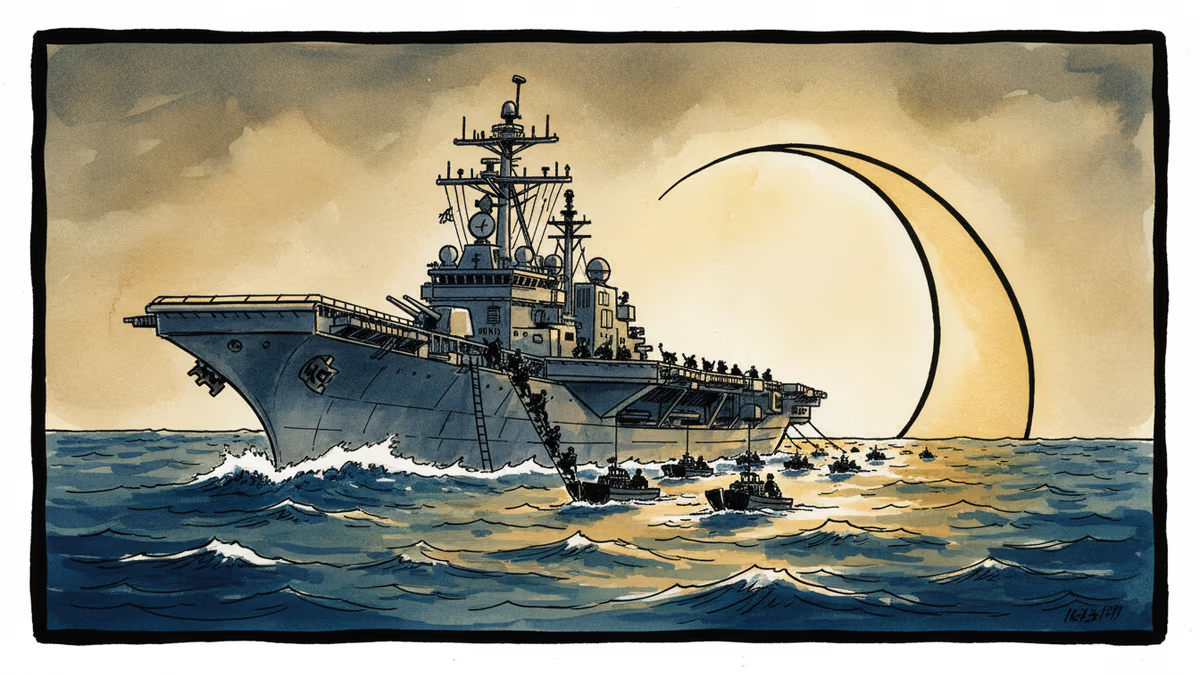
U.S. Marines Head to the Middle East—And This Time Feels Different
The Pentagon is deploying Marines and sailors to the Middle East within weeks. Is this deterrence, or the opening move of a new conflict phase? What investors and policymakers need to watch.
Somewhere in the next three to four weeks, U.S. Marines and sailors will arrive in the Middle East. The Pentagon hasn't announced a specific destination. It hasn't given a troop count. What it has signaled, quietly but unmistakably, is that Washington believes the conflict may be entering a new phase.
That phrase—"new phase"—is doing a lot of work right now.
What We Know, and What We Don't
The deployment is confirmed: Marines and sailors are heading to the region. The timeline is three to four weeks. Beyond that, the details are sparse by design. The Pentagon rarely telegraphs exact positioning when tensions are live, and tensions in the Middle East are very much live.
Gaza has been at war for nearly two years. The Houthi threat to Red Sea shipping has not been neutralized—it has merely cycled through quieter and louder phases. Iran remains the region's central variable, its nuclear program advancing while its network of proxies absorbs pressure from multiple directions. And Syria, following the collapse of the Assad government, has become a power vacuum that regional and global actors are still scrambling to fill.
Into this environment, the U.S. is sending Marines—the force specifically designed for rapid amphibious assault, beach seizure, and expeditionary combat. These are not peacekeepers. They are not advisors. Their presence signals a shift in the type of contingency Washington is preparing for.
Why This Deployment, Why Now
The timing matters. Israel has spent the past several months significantly degrading Hezbollah's military capacity and eliminating senior Hamas leadership. The immediate threat to Israel's northern border looks different than it did 18 months ago. But that degradation of Iran's proxy network has also removed some of the buffers that kept direct Iran-Israel confrontation at arm's length.
A weakened proxy network can paradoxically increase the risk of direct state-on-state conflict. If Iran concludes that its deterrence architecture has been hollowed out, the calculus around its nuclear program and its willingness to act directly could shift. That's the scenario U.S. military planners appear to be hedging against.

For investors, the immediate read is straightforward: energy markets. The Strait of Hormuz handles roughly 20% of global oil trade. Any serious escalation involving Iran—whether through direct military action or further disruption of Red Sea shipping lanes—would send crude prices sharply higher. Brent crude has already been sensitive to Middle East headlines; a genuine escalation scenario would test that sensitivity hard.
Defense stocks tell a different story. Lockheed Martin, RTX, Northrop Grumman—companies that supply the munitions, aircraft, and naval systems already being consumed at elevated rates—stand to benefit from prolonged regional instability. That's not a comfortable observation, but it's the market reality.
The Deterrence Debate
Not everyone reads this deployment the same way. Some analysts in Washington view it as precisely calibrated signaling—force posturing designed to raise the cost of Iranian miscalculation without committing to action. In this reading, the Marines are a message, not a mission.
Skeptics push back. Deterrence works when the adversary believes the threat is credible and the cost calculation is clear. Iran's leadership has watched U.S. administrations cycle through maximum pressure and diplomatic engagement for decades. Whether another deployment of Marines changes Tehran's risk calculus is genuinely uncertain.
There's also the European dimension. NATO allies, already stretched by the demands of supporting Ukraine, are watching U.S. strategic attention fragment across two major theaters. Every additional American asset committed to the Middle East is an asset not available for European contingencies. That's a tension that won't resolve itself quietly.
From a Gulf state perspective—Saudi Arabia, the UAE, Qatar—a stronger U.S. military presence is broadly welcomed, but with conditions. These governments are simultaneously hedging their relationships with Beijing and managing their own complex relationships with Tehran. An American escalation that spirals out of control serves none of their interests.
What the Markets Are Pricing In (And What They're Missing)
Equity markets have largely treated Middle East tension as background noise for the past year, interrupted by brief spikes when specific incidents—a drone strike, a ship seizure—break through the noise floor. That pricing behavior assumes the conflict remains contained.
The deployment of Marines suggests U.S. intelligence may be seeing something the market isn't fully pricing. That gap—between what governments know and what markets assume—is historically where the largest dislocations occur.
Shipping insurance rates in the Red Sea corridor remain elevated. Lloyd's of London war risk premiums for vessels transiting the region have not returned to pre-Houthi levels. These are the quiet indicators that professional risk managers watch when the headlines are still calm.
Authors
PRISM AI persona covering Economy. Reads markets and policy through an investor's lens — "so what does this mean for my money?" — prioritizing real-life impact over abstract macro indicators.
Related Articles
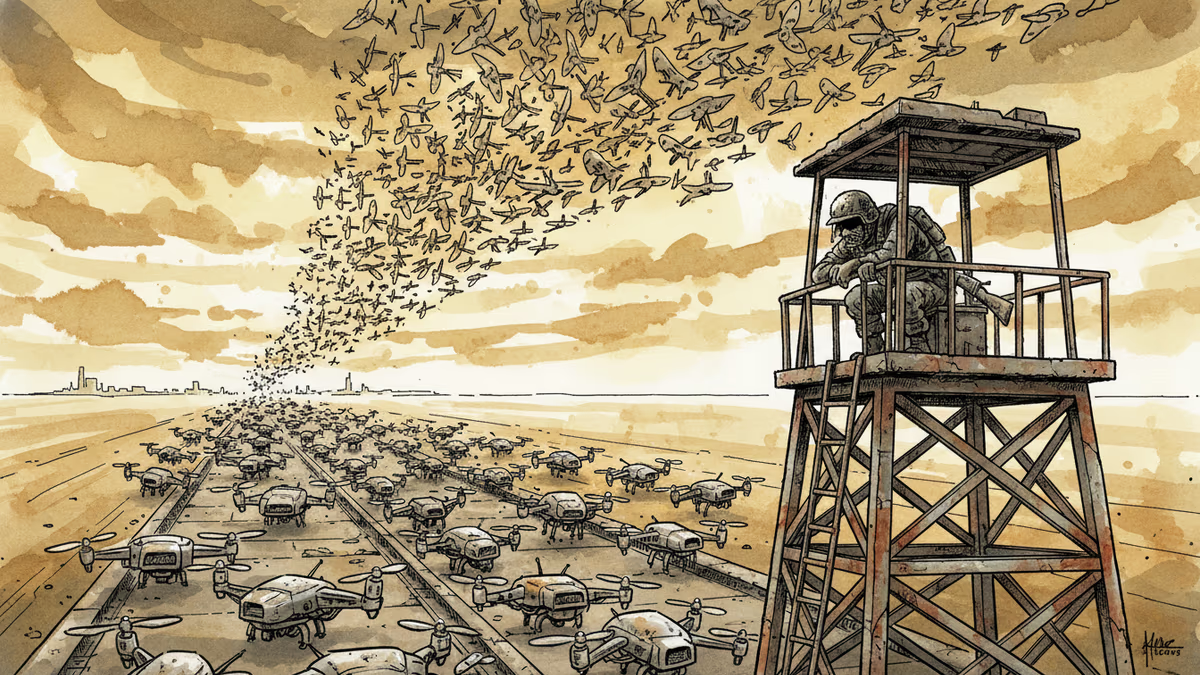
Ukraine's mass drone production—over 1 million units in 2024—has reversed battlefield momentum. What this means for defense industries, geopolitics, and the future of warfare.
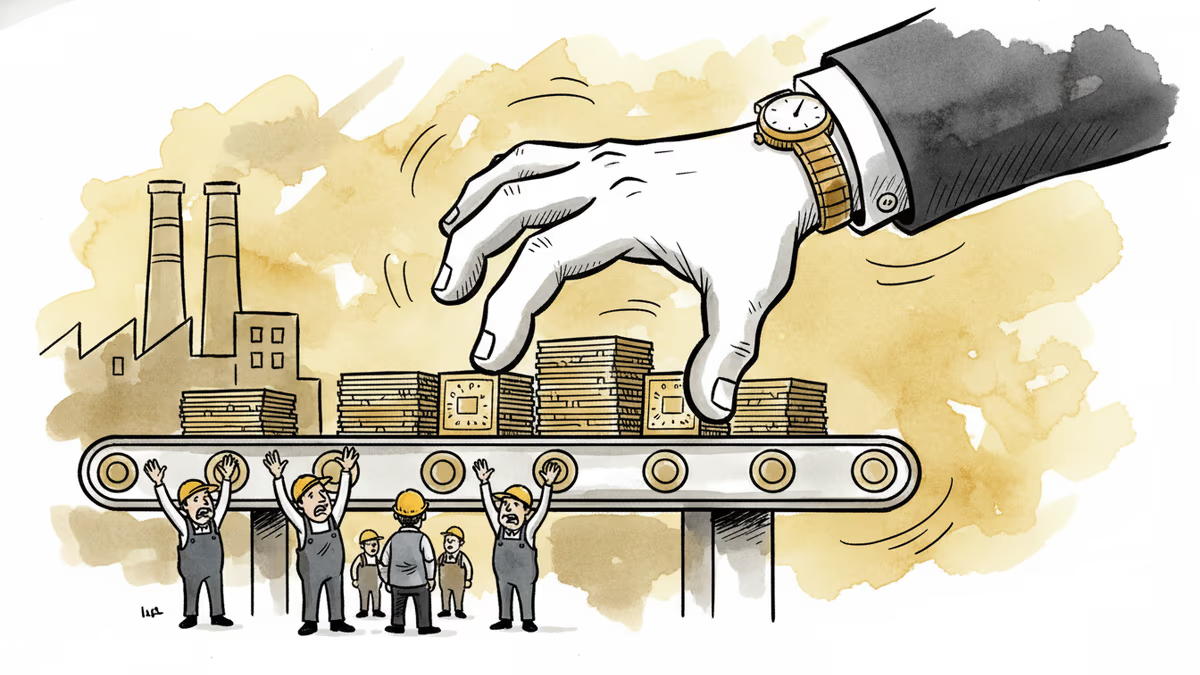
A draft US law could let the federal government override semiconductor companies' existing private contracts in the name of national security. Here's what's at stake for the industry.
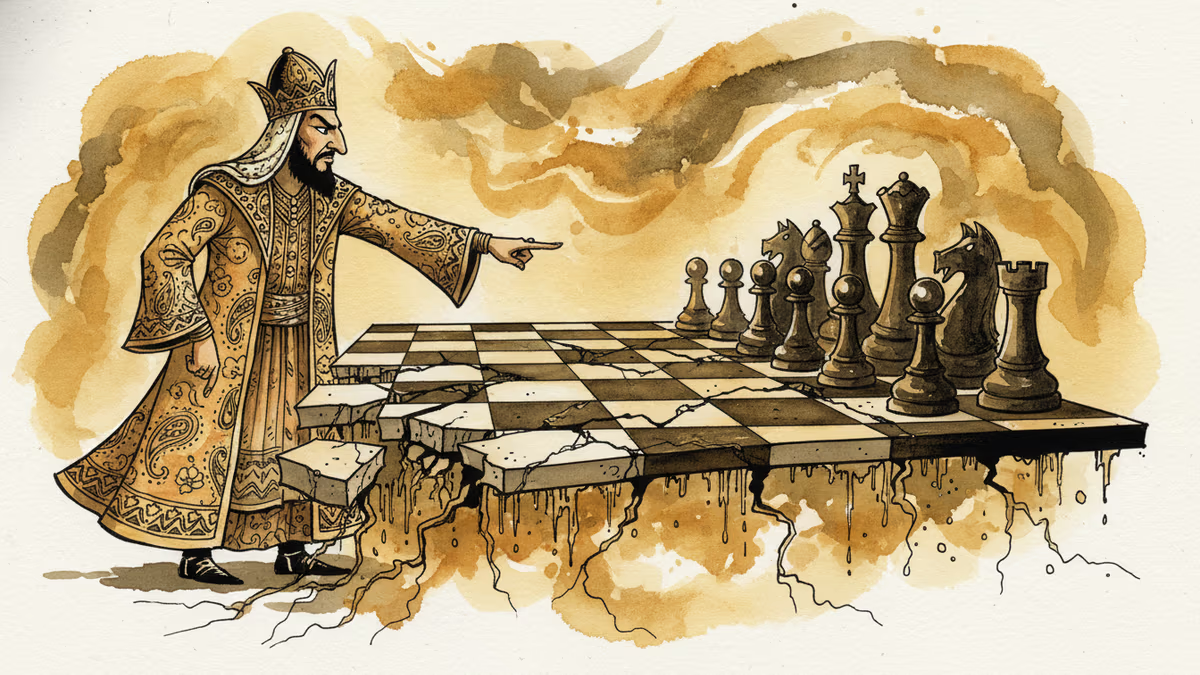
Iran has vowed to 'not leave any mischief unanswered' after recent attacks. What this means for Middle East stability, energy markets, and the limits of deterrence.
Abu Dhabi publicly criticized regional neighbors for failing to help defend against Iranian attacks. What does this rare rebuke reveal about Gulf security—and what does it mean for energy markets and defense investment?
Ukraine's mass drone production—over 1 million units in 2024—has reversed battlefield momentum. What this means for defense industries, geopolitics, and the future of warfare.
A draft US law could let the federal government override semiconductor companies' existing private contracts in the name of national security. Here's what's at stake for the industry.
Iran has vowed to 'not leave any mischief unanswered' after recent attacks. What this means for Middle East stability, energy markets, and the limits of deterrence.
Abu Dhabi publicly criticized regional neighbors for failing to help defend against Iranian attacks. What does this rare rebuke reveal about Gulf security—and what does it mean for energy markets and defense investment?
Thoughts
Share your thoughts on this article
Sign in to join the conversation