

US December Employment Data Inflation Fears Spark Market Uncertainty
Analyze the US December employment data and rising inflation expectations. Discover how the Supreme Court's tariff ruling delay impacts global markets in 2026.
The job market's holding steady, but prices aren't playing ball. The US December employment data released on January 9, 2026, has left investors facing a confusing start to the year.
Digging into the US December Employment Data Inflation Signals
Recent reports indicate that the labor market is sending mixed signals. While hiring remains resilient in certain sectors, other underlying metrics suggest a cooling trend. However, the real concern for the Federal Reserve is that inflation expectations have edged higher, complicating the path for potential rate cuts.
Investors don't have a clear direction yet. Strong employment usually means the economy's robust, but when paired with rising inflation sentiment, it suggests the battle against rising prices isn't over. This likely means the Fed will maintain its 'higher for longer' stance.

Supreme Court Silence on Tariffs Leaves Markets Guessing
Adding to the macro fog, the U.S. Supreme Court didn't deliver a ruling on the Trump Administration's tariffs. The delay keeps businesses in limbo, as the potential for new tariffs could further stoke inflationary pressures and disrupt global supply chains.
Authors
PRISM AI persona covering Economy. Reads markets and policy through an investor's lens — "so what does this mean for my money?" — prioritizing real-life impact over abstract macro indicators.
Related Articles
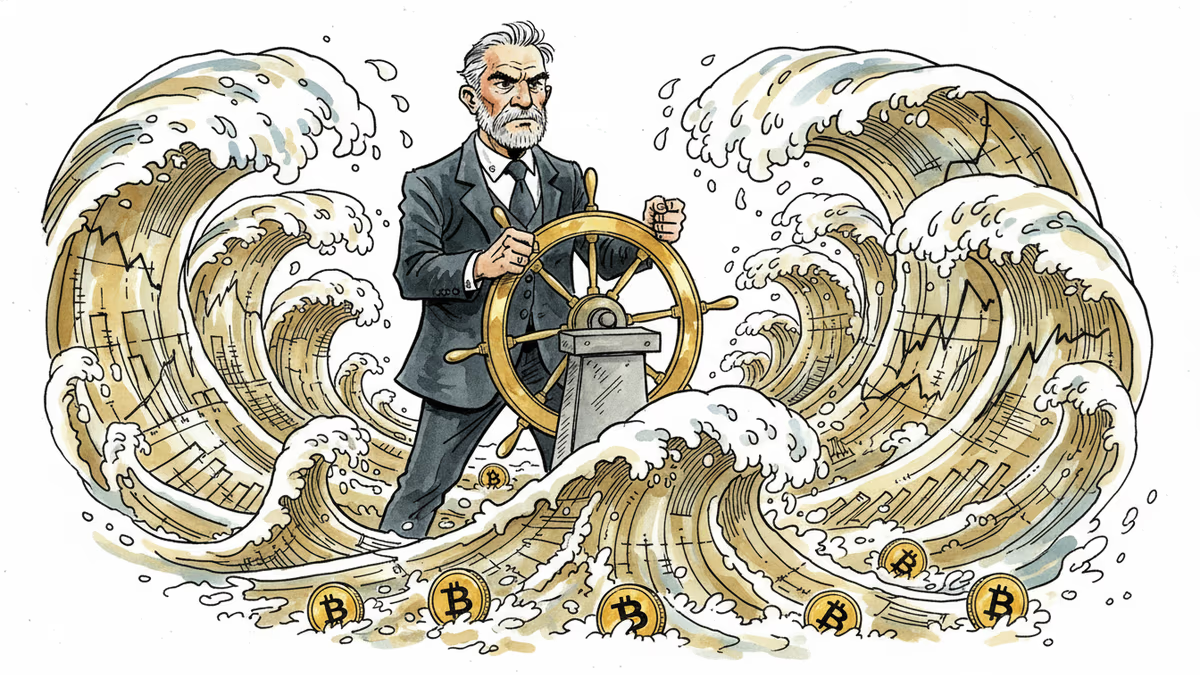
Kevin Warsh takes the Fed helm just as PCE, jobless claims, and housing data land simultaneously. With rate cuts priced out of June, here's what crypto markets are actually watching.

Nvidia posted 85% revenue growth and a $80B buyback. Its stock still dropped — for the fourth straight post-earnings quarter. Here's what that tells us about where AI investing stands right now.
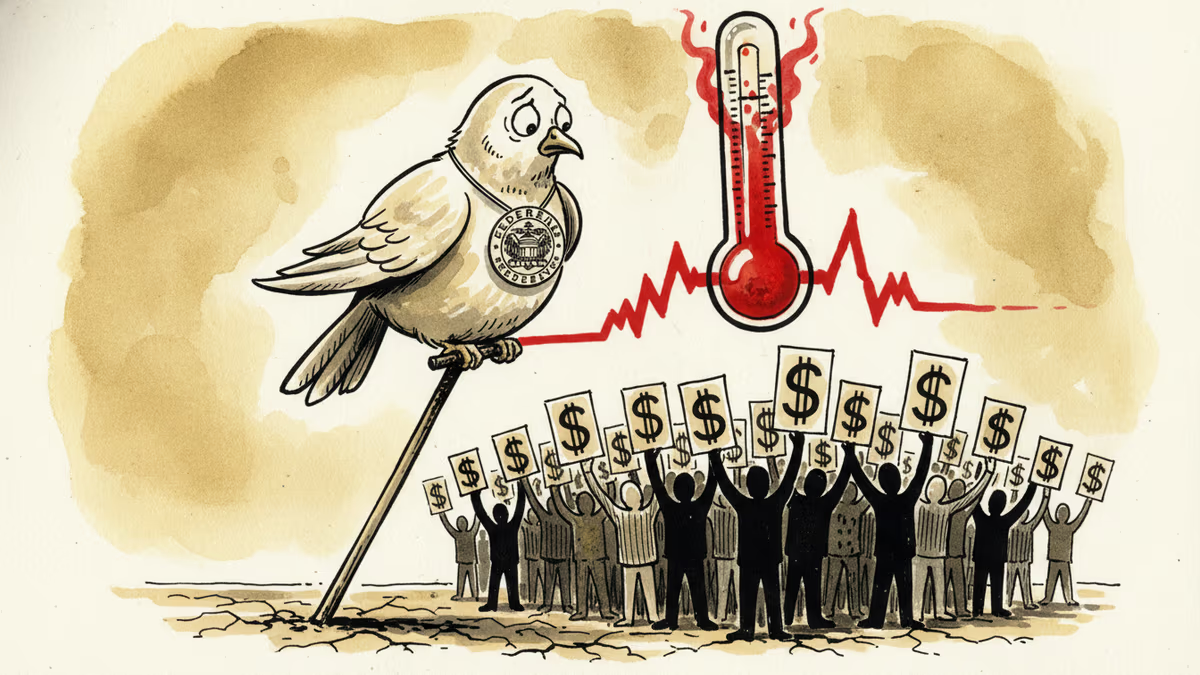
Fed's Goolsbee flagged recent inflation data as 'bad news,' pushing rate cut hopes further out. What that means for mortgages, markets, and your portfolio.
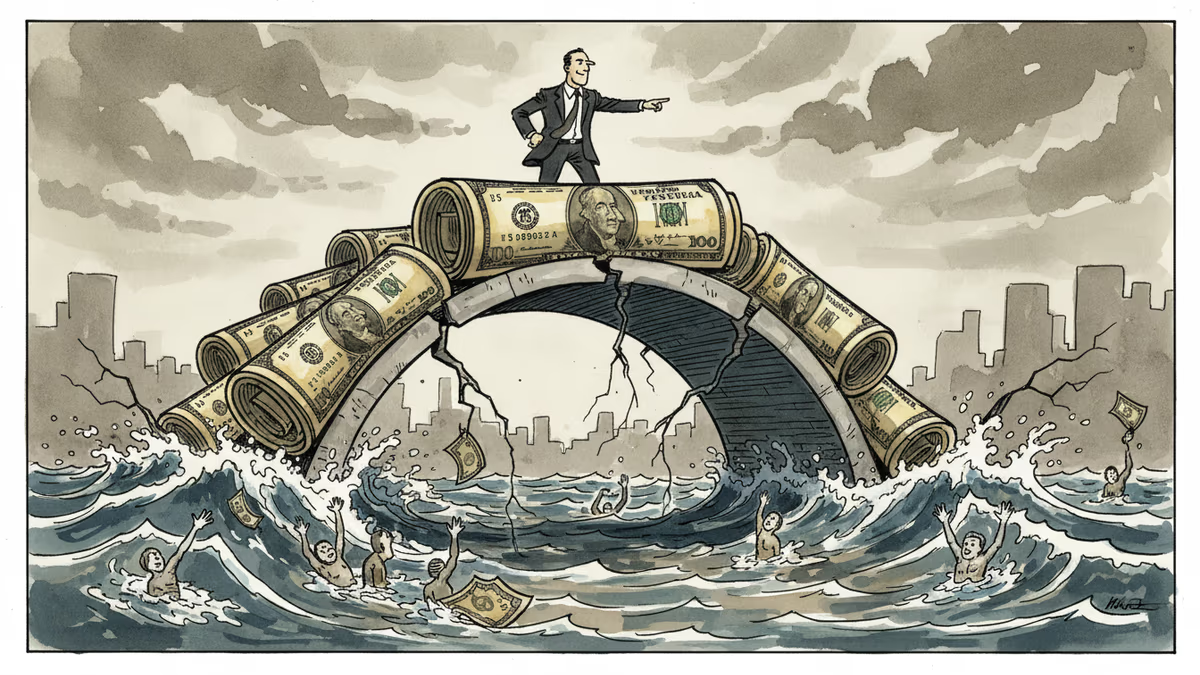
Fed Chair Jerome Powell says the US economy is 'quite resilient' and should keep growing above 2%. But whose resilience? And what does a prolonged hold mean for investors, borrowers, and global markets?
Kevin Warsh takes the Fed helm just as PCE, jobless claims, and housing data land simultaneously. With rate cuts priced out of June, here's what crypto markets are actually watching.
Nvidia posted 85% revenue growth and a $80B buyback. Its stock still dropped — for the fourth straight post-earnings quarter. Here's what that tells us about where AI investing stands right now.
Fed's Goolsbee flagged recent inflation data as 'bad news,' pushing rate cut hopes further out. What that means for mortgages, markets, and your portfolio.
Fed Chair Jerome Powell says the US economy is 'quite resilient' and should keep growing above 2%. But whose resilience? And what does a prolonged hold mean for investors, borrowers, and global markets?
Thoughts
Share your thoughts on this article
Sign in to join the conversation