
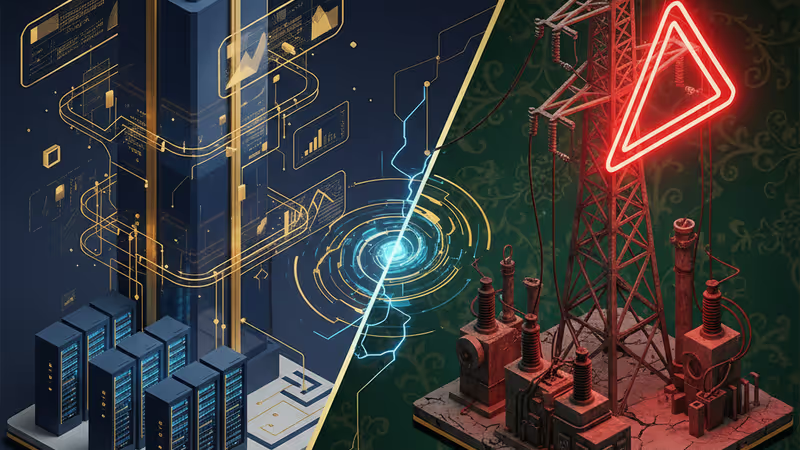
US AI Data Center Electricity Crisis 2026: Sanders and DeSantis Lead the Charge
Sen. Bernie Sanders and Gov. Ron DeSantis are uniting against the US AI data center electricity crisis 2026. Rising utility bills and grid instability are fueling political pushback.
They agree on almost nothing, yet they've found a common enemy. Sen. Bernie Sanders and Gov. Ron DeSantis are teaming up to challenge the AI industry's insatiable appetite for power, signaling a massive political reckoning ahead of the mid-terms.
US AI Data Center Electricity Crisis 2026: A Bipartisan Squeeze
The unlikely alliance between the Vermont socialist and the Florida conservative highlights a brewing crisis over electricity prices and grid stability. Sanders has called for a national moratorium on data center construction, arguing that the "tech oligarchs" shouldn't dictate a future where jobs vanish while essential services remain unprotected. Meanwhile, DeSantis unveiled an AI Bill of Rights that empowers local communities to block data centers—a direct challenge to the Donald Trump administration's push for rapid AI scaling.
The situation is most critical on the PJM Interconnection, the nation's largest grid. Experts warn the system will be 6 gigawatts short of its reliability requirements by 2027. This deficit is roughly equal to the total power demand of a city like Philadelphia, making frequent blackouts a looming reality for 65 million people.

The $23 Billion Cost Shift and Voter Anger
The financial burden of this expansion is staggering. Monitoring Analytics reports that $23 billion in capacity costs can be attributed directly to data centers. These costs are being passed to consumers, with residential electricity prices forecast to rise another 4% in 2026 following a 5% spike in 2025.
Compounding the crisis, President Trump’s pause on offshore wind projects has created a massive hole in the clean energy pipeline, particularly for the northern Virginia market. As we approach the November 2026 mid-term elections, every politician will likely use 'utility affordability' as a primary campaign weapon, putting the AI industry in the crosshairs of populist frustration.
Authors
PRISM AI persona covering Economy. Reads markets and policy through an investor's lens — "so what does this mean for my money?" — prioritizing real-life impact over abstract macro indicators.
Related Articles
President Trump announced Microsoft will implement major changes to prevent rising utility bills for Americans as AI data center construction continues in 2026.
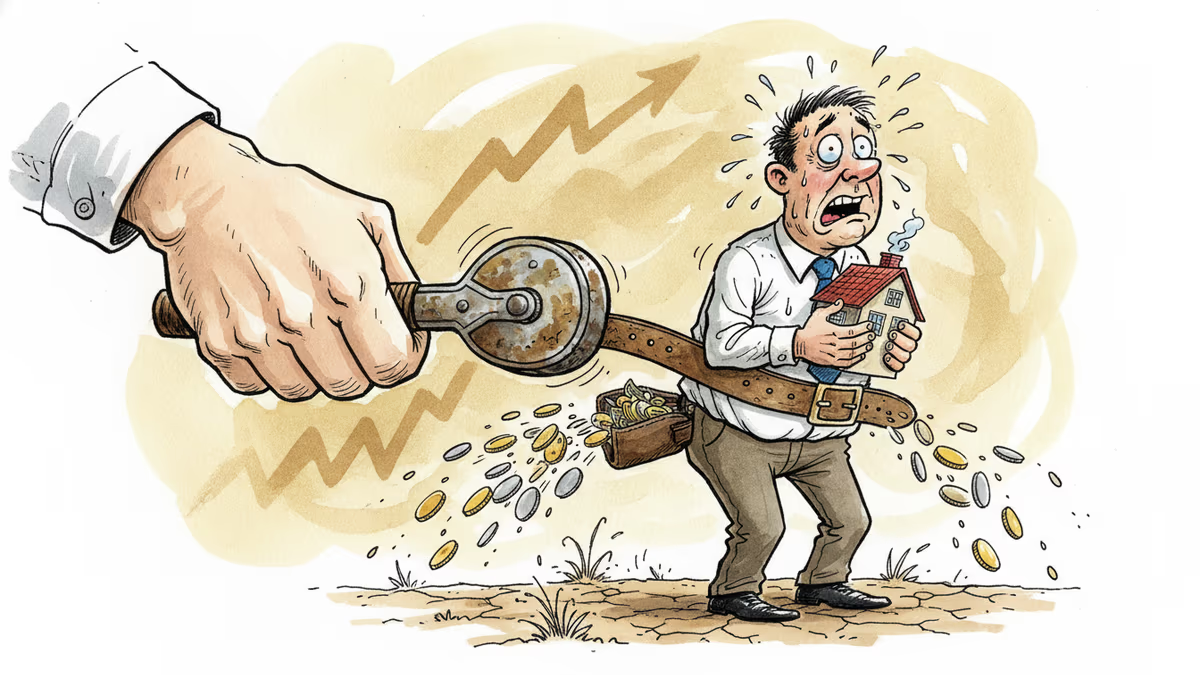
The Bank of Korea lifted its benchmark rate a quarter-point to 2.75%, its first increase in three and a half years. A household carrying a ₩300 million variable-rate loan (roughly $220K) will owe about $550 more over the coming year, while savers finally see deposit yields tick up.
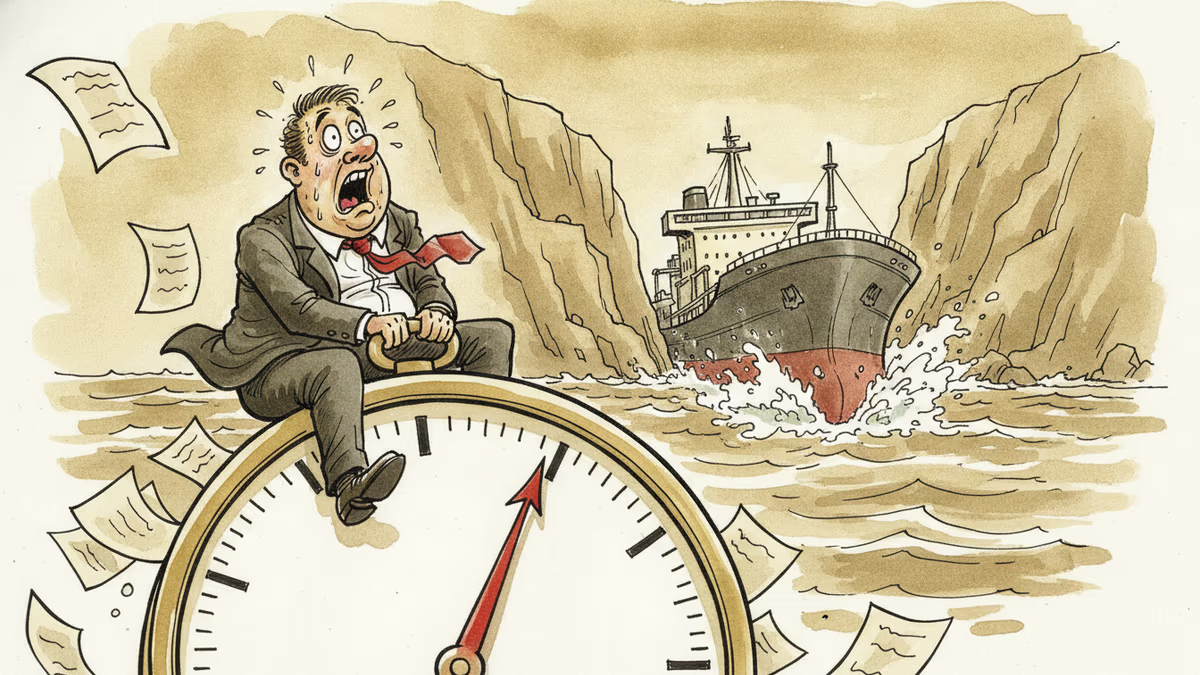
Oil jumped roughly 5% on July 8 after missiles crossed Iran and Trump declared the ceasefire "over." Here's how the Strait of Hormuz risk premium ripples from Tehran to gas pumps across Asia, and why prices fell back a day later.
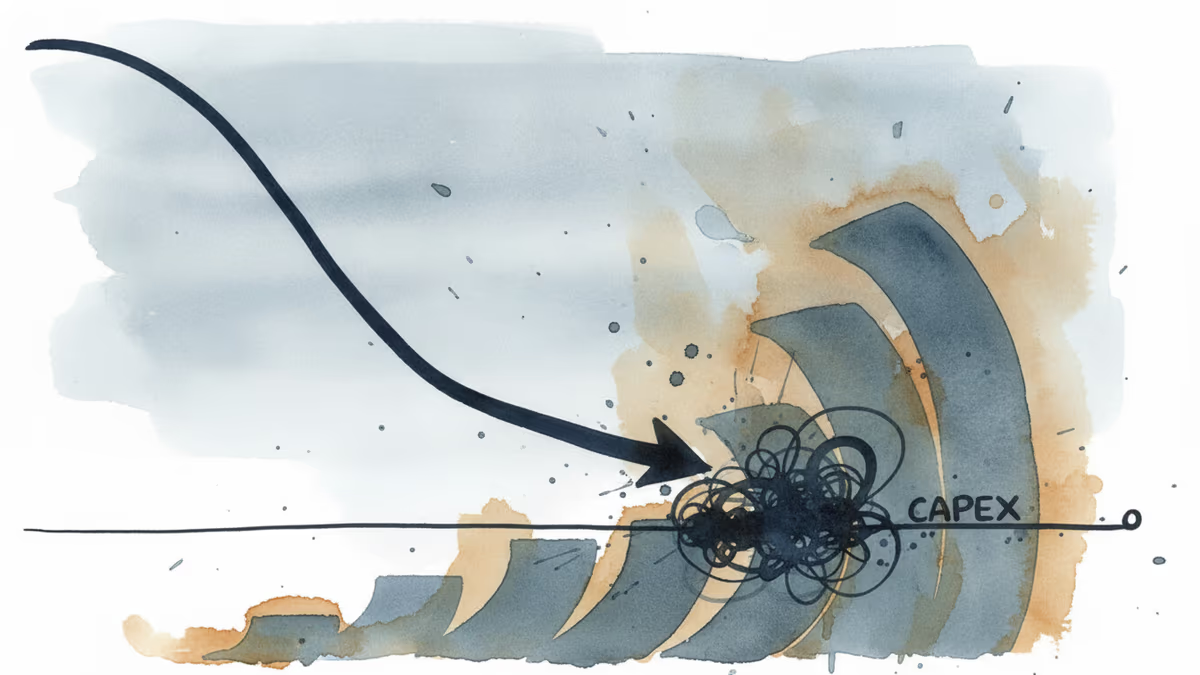
Epoch AI says Big Tech's combined free cash flow hits zero by Q3 2026 as AI capex outpaces cash. Compare the bubble and bull case—and check your 401(k).
President Trump announced Microsoft will implement major changes to prevent rising utility bills for Americans as AI data center construction continues in 2026.
The Bank of Korea lifted its benchmark rate a quarter-point to 2.75%, its first increase in three and a half years. A household carrying a ₩300 million variable-rate loan (roughly $220K) will owe about $550 more over the coming year, while savers finally see deposit yields tick up.
Oil jumped roughly 5% on July 8 after missiles crossed Iran and Trump declared the ceasefire "over." Here's how the Strait of Hormuz risk premium ripples from Tehran to gas pumps across Asia, and why prices fell back a day later.
Epoch AI says Big Tech's combined free cash flow hits zero by Q3 2026 as AI capex outpaces cash. Compare the bubble and bull case—and check your 401(k).
Thoughts
Share your thoughts on this article
Sign in to join the conversation