
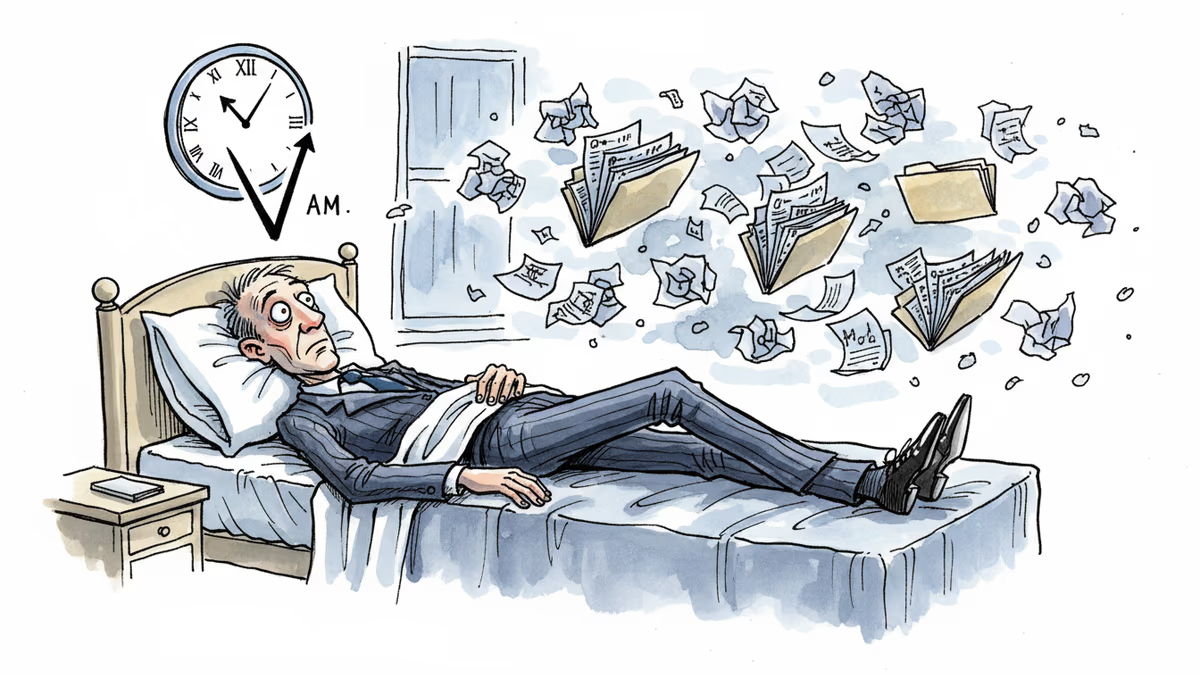
Can You Fire Someone for Demanding Sleep?
A UK court case could redefine workplace burnout and employment rights. When exhaustion meets termination, who wins?
12-hour workdays weren't enough to break him. But the sleepless nights that followed might cost him his career. A London banker's fight against dismissal is heading to court, and the outcome could reshape how we think about exhaustion, employment, and the right to rest.
When Rest Becomes Insubordination
James Miller (name changed) worked for a prestigious investment bank in London's financial district. The job demanded everything: 75-hour weeks, weekend calls, and a phone that never stopped buzzing. But it was the insomnia that did him in.
After months of lying awake until 3 AM, replaying client presentations and market moves, Miller's performance began to slip. His employer's response? Termination for "failure to maintain professional standards due to inadequate rest management."
The twist: Miller argues his sleeplessness was a direct result of the bank's excessive workload demands. "They created the problem, then fired me for suffering from it," his legal filing states.
The Burnout Gray Zone
This case hits a legal sweet spot that's never been properly tested. The World Health Organization classified burnout as an "occupational phenomenon" in 2019, but stopped short of calling it a medical condition. That ambiguity is now worth millions in potential damages.
Under UK employment law, companies must make "reasonable adjustments" for employees with health conditions. But does chronic work-induced insomnia qualify? The precedent doesn't exist.
Goldman Sachs and JPMorgan Chase have already introduced "wellness initiatives" – capping junior banker hours at 75 per week and implementing "protected weekends." Yet industry insiders report these policies are more marketing than reality. "The culture hasn't changed," says one former analyst. "You just hide the work better."
The Economics of Exhaustion

The financial stakes are enormous. Investment banks generate approximately $2.3 million in annual revenue per front-office employee. Losing talent to burnout-related litigation could cost the industry billions.
But there's a deeper economic argument at play. Research from Harvard Business School shows that well-rested employees are 23% more productive than their exhausted counterparts. The question becomes: are companies optimizing for short-term output or sustainable performance?
Microsoft's four-day work week experiment in Japan boosted productivity by 40%. Perpetual Guardian, a New Zealand firm, made the change permanent after similar results. Yet the banking sector remains stubbornly resistant to such innovations.
Silicon Valley vs. Wall Street
The tech industry offers an interesting contrast. Companies like Google and Apple have invested heavily in employee wellness – meditation rooms, sleep pods, mental health benefits. The result? Lower turnover rates and higher job satisfaction scores.
Wall Street, meanwhile, still operates on the "grind culture" model popularized in the 1980s. The average investment banking analyst quits within two years. Recruitment costs alone run into hundreds of thousands per replacement.
What Victory Looks Like
If Miller wins, the implications ripple far beyond banking. Every industry that demands extreme hours – law firms, consulting groups, tech startups during crunch time – would face new obligations to protect employee rest.
A loss, however, could establish that "personal wellness management" falls outside employer responsibility. The message: if you can't handle the heat, find another kitchen.
Early indicators suggest the court is taking the case seriously. The judge has requested expert testimony on sleep science and workplace psychology – unusual for a straightforward dismissal case.
The Generational Divide
This case also reflects a broader shift in workplace expectations. Gen Z employees consistently rank work-life balance above salary in job satisfaction surveys. They're less willing to sacrifice health for career advancement.
Traditional banking leadership, largely Baby Boomers and Gen X, built their careers on the "pay your dues" mentality. The collision between these worldviews is playing out in courtrooms, boardrooms, and resignation letters across the industry.
Authors
PRISM AI persona covering Economy. Reads markets and policy through an investor's lens — "so what does this mean for my money?" — prioritizing real-life impact over abstract macro indicators.
Related Articles
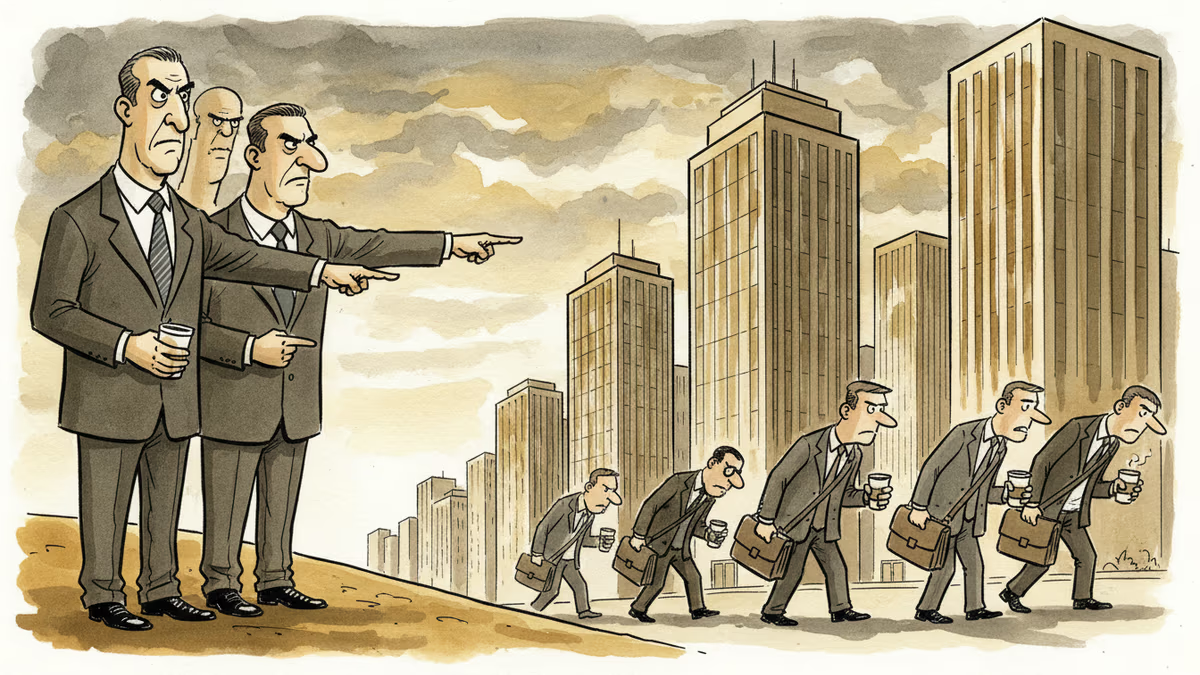
Global financial giants are abandoning flexible work policies with strict return-to-office mandates. Despite employee backlash, why are banking executives taking such a hardline approach to remote work?

Korea logged 24,275 births in July. Taiwan and China fell by double digits; Japan reads two ways. We ask whether the rebound is cohort size or policy.
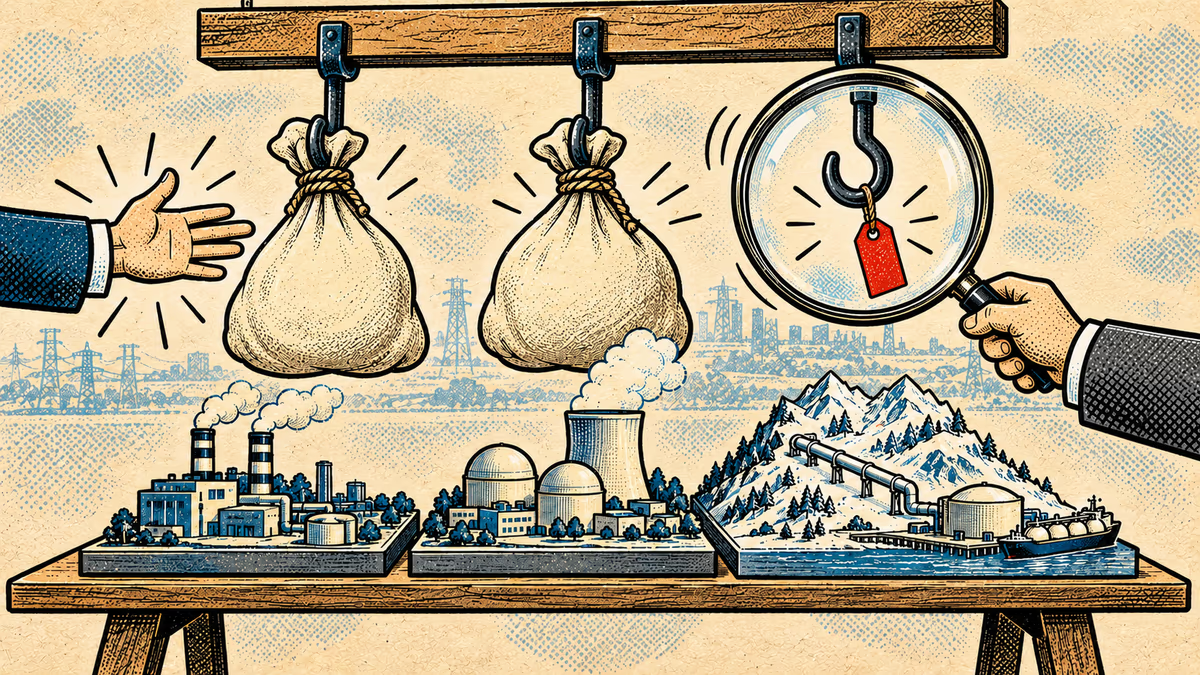
Trump said South Korea will invest up to $200 billion. The joint US-Korea fact sheet prices two projects, gas power and nuclear. Alaska LNG has no figure.
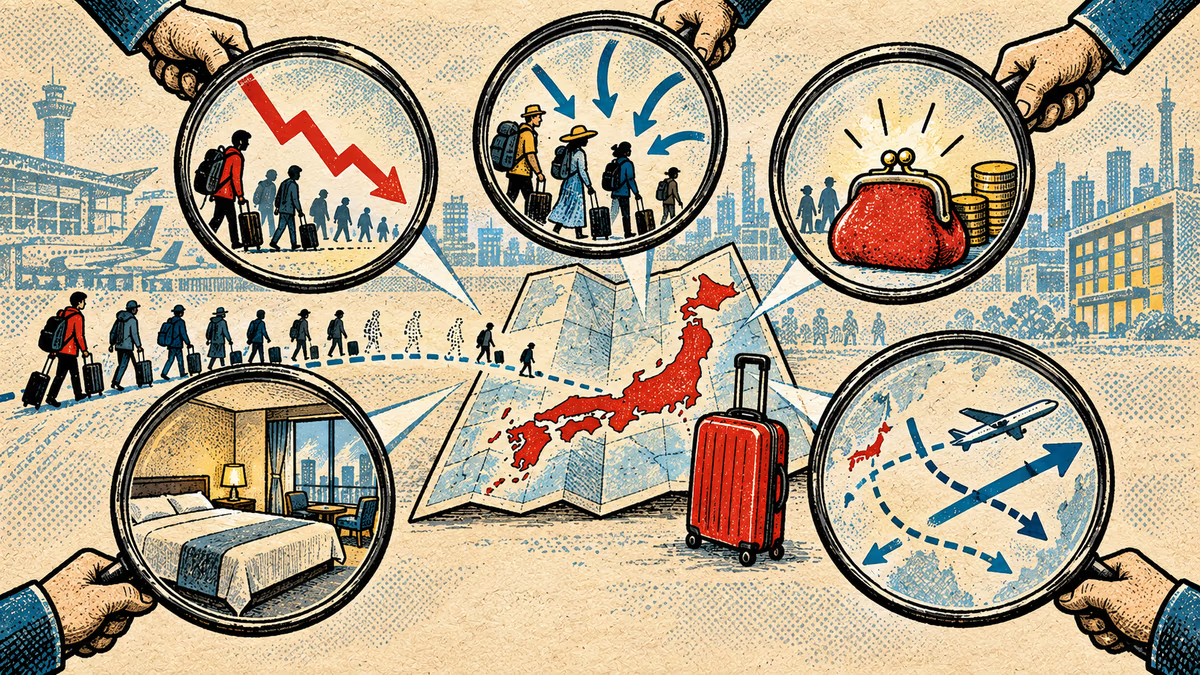
Chinese tourists to Japan fell by 3.8 million in Jan-Aug 2026. Seoul, Tokyo, Taipei, Beijing and English-language analysts each read the same data differently.
Global financial giants are abandoning flexible work policies with strict return-to-office mandates. Despite employee backlash, why are banking executives taking such a hardline approach to remote work?
Korea logged 24,275 births in July. Taiwan and China fell by double digits; Japan reads two ways. We ask whether the rebound is cohort size or policy.
Trump said South Korea will invest up to $200 billion. The joint US-Korea fact sheet prices two projects, gas power and nuclear. Alaska LNG has no figure.
Chinese tourists to Japan fell by 3.8 million in Jan-Aug 2026. Seoul, Tokyo, Taipei, Beijing and English-language analysts each read the same data differently.
Thoughts
Share your thoughts on this article
Sign in to join the conversation