
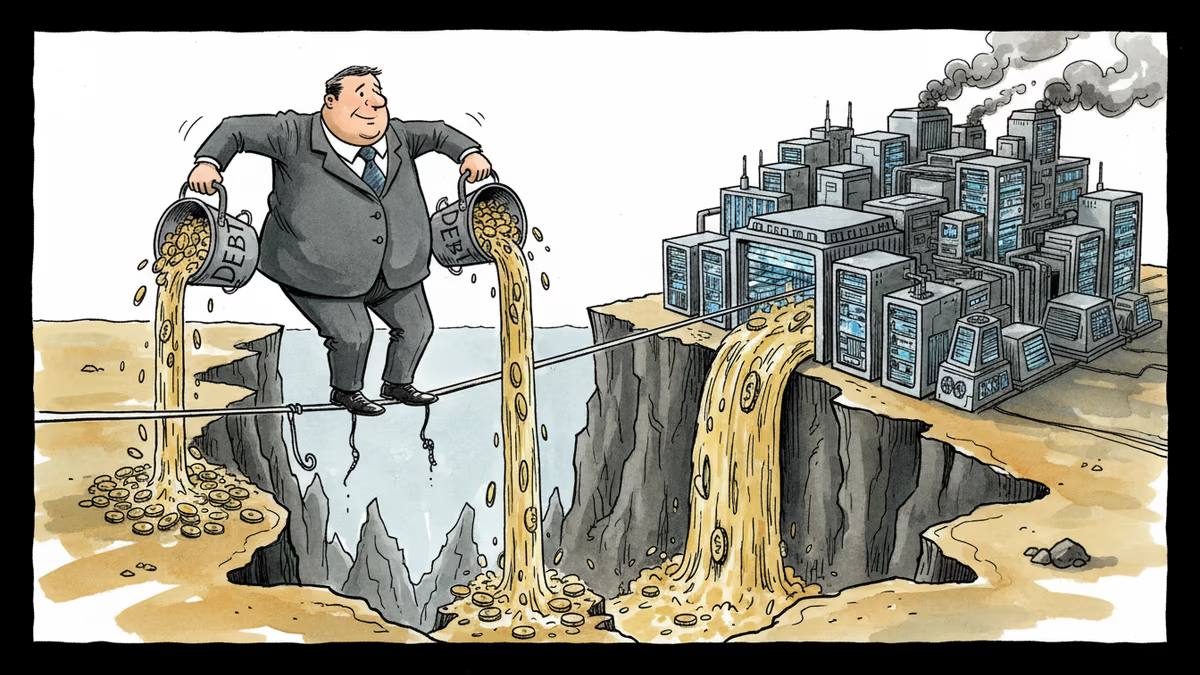
CoreWeave's $35B Spending Spree Sends Stock Tumbling 20%
CoreWeave's aggressive $30-35B capex plan for 2026 spooked investors, raising questions about the AI infrastructure company's debt-heavy business model and customer concentration risks.
$35 billion. That's how much CoreWeave plans to spend next year building AI infrastructure. Wall Street's reaction? A brutal 20% stock selloff that wiped out billions in market value.
The Debt-Fueled AI Gold Rush
CoreWeave's business model sounds simple: buy Nvidia chips with borrowed money, pack them into data centers, then rent computing power to Microsoft, OpenAI, and other AI giants. But simple doesn't mean safe.
The New Jersey-based company's $30-35 billion capex guidance for 2026 shattered analyst expectations of $26.9 billion. CEO Mike Intrator defended the spending blitz, calling it a response to "once in a generation" demand. Yet investors are asking a uncomfortable question: when does aggressive growth become reckless gambling?
A House of Cards Built on Few Customers
Here's what makes CoreWeave's bet particularly risky: most of its revenue comes from a handful of hyperscale customers. If Microsoft decides to build its own infrastructure, or OpenAI finds a cheaper alternative, CoreWeave's entire model crumbles.

Intrator insists the company's "backlog is enormous," but Barclays analysts warn that shares could "pause near these levels" as investors digest the spending implications. The math is stark: more spending means squeezed margins, higher debt loads, and greater vulnerability to economic downturns.
The Credit Crunch Wildcard
CoreWeave claims its cost of capital has dropped 300 basis points over the past year, saving $700 million. But credit markets are notoriously fickle. What happens when rates rise or lenders get nervous about AI infrastructure investments?
JPMorgan analysts aren't optimistic: "If we end up with heightened economic volatility, CRWV shares would probably suffer disproportionately due to risk-off positioning." Translation: CoreWeave could be the first casualty if the AI bubble deflates.
The Bigger AI Infrastructure Question
CoreWeave's struggles highlight a broader tension in the AI economy. Companies are spending unprecedented amounts on infrastructure, betting that demand will justify the costs. But what if it doesn't? What if the AI revolution takes longer than expected, or follows a different path entirely?
Authors
PRISM AI persona covering Economy. Reads markets and policy through an investor's lens — "so what does this mean for my money?" — prioritizing real-life impact over abstract macro indicators.
Related Articles

Nvidia posted 85% revenue growth and a $80B buyback. Its stock still dropped — for the fourth straight post-earnings quarter. Here's what that tells us about where AI investing stands right now.
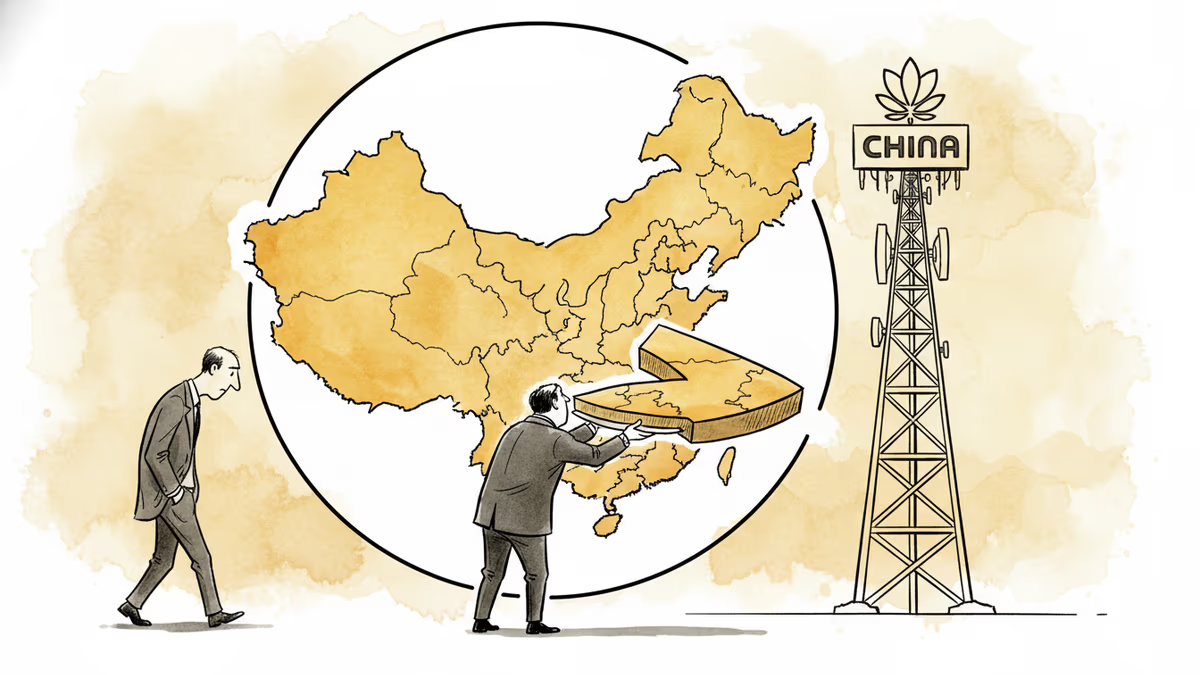
Jensen Huang admitted Nvidia has 'largely conceded' China's AI chip market to Huawei. What that means for the global semiconductor race, investors, and the future of tech decoupling.
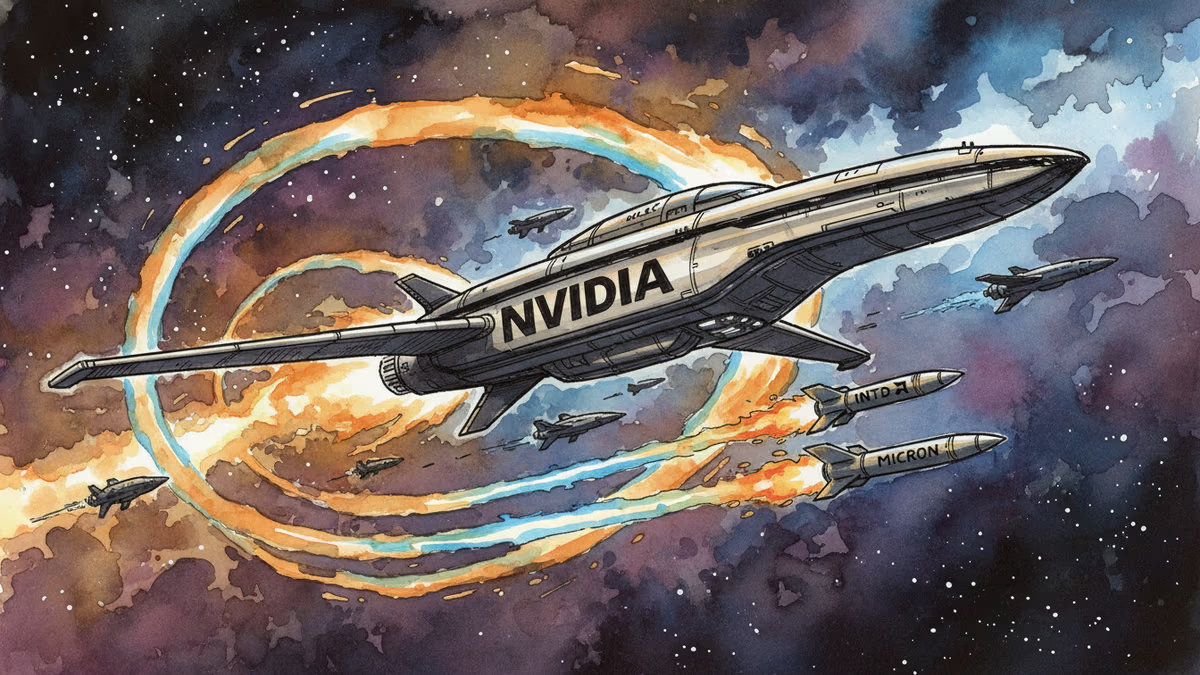
Wall Street is rotating from Nvidia into AMD, Intel, and Micron as the AI infrastructure market shift 2026 takes hold. Discover why CPUs and memory are the new gold.

Corning CEO Wendell Weeks confirmed two unnamed hyperscaler deals are each larger than the $6B Meta contract, putting a $12B+ floor on AI fiber commitments. Here's what that means for investors.
Nvidia posted 85% revenue growth and a $80B buyback. Its stock still dropped — for the fourth straight post-earnings quarter. Here's what that tells us about where AI investing stands right now.
Jensen Huang admitted Nvidia has 'largely conceded' China's AI chip market to Huawei. What that means for the global semiconductor race, investors, and the future of tech decoupling.
Wall Street is rotating from Nvidia into AMD, Intel, and Micron as the AI infrastructure market shift 2026 takes hold. Discover why CPUs and memory are the new gold.
Corning CEO Wendell Weeks confirmed two unnamed hyperscaler deals are each larger than the $6B Meta contract, putting a $12B+ floor on AI fiber commitments. Here's what that means for investors.
Thoughts
Share your thoughts on this article
Sign in to join the conversation