
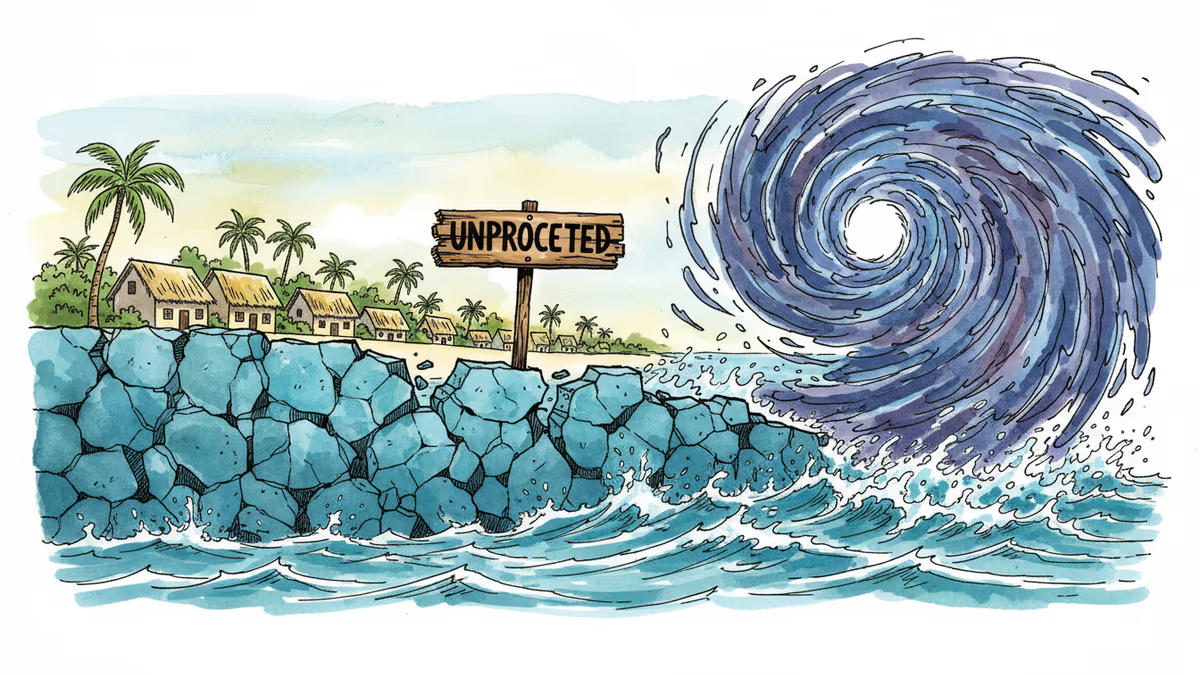
The Reef That Saves Your Town May Not Be Protected
New research reveals nearly half of the Caribbean's most critical storm-defense reefs sit outside protected zones — just as climate change makes hurricanes stronger and corals weaker.
When Hurricane Wilma slammed into Mexico's Yucatán Peninsula in 2005, waves 36 feet high were racing toward the shore. By the time they reached the small town of Puerto Morelos, they were barely 6 feet tall. No seawall did that. No government intervention. A coral reef did — one that happened to sit inside a national park.
Not every coastal town is that lucky. And as the ocean warms, fewer will be.
Nature's Most Undervalued Infrastructure
Coral reefs are, in purely engineering terms, remarkable structures. They can strip out up to 97% of incoming wave energy, and globally they prevent an estimated $4 billion in storm damage every single year. Remove them, and that damage doubles.
Along Mexico's Caribbean coast alone, roughly 105,800 people live in areas shielded by reefs, alongside buildings and infrastructure worth $858 million. The region's tourism industry — worth up to $15 billion in a strong year — depends on those reefs staying intact, both as a draw for visitors and as a barrier against the storms that would otherwise devastate the coastline.
But not all reefs are built the same. A new study by Lorenzo Alvarez-Filip, Sara M. Melo Merino, and Steven Canty makes a distinction that turns out to matter enormously: the reef's protective power depends on which corals built it. Dense thickets of elkhorn coral — large, rigid, architecturally complex — are the heavy lifters. They create the rough, elevated structures that break and slow waves most effectively. Flatter, smaller species offer far less resistance. The reef's biology determines the coastline's fate.
Half the Most Critical Reefs Are Unprotected
The researchers mapped Caribbean reefs against two criteria: current wave-breaking functionality and projected thermal resilience — essentially, which reefs are most likely to survive the ocean warming expected by mid-century.
The results are uncomfortable. Of the reefs that ranked highest on both measures, only 54% fall within formal marine protected areas. The other 46% are exposed to pollution, boat traffic, coastal development, and other human pressures that accelerate reef degradation.

The gaps are geographically specific. The Bahamas, Puerto Rico, Turks and Caicos, and Cuba all have significant clusters of high-value, unprotected reefs. Even in places like Belize and Honduras — where a large share of reefs are formally protected — the researchers found that some of the most functionally important reefs sit just outside protected boundaries.
There's an additional layer here: the reefs flagged for their coastal defense value also tend to support high levels of marine biodiversity. The places most worth protecting for human safety are often also the places most worth protecting for ecological reasons. That alignment is an opportunity, if policymakers choose to act on it.
A Dangerous Convergence
The timing of this research matters. Two trends are moving in opposite directions simultaneously, and the gap between them is where coastal communities get hurt.
On one side, ocean warming is triggering more frequent and more severe coral bleaching events. When water temperatures spike, corals expel the symbiotic algae — zooxanthellae — that give them color and energy. Prolonged heat stress kills them. As corals die, the reef structures they spent decades building slowly collapse, losing the complexity that makes them effective wave barriers. The natural seawall crumbles.
On the other side, climate change is increasing the frequency of high-intensity hurricanes. The storms are getting stronger at the same time the reefs protecting against them are getting weaker. For coastal communities caught between those two trends, the math is unforgiving.
This is where the study's framing shifts from ecological concern to policy urgency. Extending protection to unprotected high-priority reefs is, comparatively, a low-cost intervention. Reducing local stressors — pollution runoff, anchor damage, overfishing — gives thermally resilient reefs the best chance of surviving the warming that's already locked in. The alternative is watching those natural defenses erode and then paying to replace them with engineered infrastructure, at vastly greater expense.
Who Decides Which Reefs Get Protected?
For tourism operators, the calculus is fairly direct: healthy reefs mean visitors, and storm-damaged coastlines mean empty hotels. The industry has obvious incentives to support reef conservation, and in some places — like the Mexican Caribbean — that alignment has already produced meaningful protections.
For coastal residents, particularly in lower-income communities across the Caribbean, the stakes are more existential. These are people who can't easily relocate when a storm surge overtops what's left of a degraded reef. The distribution of protected versus unprotected reefs is not, it turns out, evenly spread across communities with equal political influence.
For governments, the challenge is jurisdictional and financial. Marine protected areas require enforcement, which costs money and generates friction with fishing and shipping industries. Expanding protections into the Bahamas, Cuba, or Turks and Caicos involves different political contexts, different resource constraints, and different relationships between central governments and coastal communities.
And for climate scientists and conservationists, the study introduces a criterion — functional thermal resilience — that hasn't traditionally driven protected area designation. Most marine protected areas were drawn around biological diversity hotspots or politically convenient boundaries, not around the question of which reefs will still be standing in 2050 and doing the most to keep waves off the shore.
This content is AI-generated based on source articles. While we strive for accuracy, errors may occur. We recommend verifying with the original source.
Related Articles
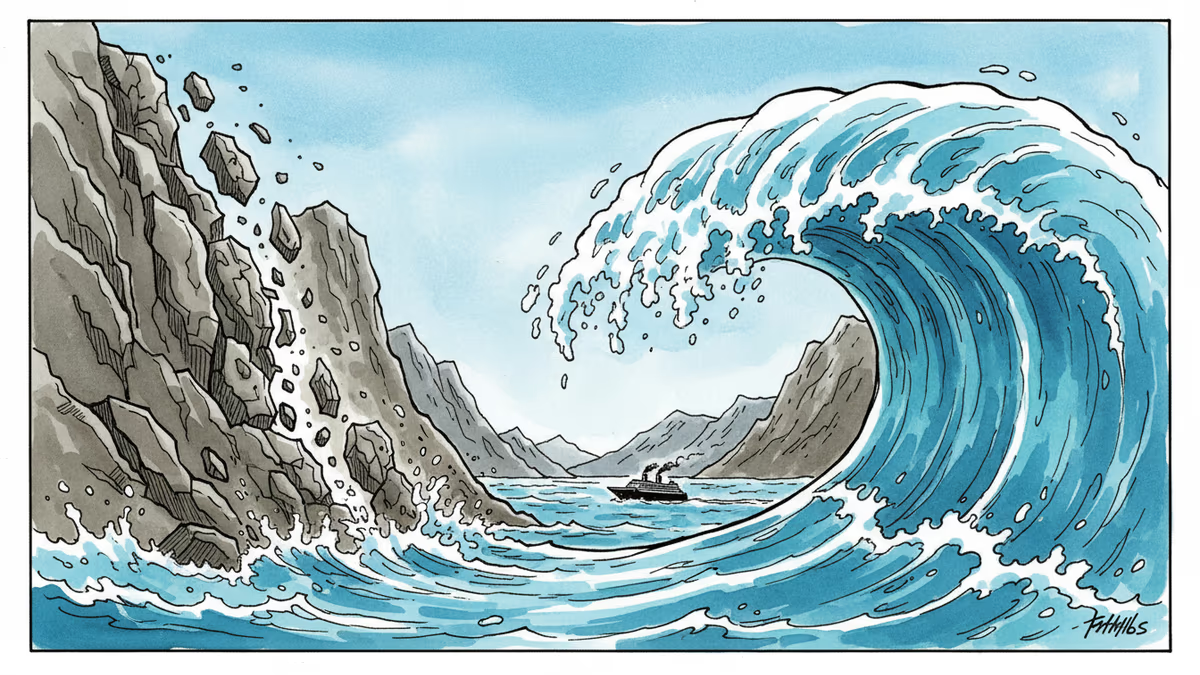
Twelve hours after tourists photographed the South Sawyer Glacier, a landslide triggered the second-tallest tsunami in recorded history. The signals were there. The monitoring system wasn't.
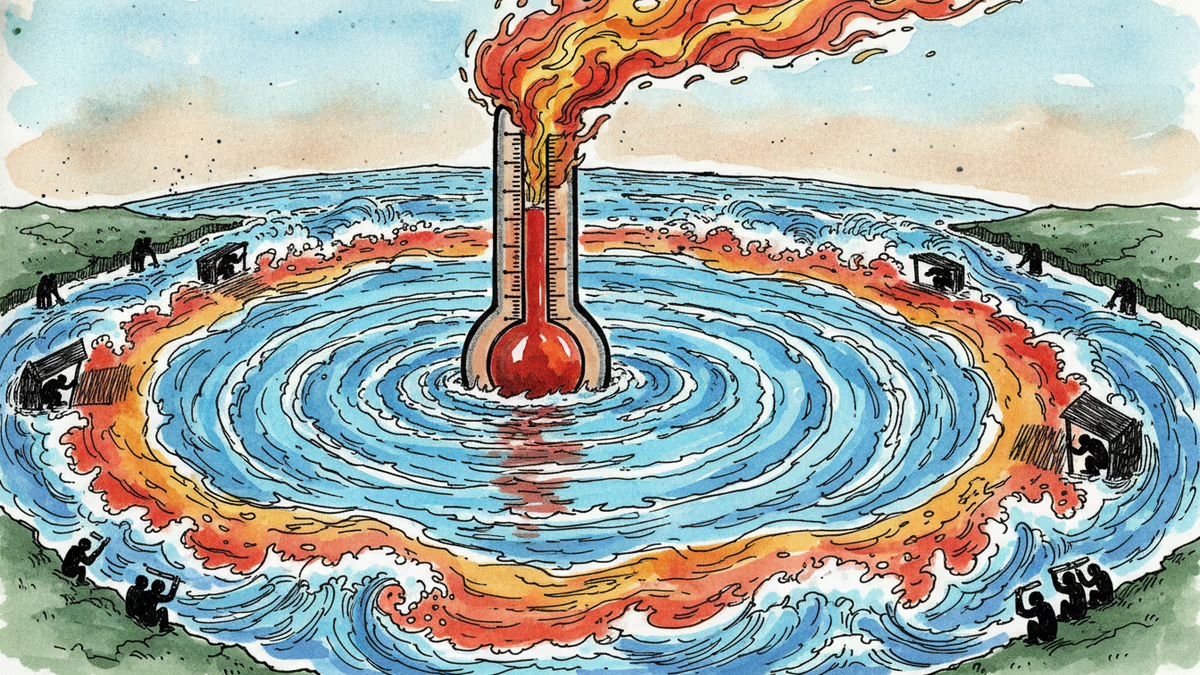
Scientists warn a coming super El Niño could trigger lasting "climate regime shifts" — not just extreme weather, but permanent changes to rainfall, drought, and ocean systems worldwide.
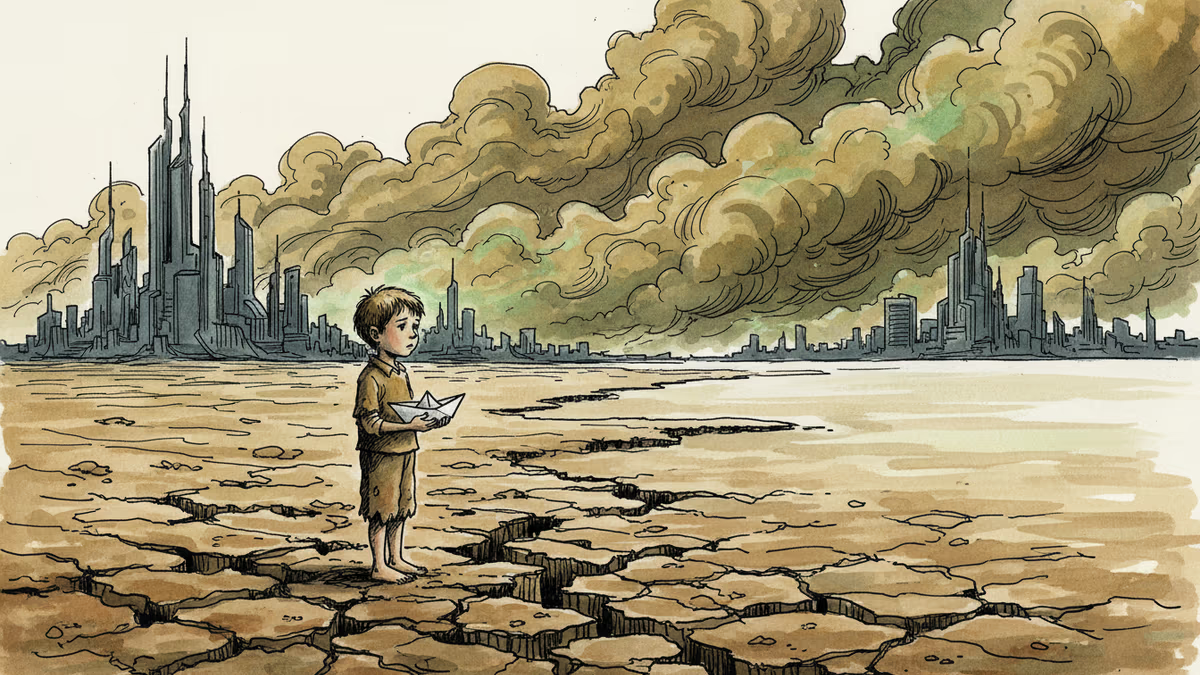
California's Salton Sea is shrinking, releasing toxic dust that stunts children's lung growth more than living near a busy freeway. A seven-year study reveals the human cost of water policy decisions.
April 1 snowpack readings across the western U.S. hit record lows in 2026 — not because of a dry winter, but because it was too warm. The implications go far beyond drought.
Twelve hours after tourists photographed the South Sawyer Glacier, a landslide triggered the second-tallest tsunami in recorded history. The signals were there. The monitoring system wasn't.
Scientists warn a coming super El Niño could trigger lasting "climate regime shifts" — not just extreme weather, but permanent changes to rainfall, drought, and ocean systems worldwide.
California's Salton Sea is shrinking, releasing toxic dust that stunts children's lung growth more than living near a busy freeway. A seven-year study reveals the human cost of water policy decisions.
April 1 snowpack readings across the western U.S. hit record lows in 2026 — not because of a dry winter, but because it was too warm. The implications go far beyond drought.
Thoughts
Share your thoughts on this article
Sign in to join the conversation