
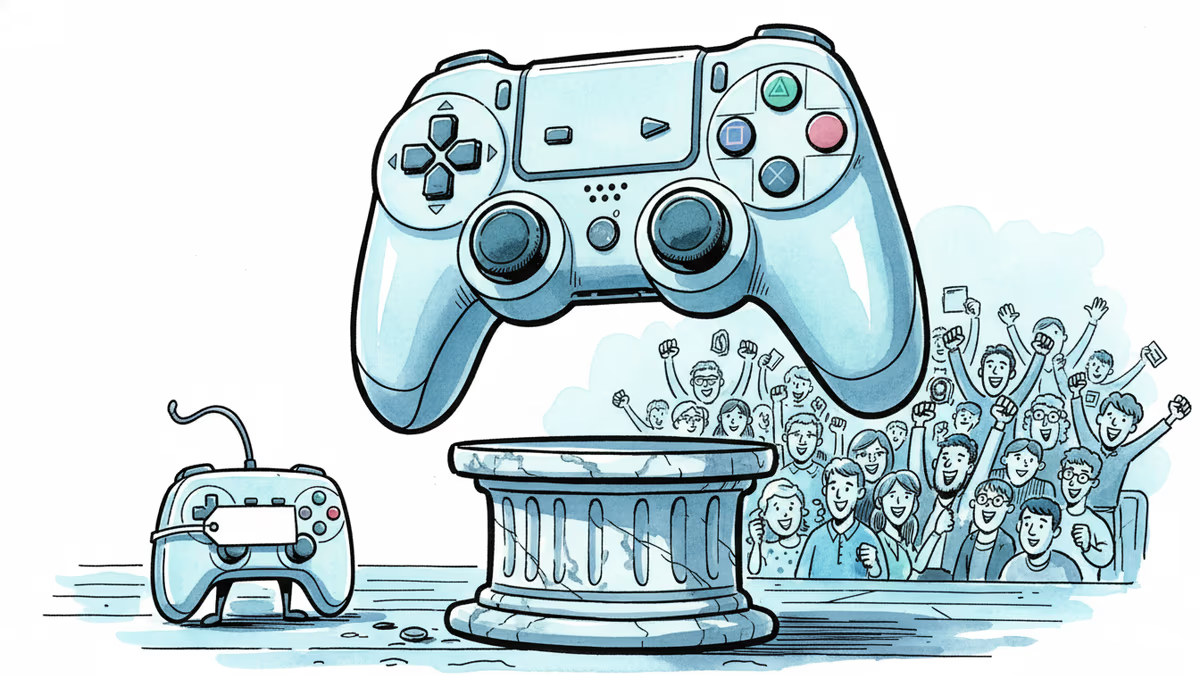
The $34 Controller That Makes Nintendo's $90 One Look Overpriced
The EasySMX S10 Lite challenges Nintendo's official Switch 2 Pro Controller at less than half the price. What happens when third-party gear outperforms the original?
Nintendo charges $90 for its Switch 2 Pro Controller. EasySMX is selling the S10 Lite for $34. And reviewers are saying the cheaper one might actually be better.
That's not a typo. And it's not a fluke.
What the S10 Lite Actually Does
Last fall, EasySMX released the S10 — a $60 wireless gamepad that already embarrassed Nintendo's Pro Controller on value. It packed TMR joysticks (rated to last longer than Nintendo's hall-effect alternatives), satisfying rumble, amiibo support, and a comfortable grip. All for $30 less than the official option.
The new S10 Lite strips back a few of those features to hit a lower price point — but adds one new capability that reviewers expect competitors to copy. The full spec sheet hasn't been exhaustively detailed yet, but the direction is clear: third-party hardware is no longer just a budget compromise. It's becoming a legitimate first choice.
For Switch 2 owners, that changes the math on building out a multi-controller setup considerably. A second official Pro Controller costs another $90. Two S10 Lites? $68 total.
Why Nintendo Can't Easily Stop This
Nintendo has historically kept its hardware ecosystem tightly controlled. The fact that a third-party gamepad now supports amiibo — Nintendo's proprietary NFC-based collectibles system — is notable. It signals that the technical barriers to replicating official features are lower than they've ever been.

The component economics explain why. Vibration motors, joystick modules, and NFC chips have all seen dramatic cost reductions over the past several years. What once required expensive licensing or proprietary engineering can now be sourced and assembled at a fraction of the cost. EasySMX, based in China, is riding that curve aggressively.
Nintendo's countermove, historically, has been firmware. The company has previously pushed updates that restricted or broke compatibility with unofficial controllers. It's a real risk for buyers — and one that doesn't come with a refund.
Three Ways to Read This
For consumers, this is straightforwardly good news. More competition, lower prices, more choice. If the S10 Lite performs as advertised, there's a compelling case to skip the official controller entirely — especially for a second or third gamepad in the household.
For Nintendo, the calculus is thornier. Controller sales carry healthy margins. Losing that revenue to third parties is a direct hit. But there's an uncomfortable flip side: a thriving accessory ecosystem makes the Switch 2 platform more attractive overall. Nintendo may be losing controller sales while winning the platform war.
For the broader gaming peripherals industry, EasySMX is proving a template. The same pressure is playing out in the Xbox and PlayStation accessory markets, where brands like 8BitDo and PowerA have carved out real market share by offering near-parity features at lower prices. The question is no longer whether third-party can match official hardware — it's how fast.
The Reliability Caveat
Not everything favors the challenger. Long-term firmware compatibility is a genuine unknown. Nintendo has shown it's willing to use software updates as a competitive tool. Buyers of unofficial controllers are, in effect, betting that Nintendo won't actively break their device — and that the manufacturer will push patches if it does.
There's also the intangible of brand trust. Nintendo's Pro Controller comes with warranty support, a known quality standard, and the confidence that it will work with every game, every update, indefinitely. For some users, that peace of mind is worth paying for.
Authors
Related Articles
Pokémon Pokopia debuts exclusively on Nintendo Switch 2. This isn't just a celebration—it's a calculated move that could reshape how we think about franchise expansion.
The 2027 release of Pokémon Winds and Waves could determine Nintendo Switch 2's success. A 30-year franchise faces its biggest test in the open-world era.
Pokémon Wind and Waves launches exclusively on Nintendo Switch 2 in 2027. Analyzing Nintendo's hardware strategy and gaming industry implications
Nintendo Switch 2's surprisingly strong game lineup could reshape console competition. Analysis of how diverse titles beyond Mario and Zelda might change the gaming landscape.
Pokémon Pokopia debuts exclusively on Nintendo Switch 2. This isn't just a celebration—it's a calculated move that could reshape how we think about franchise expansion.
The 2027 release of Pokémon Winds and Waves could determine Nintendo Switch 2's success. A 30-year franchise faces its biggest test in the open-world era.
Pokémon Wind and Waves launches exclusively on Nintendo Switch 2 in 2027. Analyzing Nintendo's hardware strategy and gaming industry implications
Nintendo Switch 2's surprisingly strong game lineup could reshape console competition. Analysis of how diverse titles beyond Mario and Zelda might change the gaming landscape.
Thoughts
Share your thoughts on this article
Sign in to join the conversation