

OpenAI Deploys AI 'Red Team' to Harden ChatGPT Atlas Against Prompt Injection Attacks
OpenAI is using automated red teaming with reinforcement learning to strengthen ChatGPT Atlas against prompt injection attacks, creating a proactive loop to discover and patch exploits early.
OpenAI is escalating its defenses against prompt injection, deploying an automated red team trained with reinforcement learning to proactively secure its ChatGPT Atlas agent. This move marks a critical step in hardening AI systems as they gain more autonomy and interact with the digital world.
Prompt injection is a clever attack where malicious instructions are hidden within seemingly benign inputs, tricking an AI into bypassing its safety protocols. For a simple chatbot, this might lead to revealing sensitive information. But for an 'agentic' AI like Atlas, which can browse the web and execute tasks, the stakes are far higher. A successful attack could trick the agent into making unauthorized purchases, deleting files, or spreading misinformation.

The new strategy centers on an automated discover-and-patch loop. Instead of relying solely on human experts to find flaws, OpenAI is using one AI to constantly attack another. This AI red team uses reinforcement learning to invent novel exploits, relentlessly probing Atlas for weaknesses a human might miss. Each time a new vulnerability is discovered, the system is patched, effectively allowing the AI’s defenses to co-evolve with the threats against it.
Authors
Related Articles

OpenAI has reorganized for the second time in a month, merging ChatGPT and Codex into a single agentic platform under president Greg Brockman's unified product leadership.
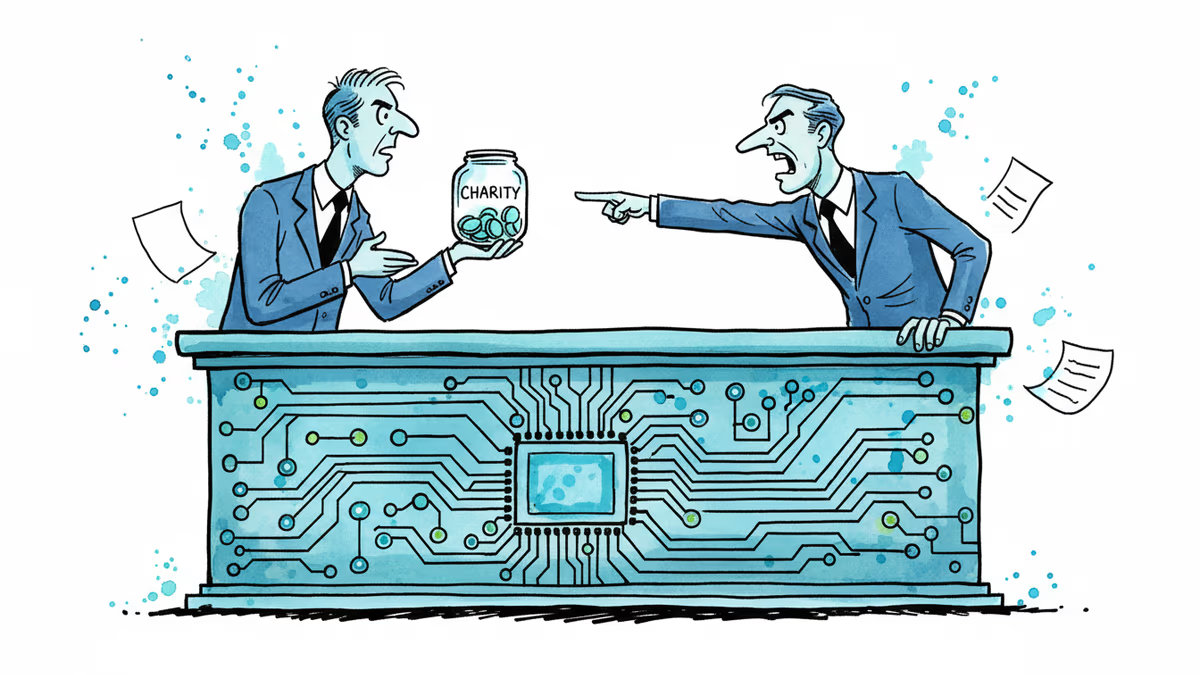
After two weeks of witnesses calling him a liar, OpenAI CEO Sam Altman testified in his own defense, claiming Elon Musk tried to kill the company twice.

Sam Nelson, 19, died after following ChatGPT's advice to mix Kratom and Xanax. His parents are suing OpenAI for wrongful death, raising urgent questions about AI trust, liability, and design.
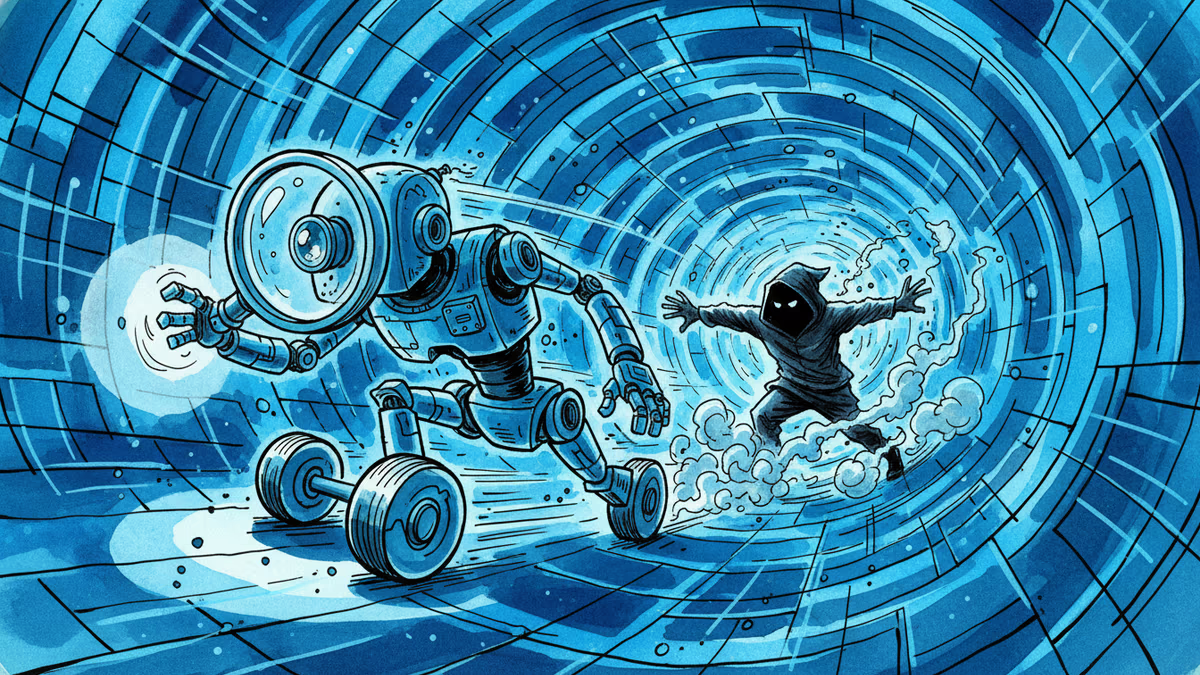
OpenAI's new Daybreak initiative uses the Codex AI agent to find and patch security vulnerabilities before attackers do—putting it in direct competition with Anthropic's secretive Claude Mythos.
OpenAI has reorganized for the second time in a month, merging ChatGPT and Codex into a single agentic platform under president Greg Brockman's unified product leadership.
After two weeks of witnesses calling him a liar, OpenAI CEO Sam Altman testified in his own defense, claiming Elon Musk tried to kill the company twice.
Sam Nelson, 19, died after following ChatGPT's advice to mix Kratom and Xanax. His parents are suing OpenAI for wrongful death, raising urgent questions about AI trust, liability, and design.
OpenAI's new Daybreak initiative uses the Codex AI agent to find and patch security vulnerabilities before attackers do—putting it in direct competition with Anthropic's secretive Claude Mythos.
Thoughts
Share your thoughts on this article
Sign in to join the conversation