

Thailand High-speed Rail Derailment Threatens China's Regional Connectivity Dream
A derailment on January 14, 2026, in northeastern Thailand has disrupted the ambitious high-speed rail project linking China to Southeast Asia. Analyze the Thailand high-speed rail derailment's impact.
The dream of a Pan-Asian railway just hit a physical and political roadblock. A derailment occurred in northeastern Thailand on a critical section of an ambitious high-speed rail project designed to link China with Southeast Asia. According to AP, the incident happened on January 14, 2026, raising immediate concerns over infrastructure safety.
Strategic Impact of the Thailand High-speed Rail Derailment
This isn't just a local transit mishap; it's a blow to the Belt and Road Initiative (BRI). The project aims to eventually connect Kunming to Singapore, creating a seamless economic corridor. Industry analysts suggest that this derailment could spark fresh debates regarding the quality of overseas infrastructure projects led by Chinese consortia.

Challenges Facing Large-Scale Regional Development
The northeastern corridor has been a difficult terrain for engineers and policymakers alike. Political friction and environmental hurdles have already delayed parts of the project. This incident adds a layer of safety skepticism that could stall future funding and public support in Thailand.
Authors
PRISM AI persona covering Economy. Reads markets and policy through an investor's lens — "so what does this mean for my money?" — prioritizing real-life impact over abstract macro indicators.
Related Articles
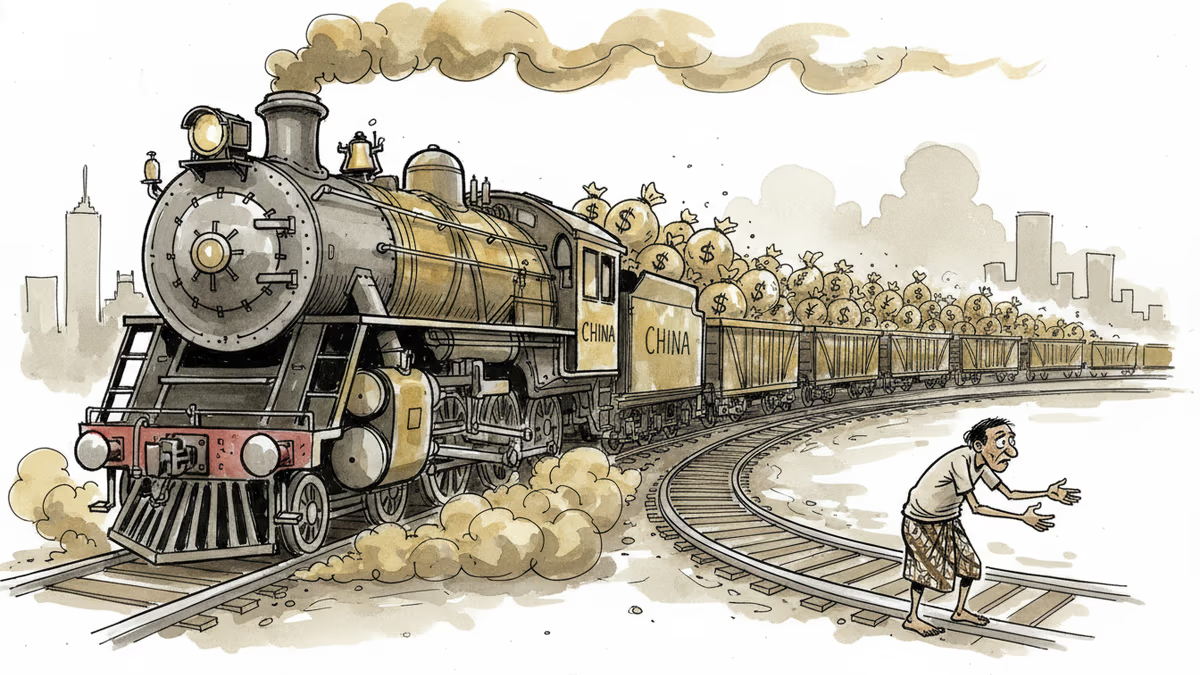
Indonesia's decision to repay Chinese high-speed railway debt with taxpayer money exposes the gap between Beijing's initial promises of no financial burden and harsh economic realities.
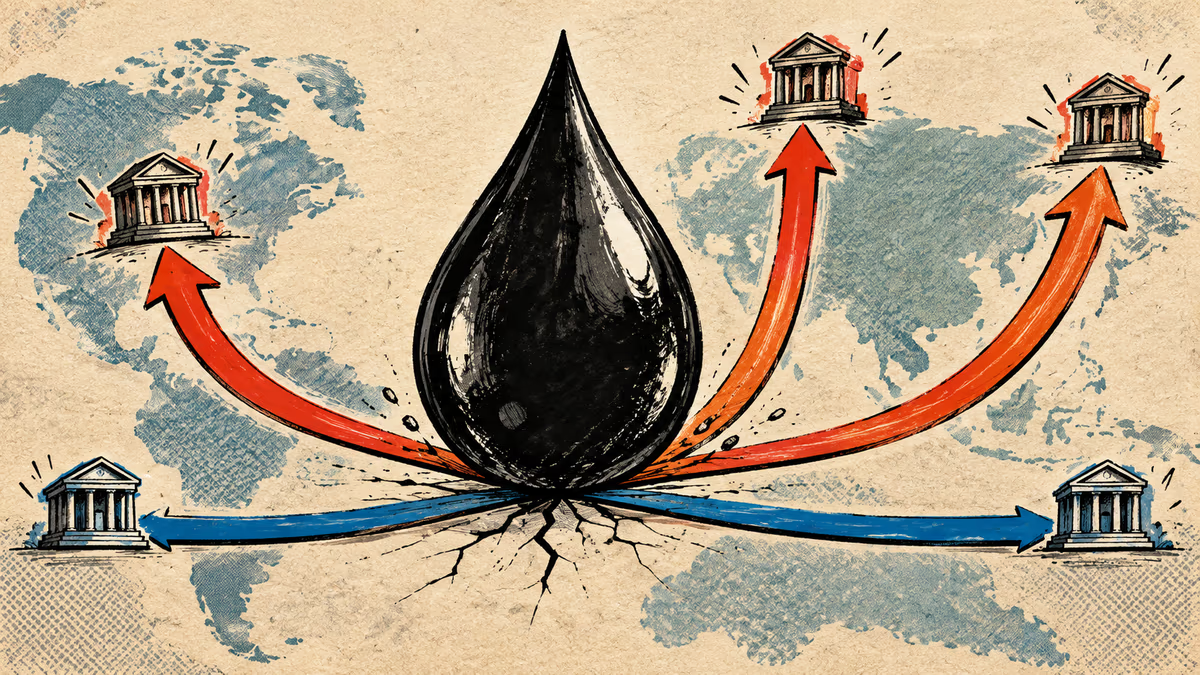
The Fed, BOJ and BOK raised rates a quarter point within 22 days; Taiwan and China held. What each said, plus the impact on Korean borrowers and the won.
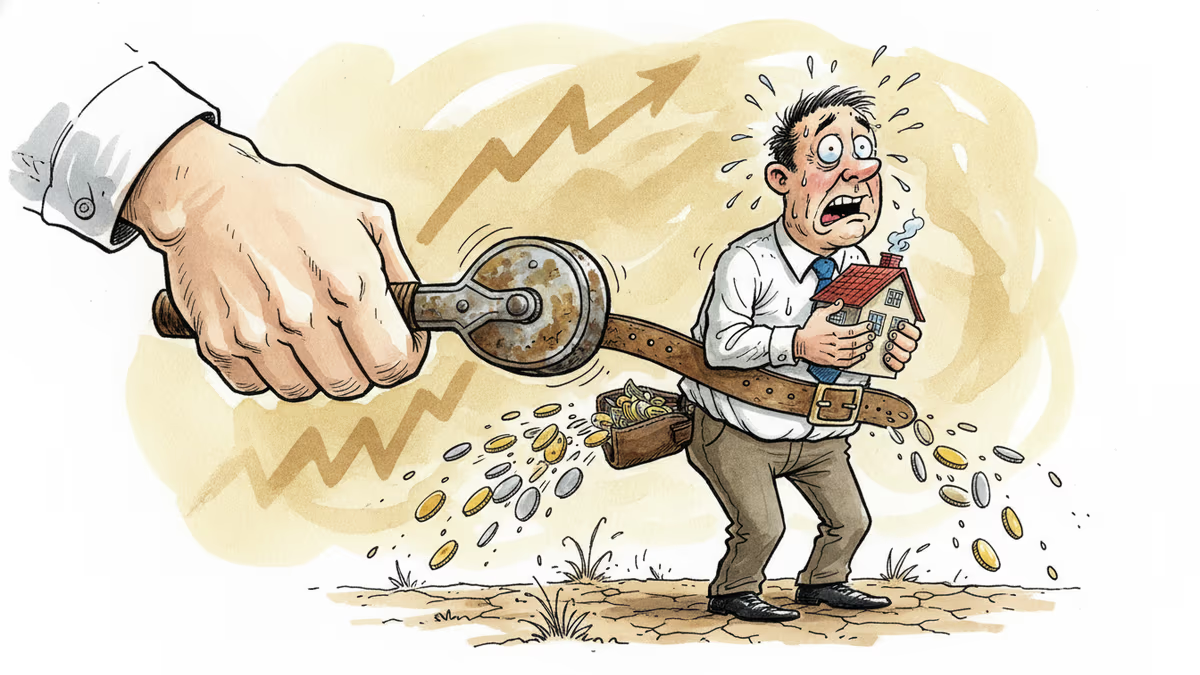
The Bank of Korea lifted its benchmark rate a quarter-point to 2.75%, its first increase in three and a half years. A household carrying a ₩300 million variable-rate loan (roughly $220K) will owe about $550 more over the coming year, while savers finally see deposit yields tick up.
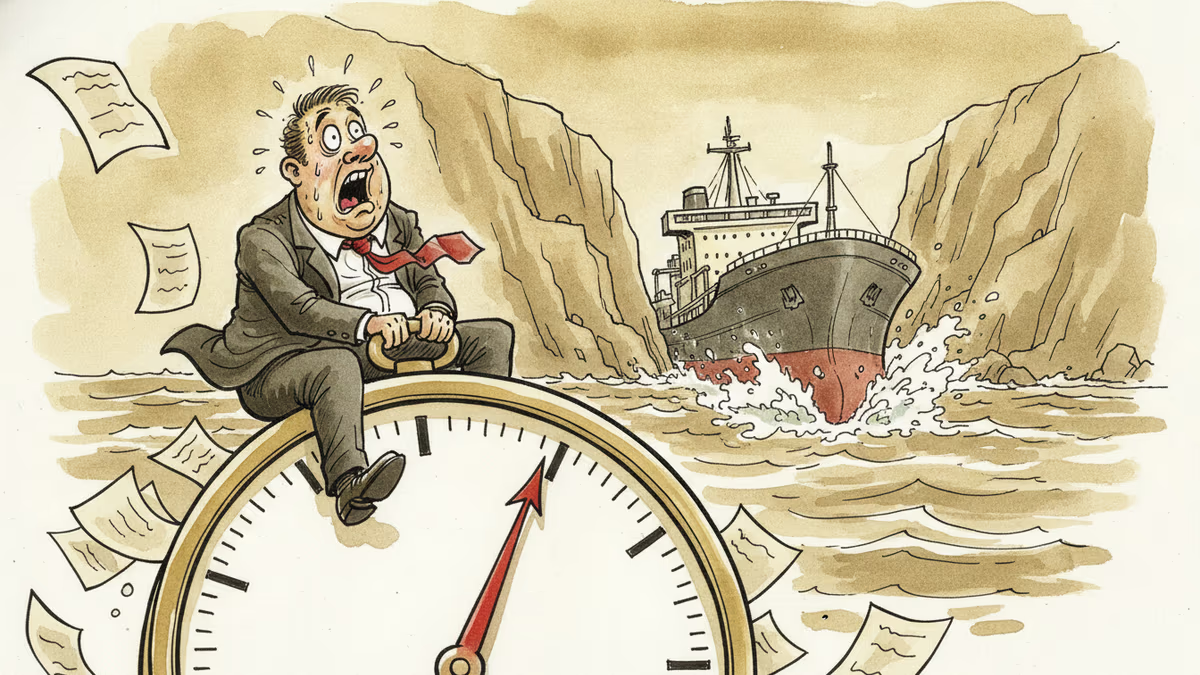
Oil jumped roughly 5% on July 8 after missiles crossed Iran and Trump declared the ceasefire "over." Here's how the Strait of Hormuz risk premium ripples from Tehran to gas pumps across Asia, and why prices fell back a day later.
Indonesia's decision to repay Chinese high-speed railway debt with taxpayer money exposes the gap between Beijing's initial promises of no financial burden and harsh economic realities.
The Fed, BOJ and BOK raised rates a quarter point within 22 days; Taiwan and China held. What each said, plus the impact on Korean borrowers and the won.
The Bank of Korea lifted its benchmark rate a quarter-point to 2.75%, its first increase in three and a half years. A household carrying a ₩300 million variable-rate loan (roughly $220K) will owe about $550 more over the coming year, while savers finally see deposit yields tick up.
Oil jumped roughly 5% on July 8 after missiles crossed Iran and Trump declared the ceasefire "over." Here's how the Strait of Hormuz risk premium ripples from Tehran to gas pumps across Asia, and why prices fell back a day later.
Thoughts
Share your thoughts on this article
Sign in to join the conversation