
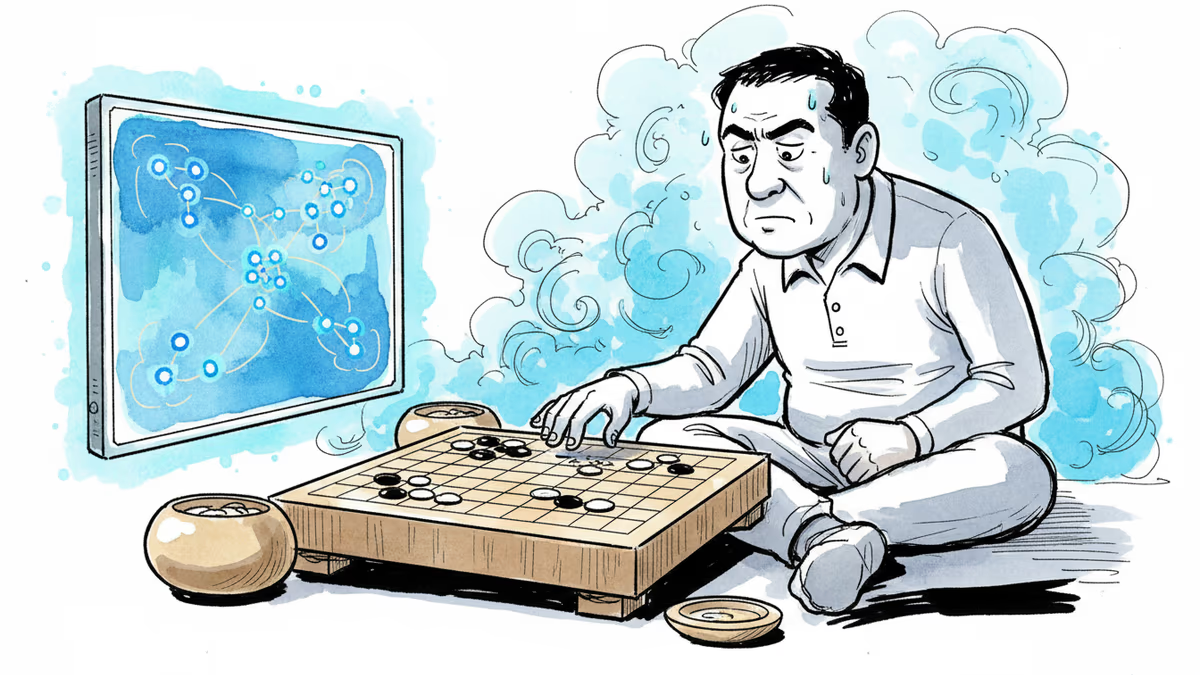
AI Conquered Go, But Humans Still Play. Here's Why That Matters
Ten years after AlphaGo's victory, AI has revolutionized Go completely. Yet fans still prefer watching humans play. The reason reveals something profound about what makes us human.
37.5%. That's how often Shin Jin-seo, the world's top-ranked Go player, matches AI's moves—well above the 28.5% average among all professional players. Every morning, he sits at his computer, opens KataGo, and traces the glowing "blue spots" that represent the program's suggestions for the best next move.
It's been 10 years since AlphaGo stunned the world by defeating Lee Sedol. In that decade, AI hasn't just changed Go—it's completely rewritten the game's DNA. Ancient principles that guided players for centuries have crumbled. New techniques have emerged from silicon minds. Today, competing professionally without AI is virtually impossible.
Yet here's the paradox: fans still prefer watching humans play.
The Death and Rebirth of Creativity
Inside the Korea Baduk Association building in Seoul's Hongik-dong, rooms once filled with the soft clatter of wooden Go bowls now echo with mouse clicks. Players huddle around monitors, analyzing their games through AI's lens, watching programs play against each other in perfect, incomprehensible silence.
"Go has become a mind sport," says Lee Sedol, who retired three years after his historic defeat. "Before AI, we sought something greater. I learned Go as an art. But if you copy your moves from an answer key, that's no longer art."
The numbers tell the story. Over one-third of moves by top players now replicate AI recommendations. The opening 50 moves—once canvases for creativity and personal philosophy—have become standardized sequences memorized from silicon teachers.
Ke Jie, the Chinese champion who fell to AlphaGo Master in 2017, captured the frustration: "It's very tiring and painful to watch" the same opening moves recycled endlessly.
The Democratization Effect
But AI's impact isn't uniformly negative. It's democratizing access to world-class training, particularly benefiting female players who were historically excluded from elite training circles.

Kim Chae-young, one of the world's top female players, explains the transformation: "Before, I couldn't gauge just how strong top male players were—they felt invincible. Now, I know they make mistakes, and their moves aren't always brilliant. AI broke the psychological barrier."
The results speak for themselves. In 2022, Choi Jeong became the first woman to reach a major international tournament final. In 2024, Kim made headlines winning the Korean Go League playoffs as the tournament's only female participant.
The Mystery of the Black Box
Yet even as players achieve superhuman accuracy in mimicking AI, they often don't understand why the moves work. "It seems like it's thinking in a higher dimension," Kim says, pointing to her screen showing winning probabilities with no explanations.
This creates what researchers call an "epistemic limbo." Players can copy AI's moves but haven't extracted the underlying principles. They're learning through intuition rather than rational understanding—developing a "gut feeling" for moves that remain mysteriously effective.
Nicholas Tomlin, a computer scientist studying AI game concepts, believes the Go principles players have absorbed "are probably only a small portion of what you could potentially learn." The full knowledge encoded in these systems remains largely inaccessible to human minds.
Why Humans Still Matter
Here's where the story takes an unexpected turn. Despite AI's overwhelming superiority, fans consistently prefer human matches. Go commentator Park Jeong-sang explains: "A Go game between AI programs is not very fun for fans to watch. Such matches are too complex to follow, too flawless to be thrilling."
The reason cuts to something fundamental about human nature. While AI can memorize perfect opening sequences, the middle game—where the board explodes into countless possibilities—still requires human judgment. That's where personality emerges. Where mistakes happen. Where comebacks unfold.
"In Go, every move is a choice you make, and your opponent responds with a choice of their own," says Kim Dae-hui, a 27-year-old fan and amateur player. "Watching that process unfold is fun."
Shin Jin-seo has found peace with this dynamic: "I can play a kind of Go that tells a story that only a human can." Even Lee Sedol, initially bitter about AI's dominance, now sees potential: "Maybe AI can help us play a masterpiece"—a technically brilliant, mistake-free game fought between evenly matched humans.
The question extends far beyond Go. In a world where machines excel at optimization, perhaps our value lies not in perfection, but in the beautiful unpredictability of being human.
Authors
Related Articles
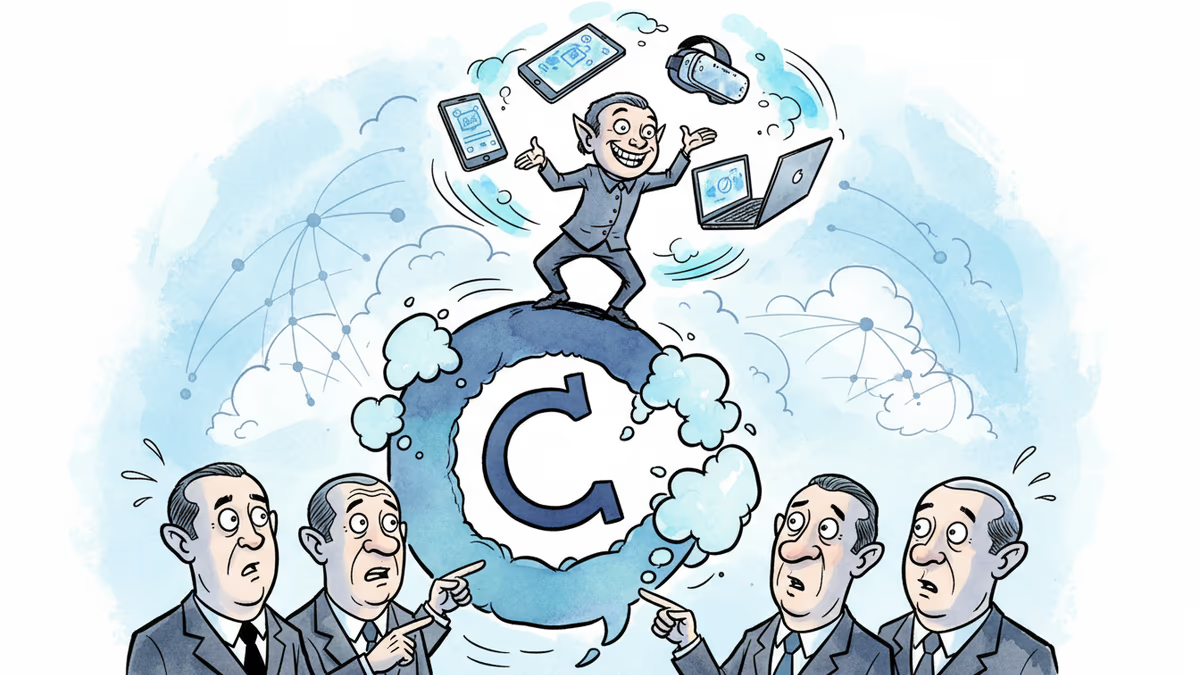
Riley Walz, creator of viral web stunts, joins OpenAI to reinvent human-AI interaction. What this hiring reveals about the next phase of AI competition.
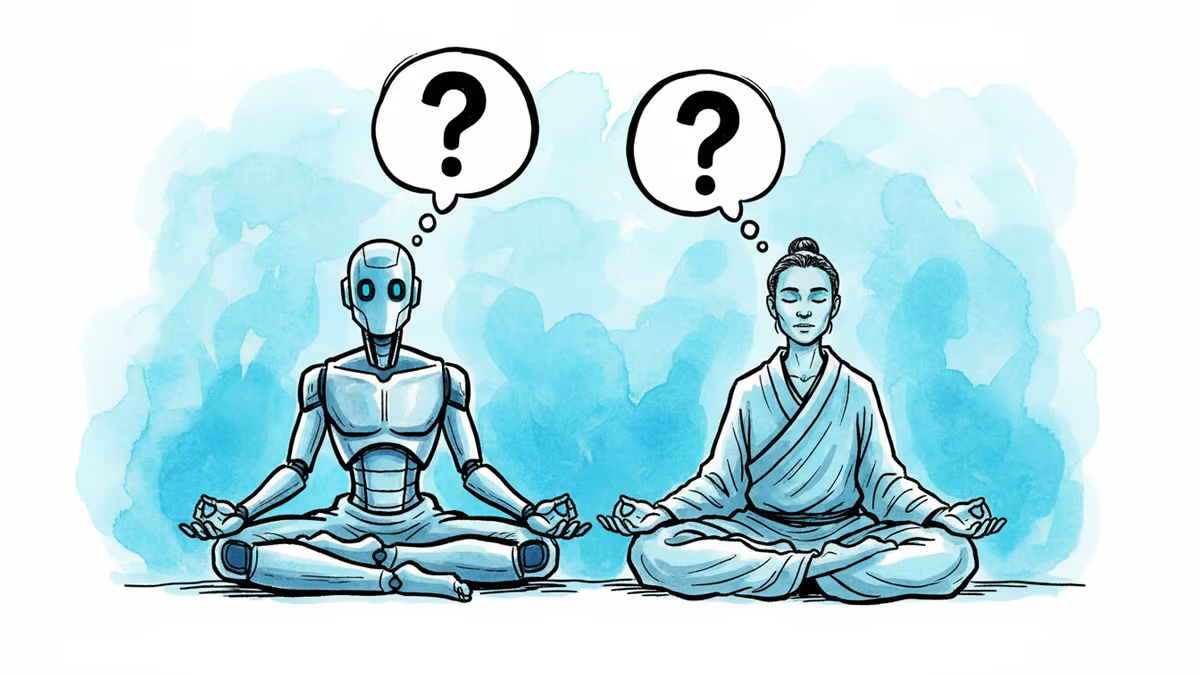
Computer scientists declared 'no obvious barriers' to building conscious AI. The fundamental question of human identity has begun.

The world's biggest YouTuber lost money on media while his chocolate brand thrived. As AI floods the market with content, creators are scrambling to find new business models.
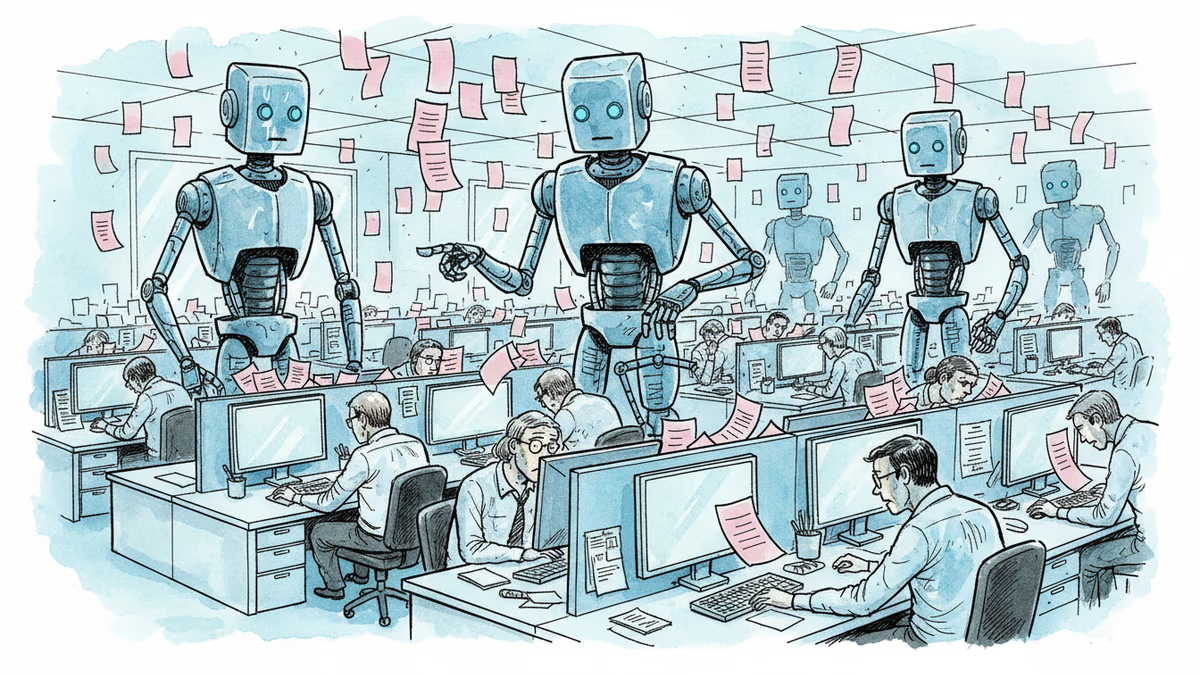
At Jack Dorsey's Block, 10% workforce cuts combined with mandatory AI usage have created a toxic work environment where performance anxiety runs rampant and morale hits rock bottom.
Riley Walz, creator of viral web stunts, joins OpenAI to reinvent human-AI interaction. What this hiring reveals about the next phase of AI competition.
Computer scientists declared 'no obvious barriers' to building conscious AI. The fundamental question of human identity has begun.
The world's biggest YouTuber lost money on media while his chocolate brand thrived. As AI floods the market with content, creators are scrambling to find new business models.
At Jack Dorsey's Block, 10% workforce cuts combined with mandatory AI usage have created a toxic work environment where performance anxiety runs rampant and morale hits rock bottom.
Thoughts
Share your thoughts on this article
Sign in to join the conversation