
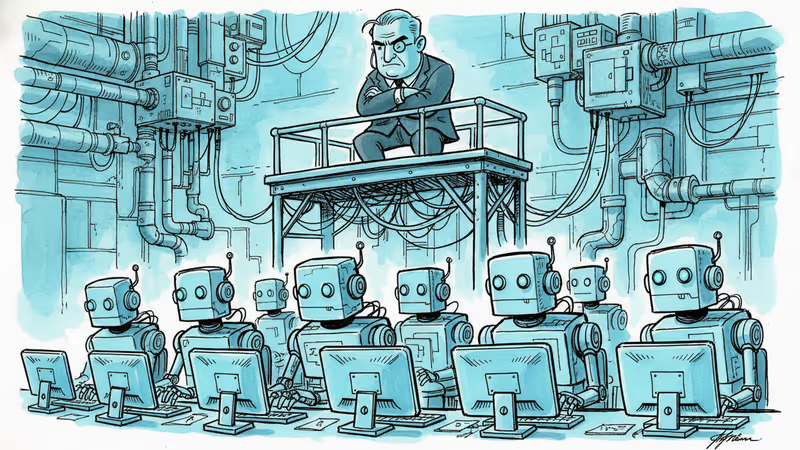
AI Agent Teams Are Here - Is the Solo Developer Era Over?
Anthropic and OpenAI simultaneously launch AI agent team features as software stocks lose $285 billion. Analyzing the reality of AI workforce replacement.
$285 billion vanished overnight. As software stocks crashed this week, Anthropic and OpenAI released eerily similar products on the same day. The era of chatting with a single AI assistant is over. Welcome to the age of AI agent teams that divide work and run in parallel.
The Synchronized AI Agent Launch
Anthropic unveiled Claude Opus 4.6 alongside "agent teams" in Claude Code. Developers can now spin up multiple AI agents that automatically split complex tasks, coordinate autonomously, and execute concurrently. OpenAI dropped a similar concept the same day, marking a clear industry shift.
This isn't just a product update—it's a fundamental reimagining of AI's role. We're moving from AI as a conversation partner to AI as a delegated workforce. Instead of asking questions and getting answers, we're assigning projects and receiving deliverables.
Yet reality hasn't caught up to the vision. Current AI agents still require heavy human intervention to catch errors and course-correct. No independent evaluation has confirmed that multi-agent tools reliably outperform a single skilled developer working alone.
Why Software Stocks Are Trembling
So why are both companies going all-in on agents despite the limitations? The market's reaction tells the story. Software stocks shed $285 billion in value this week as AI agent announcements rippled through the industry.
Investors are already pricing in the future. If AI can handle significant portions of software development, what happens to companies built on armies of human developers? The math is simple but brutal: why hire hundreds of engineers when a few AI supervisors might suffice?

This shift threatens the entire software services model. Companies that bill clients based on developer hours could see their business models evaporate. Meanwhile, firms that master AI agent coordination could deliver the same results at a fraction of the cost.
The Solo Developer's Dilemma
Developers face the most immediate impact. Junior developers handling routine coding tasks are particularly vulnerable. But this disruption cuts both ways—it's a crisis for some and an opportunity for others.
The developer skill set is rapidly evolving. Writing code becomes less important than orchestrating AI agents, designing complex systems, and making strategic technical decisions. Think less "code monkey," more "AI conductor."
Certain areas remain human territory: creative problem-solving, complex business logic implementation, and situations requiring nuanced judgment. The question isn't whether AI will replace developers entirely—it's which developers will adapt to become AI multipliers.
The Supervision Challenge
Here's the catch: someone still needs to manage these AI agent teams. Early adopters report that coordinating multiple AI agents can be more complex than doing the work yourself. Agents can work at cross-purposes, make conflicting assumptions, or produce code that doesn't integrate properly.
This creates a new role: the AI team lead. These professionals need deep technical knowledge plus the ability to break down complex projects into agent-friendly chunks. They're part project manager, part technical architect, part AI whisperer.
The companies that figure out this coordination challenge first will gain massive competitive advantages. They'll deliver faster, cheaper, and potentially better results than traditional development teams.
Authors
Related Articles
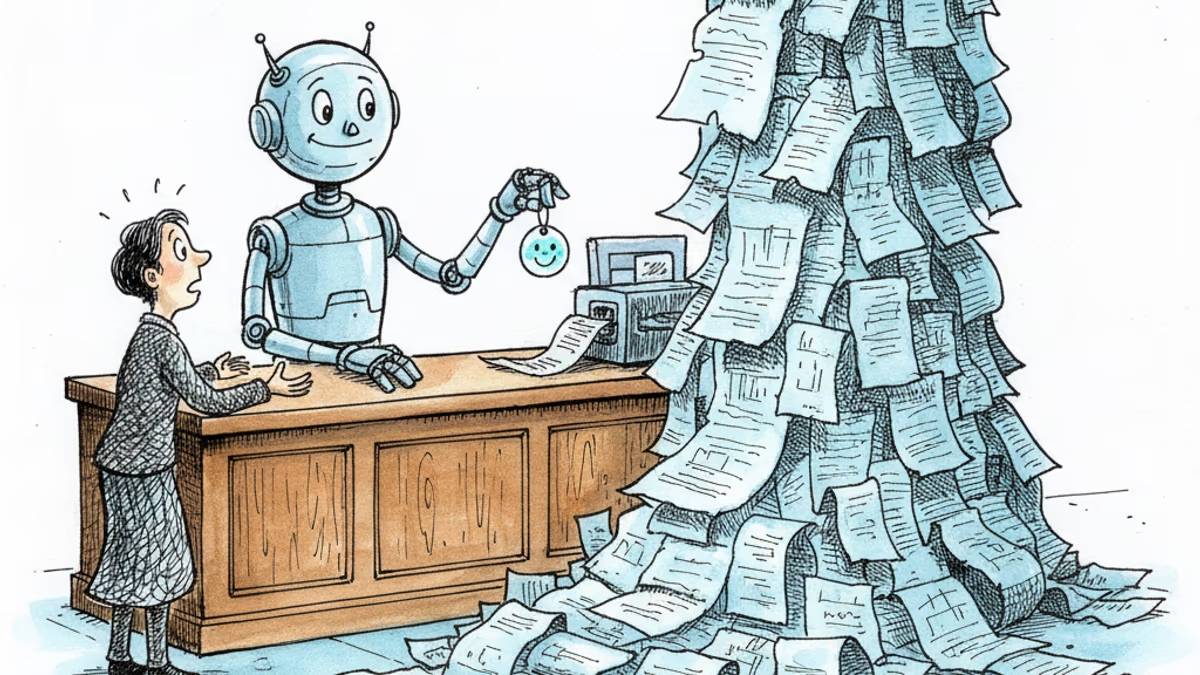
Anthropic shipped Claude Sonnet 5, its mid-tier agent model, on June 30. Behind the 'Opus-class power, budget price' headline sits a tokenizer catch and a three-horse race that's only half real. Here's what developers should actually run the numbers on.
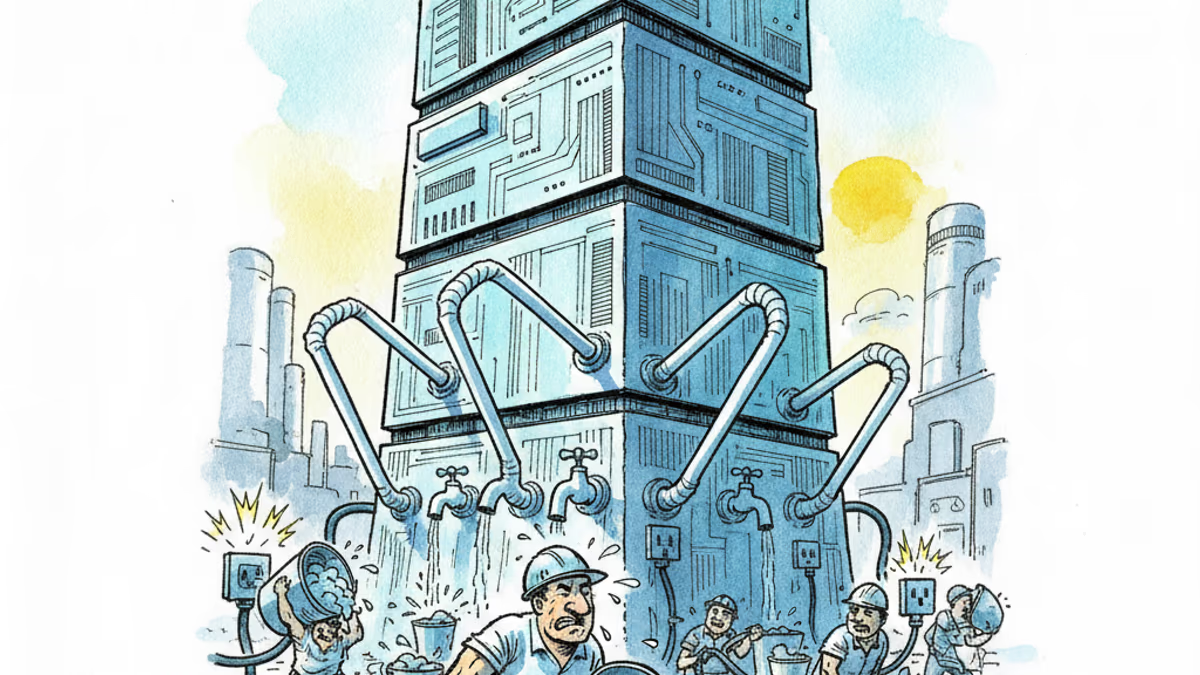
Samsung and SK unveiled a chip and AI investment package worth thousands of trillions of won on June 29. The headline number swings wildly by outlet, but the real contest isn't capital — it's water and power.
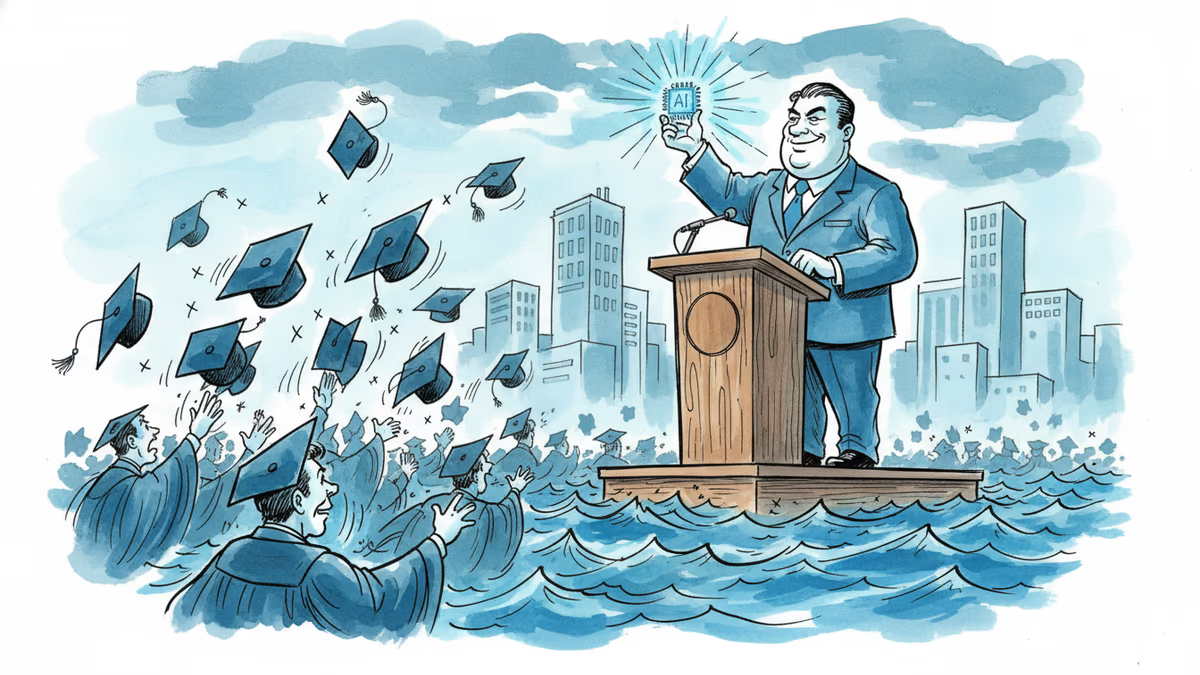
Viral videos show 2026 graduates jeering executives who praise AI at commencement ceremonies. It's not just rudeness — it's a signal about who pays for technological optimism.

Filipino virtual assistants using AI to ghost-manage LinkedIn profiles for executives is now a structured industry. 30 comments a day, fake engagement rings, and a platform struggling to tell real from fabricated.
Anthropic shipped Claude Sonnet 5, its mid-tier agent model, on June 30. Behind the 'Opus-class power, budget price' headline sits a tokenizer catch and a three-horse race that's only half real. Here's what developers should actually run the numbers on.
Samsung and SK unveiled a chip and AI investment package worth thousands of trillions of won on June 29. The headline number swings wildly by outlet, but the real contest isn't capital — it's water and power.
Viral videos show 2026 graduates jeering executives who praise AI at commencement ceremonies. It's not just rudeness — it's a signal about who pays for technological optimism.
Filipino virtual assistants using AI to ghost-manage LinkedIn profiles for executives is now a structured industry. 30 comments a day, fake engagement rings, and a platform struggling to tell real from fabricated.
Thoughts
Share your thoughts on this article
Sign in to join the conversation