
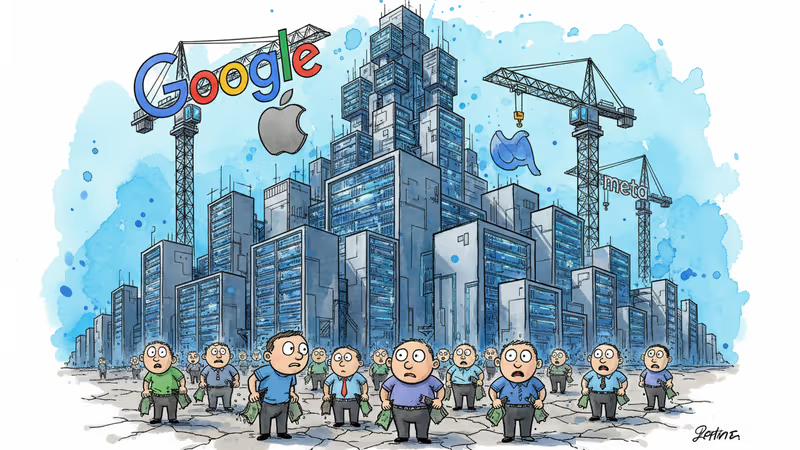
Big Tech's $200B AI Bet Leaves Investors Cold
Amazon pledges $200B for AI infrastructure, Google $175B, but stock prices tumble. Why investors are skeptical of tech's massive AI spending spree
$200 billion. That's what Amazon plans to spend on AI infrastructure in 2026 alone—a 52% jump from the previous year. Yet immediately after this massive spending announcement, Amazon's stock price dropped. The market's message was clear: we're not impressed.
The Great AI Arms Race
Big Tech's capital expenditure announcements read like a spending competition. Google projects $175-185 billion for 2026, nearly doubling from $91.4 billion last year. Meta plans $115-135 billion, while Microsoft is tracking toward roughly $150 billion based on current quarterly figures.
The logic seems straightforward: AI will transform high-end compute into tomorrow's scarcest resource. Only companies that control their own supply chains will survive. Build the most data centers, get the best AI products, guarantee victory.
But there's a problem with this thinking. Traditionally, businesses succeed by making more money and spending less—not the other way around.
Why Wall Street Isn't Buying It
Every major tech company saw its stock price tumble after announcing AI spending plans. The bigger the spend, the bigger the drop. This isn't just about companies like Meta that haven't figured out their AI monetization strategy yet. Even Microsoft and Amazon—with robust cloud businesses and clear paths to AI revenue—faced investor skepticism.

The numbers are simply too large for comfort. $200 billion exceeds the GDP of most countries. When will these investments pay off? Will they ever?
Oracle, once the poster child for AI infrastructure, projects a "measly" $50 billion—yet its more conservative approach might prove wiser.
The Compute Desert Theory
Tech executives believe we're heading toward a "compute desert"—a future where AI processing power becomes so valuable that only self-sufficient companies survive. This fear drives the frantic preparation we're seeing today.
But this assumes AI development follows a linear path where more compute always equals better results. What if breakthroughs in efficiency make today's massive data centers obsolete? What if regulatory changes reshape the competitive landscape?
A Different Kind of Bubble?
The current AI spending spree bears uncomfortable similarities to previous tech bubbles. The dot-com boom also featured massive infrastructure investments based on revolutionary potential. Many of those bets didn't pay off.
Yet dismissing AI entirely would be equally foolish. The technology is already transforming industries from healthcare to finance. The question isn't whether AI will matter—it's whether spending hundreds of billions today is the smartest way to capture that value.
Authors
Related Articles
Samsung and SK unveiled a chip and AI investment package worth thousands of trillions of won on June 29. The headline number swings wildly by outlet, but the real contest isn't capital — it's water and power.

Viral videos show 2026 graduates jeering executives who praise AI at commencement ceremonies. It's not just rudeness — it's a signal about who pays for technological optimism.

Google's Gmail Live lets you ask your inbox questions out loud. Announced at I/O 2026, it's AI's pitch to skeptics — and a reminder of how much Google already knows about you.

Filipino virtual assistants using AI to ghost-manage LinkedIn profiles for executives is now a structured industry. 30 comments a day, fake engagement rings, and a platform struggling to tell real from fabricated.
Samsung and SK unveiled a chip and AI investment package worth thousands of trillions of won on June 29. The headline number swings wildly by outlet, but the real contest isn't capital — it's water and power.
Viral videos show 2026 graduates jeering executives who praise AI at commencement ceremonies. It's not just rudeness — it's a signal about who pays for technological optimism.
Google's Gmail Live lets you ask your inbox questions out loud. Announced at I/O 2026, it's AI's pitch to skeptics — and a reminder of how much Google already knows about you.
Filipino virtual assistants using AI to ghost-manage LinkedIn profiles for executives is now a structured industry. 30 comments a day, fake engagement rings, and a platform struggling to tell real from fabricated.
Thoughts
Share your thoughts on this article
Sign in to join the conversation