
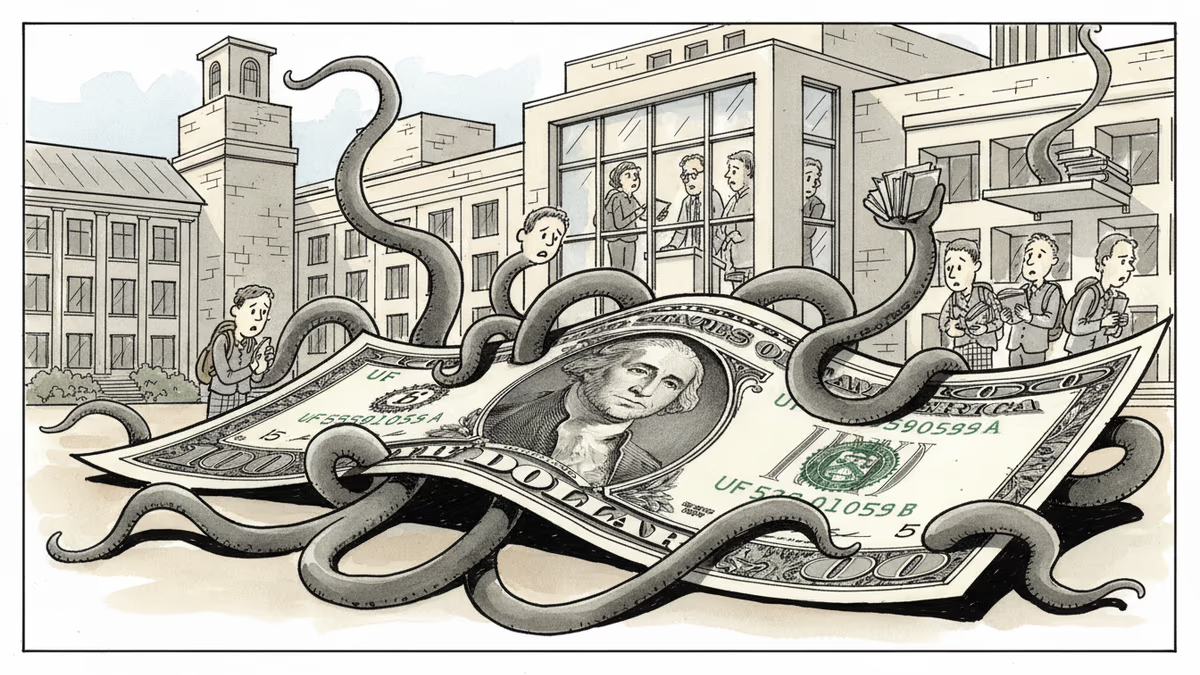
When Dirty Money Meets Ivory Towers: Epstein Files Shake US Academia
Newly released Epstein documents reveal extensive university ties, sparking campus protests and resignations. How deep does questionable funding go in higher education?
3 Million Documents, Countless Uncomfortable Questions
When the US Justice Department released 3 million new Jeffrey Epstein-related documents last month, it wasn't just another data dump. Hidden within those files were email exchanges that have turned American campuses upside down—from elite Ivy League institutions to small arts schools.
The correspondence reveals how deeply the convicted sex trafficker had penetrated academic circles, not through scholarly merit, but through strategic philanthropy. Now professors are resigning, students are protesting, and universities are scrambling to manage a crisis that cuts to the heart of higher education's funding model.
"You Are Incredible": When Art Meets Exploitation
At New York's School of Visual Arts, flyers appeared overnight: "ONE OF YOUR TEACHERS IS IN THE FILES." The target was David A. Ross, chair of the MFA Art Practice program, whose 2009 email exchange with Epstein has shocked the campus community.
Epstein had proposed an art exhibition titled "Statutory," featuring "girls and boys ages 14-25... where they look nothing like their true ages." His explanation was chilling: "Some people go to prison because they can't tell true age. controversial. fun." Ross's response? "You are incredible. This would be a very powerful and freaky book."
Ross resigned on February 3, claiming he believed Epstein's legal troubles were a "political frame-up." But the damage was done. Students who discovered their professor's connection through campus flyers are now questioning what else they don't know about their institution's funding sources.
The Price of Research: UCLA Professor Under Fire
Across the country at UCLA, neurology professor Mark Tramo faces a different kind of reckoning. A petition demanding his termination has gathered over 10,000 signatures, and he's been forced to conduct classes remotely for safety reasons.

The controversy centers on seemingly innocuous research communications that take on sinister undertones in context. Tramo's 2017 email about newborns and pacifiers—intended as research funding discussion—has been widely interpreted through the lens of Epstein's pedophilia. More damaging was a 2010 exchange where Epstein asked if student inquirers were "cute," and Tramo replied, "we'll see! (you're terrible!)."
Tramo had been seeking $500,000 from Epstein for "The Jeffrey Epstein Project for Brain Development in Critically-Ill Infants." While the project never materialized, Epstein did donate $100,000 to Tramo's institute in 2017.
The Faustian Bargain of Academic Funding
What emerges from these documents isn't just individual moral failures, but a systemic problem. Universities operate in a perpetual funding crisis, making them vulnerable to donors who ask few questions and expect little oversight in return.
Bonnie Goff, a UCLA psychology lecturer, captured the broader concern: "This is emblematic of things wrong with the art world and higher education as a whole," she said, noting both fields are "saturated with people with money and connections."
The pattern repeats across institutions: prestigious professors maintaining relationships with wealthy benefactors, often long after red flags should have prompted distance. Tramo continued corresponding with Epstein even after his 2008 conviction, writing supportively about staying "true to their friends through thick and thin."
Beyond Individual Scandals
These revelations raise uncomfortable questions about academic integrity in an era of declining public funding for higher education. When universities depend increasingly on private donors, how thoroughly do they vet benefactors? What happens when philanthropists turn out to have dark secrets?
The Daily Bruin editorial board put it bluntly: the situation "raises questions about ethical standards in university fundraising." But those standards remain largely unwritten, leaving institutions to navigate case-by-case crises rather than following clear guidelines.
Students and faculty are demanding answers not just about Epstein, but about the broader culture that enabled these relationships. As one anonymous SVA student noted, "the true extent of [Epstein's] influence is much larger than what we can read in the files."
Authors
Related Articles
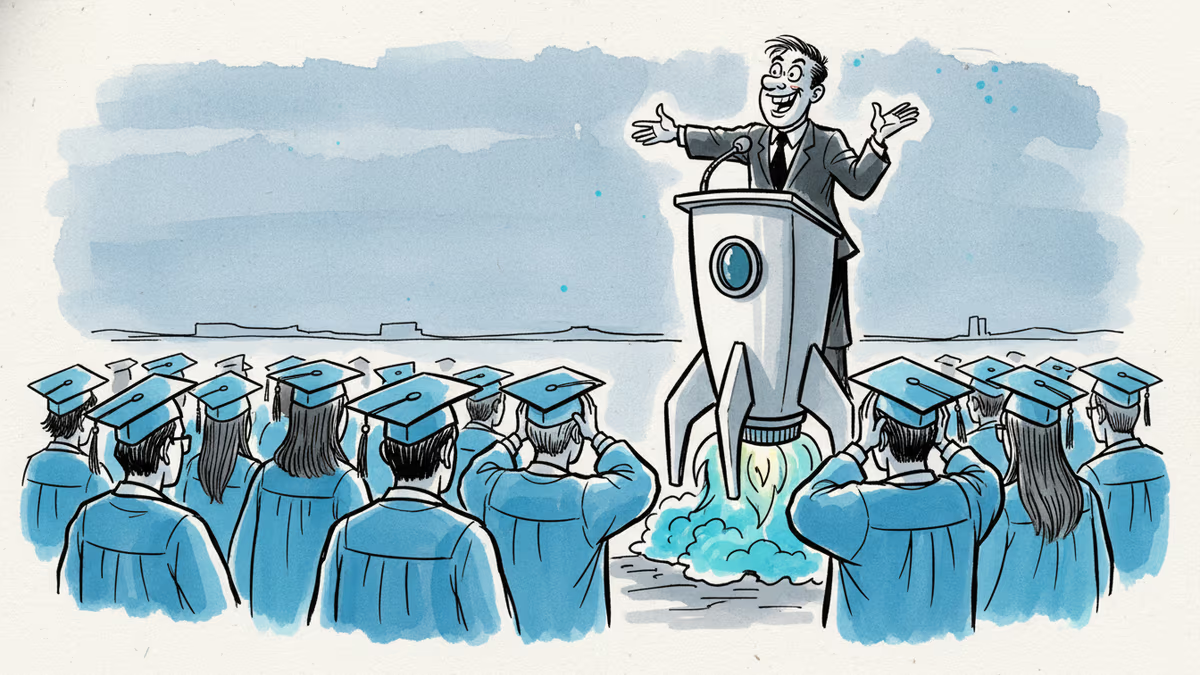
Two commencement speakers learned the hard way that AI enthusiasm doesn't land well with today's graduates. The backlash reveals a widening gap between tech optimism and Gen Z's economic reality.
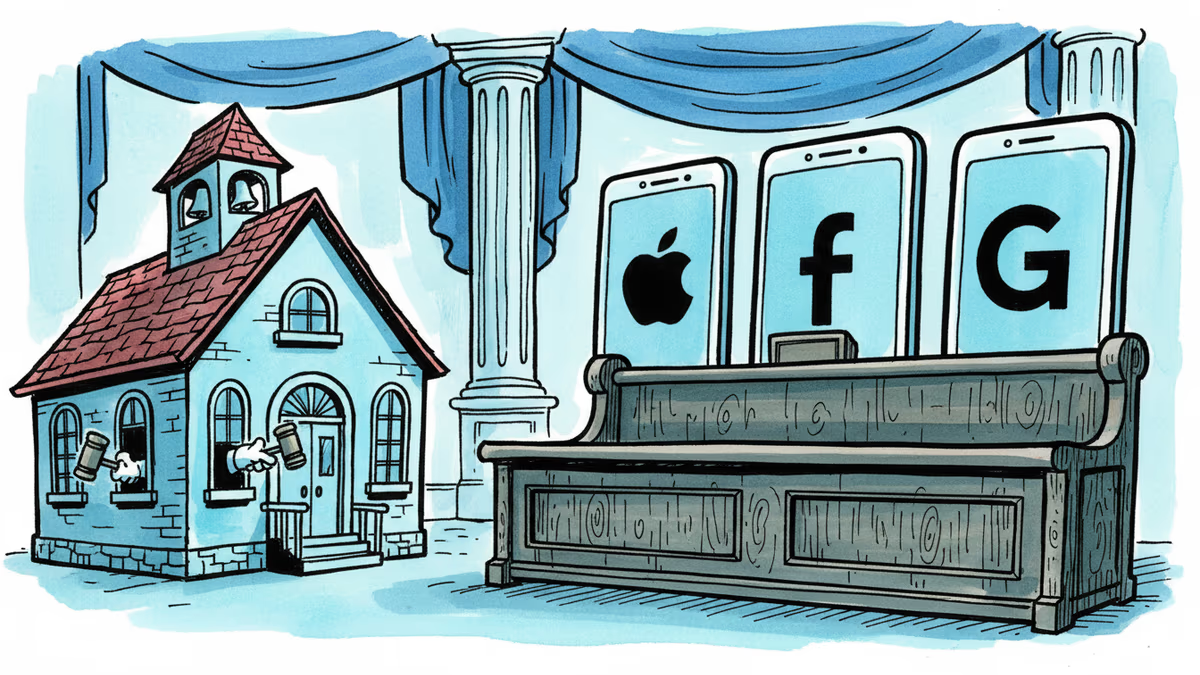
Snap, YouTube, and TikTok settled a landmark school district lawsuit over social media addiction. With 1,000+ similar cases pending, this could reshape Big Tech's liability landscape.
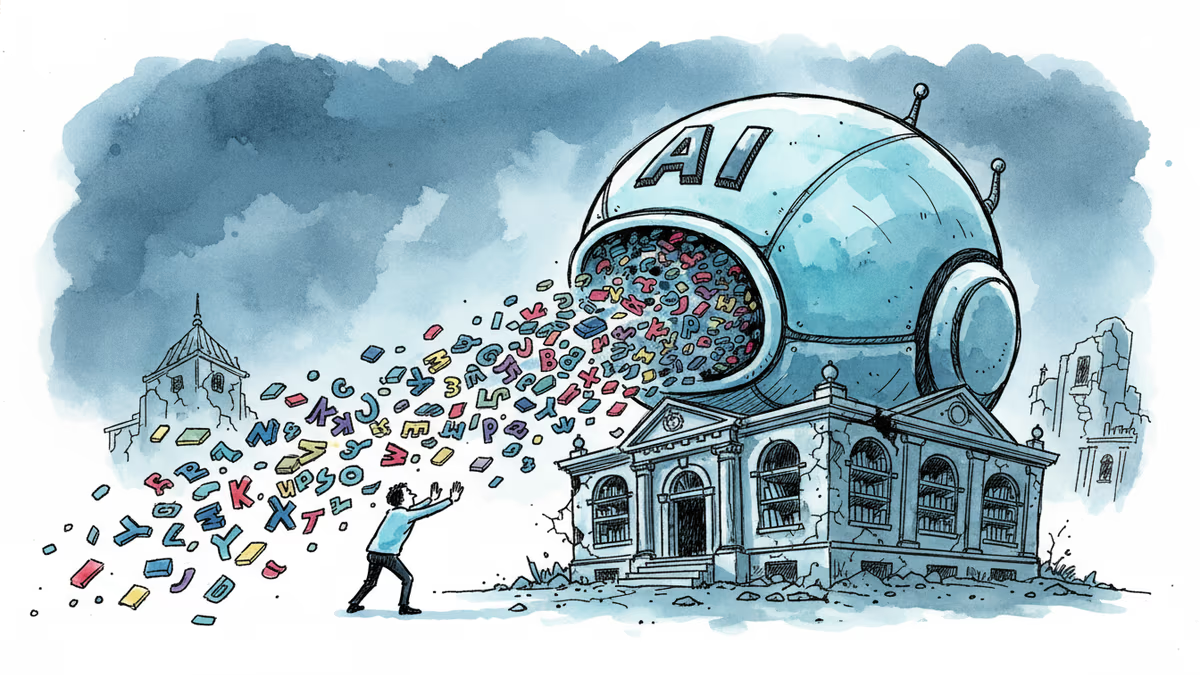
Machine-translated junk is flooding minority-language Wikipedia pages. AI learns from that junk. The result could accelerate the extinction of thousands of languages.

Stanford researchers analyzed chatbot transcripts to understand how AI conversations can spiral into dangerous obsessions. But the hardest question remains unanswered.
Two commencement speakers learned the hard way that AI enthusiasm doesn't land well with today's graduates. The backlash reveals a widening gap between tech optimism and Gen Z's economic reality.
Snap, YouTube, and TikTok settled a landmark school district lawsuit over social media addiction. With 1,000+ similar cases pending, this could reshape Big Tech's liability landscape.
Machine-translated junk is flooding minority-language Wikipedia pages. AI learns from that junk. The result could accelerate the extinction of thousands of languages.
Stanford researchers analyzed chatbot transcripts to understand how AI conversations can spiral into dangerous obsessions. But the hardest question remains unanswered.
Thoughts
Share your thoughts on this article
Sign in to join the conversation