
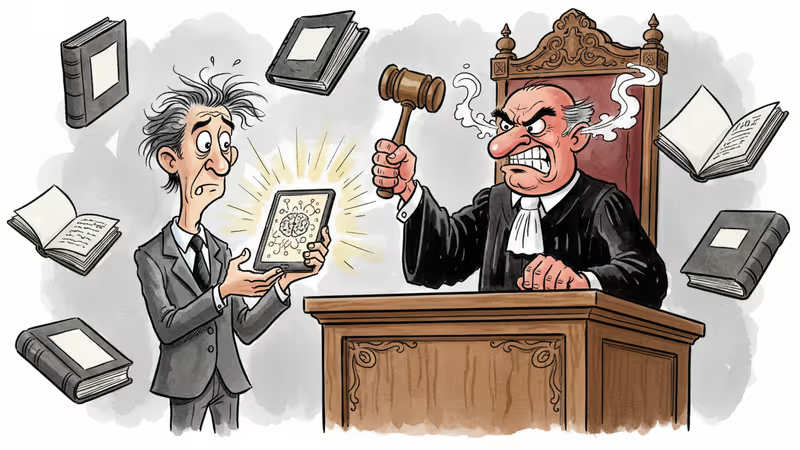
Judge Terminates Case Over Lawyer's AI Misuse
A New York federal judge took the extraordinary step of terminating a case due to a lawyer's repeated AI misuse, including fake citations and suspiciously flowery prose. What does this mean for the legal profession?
A New York federal judge didn't just slap a lawyer on the wrist for misusing AI—she terminated the entire case. It's the legal equivalent of throwing someone out of the game, not just giving them a penalty.
District Judge Katherine Polk Failla ruled Thursday that extraordinary sanctions were warranted after attorney Steven Feldman repeatedly submitted filings containing fabricated citations, despite multiple requests to correct them. The final straw? Documents that read more like ChatGPT than a seasoned lawyer.
When AI Writes Like Shakespeare (And You Don't)
One filing stood out for what Failla called its "conspicuously florid prose." While Feldman's other documents were riddled with grammatical errors and run-on sentences, this particular submission was stylistically polished—suspiciously so.
The document included random references to Ray Bradbury's Fahrenheit 451 and ancient libraries—the kind of "out-of-left-field" flourishes that scream AI generation. It was like watching someone who usually speaks in broken sentences suddenly deliver a Shakespearean soliloquy.
But the real problem wasn't the flowery language—it was the fake citations. Even after the judge repeatedly asked Feldman to correct his filings, he kept submitting documents referencing non-existent cases.
The Legal Profession's AI Reckoning
This isn't just about one lawyer's poor judgment. It's a wake-up call for the entire legal profession, which has been rapidly adopting AI tools without establishing clear guardrails.

Major law firms are already using AI for document review, contract analysis, and legal research. The technology can process thousands of documents in minutes and identify relevant precedents faster than any human. But it can also fabricate convincing-sounding case names and legal principles that don't exist.
The problem is verification. AI doesn't understand truth the way humans do—it understands patterns and probabilities. When it generates a citation, it's not pulling from a database of real cases; it's creating something that looks like a real citation based on the patterns it learned.
Beyond Legal: A Professional Credibility Crisis
This case highlights a broader challenge facing all professions as AI becomes ubiquitous. Doctors are using AI for diagnosis, financial advisors for investment strategies, and journalists for research and writing. But who's responsible when the AI gets it wrong?
The legal profession has always been built on precedent and accuracy. A single fabricated citation can undermine an entire argument—and potentially a client's case. In medicine, an AI hallucination could lead to misdiagnosis. In finance, it could result in poor investment advice.
The Feldman case suggests that professional responsibility doesn't diminish just because AI was involved. If anything, it increases the burden on professionals to verify AI-generated content more rigorously.
The Human-AI Partnership Problem
The irony is that AI could make lawyers more effective—if used properly. It can help identify relevant cases, draft initial arguments, and spot patterns in large datasets. But it requires human oversight, fact-checking, and professional judgment.
Younger lawyers, who are more comfortable with technology, might be particularly vulnerable to over-relying on AI. They may lack the experience to immediately spot when something seems off, or they might trust the technology too much.
Law schools are now scrambling to update their curricula to include AI ethics and proper usage guidelines. But the technology is evolving faster than educational institutions can adapt.
Authors
Related Articles
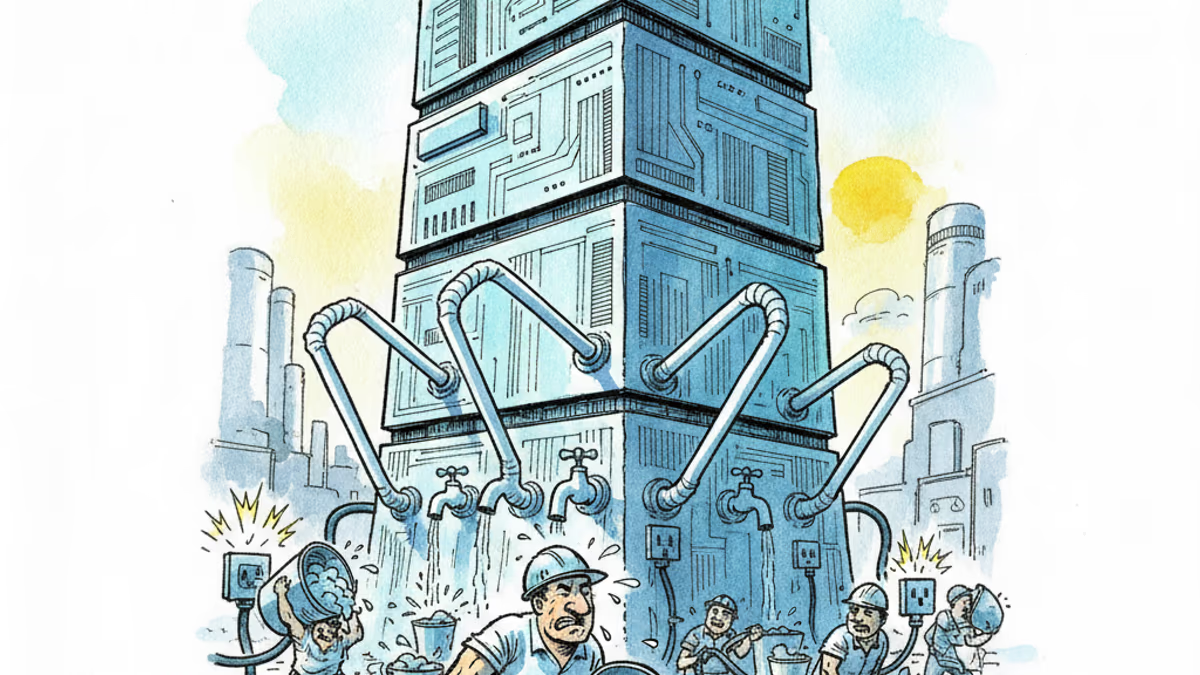
Samsung and SK unveiled a chip and AI investment package worth thousands of trillions of won on June 29. The headline number swings wildly by outlet, but the real contest isn't capital — it's water and power.
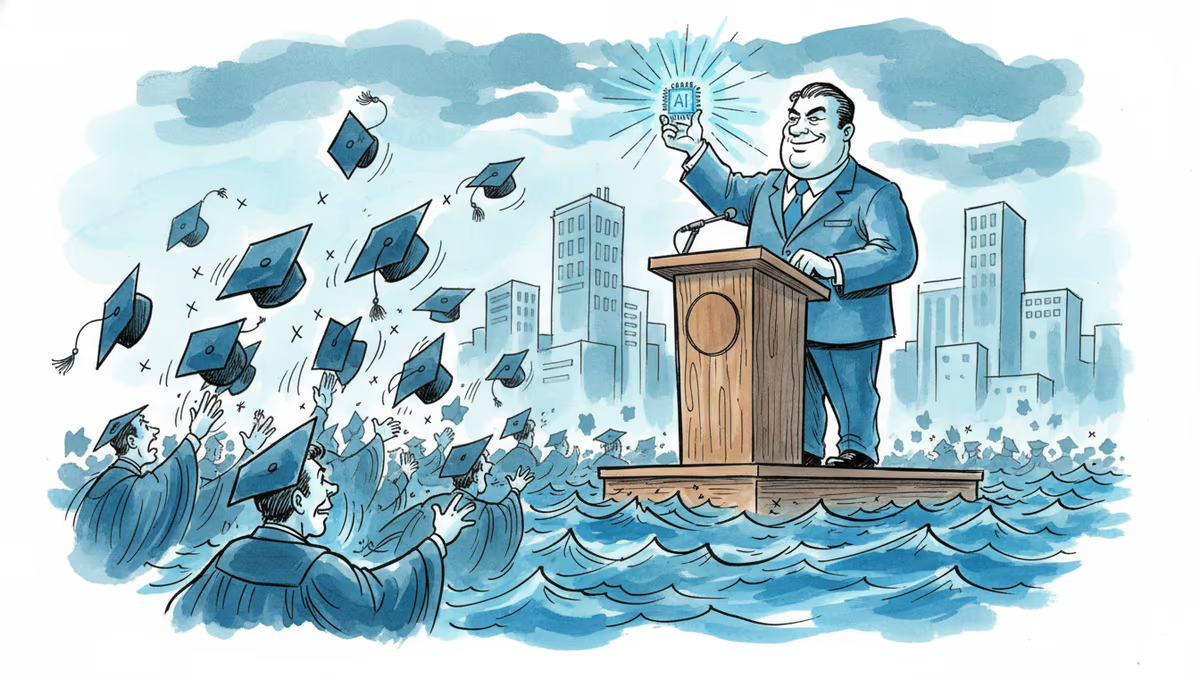
Viral videos show 2026 graduates jeering executives who praise AI at commencement ceremonies. It's not just rudeness — it's a signal about who pays for technological optimism.
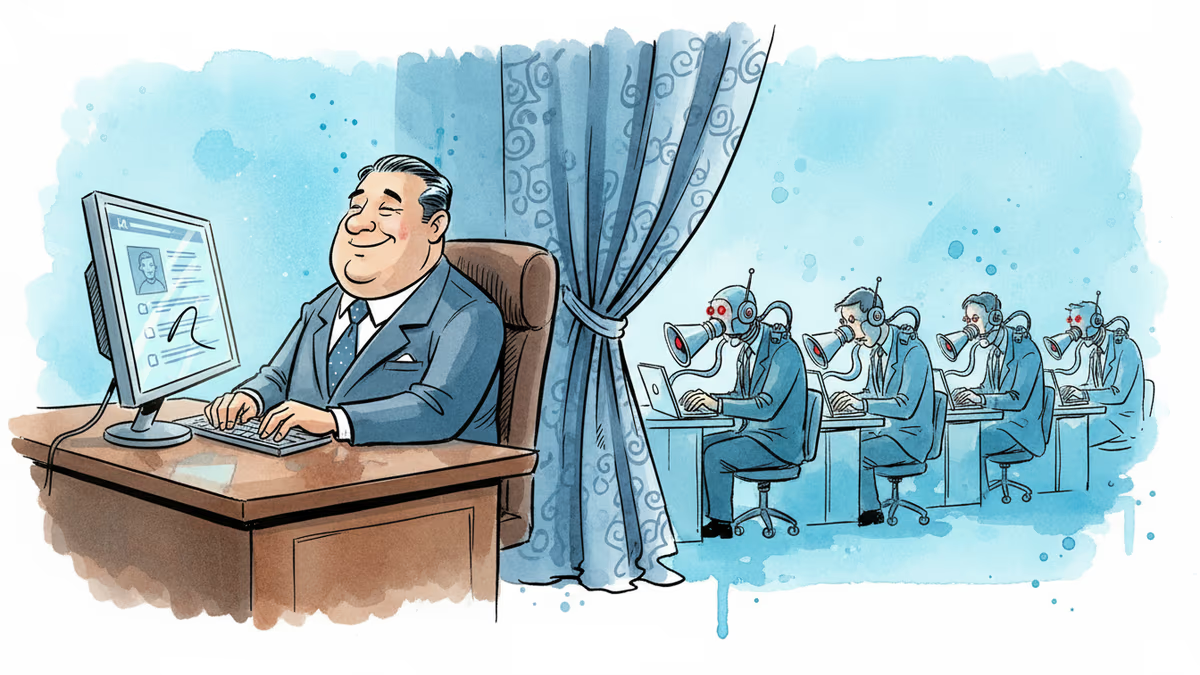
Filipino virtual assistants using AI to ghost-manage LinkedIn profiles for executives is now a structured industry. 30 comments a day, fake engagement rings, and a platform struggling to tell real from fabricated.
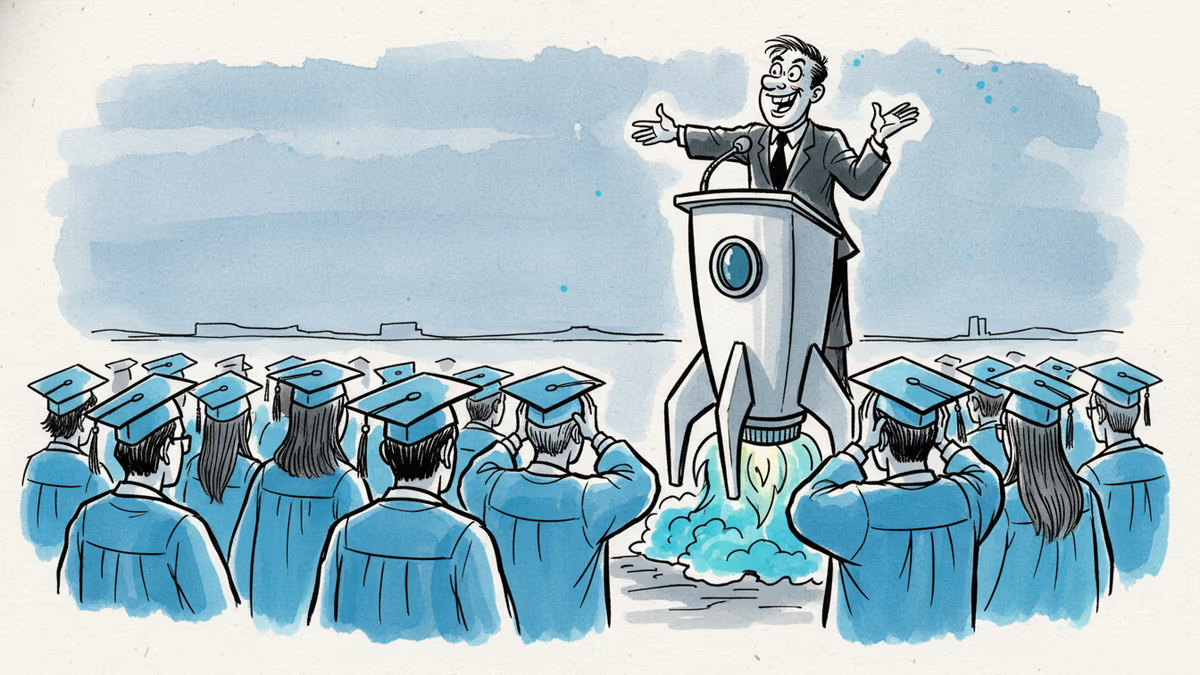
Two commencement speakers learned the hard way that AI enthusiasm doesn't land well with today's graduates. The backlash reveals a widening gap between tech optimism and Gen Z's economic reality.
Samsung and SK unveiled a chip and AI investment package worth thousands of trillions of won on June 29. The headline number swings wildly by outlet, but the real contest isn't capital — it's water and power.
Viral videos show 2026 graduates jeering executives who praise AI at commencement ceremonies. It's not just rudeness — it's a signal about who pays for technological optimism.
Filipino virtual assistants using AI to ghost-manage LinkedIn profiles for executives is now a structured industry. 30 comments a day, fake engagement rings, and a platform struggling to tell real from fabricated.
Two commencement speakers learned the hard way that AI enthusiasm doesn't land well with today's graduates. The backlash reveals a widening gap between tech optimism and Gen Z's economic reality.
Thoughts
Share your thoughts on this article
Sign in to join the conversation