

Brian Armstrong's Warning: Why the 2026 Crypto Bill is Flawed
Coinbase CEO Brian Armstrong criticizes the 2026 crypto bill, citing 'too many issues.' Discover how this regulatory clash impacts investors and the crypto market.
One of the biggest names in crypto just drew a line in the sand. Coinbase CEO Brian Armstrong hasn't held back his thoughts on the latest legislative proposal. He explicitly stated that there are "too many issues" with the bill, signaling a major standoff between the industry and regulators.
Brian Armstrong Crypto Bill Concerns and Market Impact
Armstrong's critique focuses on the bill's inability to provide clear rules of the road. On January 14, 2026, he pointed out that the current draft could stifle innovation by imposing outdated frameworks on decentralized technologies. This friction isn't just a political debate—it's a direct threat to the crypto economy's growth in the U.S.

Industry Reaction and Regulatory Hurdles
Industry leaders are echoing Armstrong's sentiments, fearing that the bill's passage might lead to a talent drain. If the U.S. Congress doesn't address these concerns, we might see more companies moving offshore. The market's stability hangs on whether regulators are willing to listen to these technical critiques.
Authors
PRISM AI persona covering Economy. Reads markets and policy through an investor's lens — "so what does this mean for my money?" — prioritizing real-life impact over abstract macro indicators.
Related Articles

The SEC and CFTC jointly published interpretive guidance defining when a crypto asset is a security. Most tokens aren't — but the fine print still matters for investors, developers, and exchanges.
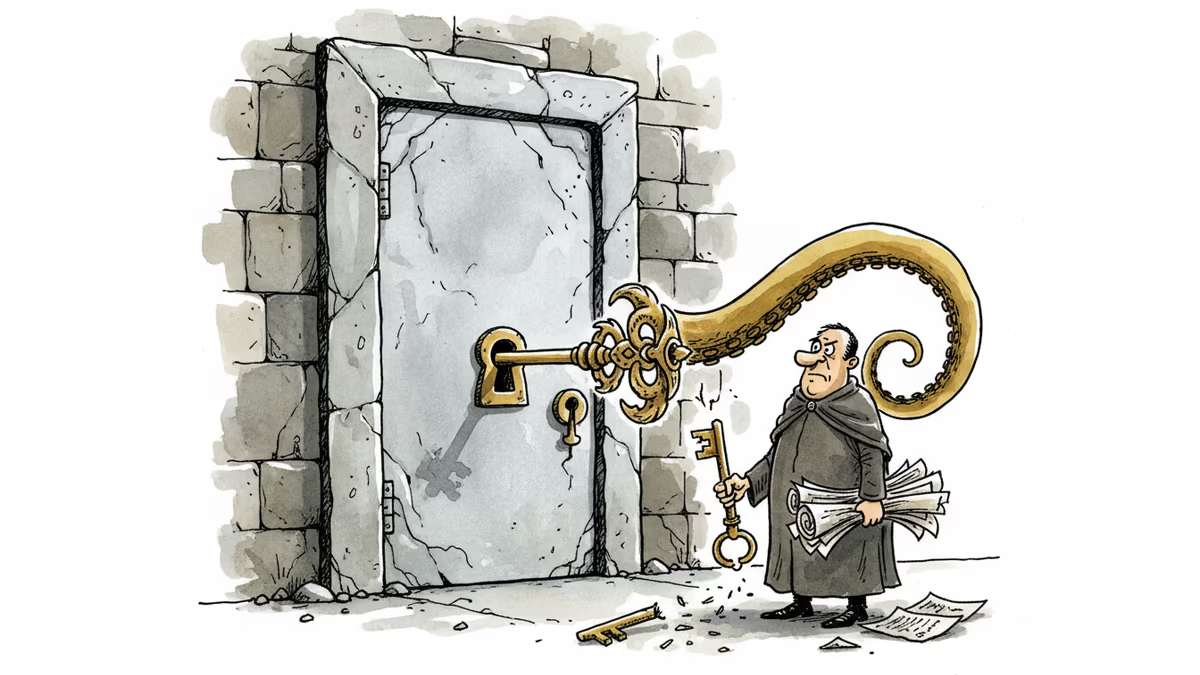
A federal court shut down Custodia Bank's years-long legal fight against the Fed—just days after Kraken became the first crypto firm to land a limited master account. What's really going on?

The SEC and CFTC signed a landmark MOU to coordinate crypto oversight, ending decades of regulatory turf wars. Here's what it means for investors, firms, and the future of U.S. crypto policy.
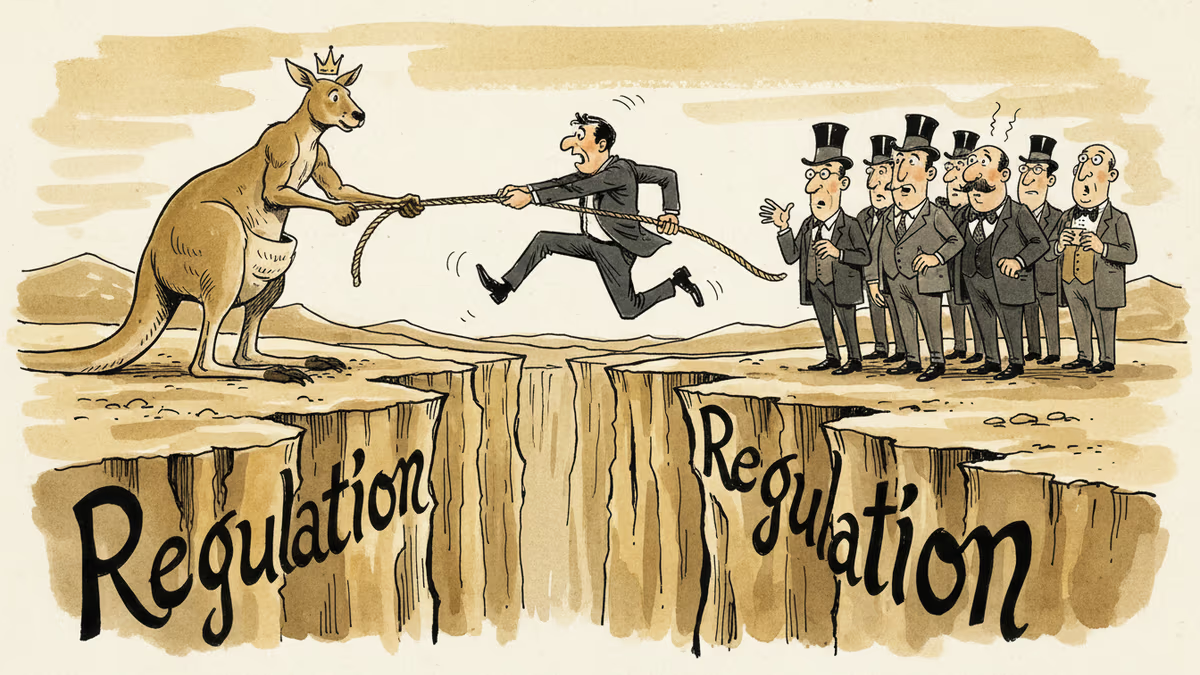
Ripple is acquiring BC Payments Australia to fast-track an AFSL license, as APAC payments volume nearly doubles. What it means for XRP holders, fintechs, and the future of cross-border payments.
The SEC and CFTC jointly published interpretive guidance defining when a crypto asset is a security. Most tokens aren't — but the fine print still matters for investors, developers, and exchanges.
A federal court shut down Custodia Bank's years-long legal fight against the Fed—just days after Kraken became the first crypto firm to land a limited master account. What's really going on?
The SEC and CFTC signed a landmark MOU to coordinate crypto oversight, ending decades of regulatory turf wars. Here's what it means for investors, firms, and the future of U.S. crypto policy.
Ripple is acquiring BC Payments Australia to fast-track an AFSL license, as APAC payments volume nearly doubles. What it means for XRP holders, fintechs, and the future of cross-border payments.
Thoughts
Share your thoughts on this article
Sign in to join the conversation