
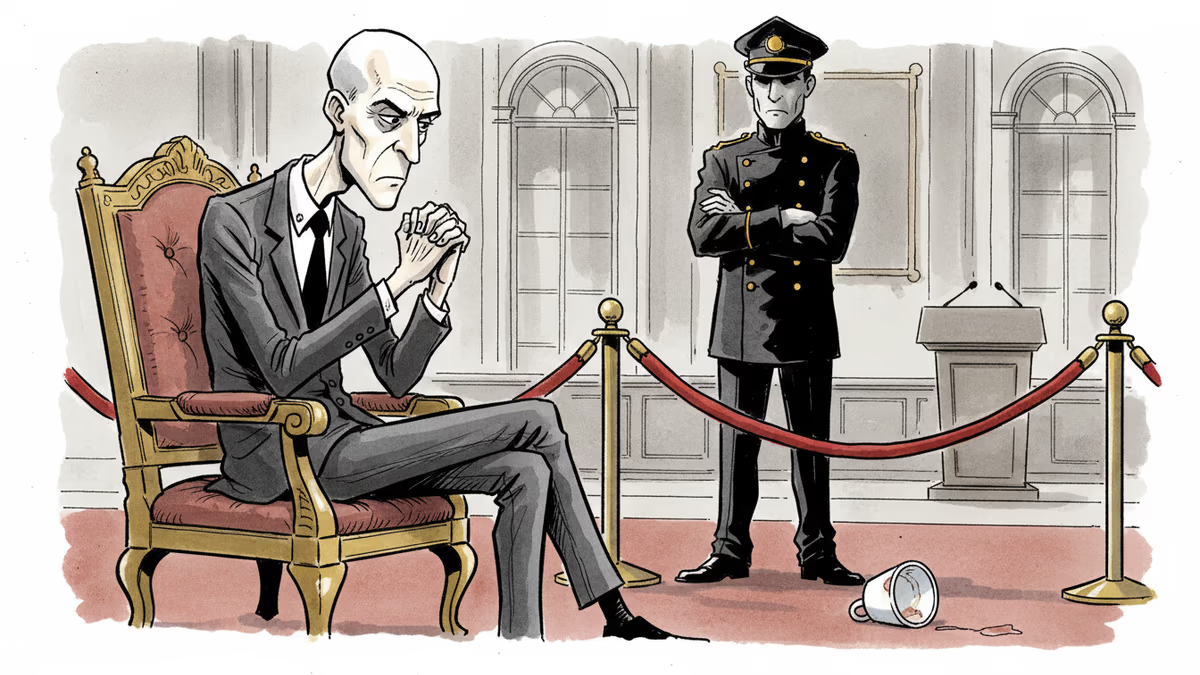
No Coffee, No Movement: What a Pentagon Briefing Reveals
On Day 13 of America's war with Iran, a tech reporter sits in a Pentagon briefing room, unable to move without an escort or bring in a cup of coffee. What does that tell us?
Day 13 of a war. A reporter wakes at 5AM and can't get a coffee. That's not a complaint — it's a data point.
The rule is simple: no outside beverages past Pentagon security. The security cutoff for the 8AM briefing was 7AM. And since Defense Secretary Pete Hegseth changed the access rules last year, journalists cannot move anywhere inside the building without an escort — including to wherever the coffee might be.
This is a small thing. It is also not a small thing at all.
What's Actually Happening in That Briefing Room
The United States launched military operations against Iran 13 days ago. The details of how, why, and with what authorization remain contested in Washington. What's less contested is the media environment that has formed around the conflict.
A reporter from The Verge — a technology publication — found themselves seated in one of the prime spots in the Pentagon briefing room. By their own admission, they've never covered a war. They weren't entirely sure why they were there.
That detail is worth sitting with. The Pentagon briefing room has a fixed number of good seats. Who fills them shapes which questions get asked on the record, which outlets drive the official narrative cycle, and ultimately, what the public knows about an ongoing war.
The Architecture of Managed Information
Wartime press management isn't new. During the Gulf War, the U.S. military introduced the pool system — a small group of reporters granted limited front-line access while the rest were held in briefing rooms. During the Iraq invasion, the embed model attached journalists directly to military units, trading independence for proximity.

The pattern across all these systems is the same: don't block information entirely — manage its flow.
What's different this time is that the restrictions were already in place before the war started. Hegseth's rule changes — mandatory escorts, restricted movement, tightened access — were implemented during peacetime. When the conflict began, the infrastructure for information control was already built.
A reporter who can't walk to the coffee machine without permission is a reporter who cannot wander into an unexpected conversation, stumble onto a source, or ask an unscheduled question.
Three Ways to Read This
From the Pentagon's perspective, the logic is defensible. Operational security is real. Uncontrolled information flow during active military operations can cost lives. The argument that some wartime restrictions are necessary has genuine merit.
From a press freedom perspective, the concern isn't any single rule — it's the cumulative effect. When journalists can only be where they're escorted, only hear what's offered at a briefing, and only access sources through official channels, the resulting coverage reflects the institution's preferred narrative by default, not by intent.
From a news consumer's perspective, the question becomes: what are you actually reading? War coverage that originates entirely from controlled briefing rooms carries a structural bias that no individual journalist's integrity can fully overcome. The constraint is architectural, not personal.
Why a Tech Reporter in a War Briefing Matters
The presence of The Verge in that room isn't random. Traditional national security press corps — outlets with decades of Pentagon relationships and beat reporters who know where the coffee is — have seen their access reconfigured under the current administration. The reshuffling of who gets the good seats is itself a form of press management.
A tech reporter, however skilled, brings different institutional knowledge, different source networks, and different questions than a defense correspondent. That's not a criticism of the reporter. It's an observation about what the room is designed to produce.
Authors
Related Articles
A gunman attacked a Secret Service checkpoint at the White House Correspondents' Dinner. Trump's first public reaction wasn't about security. It was about his $400M ballroom project.
Hours after an armed suspect attempted to breach the White House Correspondents Dinner, Trump used the security scare to publicly defend his White House ballroom project. What does that tell us?
A California judge blocked the Pentagon from labeling Anthropic a supply chain risk. The 43-page ruling exposes a pattern: tweet first, lawyer later. What it means for AI governance and the limits of government leverage.
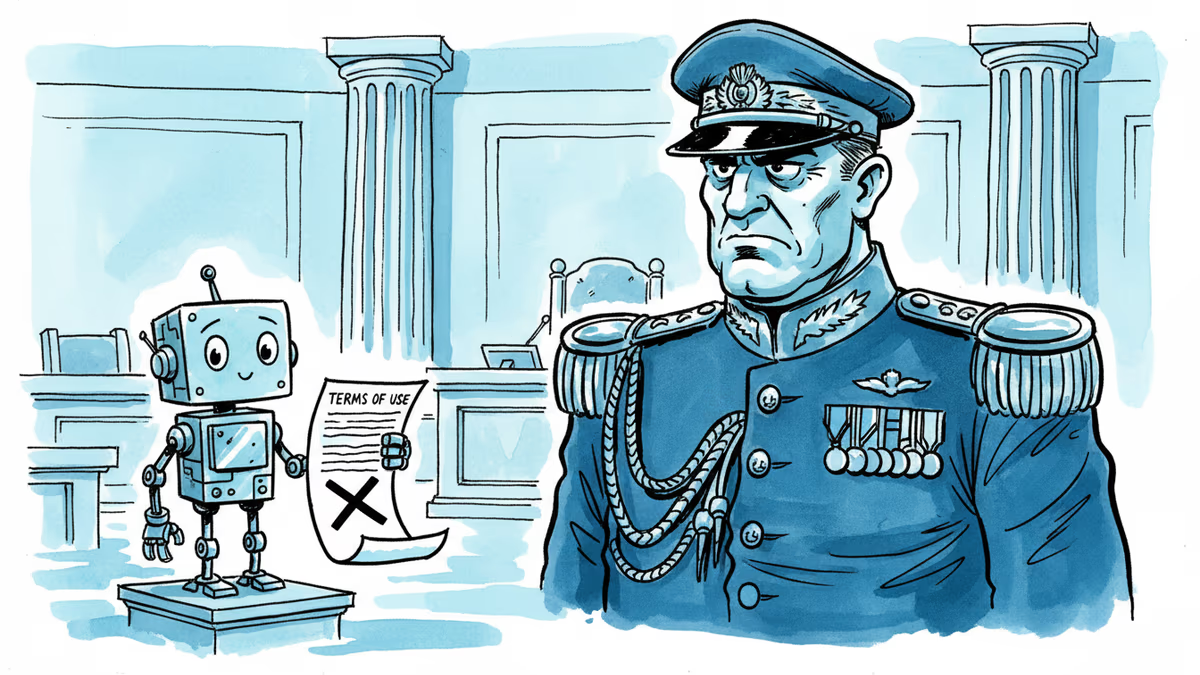
Anthropic filed two sworn declarations challenging the Pentagon's claim that it poses a national security risk. The timeline they reveal raises uncomfortable questions about the government's real motives.
A gunman attacked a Secret Service checkpoint at the White House Correspondents' Dinner. Trump's first public reaction wasn't about security. It was about his $400M ballroom project.
Hours after an armed suspect attempted to breach the White House Correspondents Dinner, Trump used the security scare to publicly defend his White House ballroom project. What does that tell us?
A California judge blocked the Pentagon from labeling Anthropic a supply chain risk. The 43-page ruling exposes a pattern: tweet first, lawyer later. What it means for AI governance and the limits of government leverage.
Anthropic filed two sworn declarations challenging the Pentagon's claim that it poses a national security risk. The timeline they reveal raises uncomfortable questions about the government's real motives.
Thoughts
Share your thoughts on this article
Sign in to join the conversation