

217,000 AI Pros: The Indian IT Sector AI Upskilling 2027 Roadmap
TCS has trained 217,000 employees in AI as the Indian IT sector prepares for a future where human-AI teams are the norm. Explore the AI upskilling 2027 roadmap.
Resistance is no longer optional in India's tech hubs. Tata Consultancy Services (TCS), the nation's largest IT firm, has rapidly grown its pool of workers with "higher-order AI skills" to 217,000, up from 180,000 just a month ago. This isn't just a training initiative; it's a survival pivot.
The Indian IT Sector AI Upskilling Surge
According to Nasscom, more than one-third of Indian IT companies are now utilizing AI for 40% of their core operations. The impact is measurable, with firms reporting 25% to 35% improvements in key performance indicators. The message from the C-suite is clear: those who can't treat AI as a teammate risk the end of their careers.

From 8 Million to 10 Million: High Stakes for 2027
The road ahead is polarized. Niti Aayog, the government's policy think tank, warns that without corrective action, tech sector headcount could drop to 6 million by 2031. However, a successful push for AI upskilling could actually boost the sector to 10 million jobs by the same year.
By 2027, an overwhelming 97% of IT companies expect work to be performed by integrated human-AI teams. While TCS and Infosys are betting on growth, analysts like Saurabh Mukherjea remain skeptical, suggesting the absolute number of humans required could eventually drop by orders of magnitude.
Authors
Related Articles

Beyond the headline numbers, 2025's tech layoffs reveal a structural shift. See our analysis on how AI is creating a new market reality for investors.
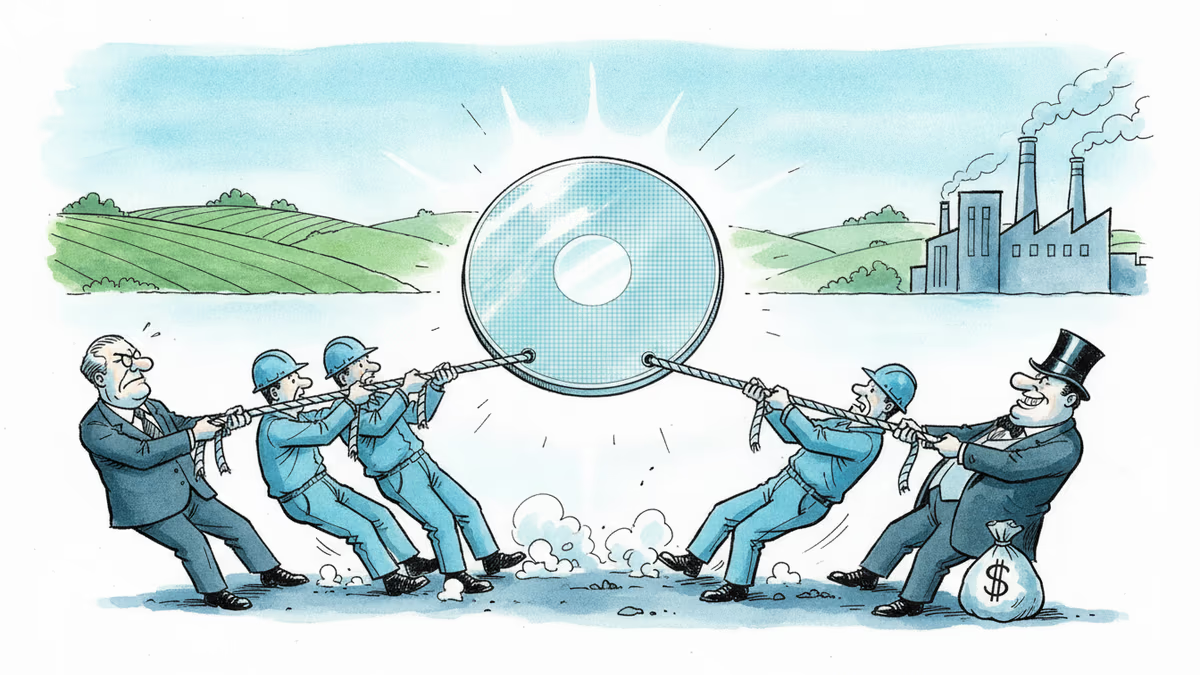
Samsung Electronics' union branch revealed that 84% of survey respondents oppose the government's roughly $290 billion (₩400 trillion) semiconductor megaproject in Gwangju. Government, management, the union and shareholders are all reading the same national project in sharply different ways.

Nvidia shipped roughly a billion RISC-V cores in 2024, then announced it would run CUDA on the open standard. We break down how royalty-free instruction sets and open software stacks are trying to route around CUDA's lock-in. Part 2 of the Semiconductor Sovereignty series.
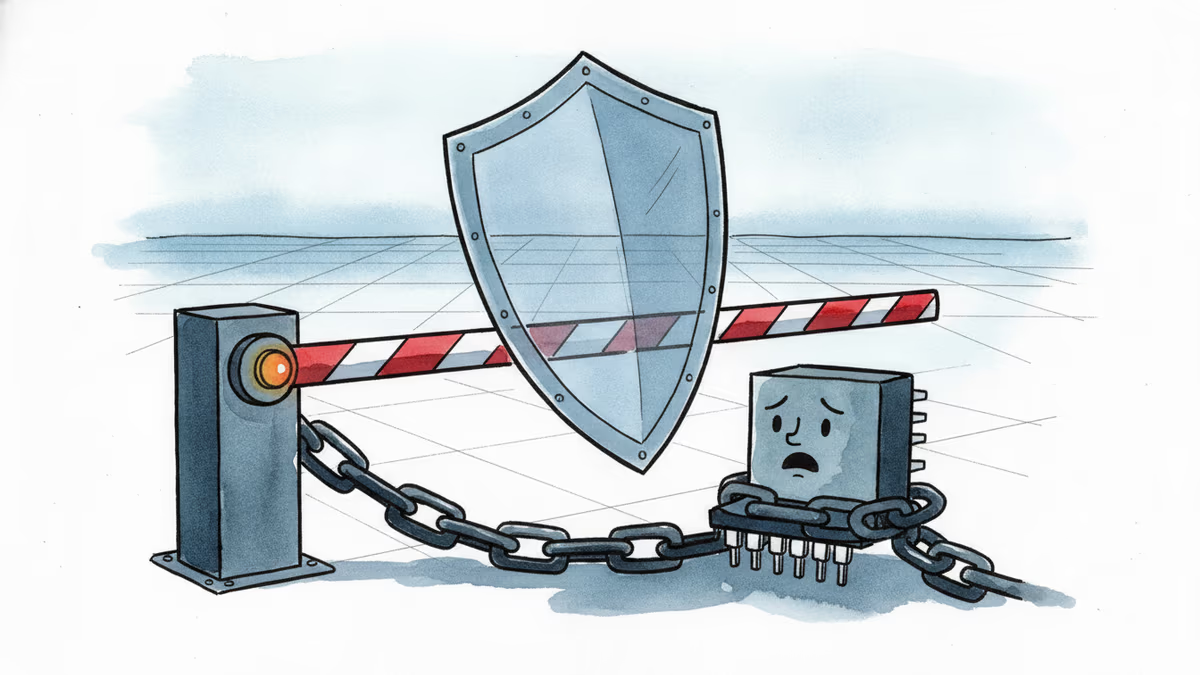
US AI-chip export controls split into three layers in the first half of 2026 — January easing, a May crackdown on circumvention, and a pending bill. Nvidia erased China from its guidance and still posted a record $81.6 billion quarter. A look at the export policy that both shields and cages it.
Beyond the headline numbers, 2025's tech layoffs reveal a structural shift. See our analysis on how AI is creating a new market reality for investors.
Samsung Electronics' union branch revealed that 84% of survey respondents oppose the government's roughly $290 billion (₩400 trillion) semiconductor megaproject in Gwangju. Government, management, the union and shareholders are all reading the same national project in sharply different ways.
Nvidia shipped roughly a billion RISC-V cores in 2024, then announced it would run CUDA on the open standard. We break down how royalty-free instruction sets and open software stacks are trying to route around CUDA's lock-in. Part 2 of the Semiconductor Sovereignty series.
US AI-chip export controls split into three layers in the first half of 2026 — January easing, a May crackdown on circumvention, and a pending bill. Nvidia erased China from its guidance and still posted a record $81.6 billion quarter. A look at the export policy that both shields and cages it.
Thoughts
Share your thoughts on this article
Sign in to join the conversation