
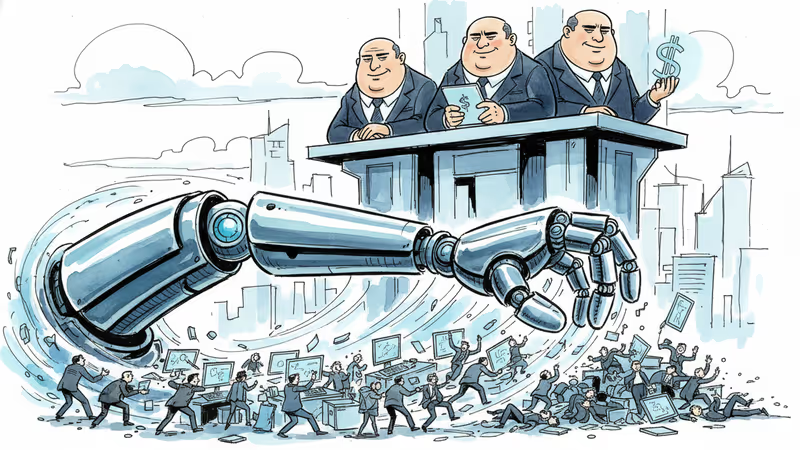
India's $300B IT Sector Faces AI Reckoning as Stocks Plunge 6%
Anthropic's Claude Cowork triggers massive selloff in Indian IT stocks, signaling AI's threat to the world's back office. Which companies will survive the automation wave?
6%. That's how much India's IT stocks index plummeted on February 4th, the day Anthropic released its Claude Cowork agentic plugin. In a single trading session, the market delivered its verdict: AI had finally come for the world's back office.
The selloff wasn't just numbers on a screen. It represented the first concrete sign that artificial intelligence could make much of India's $300 billion IT outsourcing industry obsolete. For 40 years, Indian companies have thrived on doing the repetitive knowledge work that Western firms didn't want to handle in-house. Now, AI can review contracts, track regulatory compliance, and forecast sales—exactly what keeps 5 million Indian IT workers employed.
The End of the Labor Arbitrage Model?
"The math is simple," says Ishan Talathi, co-founder of Pune-based cloud infrastructure firm CloudPe. "If a U.S. company can automate legal contract reviews internally using Claude Cowork or OpenAI Codex, why would they pay for a 50-person team in Bengaluru to do it?"
Talathi's question strikes at the heart of India's IT model. Built on "man-day billing"—charging clients for bodies on projects—the industry has leveraged labor costs that are 60-80% cheaper than in the West. Cities like Bengaluru, Hyderabad, and Pune became global hubs for executing low-end tech tasks for North American and European clients.
Now that foundation is cracking. Talathi estimates up to half of traditional outsourcing work faces direct extinction from AI, with contract reviews, compliance documentation, data processing, routine coding, and testing being most vulnerable.
The Survivors vs. The Casualties
Not all companies are equally exposed. Market leaders like Tata Consultancy Services and Infosys have been preparing for this moment, integrating generative AI and machine learning into their core offerings. By mid-2025, India's top five IT companies had trained more than 250,000 employees on AI technologies.

TCS—the biggest Indian IT firm—reports $1.8 billion in annualized AI services revenue, roughly 5% of its quarterly consolidated revenue. That's not just defensive positioning; it's proof that some companies are turning the AI threat into opportunity.
But adaptation isn't universal. "The scaremongering has some merit, and not every tech services firm will survive," warns Yugal Joshi, partner at global research firm Everest Group. "Speed to partner with AI vendors, scaling solutions, and internal operating model transformation will be crucial."
What Gets Automated, What Survives
The impact won't be uniform across job categories. Junior roles executing repetitive, standardized tasks face immediate vulnerability. Mid-level positions with low specialization could become redundant within a decade.
However, experts push back against doomsday scenarios. "Large enterprises don't engage Indian IT firms to run isolated tasks," notes Nirmit Biswas, senior research analyst at Market Research Future. "They outsource complex, interdependent systems with accountability attached."
Biswas estimates only about one-fifth of traditional IT delivery effort will be affected by AI—and that doesn't translate to the same proportion of revenue at risk. "AI tools may shorten delivery cycles, but they don't replace vendor responsibility for uptime, integration, compliance, or transformation outcomes."
The Broader Implications
India's IT sector reckoning extends far beyond stock prices. The industry directly employs 5 million people and accounts for 10% of India's GDP. A mismanaged transition could devastate urban economies, real estate markets, and ancillary services across major tech hubs.
Yet some see this disruption as overdue evolution. "The business model shift forces a move from cost arbitrage to genuine innovation, which is healthy," Talathi observes. Workers who upskill will likely continue earning good salaries, while those who don't may find themselves obsolete.
Authors
Related Articles

Jack Dorsey's Block slashes nearly half its workforce citing AI automation. Investors cheer, but is this the new normal for tech layoffs?
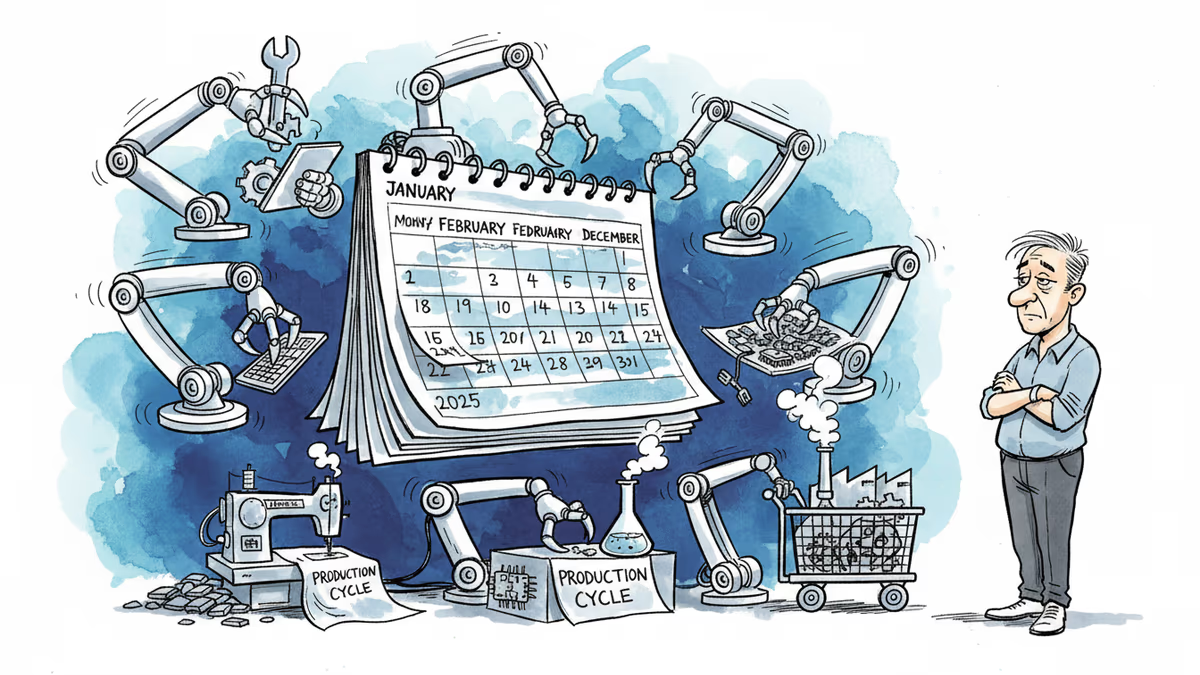
Perplexity's Computer tool orchestrates AI agents to handle long-term projects autonomously. Is this the future of work automation or just clever marketing?
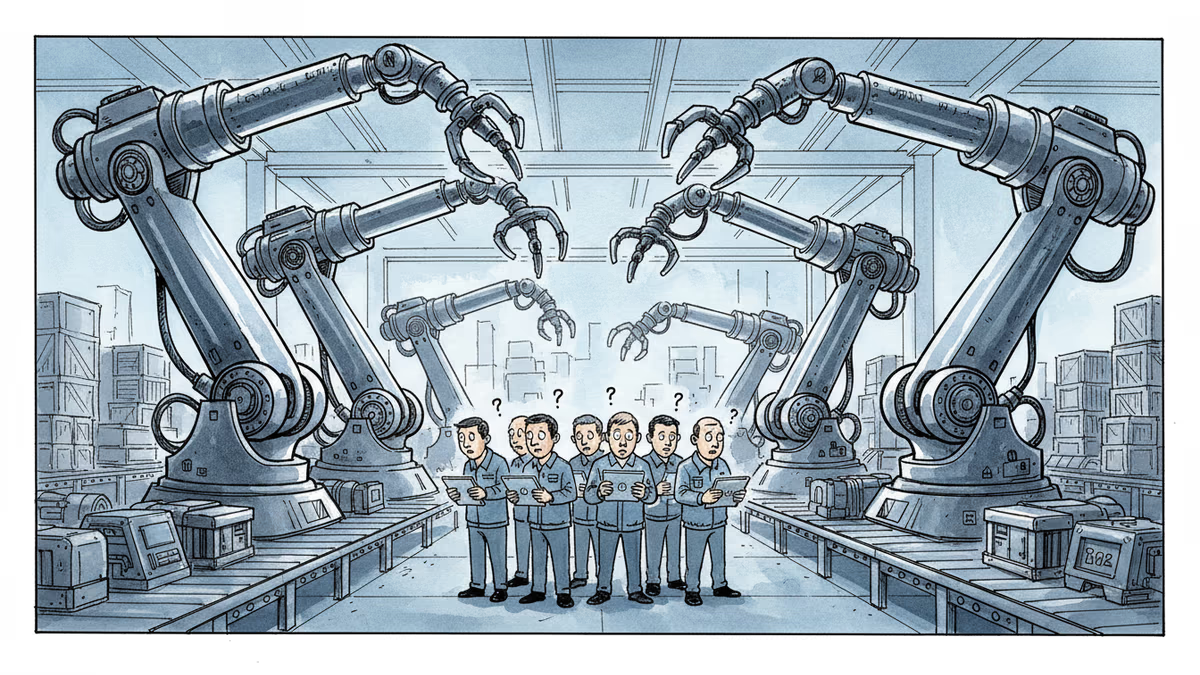
Siemens CEO Roland Busch outlines a vision for fully automated manufacturing powered by AI agents and digital twins. But in a world where machines make decisions, what happens to human workers?
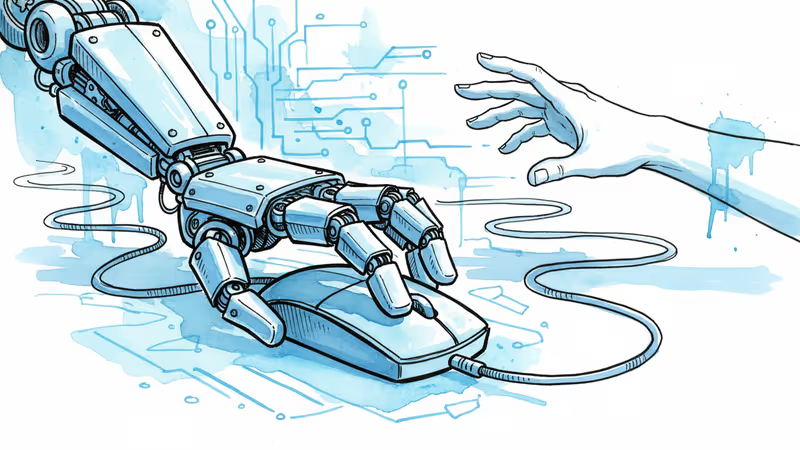
Google's new Auto Browse lets AI navigate websites and shop for you. Convenience comes with trade-offs that could reshape how we experience the web.
Jack Dorsey's Block slashes nearly half its workforce citing AI automation. Investors cheer, but is this the new normal for tech layoffs?
Perplexity's Computer tool orchestrates AI agents to handle long-term projects autonomously. Is this the future of work automation or just clever marketing?
Siemens CEO Roland Busch outlines a vision for fully automated manufacturing powered by AI agents and digital twins. But in a world where machines make decisions, what happens to human workers?
Google's new Auto Browse lets AI navigate websites and shop for you. Convenience comes with trade-offs that could reshape how we experience the web.
Thoughts
Share your thoughts on this article
Sign in to join the conversation