
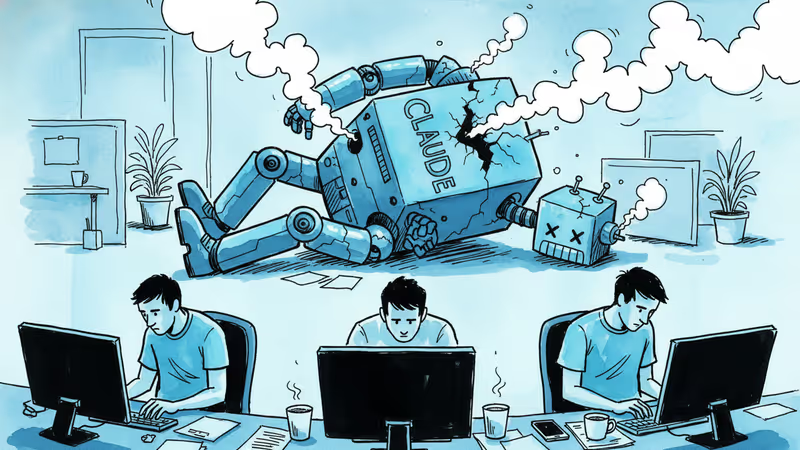
Claude AI Outage Exposes Growing Pains of AI Dependency
Anthropic's Claude AI suffered a major outage affecting all models, fixed in 20 minutes. But the incident highlights deeper questions about AI reliability as dependency grows.
Twenty minutes. That's how long developers worldwide stared at error screens today, waiting for Anthropic'sClaude AI to come back online. In the world of instant everything, twenty minutes feels like an eternity when your workflow depends on artificial intelligence.
When All Models Go Down at Once
Anthropic'sClaude AI models experienced what the company called "elevated error rates" across all its services today. Claude Code users hit 500 errors, and the outage wasn't limited to one product—it affected the entire Claude ecosystem.
This wasn't an isolated incident. Claude Opus 4.5 had issues yesterday, and earlier this week Anthropic had to fix problems with its AI credits purchasing system. The pattern raises questions: are these growing pains of a scaling AI service, or signs of deeper infrastructure challenges?
Anthropic identified the root cause quickly and implemented a fix within 20 minutes. But those twenty minutes left thousands of developers in limbo, highlighting how dependent we've become on AI tools for daily work.
The Hidden Cost of AI Integration
The outage reveals something bigger than a technical glitch. As AI tools become embedded in everything from code generation to content creation, even brief interruptions have outsized impacts. Developers who've integrated Claude into their workflows suddenly found themselves unable to complete basic tasks.

This dependency isn't unique to Claude. OpenAI'sChatGPT has experienced multiple outages, Google'sBard has had its share of issues, and Microsoft'sCopilot services have faced similar disruptions. The pattern suggests that AI reliability challenges are industry-wide, not company-specific.
For businesses building AI-first products, today's outage serves as a reminder that backup plans aren't just nice to have—they're essential. The companies that weathered today's disruption best were likely those with diversified AI toolchains.
The Expectation Gap
There's a curious phenomenon happening with AI service outages. Users seem to expect higher reliability from AI tools than from traditional software. Perhaps it's because we associate "intelligence" with reliability, or maybe it's because AI tools feel more mission-critical to our work.
But here's the reality: AI services run on the same infrastructure as any other cloud service. They're subject to the same network issues, server failures, and scaling challenges. The difference is that when AI goes down, it often takes creative and analytical workflows with it—tasks that are harder to work around than a simple database query.
Building Resilience in an AI-Dependent World
Today's outage offers lessons for both providers and users. For Anthropic and other AI companies, it underscores the importance of robust infrastructure and clear communication during incidents. The company's quick identification and resolution of the issue was commendable, but preventing such widespread outages should be the priority.
For users, the incident highlights the risks of over-dependence on any single AI service. Smart developers and businesses are already diversifying their AI toolkits, using multiple providers and maintaining fallback options for critical workflows.
Authors
Related Articles
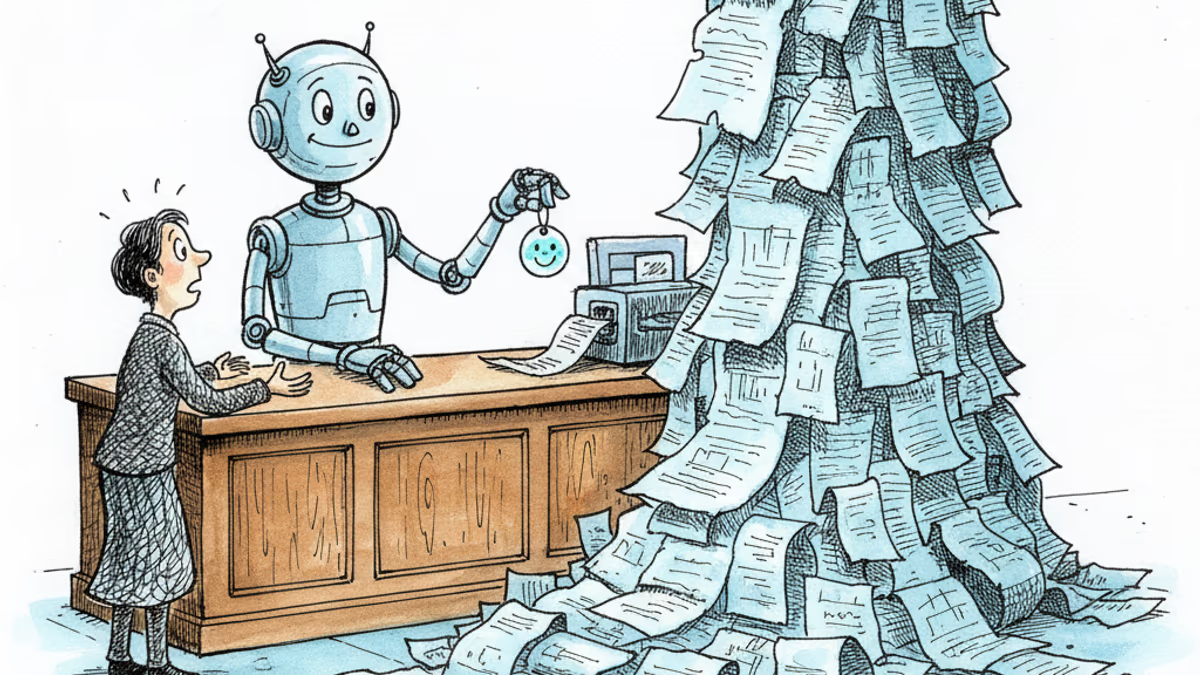
Anthropic shipped Claude Sonnet 5, its mid-tier agent model, on June 30. Behind the 'Opus-class power, budget price' headline sits a tokenizer catch and a three-horse race that's only half real. Here's what developers should actually run the numbers on.

Samsung and SK unveiled a chip and AI investment package worth thousands of trillions of won on June 29. The headline number swings wildly by outlet, but the real contest isn't capital — it's water and power.
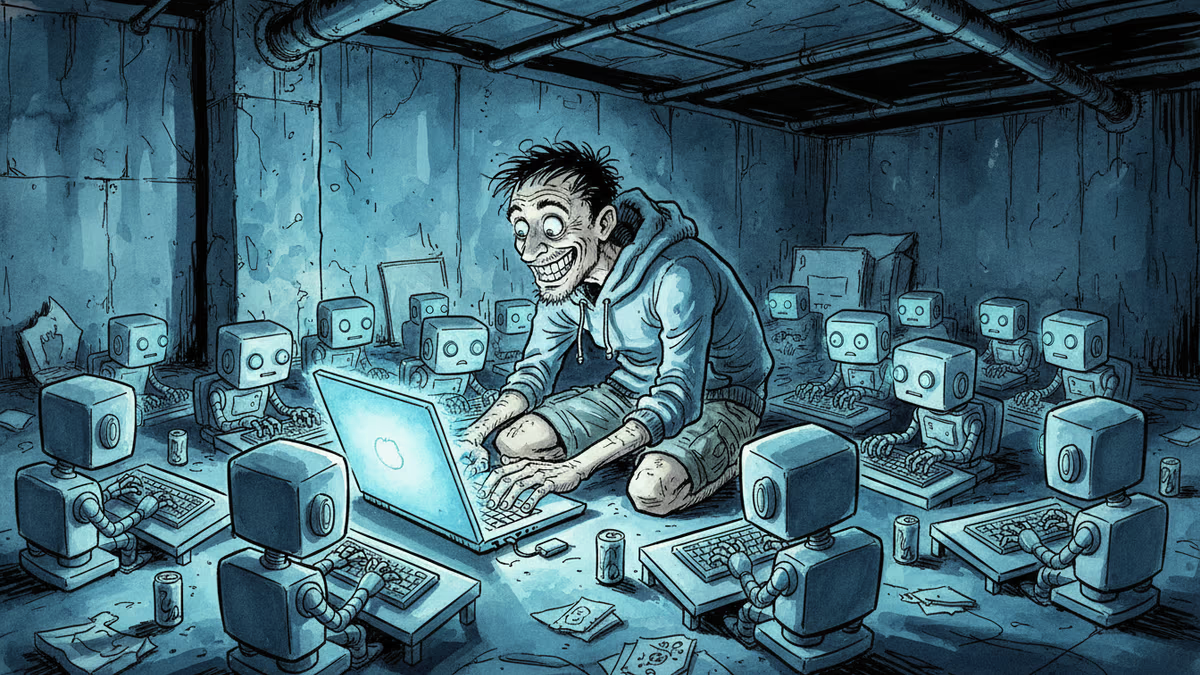
A small but growing group of developers has gone all-in on AI coding agents like Claude Code and OpenClaw. History suggests the rest of us won't be far behind.
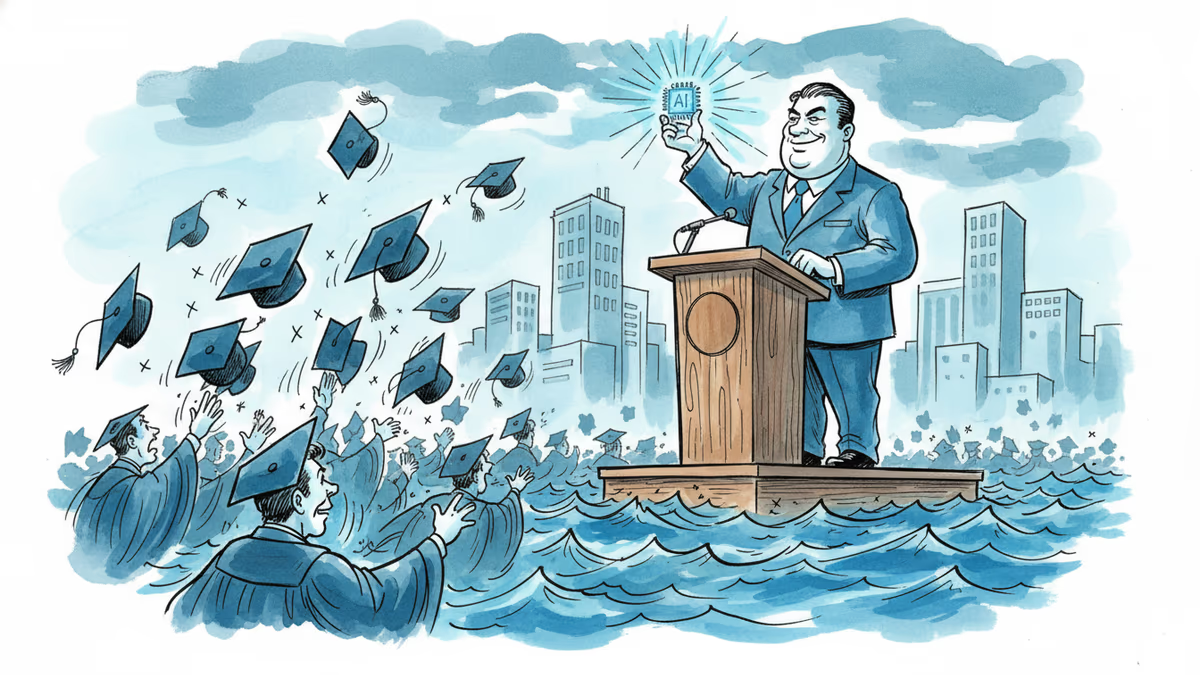
Viral videos show 2026 graduates jeering executives who praise AI at commencement ceremonies. It's not just rudeness — it's a signal about who pays for technological optimism.
Anthropic shipped Claude Sonnet 5, its mid-tier agent model, on June 30. Behind the 'Opus-class power, budget price' headline sits a tokenizer catch and a three-horse race that's only half real. Here's what developers should actually run the numbers on.
Samsung and SK unveiled a chip and AI investment package worth thousands of trillions of won on June 29. The headline number swings wildly by outlet, but the real contest isn't capital — it's water and power.
A small but growing group of developers has gone all-in on AI coding agents like Claude Code and OpenClaw. History suggests the rest of us won't be far behind.
Viral videos show 2026 graduates jeering executives who praise AI at commencement ceremonies. It's not just rudeness — it's a signal about who pays for technological optimism.
Thoughts
Share your thoughts on this article
Sign in to join the conversation