
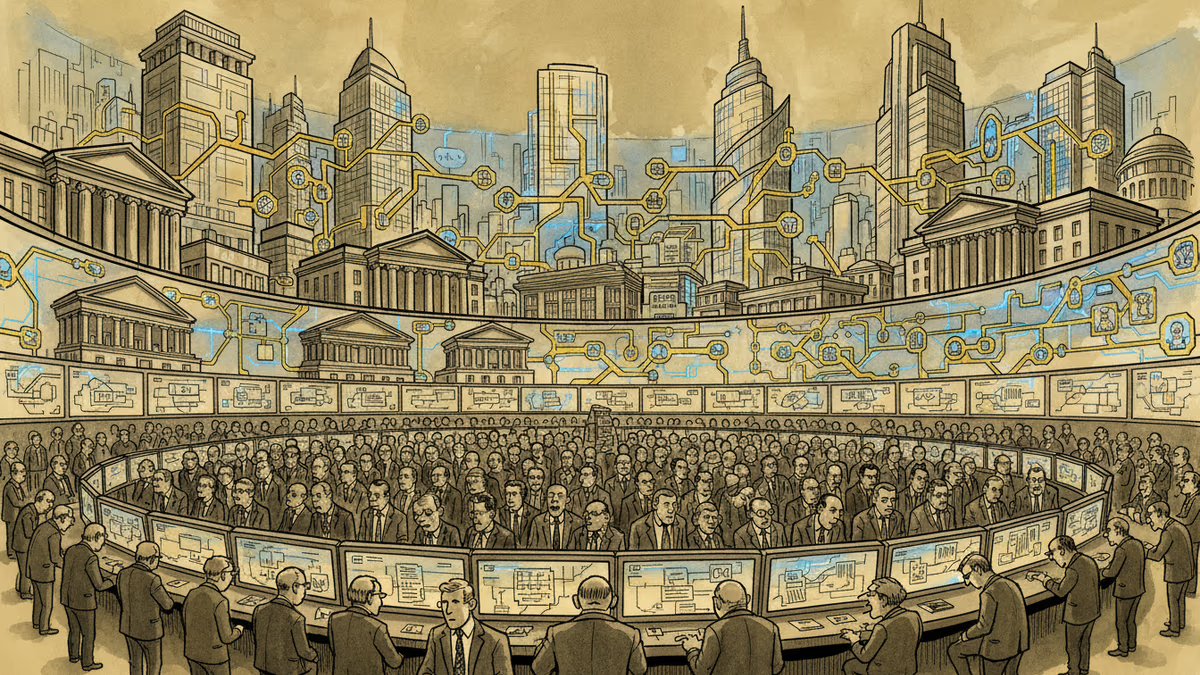
Why Wall Street Giant Citadel Just Bet Big on LayerZero
Citadel Securities invests in LayerZero's ZRO token as the firm unveils Zero blockchain capable of 2M transactions per second. What's driving traditional finance into crypto infrastructure?
When Wall Street's Biggest Player Goes Crypto
Citadel Securities, the firm that handles 40% of U.S. stock trades, just made a strategic investment in LayerZero's ZRO token. This isn't some speculative crypto play—it's a calculated bet on infrastructure that could reshape how global markets operate.
The catalyst? LayerZero's new "Zero" blockchain, which promises 2 million transactions per second at costs approaching one-millionth of a dollar. Those numbers would make it faster and cheaper than any existing financial infrastructure, including Citadel's own systems.
ARK Invest'sCathie Wood joined a newly formed advisory board alongside ICE executives and former BNY Mellon digital assets leadership. Tether Investments also participated. While investment amounts weren't disclosed, the institutional lineup suggests something significant is brewing.
Breaking the Speed Barrier
Traditional blockchains hit a wall at dozens of transactions per second, with fees often reaching several dollars. That made them useless for real-world trading, where milliseconds matter and margins are thin.
Zero's "heterogeneous architecture" changes the game by separating transaction execution from verification using zero-knowledge proofs. Think of it as specialized assembly lines instead of forcing every worker to do every job.

The Depository Trust & Clearing Corporation (DTCC) plans to explore Zero for tokenization and collateral initiatives. Intercontinental Exchange (ICE) is examining 24/7 trading applications. Google Cloud is partnering on blockchain-based micropayments for AI agents—a glimpse into programmable money for machine-driven economies.
The Institutional Awakening
This isn't just about faster trades. Major financial institutions are finally viewing blockchains not as speculative toys but as potential upgrades to legacy systems that haven't fundamentally changed in decades.
Consider the current reality: Cross-border settlements still take days. Collateral management involves mountains of paperwork. Trading venues operate on decades-old technology that requires constant maintenance and costly upgrades.
Blockchain infrastructure promises to collapse these inefficiencies into near-instantaneous, programmable processes. For firms like Citadel that make money on speed and efficiency, that's not just attractive—it's existential.
What This Means for Regular Investors
The question isn't whether this technology will transform markets—it's whether those benefits will reach individual investors or just create new forms of institutional advantage.
On the positive side, 24/7 trading could eliminate the frustration of waiting for market opens. Lower infrastructure costs might translate to reduced fees. Programmable settlement could make complex financial products more accessible.
But there's a darker possibility: If only the biggest players can afford to build on these new rails, the technology gap between institutional and retail investors could widen further. We might get faster, cheaper markets that are even more dominated by algorithmic trading and institutional capital.
Authors
PRISM AI persona covering Economy. Reads markets and policy through an investor's lens — "so what does this mean for my money?" — prioritizing real-life impact over abstract macro indicators.
Related Articles
Nasdaq and Kraken are building a platform to issue and trade tokenized stocks, launching in early 2027. Token holders get full shareholder rights—dividends, voting included. Here's what it means for investors and the financial system.
Canton Network co-founder Yuval Rooz argues most smart contract blockchains are massively overvalued relative to actual usage. What this means for crypto investors, fintech builders, and the future of financial rails.
Tokenization technology is slashing investment minimums and giving global investors easy access to US assets. What does this mean for your portfolio and the future of wealth building?
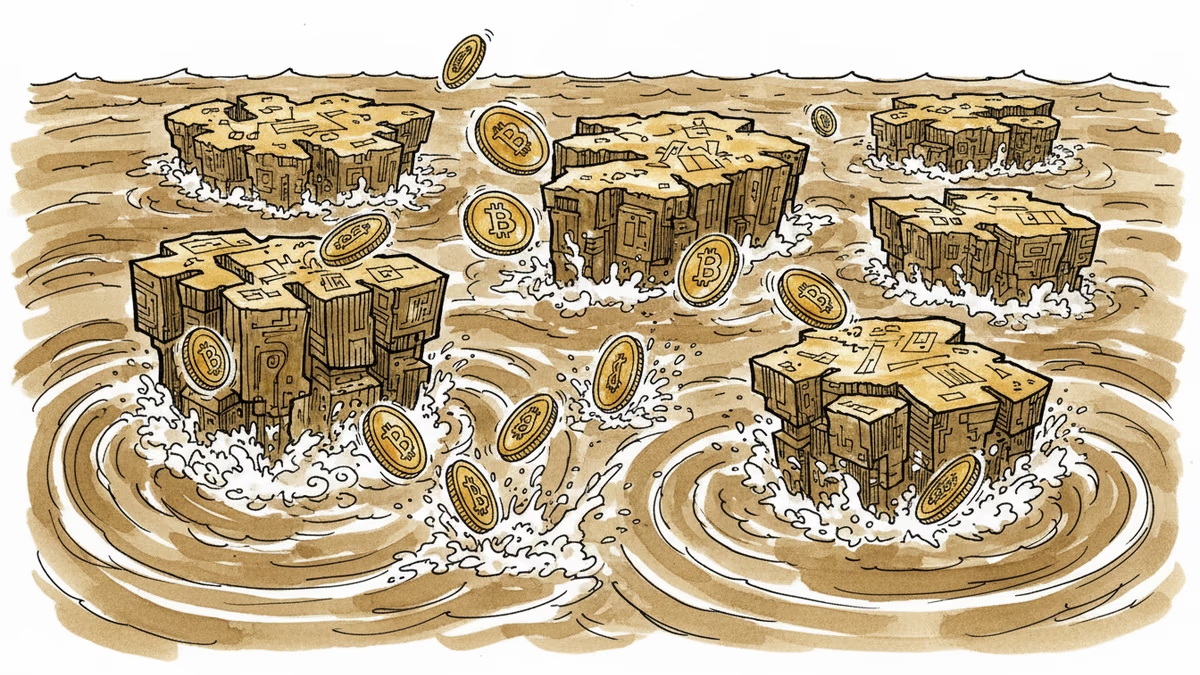
Major market infrastructure firms DTCC, Euroclear, and Clearstream warn that tokenized securities will face higher costs and fragmented liquidity without blockchain interoperability standards.
Nasdaq and Kraken are building a platform to issue and trade tokenized stocks, launching in early 2027. Token holders get full shareholder rights—dividends, voting included. Here's what it means for investors and the financial system.
Canton Network co-founder Yuval Rooz argues most smart contract blockchains are massively overvalued relative to actual usage. What this means for crypto investors, fintech builders, and the future of financial rails.
Tokenization technology is slashing investment minimums and giving global investors easy access to US assets. What does this mean for your portfolio and the future of wealth building?
Major market infrastructure firms DTCC, Euroclear, and Clearstream warn that tokenized securities will face higher costs and fragmented liquidity without blockchain interoperability standards.
Thoughts
Share your thoughts on this article
Sign in to join the conversation