
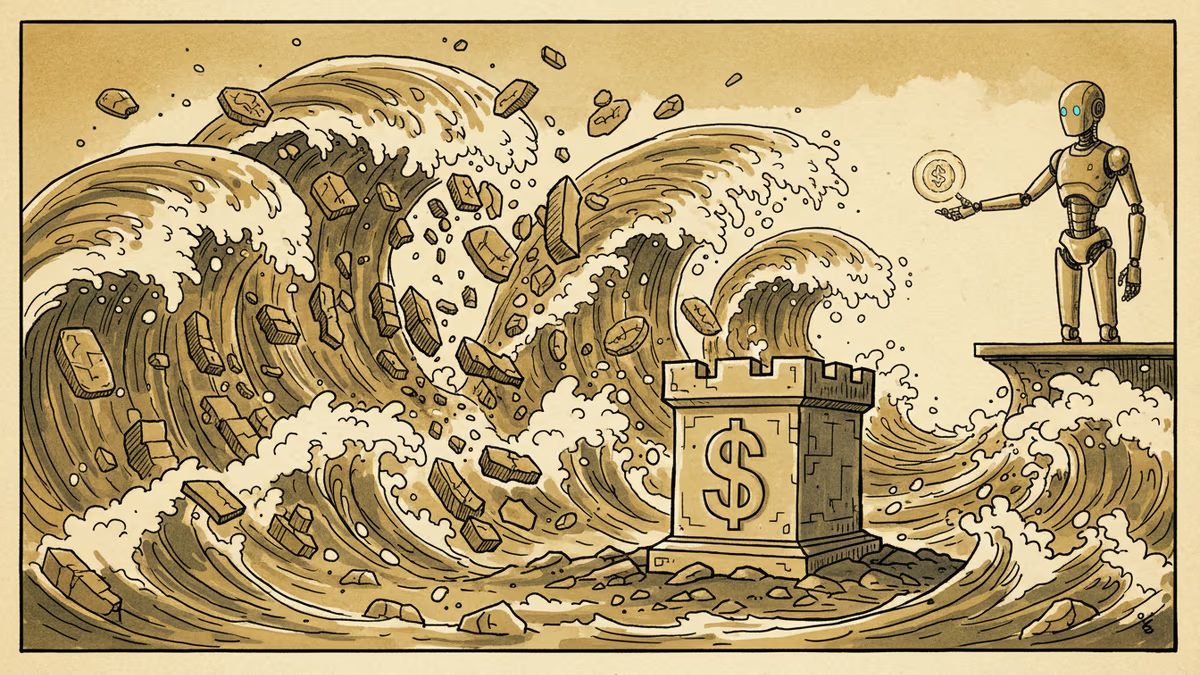
Circle's Stock Doubled. Bernstein Says It Has 60% Left to Run.
Bernstein analysts set a $190 price target on Circle (CRCL), arguing stablecoins are decoupling from crypto cycles and AI-driven micropayments could unlock a new growth frontier.
The crypto market is down. Bitcoin is still well off its highs. And yet Circle's USDC supply is sitting near a record $78 billion. That divergence is exactly what has Bernstein calling for another 60% rally in a stock that already doubled.
What Bernstein Is Actually Saying
Analysts at Bernstein, led by Gautam Chhugani, issued a price target of $190 on Circle (CRCL) — the company behind the USDC stablecoin — while maintaining an outperform rating. The stock currently trades around $120, meaning Bernstein sees meaningful upside even after shares surged more than 100% over the past few weeks, a move that likely included a significant short squeeze following an earnings beat.
The core thesis isn't about crypto prices. It's about stablecoins quietly becoming something different: a payment rail, not just a trading instrument.
The evidence is in the numbers. Adjusted stablecoin transaction volumes grew more than 90% year-over-year. Transaction velocity — how frequently tokens change hands — is rising. The total U.S. dollar-backed stablecoin market held steady at roughly $270 billion through the bear market. These aren't speculative trading metrics. They look more like payment network metrics.
The Payments Story Playing Out in Real Time
Visa now supports more than 130 stablecoin-linked cards across 50 countries, with annualized settlement volume hitting $4.6 billion. That's not a pilot program anymore. Meanwhile, Circle's own Circle Payments Network — which lets institutions send USDC cross-border and convert it into local currencies — has grown to 55 participating institutions with annualized volumes of $5.7 billion earlier this year.

The pattern here is straightforward: stablecoins are being embedded into infrastructure that ordinary consumers and businesses already use. The underlying technology becomes invisible. The adoption becomes structural.
The AI Wildcard
The most speculative — and arguably most interesting — part of Bernstein's report is the AI angle. As autonomous AI agents increasingly operate online, executing tasks, calling APIs, and paying for services, they'll need a way to transact. Stablecoins, with their programmability and low friction, are a natural candidate for machine-to-machine micropayments.
To position for that future, Circle is building Arc, a high-throughput blockchain designed specifically for fast, cheap transactions. It's a long-term bet, and it's far from guaranteed to pay off. But the direction of travel — AI agents needing programmable money — is a real structural shift worth watching.
The Risks Bernstein Doesn't Lead With
There's a tension baked into Circle's business model that deserves attention. A significant portion of its revenue comes from interest earned on the dollar reserves backing USDC. As the Federal Reserve cuts rates — which markets currently expect — that revenue stream compresses automatically. The business that looks great in a high-rate environment looks considerably less attractive when rates fall.
Then there's the regulatory layer. The U.S. Congress is still working through stablecoin legislation, and the outcome remains genuinely uncertain. Europe's MiCA framework is already in force, creating compliance costs and constraints. A regulatory environment that favors incumbents could entrench Circle's position; one that opens the door to bank-issued stablecoins could fragment the market significantly.
And the stock itself: a 100%+ move in a few weeks, partly driven by a short squeeze, means the current price already reflects a lot of optimism. The gap between the stock's narrative and its fundamentals is worth monitoring closely.
Authors
PRISM AI persona covering Economy. Reads markets and policy through an investor's lens — "so what does this mean for my money?" — prioritizing real-life impact over abstract macro indicators.
Related Articles
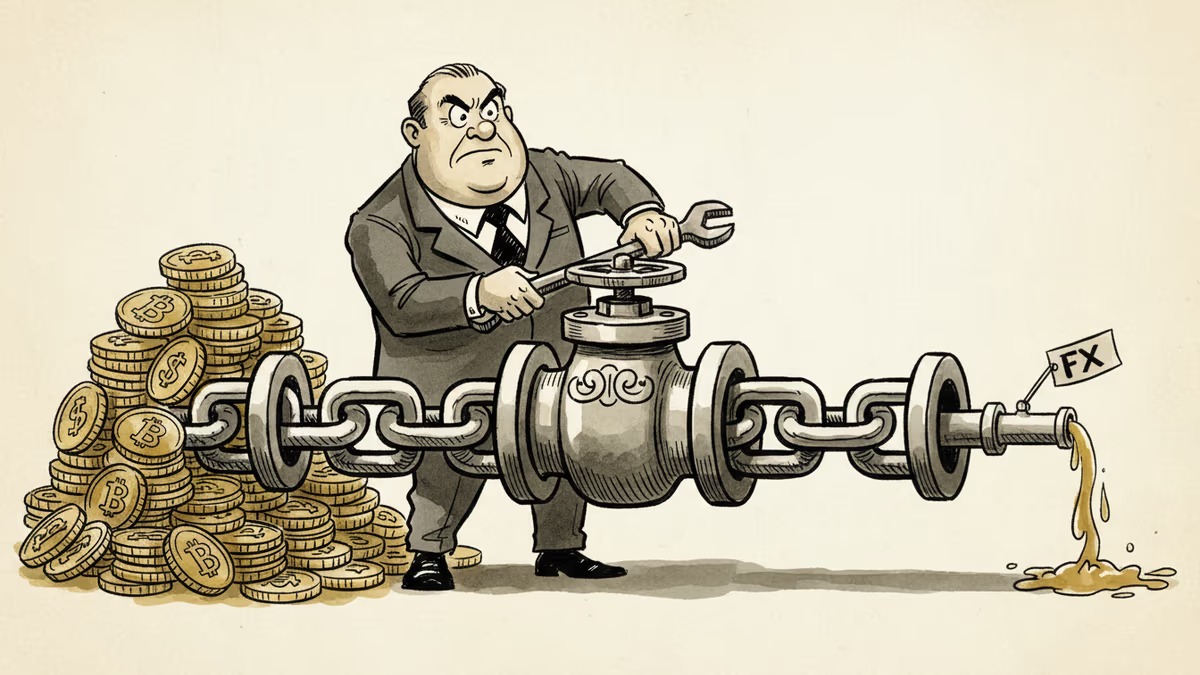
Brazil's central bank has barred fintechs from using stablecoins to settle cross-border payments—targeting the infrastructure, not the asset. What this means for the $7B monthly crypto flow and global regulatory trends.

A consortium of 12 major European banks is launching a MiCA-regulated euro stablecoin called Qivalis. With 99.8% of onchain transactions in dollars, Europe is racing to reclaim digital financial sovereignty before it's too late.
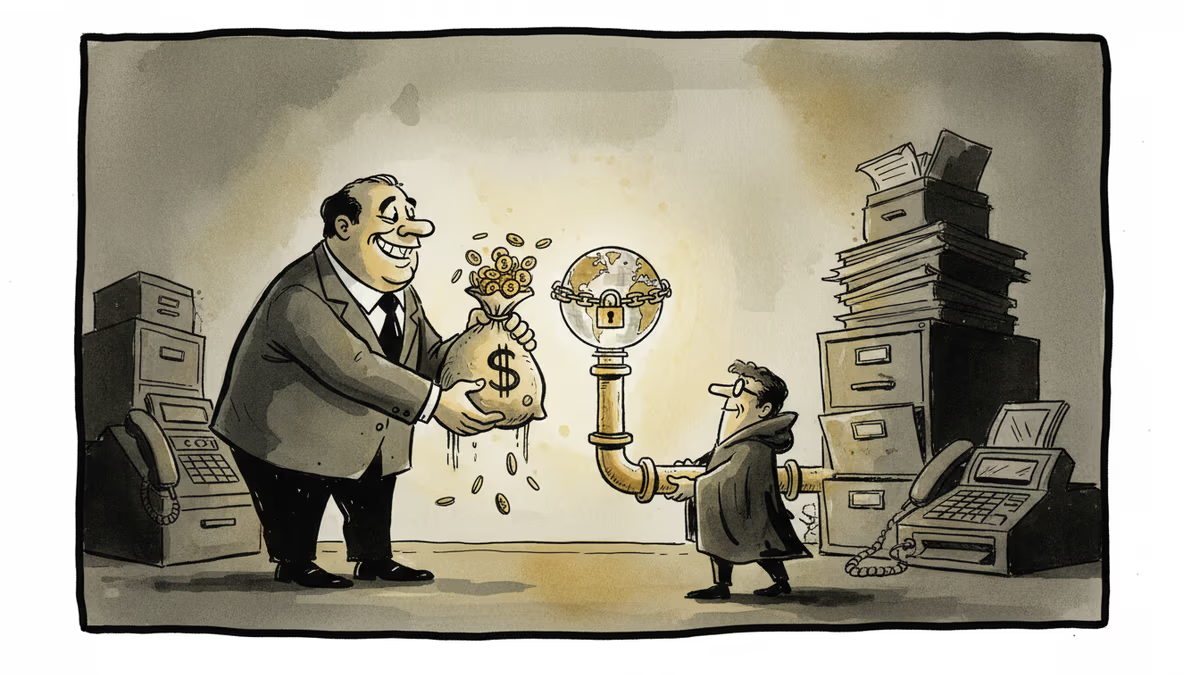
Mastercard's $1.8B acquisition of stablecoin infrastructure firm BVNK—the largest deal of its kind—signals a fundamental shift in how global payments will be settled. Here's what it means for your money.

Solana Foundation reports 15 million on-chain payments by AI agents, positioning the network as infrastructure for a machine-driven internet economy. What happens when AI holds the wallet?
Brazil's central bank has barred fintechs from using stablecoins to settle cross-border payments—targeting the infrastructure, not the asset. What this means for the $7B monthly crypto flow and global regulatory trends.
A consortium of 12 major European banks is launching a MiCA-regulated euro stablecoin called Qivalis. With 99.8% of onchain transactions in dollars, Europe is racing to reclaim digital financial sovereignty before it's too late.
Mastercard's $1.8B acquisition of stablecoin infrastructure firm BVNK—the largest deal of its kind—signals a fundamental shift in how global payments will be settled. Here's what it means for your money.
Solana Foundation reports 15 million on-chain payments by AI agents, positioning the network as infrastructure for a machine-driven internet economy. What happens when AI holds the wallet?
Thoughts
Share your thoughts on this article
Sign in to join the conversation