
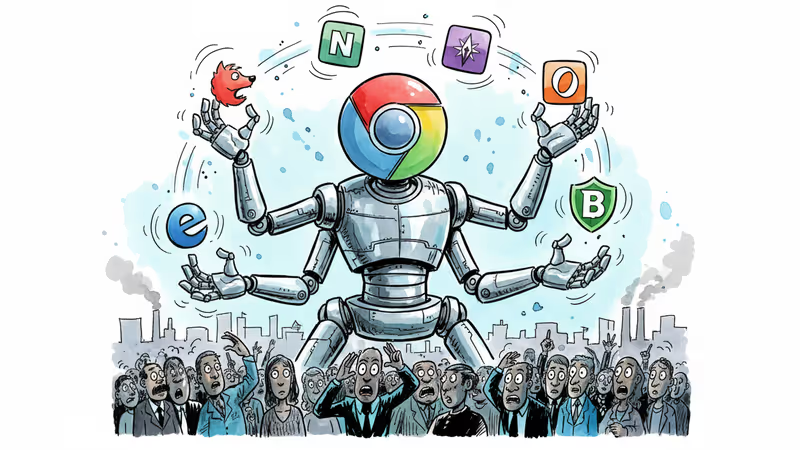
Google Strikes Back: Chrome Gets AI Superpowers to Fight Browser Wars
Google adds Gemini AI sidebar and auto-browse features to Chrome, responding to AI browser challengers from OpenAI and Perplexity with ambitious automation capabilities.
The browser wars just got personal. After watching upstarts like OpenAI, Perplexity, and The Browser Company launch AI-powered browsers throughout 2025, Google is finally unleashing its counter-attack. The tech giant is transforming Chrome – which commands the lion's share of global browser usage – into an AI powerhouse that doesn't just browse the web, but thinks, acts, and shops for you.
The AI Invasion of Your Browser
Google's latest Chrome update introduces three game-changing features that signal a fundamental shift in how we interact with the internet. The centerpiece is a persistent Gemini AI sidebar that understands not just individual webpages, but entire browsing contexts. When you open multiple tabs from a single site – say, comparing laptop prices across different product pages – the AI assistant grasps these as a unified shopping session.
But the real headline grabber is auto-browse, an ambitious feature that promises to handle entire online tasks autonomously. Imagine telling your browser to "find me the best deal on a new phone and apply any available discount codes," then watching it navigate websites, compare prices, and even initiate purchases on your behalf. The AI agent will pause for your approval only when handling sensitive actions like logging into accounts or completing final transactions.
The rollout also brings Nano Banana integration, allowing users to modify images with AI-generated elements found while browsing, and extends Gemini access to Chromebook Plus users beyond the previous Windows and macOS limitations.
Why Google Moved Now
This isn't just feature creep – it's strategic necessity. Throughout 2025, AI-native browsers gained traction by promising what traditional browsers couldn't: intelligent assistance baked into every web interaction. OpenAI's browser offerings and Perplexity's search-integrated browsing posed the first serious challenge to Chrome's dominance in over a decade.
Google's response leverages its unique advantage: deep integration with your digital life. The upcoming personal intelligence feature will connect Chrome's AI to your Gmail, Google Photos, YouTube history, and search data. This means asking the sidebar about "my family's weekend plans" or having it draft and send emails without leaving your current webpage.

The timing coincides with Google's broader AI strategy pivot. As generative AI reshapes user expectations, the company faces pressure to prove its AI capabilities can enhance, not just supplement, its core products. Chrome represents the perfect testing ground – a massive user base encountering diverse web scenarios daily.
The Promise and the Peril
Browser-based AI agents sound revolutionary, but early implementations reveal significant challenges. Google's own demos focused on familiar use cases: shopping comparisons and travel planning. However, real-world agent performance often falls short of promotional videos. Tasks fail when websites update their layouts, AI misinterprets user intent, or complex multi-step processes break down.
Google acknowledges these limitations while highlighting early user applications: scheduling appointments, filling tedious forms, collecting tax documents, and getting service quotes. The company's internal testing suggests users gravitate toward repetitive, well-defined tasks rather than complex decision-making scenarios.
Privacy concerns loom large as well. While Google promises its AI models won't access saved passwords or payment details, the auto-browse feature inherently requires extensive data about your browsing habits, preferences, and online behavior. This creates a tension between convenience and privacy that different users will resolve differently.
The Bigger Browser Battle
This update represents more than feature additions – it's Google's declaration that the browser itself is evolving. Traditional browsers were passive tools for accessing websites. AI browsers promise to become active partners in accomplishing online goals.
The competitive landscape suggests this transformation is inevitable. Opera has integrated AI assistants, The Browser Company built Arc with AI-first principles, and now Chrome is following suit. The question isn't whether browsers will become more intelligent, but which approach will resonate with users.
Google's advantage lies in scale and integration. Chrome's massive user base provides unparalleled data for training AI models, while Google's ecosystem offers seamless connections across services. However, this same integration raises regulatory scrutiny concerns, particularly in markets already questioning Google's market dominance.
Authors
Related Articles
In a post-Google I/O interview, Sundar Pichai acknowledged flawed search results, real AI anxiety, and an AGI timeline that makes the label irrelevant. Here's what he said — and what it means.
Google is replacing Assistant with Gemini in cars with Google built-in, starting in the U.S. GM's 4 million vehicles are first. But the real story is what happens when your car becomes a Google device.
Apple's iOS 27 will let users swap in Google Gemini, Anthropic's Claude, or other AI chatbots to power Siri responses. Here's what that actually means for you, for competitors, and for the AI industry.
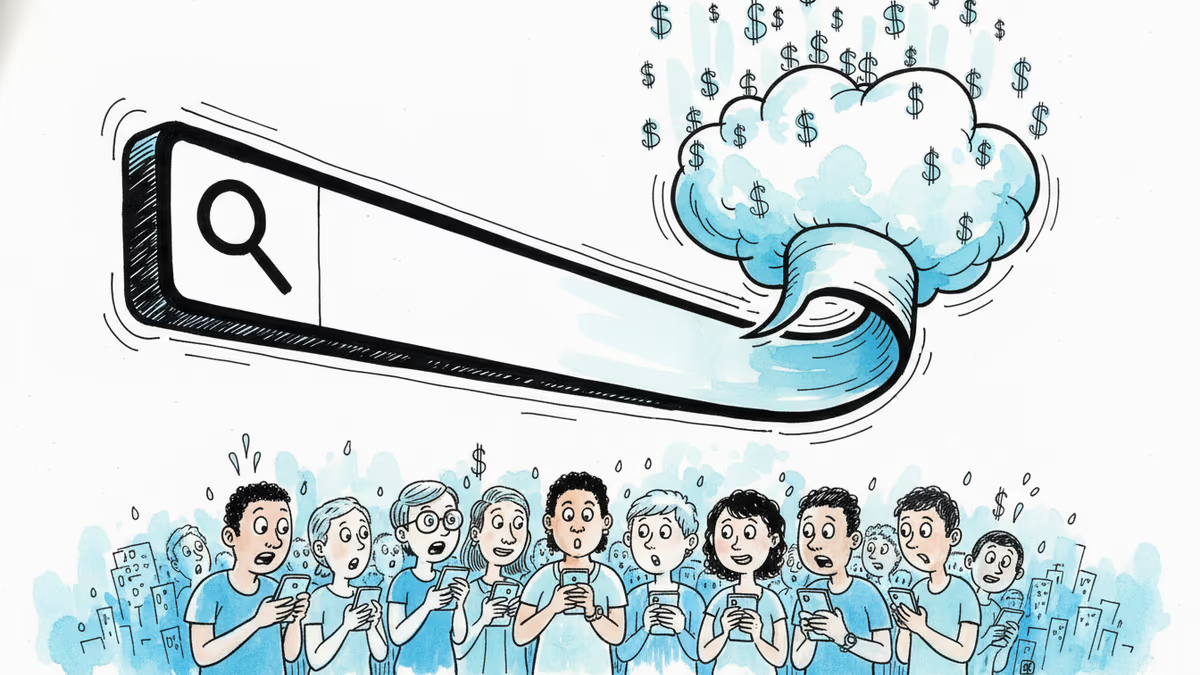
Google SVP Nick Fox confirmed ads in Gemini are "not ruled out," two months after DeepMind's CEO said the opposite. Here's what that shift means for users, advertisers, and the AI industry.
In a post-Google I/O interview, Sundar Pichai acknowledged flawed search results, real AI anxiety, and an AGI timeline that makes the label irrelevant. Here's what he said — and what it means.
Google is replacing Assistant with Gemini in cars with Google built-in, starting in the U.S. GM's 4 million vehicles are first. But the real story is what happens when your car becomes a Google device.
Apple's iOS 27 will let users swap in Google Gemini, Anthropic's Claude, or other AI chatbots to power Siri responses. Here's what that actually means for you, for competitors, and for the AI industry.
Google SVP Nick Fox confirmed ads in Gemini are "not ruled out," two months after DeepMind's CEO said the opposite. Here's what that shift means for users, advertisers, and the AI industry.
Thoughts
Share your thoughts on this article
Sign in to join the conversation