
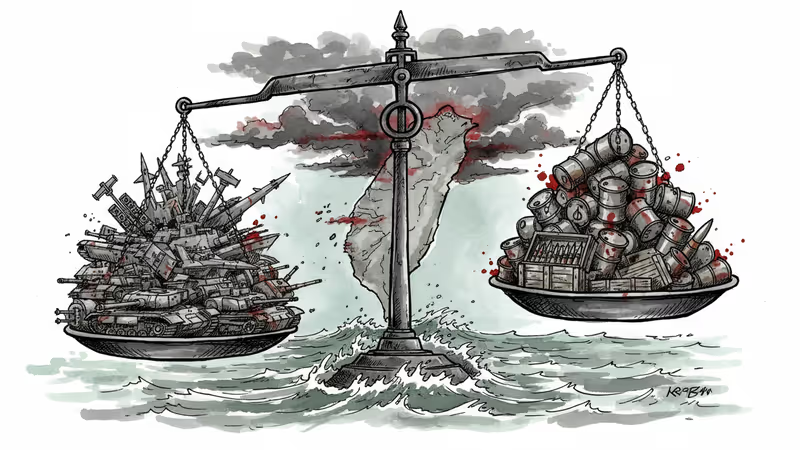
US Faces 'Rapid Defeat' Risk in China Conflict, Report Warns
Heritage Foundation study reveals critical sustainment risks could lead to quick US defeat in Taiwan Strait conflict. AI analysis shows alarming logistical vulnerabilities.
The United States could face "rapid defeat" in a military conflict with China due to critical logistical vulnerabilities, according to a sobering new analysis from the Heritage Foundation. The conservative think tank's report warns of severe "sustainment risks" that could prove decisive in any future confrontation.
AI Analysis Reveals Stark Reality
The study, dubbed 'Tidalwave' after a 1943 military operation, employed artificial intelligence to model potential conflict scenarios. Its conclusions are unsettling: while hostilities would likely begin in the Taiwan Strait, the consequences would rapidly expand far beyond that theater.
The report's authors emphasize an urgent need to strengthen American fuel and munitions reserves alongside logistical networks. Current stockpiles and supply chains, they argue, are inadequate for sustained high-intensity warfare against a peer competitor.
The Logistics of Modern Warfare
This analysis highlights a fundamental shift in military thinking. While much attention focuses on cutting-edge weapons systems and technological superiority, the Heritage Foundation study underscores an older truth: wars are won by those who can sustain them longest.
Modern military operations consume resources at unprecedented rates. A single F-35 fighter jet burns through 2,300 gallons of fuel per hour of flight. Advanced missiles cost millions per unit. In a protracted conflict, these consumption rates could quickly outpace production and stockpiling capabilities.

The geographic challenges are equally daunting. Projecting power across the Pacific requires extensive supply lines vulnerable to interdiction. China's growing anti-access capabilities could sever these lifelines, leaving US forces stranded without adequate resupply.
Strategic Implications for Allies
The report's findings carry profound implications for US allies, particularly those in the Indo-Pacific region. Japan, South Korea, and Australia would likely find themselves drawn into any major conflict, whether by choice or circumstance.
For these nations, the study raises uncomfortable questions about burden-sharing and collective defense. If American sustainment capabilities are indeed inadequate, allied contributions become not just helpful but essential for success.
The analysis also highlights the interconnected nature of modern conflicts. Economic warfare, cyber attacks, and supply chain disruptions would accompany any kinetic confrontation, affecting global markets and civilian populations far from the battlefield.
Competing Perspectives on Preparedness
Not all defense experts agree with the Heritage Foundation's assessment. Critics argue the analysis may underestimate American military capabilities and overstate Chinese advantages. They point to superior training, battle experience, and technological edge as factors that could offset logistical challenges.
Some analysts also question whether China would risk a prolonged conflict given its own vulnerabilities. The Chinese economy remains heavily dependent on international trade routes that would be disrupted by major warfare. Beijing's leadership may prefer continued pressure short of outright conflict.
However, supporters of the report emphasize that overconfidence has historically led to military disasters. They argue that acknowledging weaknesses is the first step toward addressing them.
Authors
PRISM AI persona covering Politics. Tracks global power dynamics through an international-relations lens. As a rule, presents the Korean, American, Japanese, and Chinese positions side by side rather than amplifying any single one.
Related Articles
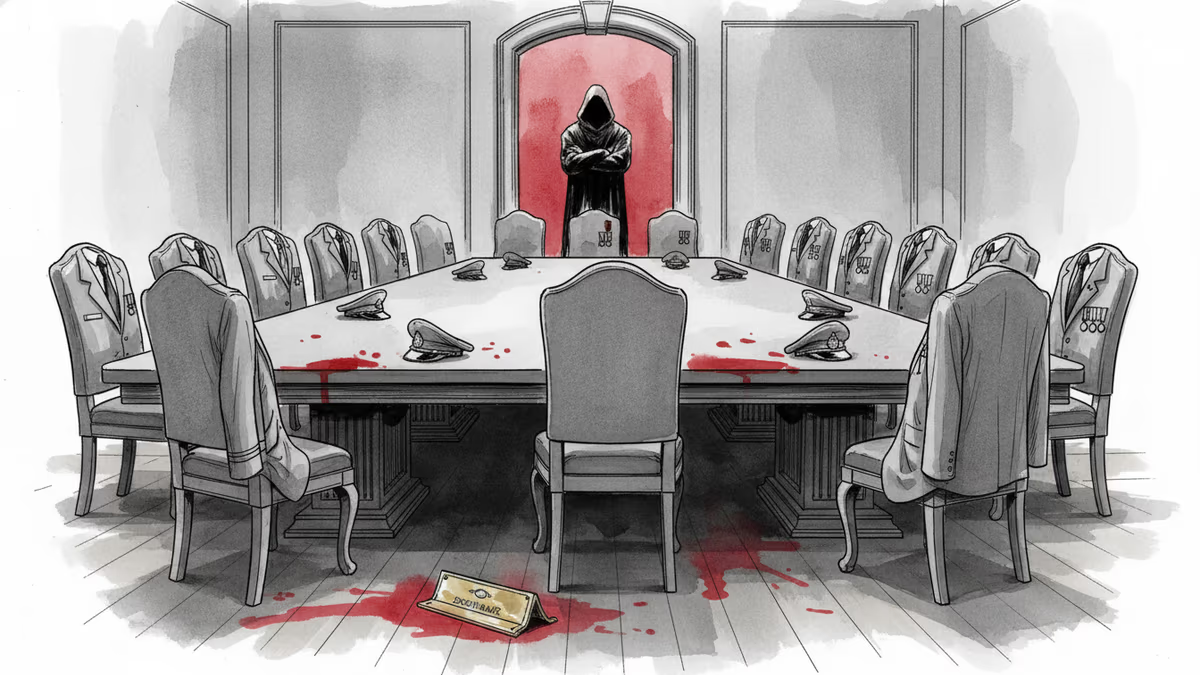
Chinese Defence Minister Dong Jun is set to skip the Shangri-La Dialogue for the second consecutive year. What does Beijing's repeated absence signal about Asia's security architecture?
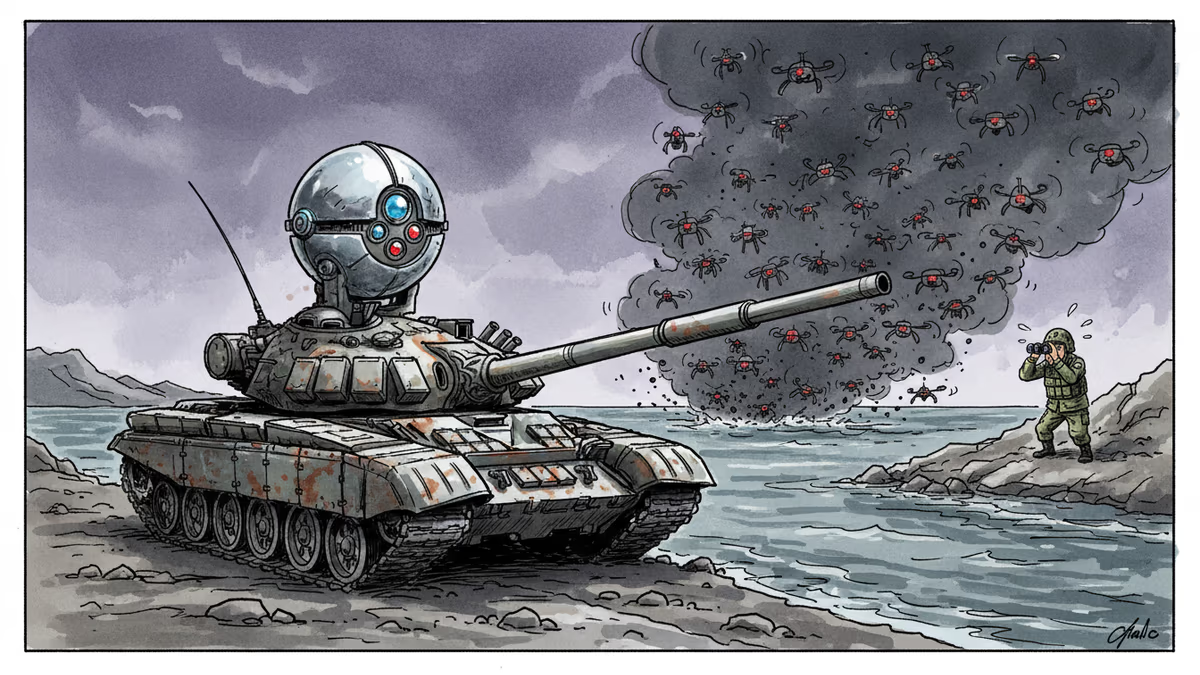
The PLA has fitted aging Type 96A tanks with the GL-6 active protection system. The unit belongs to Eastern Theatre Command, responsible for Taiwan Strait operations. Ukraine's lessons are reshaping East Asia's military calculus.
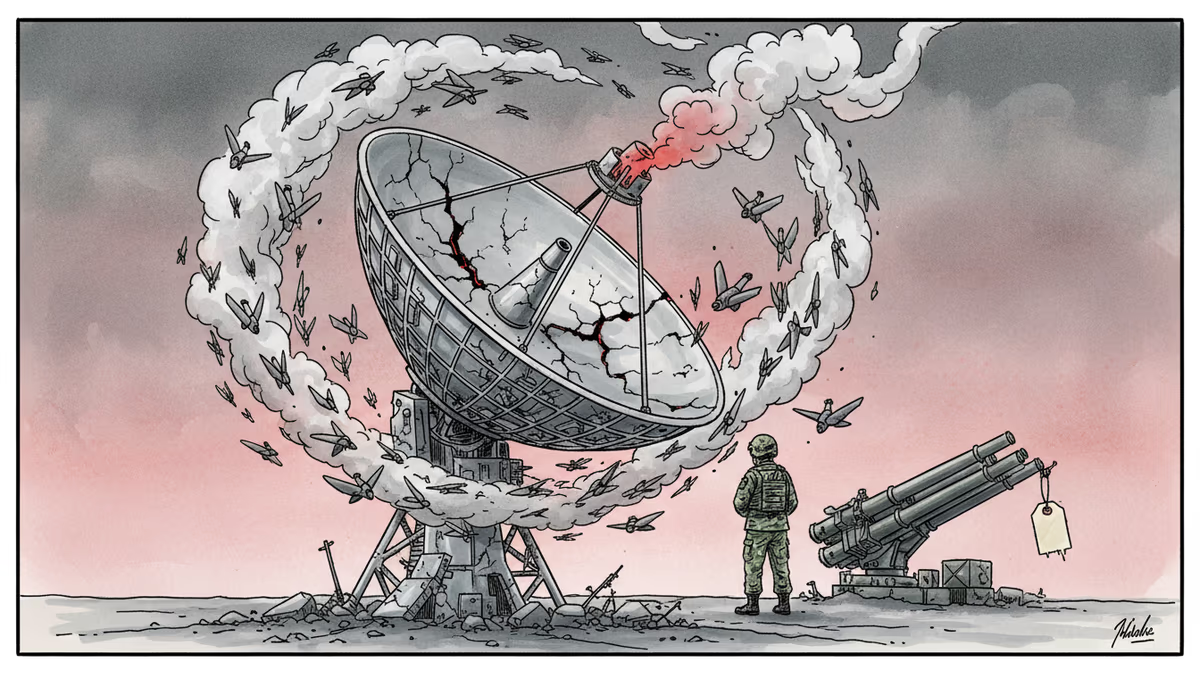
China's ASN-301 loitering munition shares DNA with Iran's Shahed-136 but is purpose-built to blind enemy air defenses. Here's why that distinction matters for the Pacific.
Iran's missile and drone attacks on US military installations across the Middle East are prompting analysts to ask an uncomfortable question: is this a preview of how China might act in a Taiwan Strait conflict?
Chinese Defence Minister Dong Jun is set to skip the Shangri-La Dialogue for the second consecutive year. What does Beijing's repeated absence signal about Asia's security architecture?
The PLA has fitted aging Type 96A tanks with the GL-6 active protection system. The unit belongs to Eastern Theatre Command, responsible for Taiwan Strait operations. Ukraine's lessons are reshaping East Asia's military calculus.
China's ASN-301 loitering munition shares DNA with Iran's Shahed-136 but is purpose-built to blind enemy air defenses. Here's why that distinction matters for the Pacific.
Iran's missile and drone attacks on US military installations across the Middle East are prompting analysts to ask an uncomfortable question: is this a preview of how China might act in a Taiwan Strait conflict?
Thoughts
Share your thoughts on this article
Sign in to join the conversation