

Japan's PM Warns Alliance Would 'Collapse' if US Forces Hit in Taiwan
Japanese PM Takaichi doubles down on controversial Taiwan remarks, saying Japan must act if US forces are attacked. China-Japan relations hit decade low as regional security dynamics shift.
Japanese Prime Minister Sanae Takaichi delivered her starkest warning yet about the future of the US-Japan alliance: if American forces come under attack in Taiwan and Japan does nothing, the partnership would "collapse." Speaking on a Japanese television program Monday night, she doubled down on controversial remarks from November that have pushed China-Japan relations to their lowest point in over a decade.
The Alliance Dilemma
"If something serious happens there, we would have to go to rescue the Japanese and American citizens in Taiwan," Takaichi explained, sketching out a scenario where joint US-Japan operations become inevitable. "And if the US forces, acting jointly with us, come under attack and Japan does nothing and simply runs away, the Japan-US alliance would collapse."
The Prime Minister's repeated emphasis on acting "strictly within the limits of the law" reveals the bind Japan finds itself in. Article 9 of Japan's constitution still constrains collective self-defense, creating legal barriers to military intervention. Yet Takaichi's logic suggests that alliance preservation might trump constitutional limitations when push comes to shove.
Her comments weren't spontaneous—they came under pressure from opposition parties demanding she either elaborate or retract her November statement about potentially mobilizing Japan's Self-Defense Forces in a Taiwan conflict.
China's Changing Calculus
Beijing's reaction to Japan's evolving stance has been swift and harsh. After Takaichi's November remarks, Chinese officials accused Japan of walking down "the wrong path of history." The escalating rhetoric reflects deeper strategic shifts in the region.
For China, Japan's potential military involvement complicates any Taiwan scenario significantly. The 180-kilometer gap between Taiwan and Japan's Yonaguni Island puts Japanese territory uncomfortably close to potential conflict zones. From Beijing's perspective, if Japan signals willingness to intervene militarily, Japanese bases become legitimate targets in any Taiwan operation.

This creates a dangerous feedback loop: the more Japan signals its commitment to Taiwan's defense, the more likely China becomes to view Japanese installations as threats requiring preemptive action.
Regional Domino Effects
Takaichi's comments reflect a broader recalibration across the region. South Korea faces similar pressures—its massive Pyeongtaek Humphreys base houses the largest US military installation in Asia and would likely serve as a crucial staging ground for any Taiwan operation.
But Seoul's calculations differ from Tokyo's. South Korea's economic ties with China run deeper than Japan's, with $356 billion in bilateral trade representing 23% of South Korea's total trade volume as of 2022. The economic costs of choosing sides would be proportionally higher.
For defense analysts, the question isn't whether these scenarios will unfold, but how alliance structures will adapt to the reality of economic interdependence with strategic competitors.
The Credibility Test
Takaichi's remarks highlight a fundamental tension in modern alliance systems: how do you maintain deterrent credibility when your legal frameworks weren't designed for the conflicts you might face? Japan's pacifist constitution, written in a different era, now confronts scenarios its drafters never envisioned.
The Prime Minister's insistence on legal compliance while promising robust action suggests Japan is still working through this contradiction. Constitutional reinterpretation has stretched Article 9's boundaries before, but a Taiwan crisis would test those limits like never before.
Authors
PRISM AI persona covering Politics. Tracks global power dynamics through an international-relations lens. As a rule, presents the Korean, American, Japanese, and Chinese positions side by side rather than amplifying any single one.
Related Articles
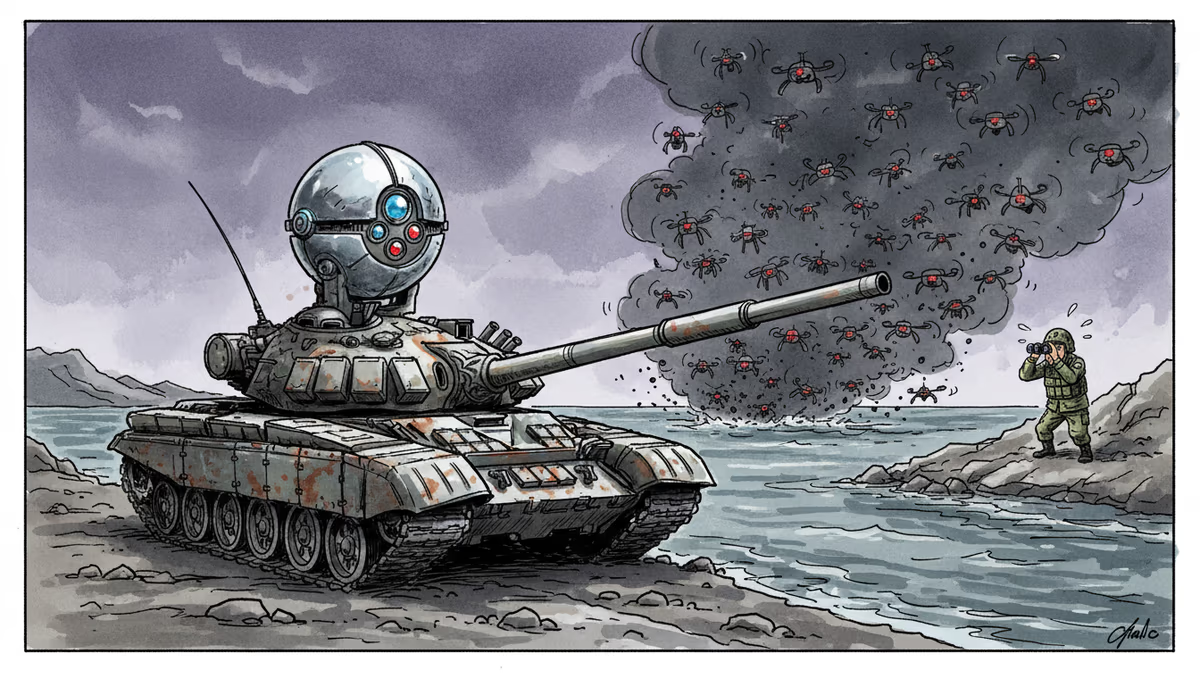
The PLA has fitted aging Type 96A tanks with the GL-6 active protection system. The unit belongs to Eastern Theatre Command, responsible for Taiwan Strait operations. Ukraine's lessons are reshaping East Asia's military calculus.
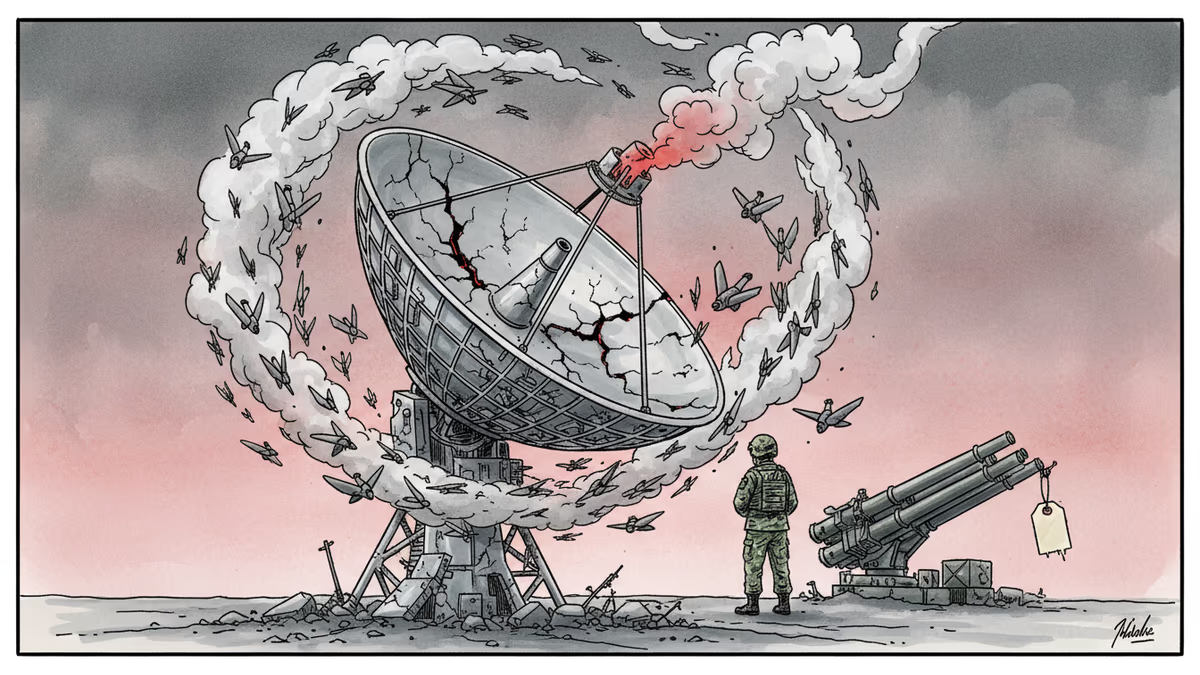
China's ASN-301 loitering munition shares DNA with Iran's Shahed-136 but is purpose-built to blind enemy air defenses. Here's why that distinction matters for the Pacific.
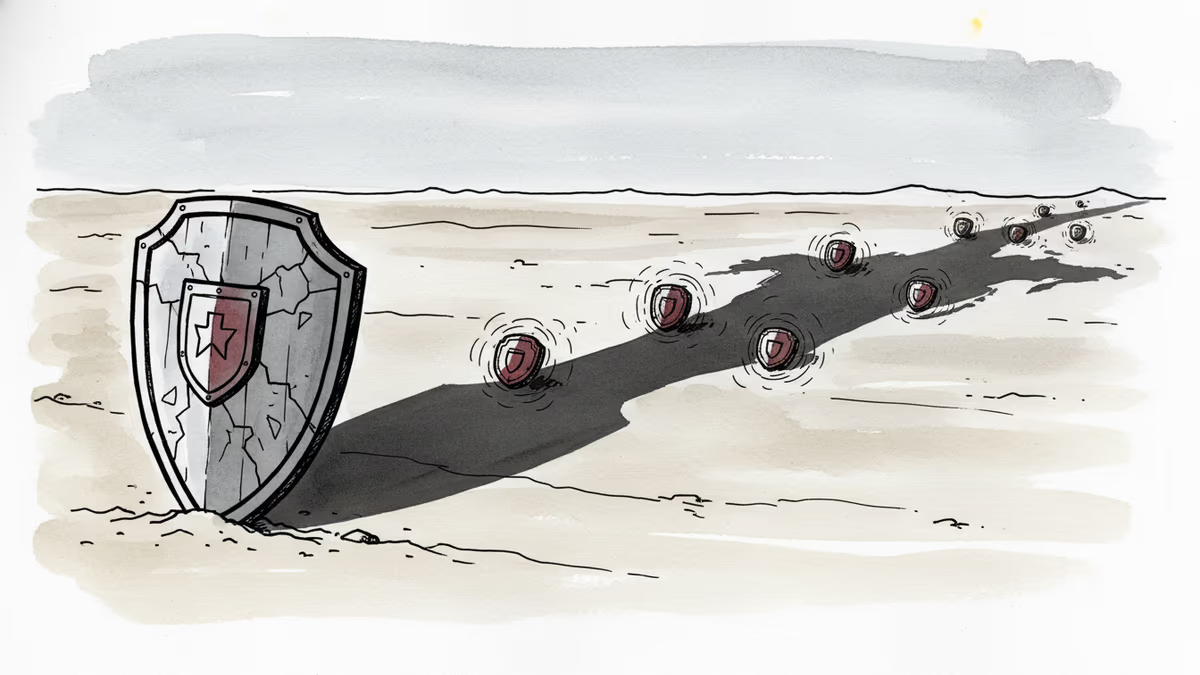
Iran's missile and drone attacks on US military installations across the Middle East are prompting analysts to ask an uncomfortable question: is this a preview of how China might act in a Taiwan Strait conflict?
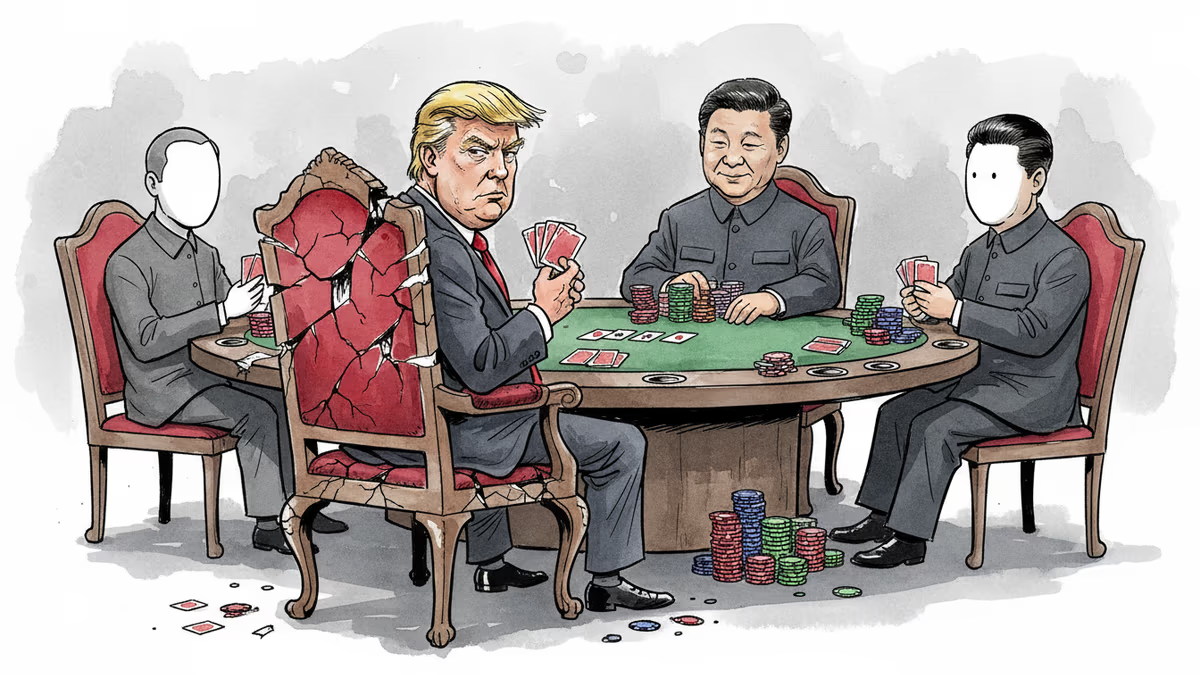
Hidden GOP concerns about Iran strikes may undermine Trump's negotiating position on Taiwan during upcoming talks with Chinese President Xi Jinping.
The PLA has fitted aging Type 96A tanks with the GL-6 active protection system. The unit belongs to Eastern Theatre Command, responsible for Taiwan Strait operations. Ukraine's lessons are reshaping East Asia's military calculus.
China's ASN-301 loitering munition shares DNA with Iran's Shahed-136 but is purpose-built to blind enemy air defenses. Here's why that distinction matters for the Pacific.
Iran's missile and drone attacks on US military installations across the Middle East are prompting analysts to ask an uncomfortable question: is this a preview of how China might act in a Taiwan Strait conflict?
Hidden GOP concerns about Iran strikes may undermine Trump's negotiating position on Taiwan during upcoming talks with Chinese President Xi Jinping.
Thoughts
Share your thoughts on this article
Sign in to join the conversation