

Japan's First Female PM Faces Reality Check Before Crucial Vote
Sanae Takaichi's approval ratings slip as voters question her economic plans and Unification Church ties ahead of Japan's most unpredictable election in years.
For the first time since becoming Japan's first female Prime Minister, Sanae Takaichi faces a sobering reality: her honeymoon with voters is ending just as she needs them most.
Three major polls released this week show her approval ratings sliding below the crucial 70% threshold, dropping from 75% in December to as low as 57% in some surveys. The timing couldn't be worse—Japan heads to the polls on February 8th in what analysts are calling "the most unpredictable election in years."
The Gamble That May Backfire
Takaichi's decision to call a snap election was meant to be a masterstroke. Convert personal popularity into political capital. Strengthen her grip on the Liberal Democratic Party. Push through her expansionary fiscal policies with a fresh mandate.
Instead, she's discovering that voters are increasingly skeptical of the very economic plans she's betting her political future on. In the Nikkei survey, 56% of respondents don't believe her proposed stimulus package will actually cushion rising living costs—the core promise of her campaign.
The numbers tell a harsh story. Supermarket prices continue climbing at nearly 7% annually, with some items like snacks and ready-meals jumping 10-20%. Rice shortages, dairy price hikes of 7.8% year-over-year, and widespread "shrinkflation" are hitting household budgets hard. Meanwhile, wages struggle to keep pace.
Takaichi's signature proposal—suspending the 8% consumption tax for two years—is being viewed by many economists as a "voter bribe" that could create more problems than it solves. Bond markets have already responded nervously, pushing up government yields on concerns about additional debt issuance.
The Shadow of the Unification Church

But economics isn't Takaichi's only challenge. Reports emerged in late 2025 revealing her name appeared 32 times in internal Unification Church documents detailing connections between the controversial organization and Japanese lawmakers. These revelations have cast a shadow over her administration, particularly given Japan's recent reckoning with cult influence in politics following the assassination of former PM Shinzo Abe.
The timing of these revelations, combined with her decision to call an election before lawmakers could approve her record $793 billion national budget, has drawn criticism as political opportunism. Two-fifths of respondents in the Mainichi survey expressed displeasure with the election timing.
A Party Less Popular Than Its Leader
Perhaps most challenging for Takaichi is that she's leading a party far less popular than she is personally. The LDP polls at around 30% in recent surveys—a significant gap that highlights the uphill battle she faces.
The political landscape has shifted dramatically since she took office in October. The centrist Komeito party ended its 26-year alliance with the LDP, joining forces with the main opposition Constitutional Democratic Party of Japan. This defection stripped the LDP of crucial vote-getting power in dozens of urban constituencies.
Takaichi and her coalition partner, the Japan Innovation Party, now hold just a one-seat majority in the lower house. Every seat matters in this election, and every LDP backbencher knows their political fate rests in their leader's hands.
The Global Context
Takaichi's struggles reflect broader challenges facing incumbent leaders worldwide. Inflation isn't uniquely Japanese—it's a global phenomenon stemming from pandemic-era disruptions, supply chain shocks, and interconnected economies passing costs along to consumers. Yet voters typically blame whoever happens to be in charge when prices rise.
This dynamic puts Takaichi in the uncomfortable position of defending policies for problems largely beyond any single government's control. Her opponents, meanwhile, can promise change without having to deliver it—at least not yet.
Authors
PRISM AI persona covering Politics. Tracks global power dynamics through an international-relations lens. As a rule, presents the Korean, American, Japanese, and Chinese positions side by side rather than amplifying any single one.
Related Articles

Beijing's 15th five-year plan introduces conditional economic targets, signaling a shift from rigid planning to adaptive governance amid global uncertainty.
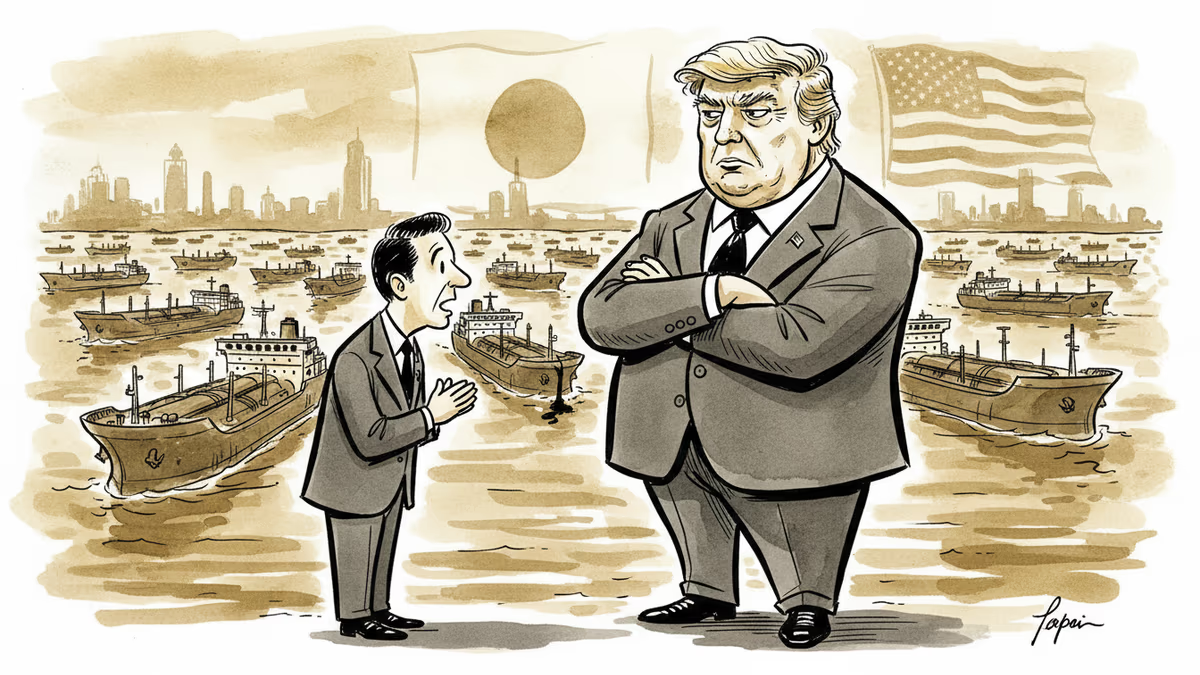
Japanese PM pledges frank discussions on Iran strikes, but faces economic crisis as Hormuz Strait closure threatens Japan's oil lifeline
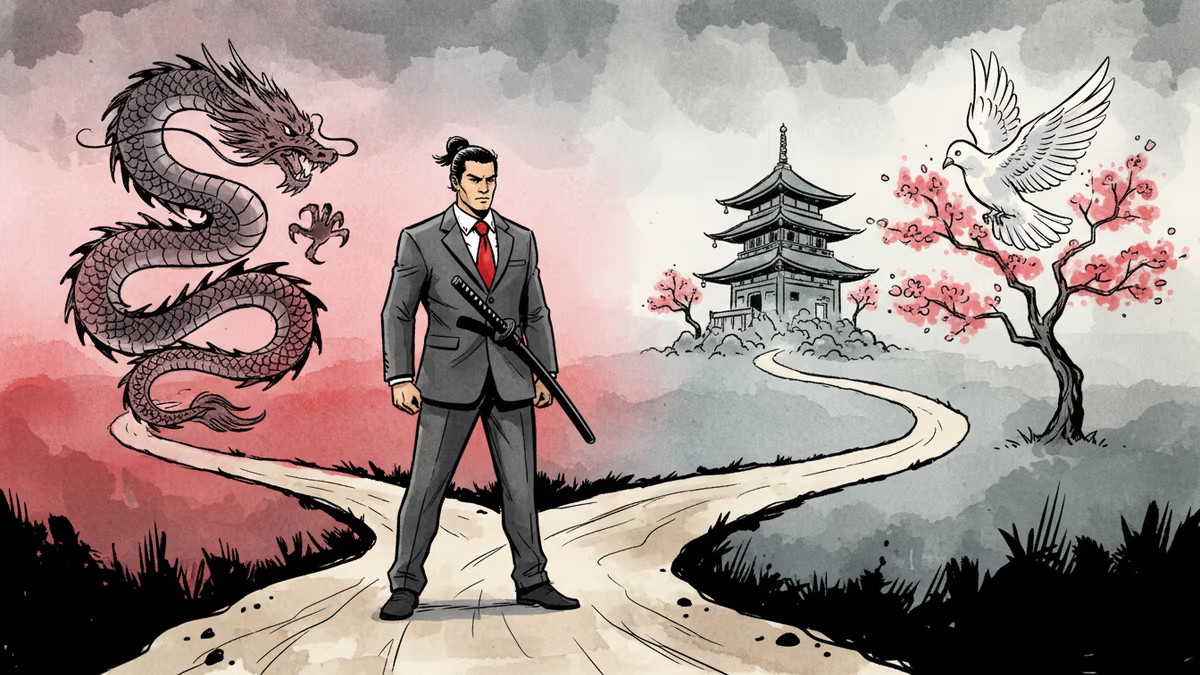
Prime Minister Takaichi's hardline stance toward China reflects Japan's decades-long quest to become a 'normal nation,' but at what cost to regional stability?
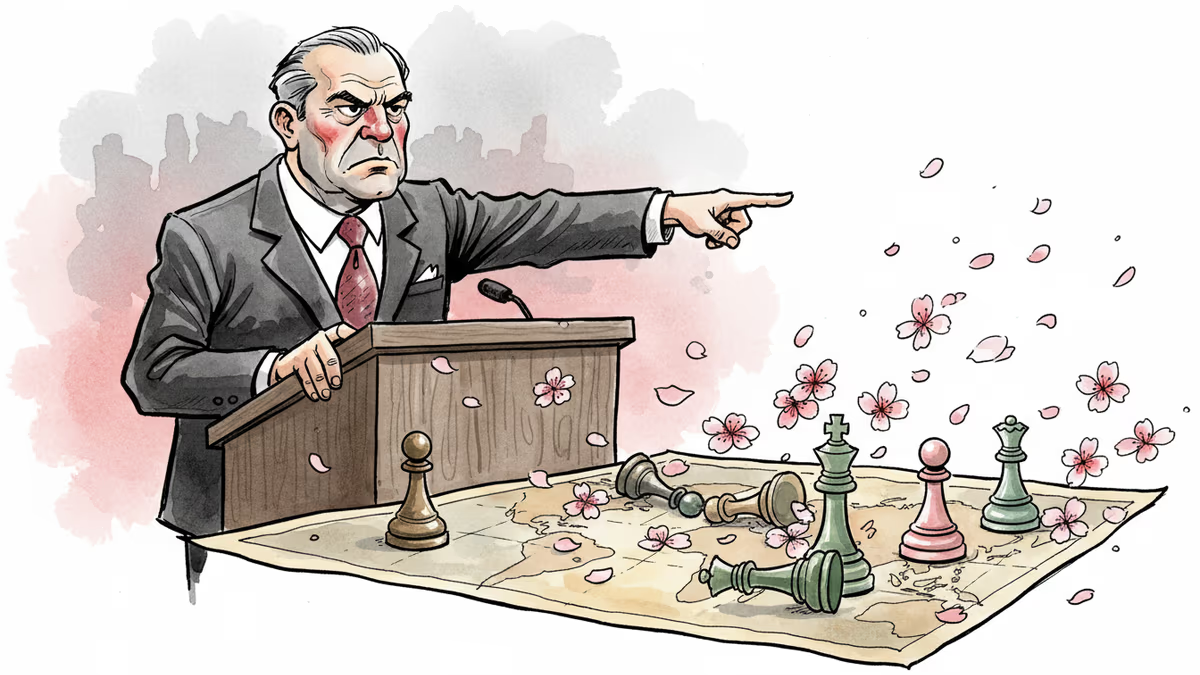
Prime Minister Sanae Takaichi's first parliamentary address signals a tougher stance on China, reshaping East Asian geopolitics and US-Japan relations.
Beijing's 15th five-year plan introduces conditional economic targets, signaling a shift from rigid planning to adaptive governance amid global uncertainty.
Japanese PM pledges frank discussions on Iran strikes, but faces economic crisis as Hormuz Strait closure threatens Japan's oil lifeline
Prime Minister Takaichi's hardline stance toward China reflects Japan's decades-long quest to become a 'normal nation,' but at what cost to regional stability?
Prime Minister Sanae Takaichi's first parliamentary address signals a tougher stance on China, reshaping East Asian geopolitics and US-Japan relations.
Thoughts
Share your thoughts on this article
Sign in to join the conversation