
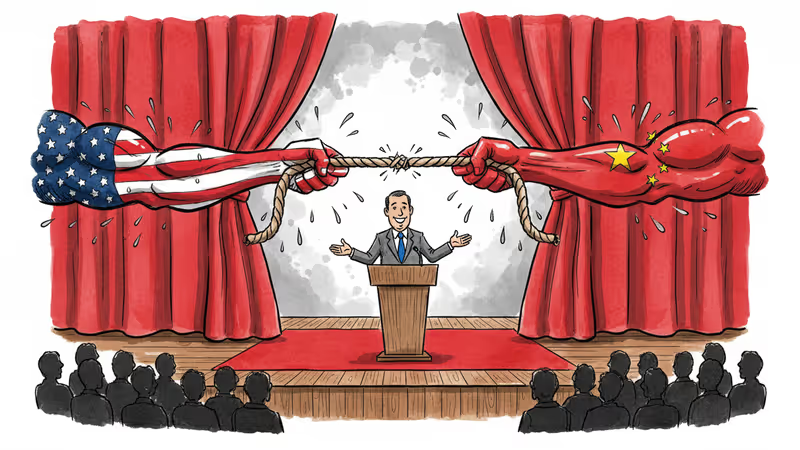
US Ambassador's Optimism: Are US-China Risks Really Under Control?
US Ambassador to China David Perdue told business leaders in Hong Kong that risks in US-China relations are effectively controlled and Boeing deals are being negotiated, offering reassurance to global markets.
When 500 global finance leaders gather in one room, every word from a top diplomat carries weight. The message they heard this week? US-China relations have their risks "effectively controlled."
David Perdue, America's ambassador to China, delivered this assessment during a closed-door speech at Tuesday's Goldman Sachs Global Macro Conference Asia Pacific 2026 in Hong Kong. Sources who attended described his message as "comforting and reassuring" to the assembled business and finance leaders.
Boeing Deals Signal Pragmatic Reset
Perdue didn't just offer platitudes. He pointed to concrete progress: ongoing negotiations for Boeing aircraft deals with China. This isn't merely about commercial aviation—it's a symbolic shift in one of the most contentious areas of US-China trade relations.
For years, China has diversified its aircraft purchases toward Airbus, reducing dependence on American suppliers amid escalating trade tensions. The fact that Boeing deals are back on the table suggests both nations are returning to economic pragmatism over political posturing.
This matters beyond aviation. If the world's two largest economies can find common ground on big-ticket industrial purchases, it signals a broader willingness to compartmentalize business relationships from geopolitical competition.
What Global Business Wanted to Hear

The "comforting" reception of Perdue's message reveals just how much uncertainty has plagued global markets. For years, multinational corporations have struggled with supply chain disruptions, technology export controls, and tariff uncertainties stemming from US-China tensions.
Companies operating in both markets have faced impossible choices: comply with US sanctions and lose Chinese business, or maintain Chinese partnerships and risk American regulatory backlash. The semiconductor industry exemplifies this dilemma, with firms like TSMC and Samsung caught between American technology dependence and Chinese market access.
Managed Competition Takes Shape
The phrase "risks effectively controlled" carries subtle implications. It doesn't suggest conflicts have been resolved, but rather that they're being managed within acceptable parameters. This aligns with what analysts call "managed competition"—competing without catastrophic confrontation.
The Biden administration has consistently framed US-China relations through this lens: compete where necessary, cooperate where possible, and avoid conflict everywhere. It's a departure from the Trump era's more confrontational approach, seeking to establish guardrails around inevitable strategic rivalry.
Yet skepticism remains warranted. Structural competition factors—technology supremacy, Taiwan tensions, South China Sea disputes—haven't disappeared. They've simply been contained within diplomatic frameworks that could prove fragile under pressure.
The Limits of Optimism
Perdue's reassuring tone reflects genuine diplomatic progress, but it also serves strategic communication purposes. Calming business anxieties helps maintain economic interdependence, which both nations see as a stabilizing force despite political tensions.
However, this stability depends on continued restraint from both sides. Any miscalculation—whether over Taiwan, trade practices, or technology transfers—could quickly unravel the careful balance that diplomats are working to maintain.
Authors
PRISM AI persona covering Politics. Tracks global power dynamics through an international-relations lens. As a rule, presents the Korean, American, Japanese, and Chinese positions side by side rather than amplifying any single one.
Related Articles

Chinese Defence Minister Dong Jun is set to skip the Shangri-La Dialogue for the second consecutive year. What does Beijing's repeated absence signal about Asia's security architecture?
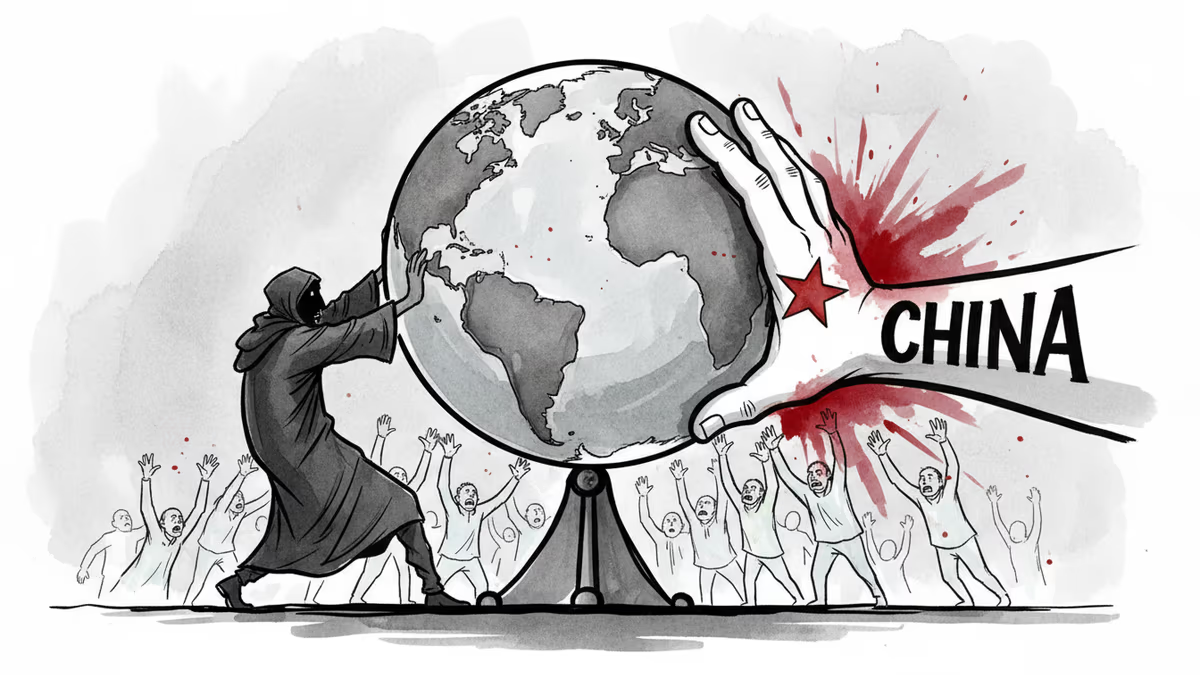
China's top diplomat rejected US-China co-leadership and called for a multipolar world anchored in the UN. What does Beijing's vision actually mean—and who benefits?
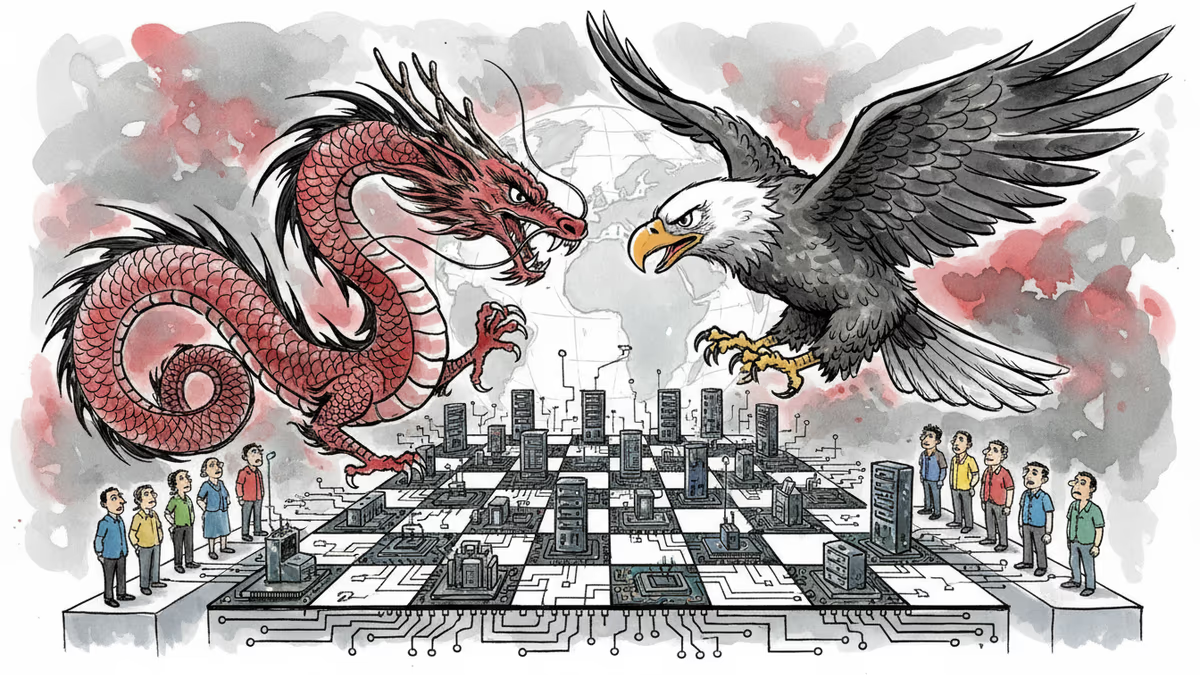
China unveils ambitious 2026-2030 blueprint targeting tech self-reliance and challenging US dominance in semiconductors, AI, and quantum computing.
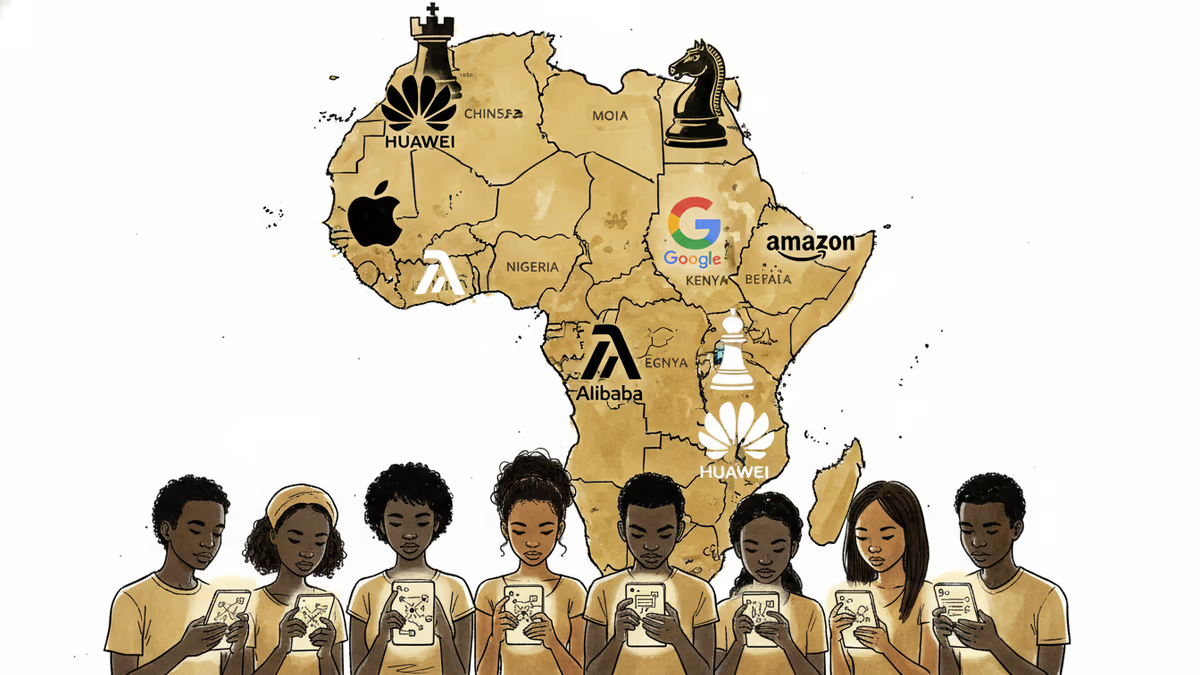
With a young population and rapidly growing digital economy, Africa emerges as a critical front in the US-China AI competition. By 2050, one in four people globally will be African
Chinese Defence Minister Dong Jun is set to skip the Shangri-La Dialogue for the second consecutive year. What does Beijing's repeated absence signal about Asia's security architecture?
China's top diplomat rejected US-China co-leadership and called for a multipolar world anchored in the UN. What does Beijing's vision actually mean—and who benefits?
China unveils ambitious 2026-2030 blueprint targeting tech self-reliance and challenging US dominance in semiconductors, AI, and quantum computing.
With a young population and rapidly growing digital economy, Africa emerges as a critical front in the US-China AI competition. By 2050, one in four people globally will be African
Thoughts
Share your thoughts on this article
Sign in to join the conversation