

Crypto Isn't Anonymous Anymore: China Crypto Bribery Investigation Exposes Former CBDC Chief
China's CCDI has exposed a major bribery case involving Yao Qian, former PBoC digital currency head. Learn how the China crypto bribery investigation tracked 2,000 ETH.
The myth of untraceable digital wealth is crumbling. Beijing's anti-corruption watchdogs have revealed how they're cracking down on officials using cryptocurrencies to hide illicit gains. According to a documentary aired on state broadcaster CCTV, investigators are no longer blinded by the blockchain; they're simply following the money back to the physical world.
The 2,000 Ether Trail: How China Crypto Bribery Investigation Cracked the Case
At the center of this landmark case is Yao Qian, the 56-year-old former head of the People’s Bank of China's digital currency institute. As the architect who led the development of the digital renminbi, Yao was arguably one of the most knowledgeable people regarding digital finance in the country. However, his expertise didn't save him when the Central Commission for Discipline Inspection (CCDI) noticed a 20 million yuan (approx. $2.9 million) villa purchase in Beijing made under a relative's name.

- Bribe received: 2,000 ether coins from a digital currency firm director.
- Cashed out: 370 tokens for 10 million yuan during the 2021 crypto peak.
- Additional bribes: 12 million yuan in cold hard cash from an info services company.
From Digital Architect to Forensic Subject
The CCDI found that Yao had used his influence within the tech supervision sector to facilitate company listings in exchange for digital tokens. The breakthrough in the China crypto bribery investigation came from cross-referencing lifestyle inflation with blockchain exits. It's a clear signal that the Chinese state is integrating on-chain data with traditional financial surveillance to close the loop on corruption.
Authors
Related Articles
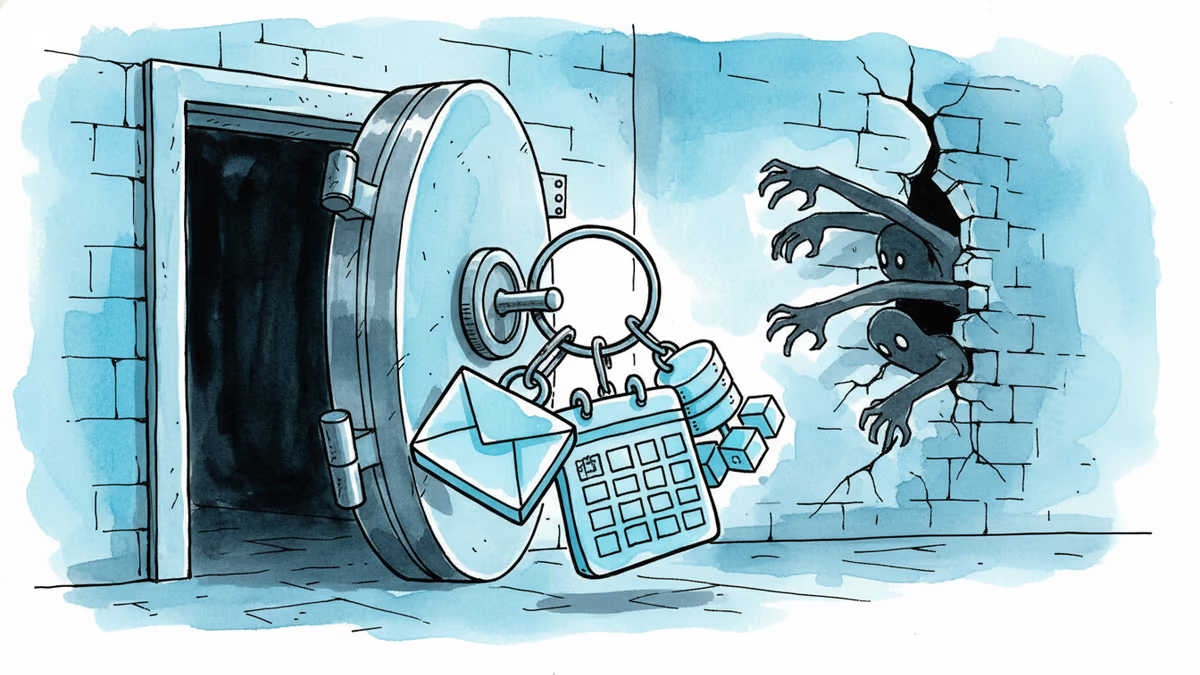
A critical vulnerability in Starlette—downloaded 325 million times per week—puts millions of AI agent servers at risk, exposing stored credentials for email, databases, and third-party services.

GitHub confirmed hackers stole data from 3,800 internal repositories via a poisoned VS Code extension. Here's why developer tools are now the most dangerous attack surface in tech.

A Utah woman was sentenced to life in prison partly because of her Google searches and deleted texts. The Kouri Richins case reveals how digital footprints have become the courtroom's most reliable witness.
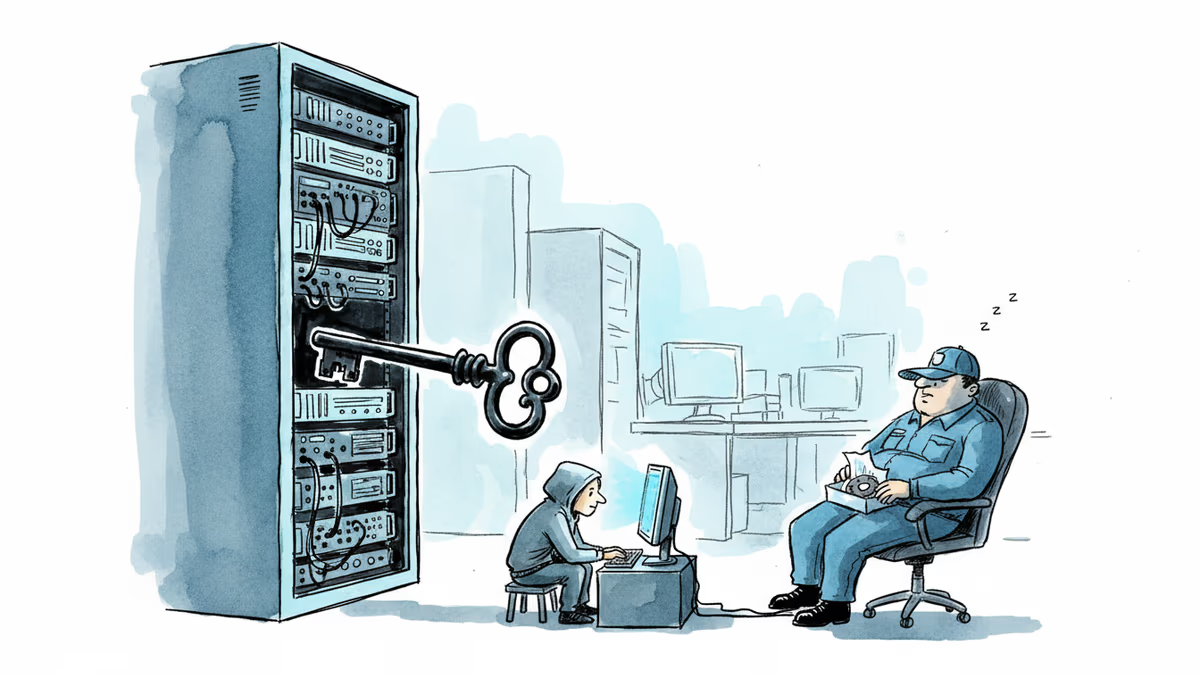
Dirty Frag gives low-privilege users root access on virtually every Linux distro. The exploit code leaked three days ago. Microsoft says attackers are already experimenting with it.
A critical vulnerability in Starlette—downloaded 325 million times per week—puts millions of AI agent servers at risk, exposing stored credentials for email, databases, and third-party services.
GitHub confirmed hackers stole data from 3,800 internal repositories via a poisoned VS Code extension. Here's why developer tools are now the most dangerous attack surface in tech.
A Utah woman was sentenced to life in prison partly because of her Google searches and deleted texts. The Kouri Richins case reveals how digital footprints have become the courtroom's most reliable witness.
Dirty Frag gives low-privilege users root access on virtually every Linux distro. The exploit code leaked three days ago. Microsoft says attackers are already experimenting with it.
Thoughts
Share your thoughts on this article
Sign in to join the conversation