

Breaking the Chokehold: Zhejiang 3nm AI Chip Breakthrough Targets by 2030
Zhejiang province unveils a 5-year plan (2026-2030) targeting 3nm and 7nm AI chip breakthroughs. Learn how China's tech hub aims to counter US sanctions.
China's tech heartland isn't waiting for permission. Zhejiang province just laid out a bold five-year roadmap to break the US semiconductor chokehold, targeting 3nm to 7nm chip breakthroughs. This move signals a massive push for indigenous technology in the face of escalating geopolitical rivalry.
Zhejiang 3nm AI Chip Breakthrough: The 2030 Vision
According to the South China Morning Post, Zhejiang—home to giants like Alibaba and robotics pioneer Unitree—revealed a draft industrial plan for 2026 to 2030. The province intends to concentrate on rapid progress across advanced nodes, specifically focusing on AI chips and semiconductor manufacturing equipment.

| Node Size | Transistor Density (Approx.) | Strategic Focus |
|---|---|---|
| 7nm | 90M - 100M per mm² | Current Breakthrough Goal |
| 3nm | 200M - 224M per mm² | Advanced Frontier Goal |
| RISC-V | N/A | 5th Gen Architecture |
Chasing the TSMC Standard
The urgency is fueled by TSMC's absolute dominance in the sector. On Jan 15, TSMC announced that advanced nodes (3nm, 5nm, 7nm) accounted for a staggering 77% of its total wafer revenue in Q4 2025. Zhejiang’s plan to develop high-end general-purpose chips and RISC-V architecture is a direct attempt to claw back market share and ensure national security.
Authors
Related Articles
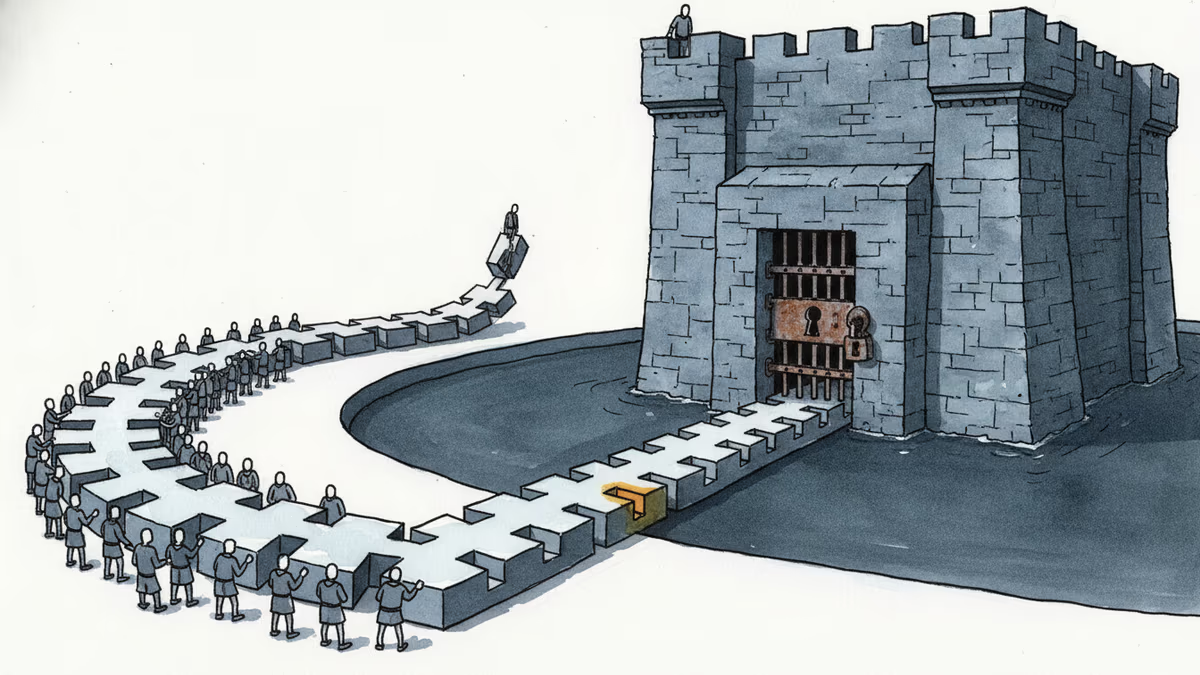
Nvidia shipped roughly a billion RISC-V cores in 2024, then announced it would run CUDA on the open standard. We break down how royalty-free instruction sets and open software stacks are trying to route around CUDA's lock-in. Part 2 of the Semiconductor Sovereignty series.
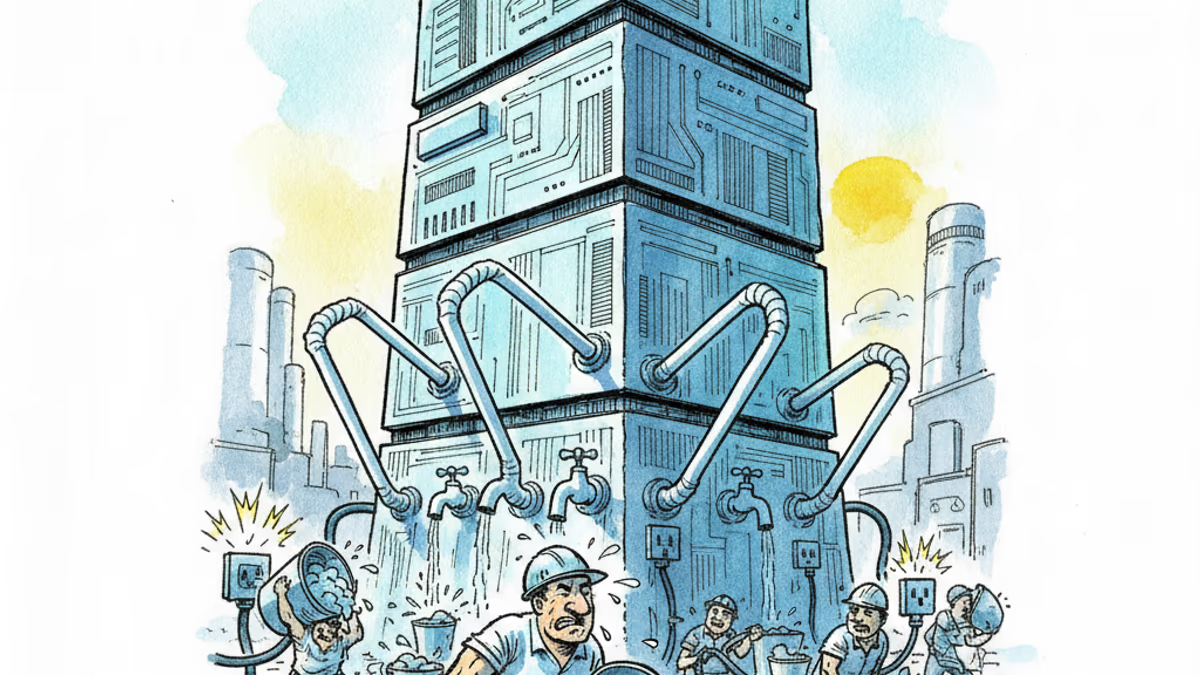
Samsung and SK unveiled a chip and AI investment package worth thousands of trillions of won on June 29. The headline number swings wildly by outlet, but the real contest isn't capital — it's water and power.

Moonshot AI raised $2B at a $20B valuation. Its Kimi models rank second on OpenRouter. What China's open-weight AI surge means for the global LLM market.
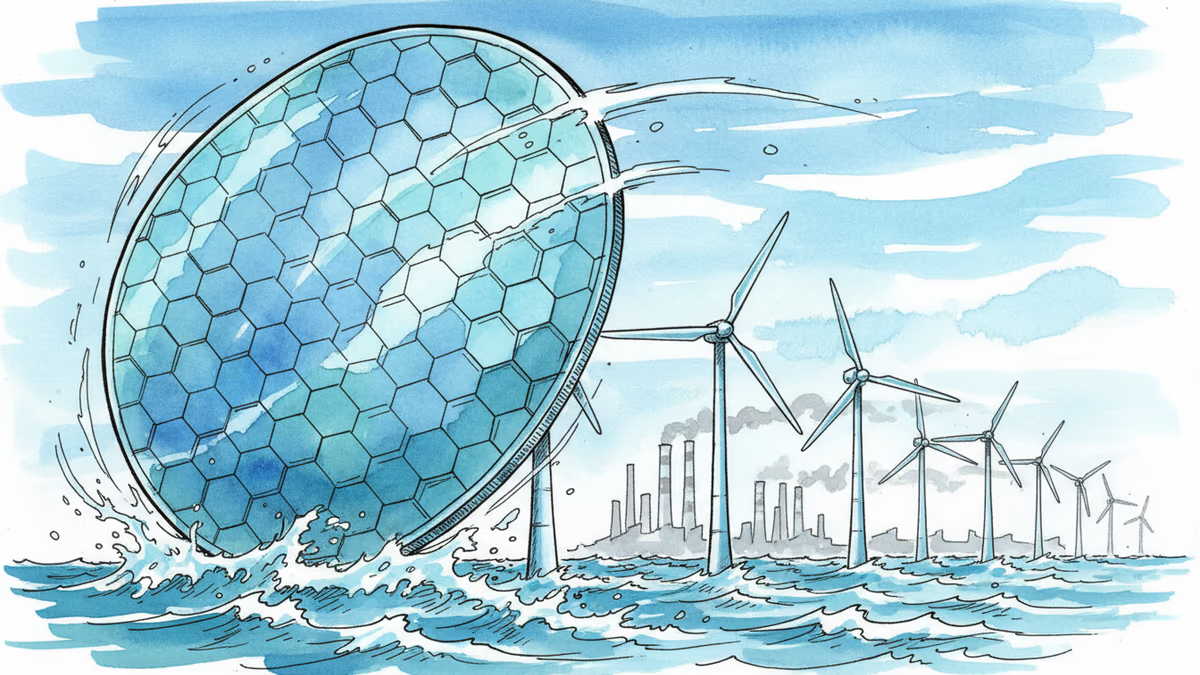
TSMC has signed a 30-year power purchase agreement for 100% of output from Taiwan's Hai Long offshore wind project. The 1GW deal reveals how chipmakers are quietly becoming energy companies.
Nvidia shipped roughly a billion RISC-V cores in 2024, then announced it would run CUDA on the open standard. We break down how royalty-free instruction sets and open software stacks are trying to route around CUDA's lock-in. Part 2 of the Semiconductor Sovereignty series.
Samsung and SK unveiled a chip and AI investment package worth thousands of trillions of won on June 29. The headline number swings wildly by outlet, but the real contest isn't capital — it's water and power.
Moonshot AI raised $2B at a $20B valuation. Its Kimi models rank second on OpenRouter. What China's open-weight AI surge means for the global LLM market.
TSMC has signed a 30-year power purchase agreement for 100% of output from Taiwan's Hai Long offshore wind project. The 1GW deal reveals how chipmakers are quietly becoming energy companies.
Thoughts
Share your thoughts on this article
Sign in to join the conversation