

2mm Precision: China Saves $50M TBM in Yangtze River Tunnel Rescue
China successfully rescued a $50M stalled TBM under the Yangtze River with a 2mm vertical error. Learn how this engineering feat saved the Jiangyin-Jingjiang tunnel project.
A daring underground rescue has saved a $50 million megaproject from certain abandonment. Beneath the country’s largest river, a massive tunnel boring machine (TBM) met its stranded twin with a staggering vertical error of just 2mm, proving that even the most catastrophic engineering failures can be reversed with extreme precision.
China Yangtze River Tunnel TBM Recovery: A High-Stakes Rendezvous
According to state media reports on Wednesday, engineers have achieved a technical feat previously thought impossible. They successfully recovered a shield tunnelling machine (STM) that had been entombed under the Yangtze River since February 2023. The rendezvous was so precise that it showed zero horizontal deviation and less than 0.078 inches of vertical error.
The crisis began when a 16m-diameter machine ground to a halt midway through the 6.4km Jiangyin-Jingjiang Yangtze River Tunnel project. Stuck at a depth of 54 metres under crushing water pressure, the $50 million asset was effectively lost, threatening the viability of the entire dual six-lane highway project linking Jiangsu province's industrial zones.

From 'Steel Tomb' to Engineering Benchmark
The recovery team didn't give up. They deployed a second TBM from the opposite direction to excavate toward the stranded unit. This mid-river docking strategy turned a potential multi-million dollar write-off into a defining moment for modern deep-underground engineering.
Authors
Related Articles
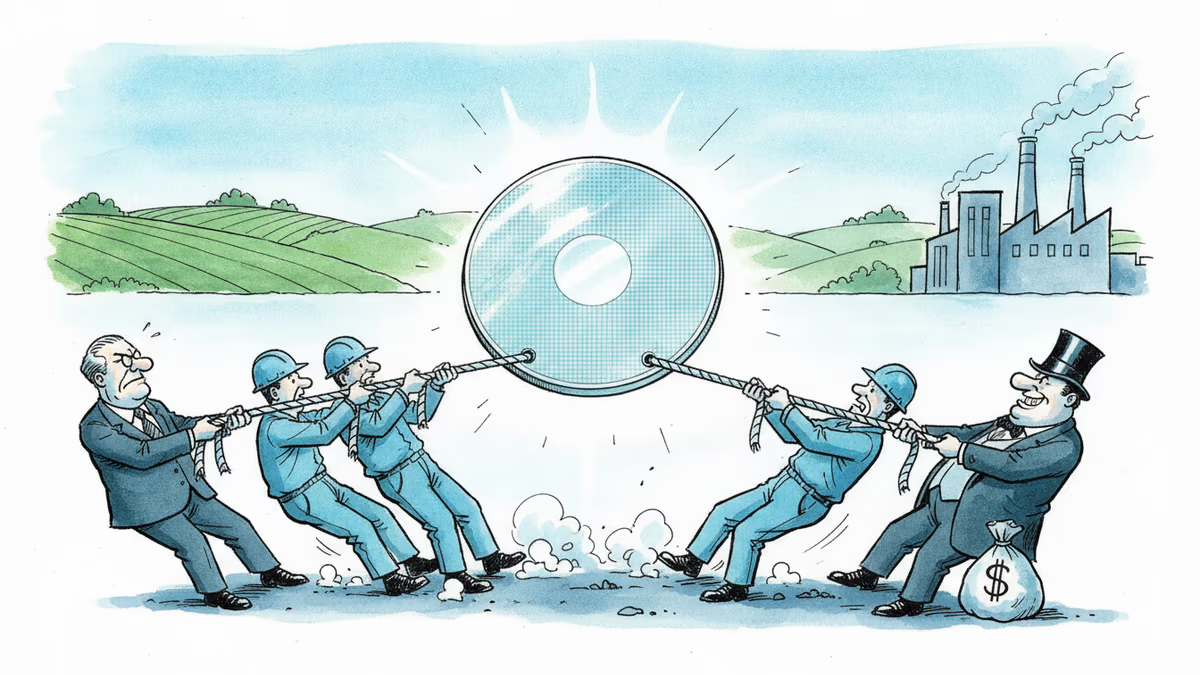
Samsung Electronics' union branch revealed that 84% of survey respondents oppose the government's roughly $290 billion (₩400 trillion) semiconductor megaproject in Gwangju. Government, management, the union and shareholders are all reading the same national project in sharply different ways.
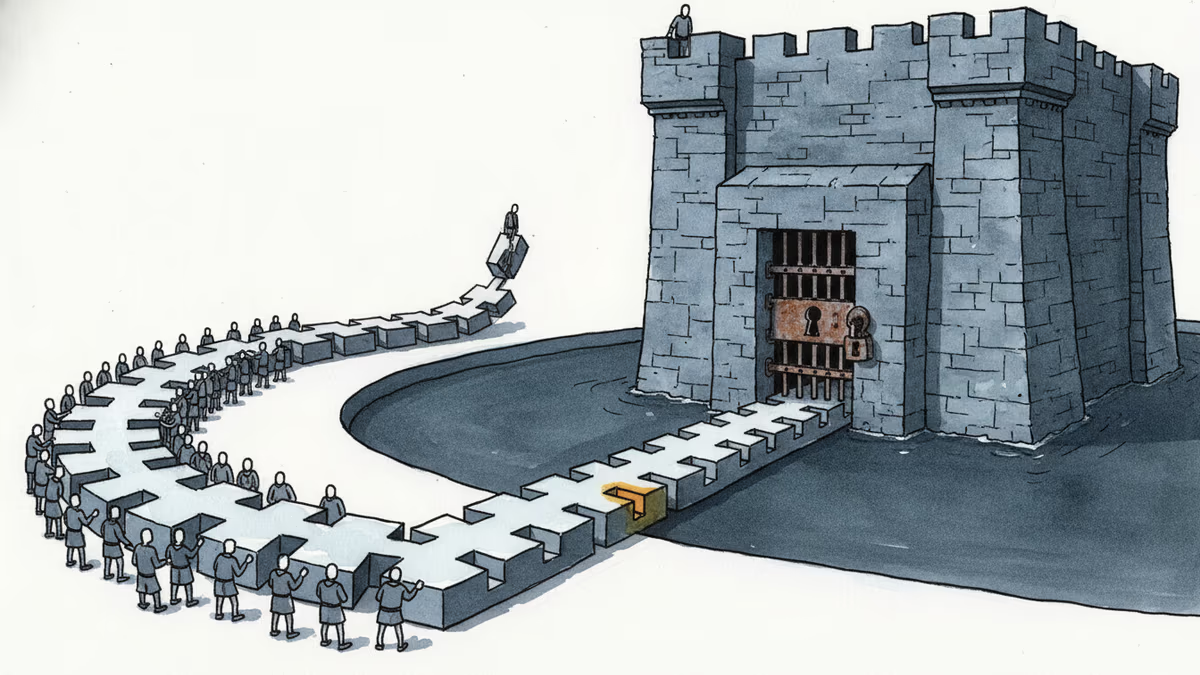
Nvidia shipped roughly a billion RISC-V cores in 2024, then announced it would run CUDA on the open standard. We break down how royalty-free instruction sets and open software stacks are trying to route around CUDA's lock-in. Part 2 of the Semiconductor Sovereignty series.
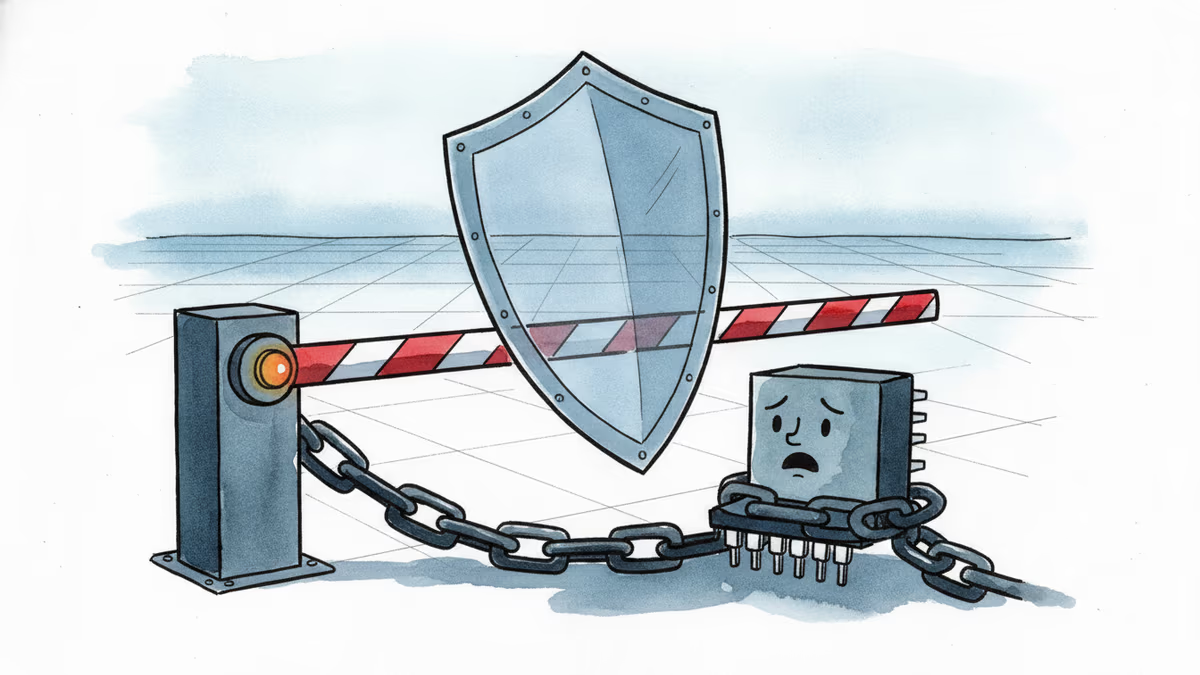
US AI-chip export controls split into three layers in the first half of 2026 — January easing, a May crackdown on circumvention, and a pending bill. Nvidia erased China from its guidance and still posted a record $81.6 billion quarter. A look at the export policy that both shields and cages it.
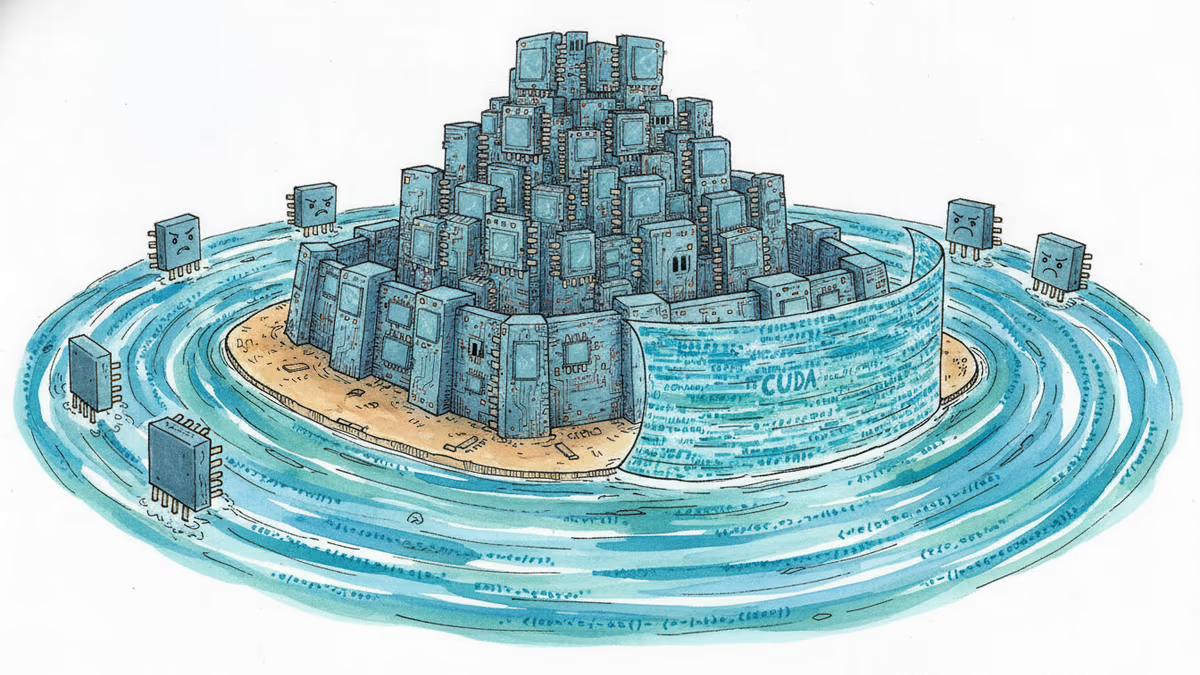
AMD's MI325X matches or beats Nvidia on memory and bandwidth — yet Nvidia's 86-92% share holds. The real moat is CUDA, 20 years in the making. Part 1 of 4.
Samsung Electronics' union branch revealed that 84% of survey respondents oppose the government's roughly $290 billion (₩400 trillion) semiconductor megaproject in Gwangju. Government, management, the union and shareholders are all reading the same national project in sharply different ways.
Nvidia shipped roughly a billion RISC-V cores in 2024, then announced it would run CUDA on the open standard. We break down how royalty-free instruction sets and open software stacks are trying to route around CUDA's lock-in. Part 2 of the Semiconductor Sovereignty series.
US AI-chip export controls split into three layers in the first half of 2026 — January easing, a May crackdown on circumvention, and a pending bill. Nvidia erased China from its guidance and still posted a record $81.6 billion quarter. A look at the export policy that both shields and cages it.
AMD's MI325X matches or beats Nvidia on memory and bandwidth — yet Nvidia's 86-92% share holds. The real moat is CUDA, 20 years in the making. Part 1 of 4.
Thoughts
Share your thoughts on this article
Sign in to join the conversation