
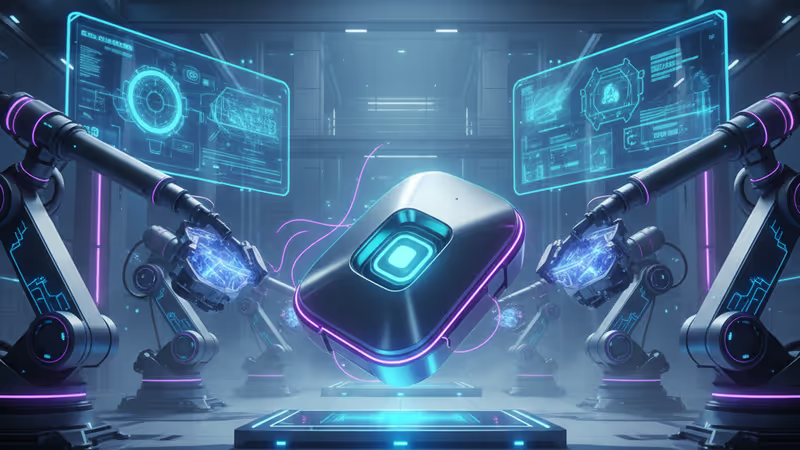
China's Hi-tech Manufacturing 2026: The Road to 2035 Global Dominance
China reaches the global top 4 in manufacturing power as of 2026. Explore how the China hi-tech manufacturing 2026 blueprint aims for 2035 leadership through AI and robotics.
The era of cheap mass production is over; the age of high-tech dominance has begun. China just solidified its position as the world's 4th most advanced manufacturing power as of 2024. Now, it's setting its sights on overtaking the U.S., Germany, and Japan to become the world's leading manufacturing powerhouse by 2035.
Strategic Blueprint for China Hi-tech Manufacturing 2026
According to reports from the Chinese Academy of Engineering and other key institutions, China's manufacturing sector is no longer just about scale—it's about excellence. The country has hit its strategic milestone ahead of schedule, proving that the sector is the backbone of its real economic development.
The latest "Green Paper" highlights 17 strategic sectors poised for transformation. These include next-generation IT, robotics, and aerospace equipment. The driving force behind this upgrade isn't just labor; it's the deep integration of Artificial Intelligence (AI).

Key Sectors Targeting World-Leading Status by 2030
Beijing expects seven specific industries to maintain or achieve global leadership through "original innovation" by 2030:
- Advanced rail transport and marine engineering
- New energy and Intelligent Connected Vehicles (ICVs)
- Information and communication equipment
- High-end textiles and home appliances
Authors
Related Articles

Eclipse Ventures just raised $1.3B to build an ecosystem of physical AI startups across transportation, energy, robotics, and defense. Here's why the strategy matters more than the money.
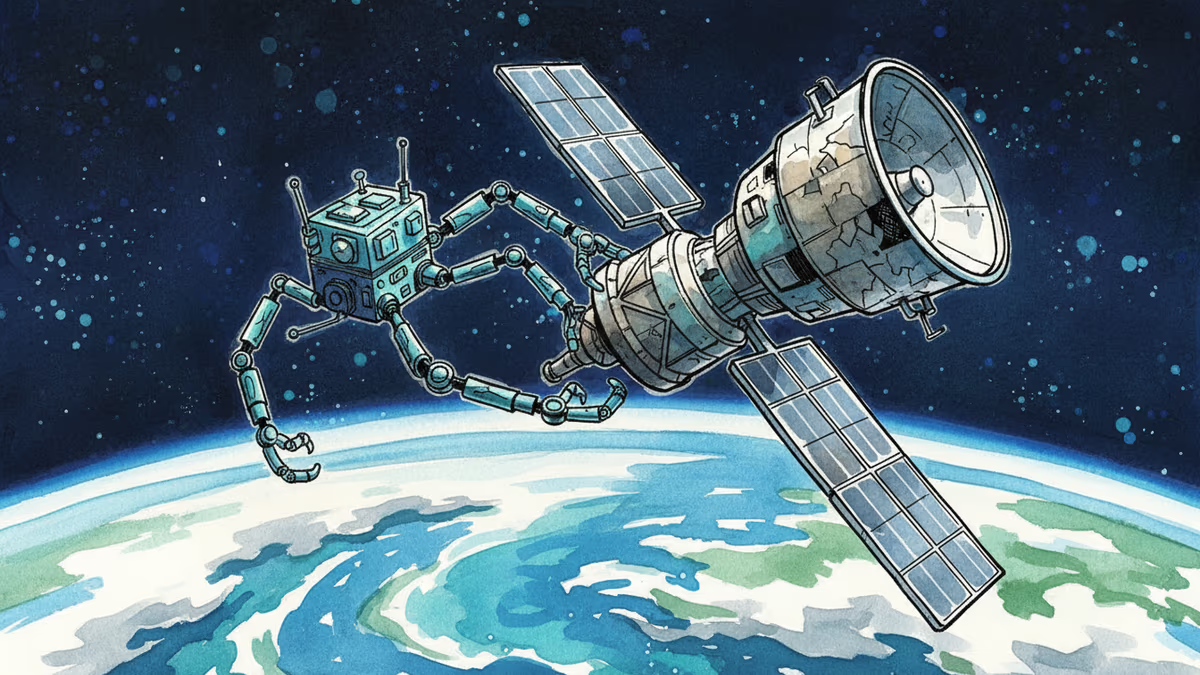
NASA's Swift Observatory is falling out of orbit. A $30M commercial robot mission may save it—and rewrite the rules for space infrastructure maintenance.

At Nvidia's GTC 2026, a rambling Olaf robot had its mic cut mid-demo. The real story isn't the glitch — it's the questions the industry keeps avoiding.

After 5 years as independent unit, Google absorbs AI robotics subsidiary Intrinsic, signaling strategic shift toward physical AI as core business priority
Eclipse Ventures just raised $1.3B to build an ecosystem of physical AI startups across transportation, energy, robotics, and defense. Here's why the strategy matters more than the money.
NASA's Swift Observatory is falling out of orbit. A $30M commercial robot mission may save it—and rewrite the rules for space infrastructure maintenance.
At Nvidia's GTC 2026, a rambling Olaf robot had its mic cut mid-demo. The real story isn't the glitch — it's the questions the industry keeps avoiding.
After 5 years as independent unit, Google absorbs AI robotics subsidiary Intrinsic, signaling strategic shift toward physical AI as core business priority
Thoughts
Share your thoughts on this article
Sign in to join the conversation