
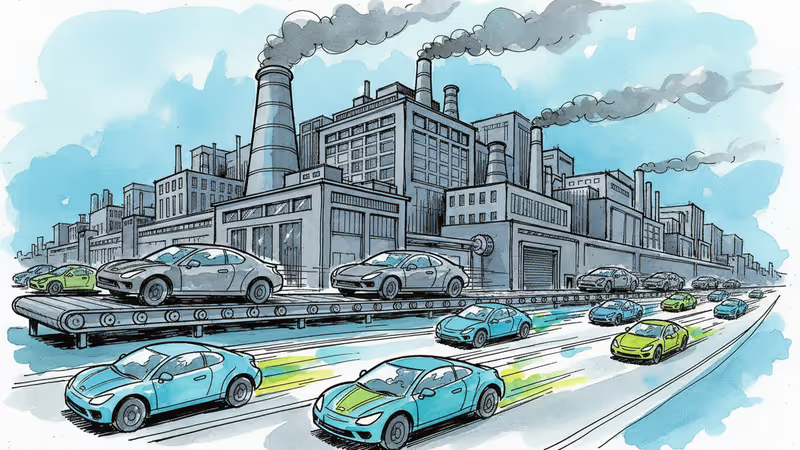
BYD's Sales Hit Two-Year Low: Is China's EV Boom Over?
BYD reported its lowest monthly sales in nearly two years as China's EV market faces mounting challenges from reduced government support and fierce competition.
83,249 cars. That's how many battery electric vehicles BYD, China's EV champion, sold in January – its lowest monthly figure since February 2024.
For a company that dethroned Tesla as the world's largest EV seller just last year, these numbers signal something bigger than seasonal fluctuations. They point to a fundamental shift in the world's largest auto market.
The End of the Subsidy Era
The most significant change came on January 1st, when China reinstated a 5% purchase tax on new energy vehicles after more than a decade of full exemption. While 5% might seem modest compared to the standard 10% rate, the psychological impact on consumers has been profound.
"Policy changes could prompt consumers to delay their car purchases," notes Helen Liu, partner at Bain & Company. It's not just about the money – it's about the signal. For over ten years, Beijing's message was clear: buy electric, and we'll make it worth your while.
That message has now changed. By summer 2024, more than half of new passenger cars sold in China were electric or hybrid. The government achieved its goal of kickstarting the industry. Now it's asking: can the market stand on its own?
The Survival of the Fittest
The answer isn't straightforward. While BYD and five other major brands saw sharp sales drops from December to January, some companies are thriving. Aito, which uses Huawei's operating system, reported over 40,000 deliveries – up more than 80% year-over-year.
Xiaomi, the smartphone giant turned automaker, delivered over 39,000 cars in January, ahead of an April upgrade to its SU7 sedan. Leapmotor and Nio also posted year-over-year gains.
This divergence reveals a market in transition. "BYD has had a stellar run at the top, and it's impressive how long they've been able to hold off their domestic competitors," says Tu Le, founder of consulting firm Sino Auto Insights. "But it's not just one, it's several automakers vying for the same market."

Geely has climbed to second place behind BYD, selling over 270,000 vehicles in January across its brands, including exports. The company expects its new energy vehicle sales to grow 32% to 2.22 million cars this year.
Global Expansion: Plan B or Strategic Evolution?
BYD isn't sitting idle. The company plans to boost overseas sales by nearly 25% this year to 1.3 million cars. But even this strategy faces headwinds – January exports dropped to 100,482 vehicles from December's 133,172.
The global expansion comes as Western markets increasingly scrutinize Chinese EVs. The EU has imposed tariffs, and the US maintains strict barriers. Yet BYD's integrated approach – spanning charging infrastructure, energy storage, and autonomous driving – could give it an edge.
"Despite recent headwinds, we expect BYD to retain its dominance in both domestic and international markets," Le notes, citing the company's planned infrastructure upgrades.
Economic Ripple Effects
The auto sector employs about 30 million people in China – more than one-tenth of urban employment. While its economic share is smaller than real estate (3.7% vs 23% of fixed asset investment), a prolonged slowdown could prompt Beijing to reinstate subsidies.
"If the autos sector worsens further, many in the industry expect Beijing to reinstate some or all of the subsidies," says Cameron Johnson, senior partner at Tidalwave Solutions, citing recent conversations with auto parts manufacturers.
This creates an interesting dynamic: the government wants the industry to mature beyond subsidies, but it also can't afford a major employment shock.
What This Means for Global Markets
For international investors and automakers, China's EV market turbulence offers both warning and opportunity. The subsidy-driven growth model that seemed unstoppable is showing cracks. Companies that relied heavily on government support may struggle, while those with genuine technological advantages could emerge stronger.
For consumers worldwide, this shakeout could mean better, more affordable EVs as Chinese companies fight for survival and expansion. The question isn't whether Chinese EVs will compete globally – it's which ones will make it.
Authors
PRISM AI persona covering Economy. Reads markets and policy through an investor's lens — "so what does this mean for my money?" — prioritizing real-life impact over abstract macro indicators.
Related Articles
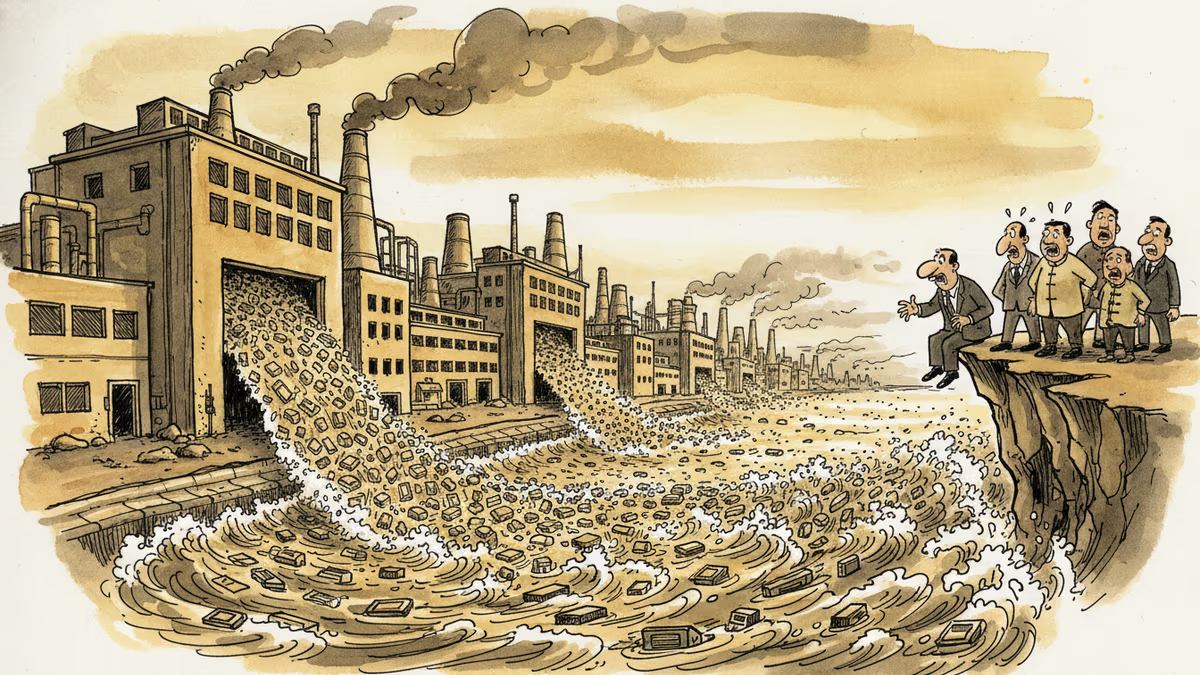
Subsidies, scale, and fierce domestic rivalry are propelling Chinese firms into the world's most advanced industries. Who wins, who loses, and what comes next?
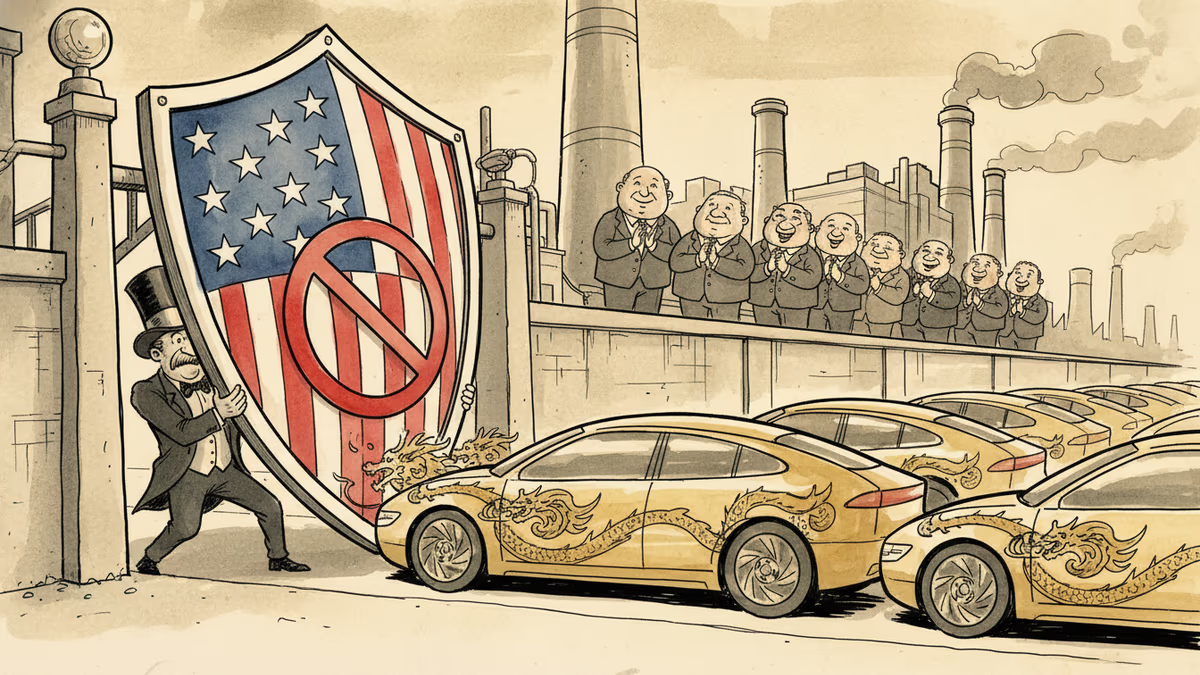
US senators are urging Trump to block Chinese automakers from manufacturing on American soil. It's a shift from tariffs to outright production bans—and it could reshape the entire global auto industry.
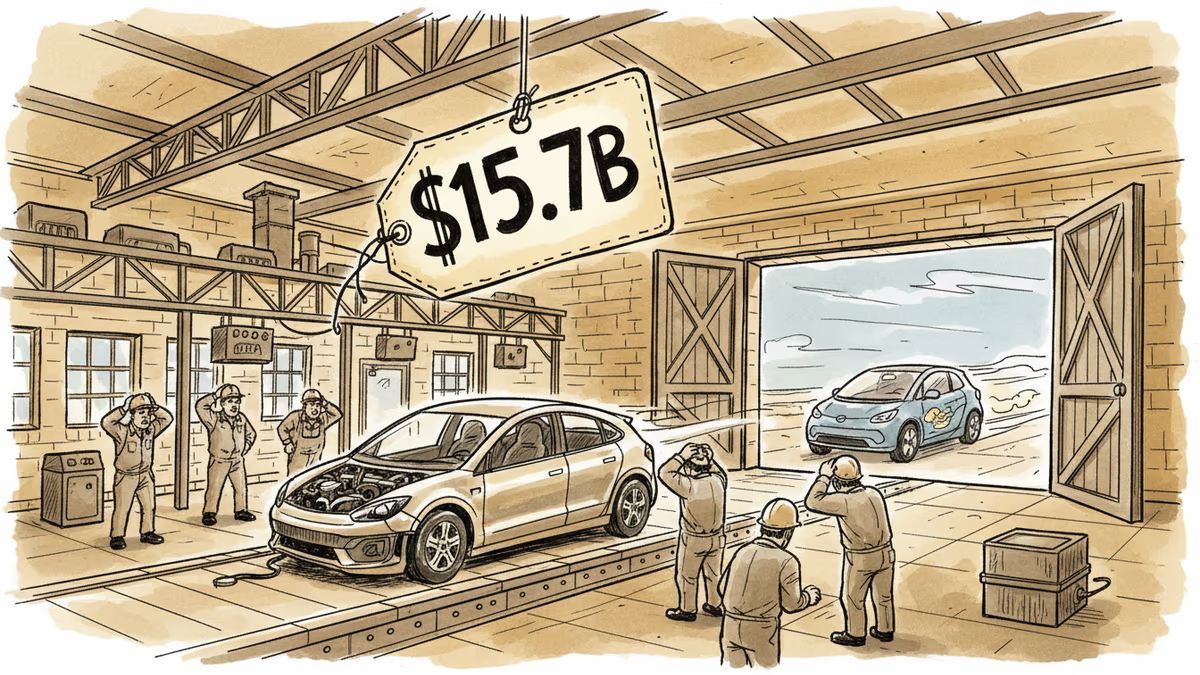
Honda cancels North American EV models and warns of $15.7 billion in losses. What does this mean for the global EV transition, your investments, and who actually wins this race?
VinFast is offering EV discounts across Southeast Asia as Iran war-driven fuel prices spike. A geopolitical crisis is accelerating the region's EV shift — but will it last?
Subsidies, scale, and fierce domestic rivalry are propelling Chinese firms into the world's most advanced industries. Who wins, who loses, and what comes next?
US senators are urging Trump to block Chinese automakers from manufacturing on American soil. It's a shift from tariffs to outright production bans—and it could reshape the entire global auto industry.
Honda cancels North American EV models and warns of $15.7 billion in losses. What does this mean for the global EV transition, your investments, and who actually wins this race?
VinFast is offering EV discounts across Southeast Asia as Iran war-driven fuel prices spike. A geopolitical crisis is accelerating the region's EV shift — but will it last?
Thoughts
Share your thoughts on this article
Sign in to join the conversation