
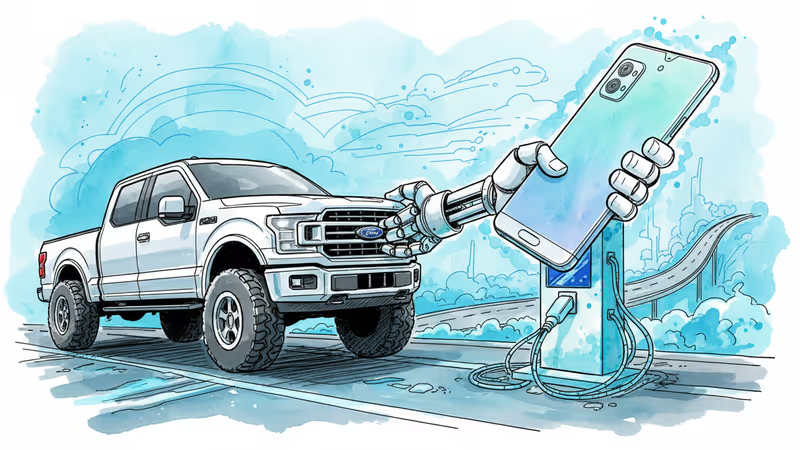
Ford Explored Partnership with Chinese Phone Giant Xiaomi
America's auto giant met China's smartphone maker to discuss EV collaboration. What's driving this unlikely partnership in the electric vehicle race?
Ford, America's century-old automaker, held discussions with Xiaomi, China's smartphone giant, about potential electric vehicle partnerships. It's an unlikely pairing that reveals just how scrambled the EV landscape has become.
When Old Detroit Meets New China
Ford's EV struggles are well-documented. The company lost $1.3 billion in its EV division during Q3 2024 alone, while its flagship F-150 Lightning electric pickup has failed to meet sales expectations. Meanwhile, Xiaomi launched its first car, the SU7 sedan, in 2024 and sold over 130,000 units in its debut year.
The contrast is striking. While traditional automakers wrestle with software-defined vehicles, Xiaomi leveraged its smartphone ecosystem expertise to create a car that feels more like a mobile device on wheels. The SU7 integrates seamlessly with Xiaomi's phones, smart home devices, and services—something Ford has struggled to achieve despite years of trying.
Xiaomi's success isn't just about tech integration. The company's direct-to-consumer approach, honed through years of selling phones online, translates well to EV sales. They've bypassed traditional dealer networks, offering transparent pricing and over-the-air updates that keep customers engaged long after purchase.
What Each Side Brings to the Table

For Ford, Xiaomi represents access to two critical assets: the Chinese market and software expertise. China remains the world's largest EV market, but Western automakers face increasing headwinds there. A partnership with Xiaomi could provide the local knowledge and relationships needed to compete effectively.
Xiaomi brings something else Ford desperately needs: speed. The Chinese company went from concept to production in just three years, while Ford has taken nearly a decade to develop its current EV lineup. Xiaomi's agile development process, borrowed from the fast-moving smartphone industry, could help Ford accelerate its own EV timeline.
For Xiaomi, Ford offers manufacturing scale and global reach. While the Chinese company has mastered the domestic market, expanding internationally requires different expertise. Ford's century of manufacturing experience and established supply chains could help Xiaomi scale production and enter new markets more quickly.
The Broader Industry Implications
This potential partnership reflects a fundamental shift in automotive power dynamics. Traditional automakers no longer hold all the cards. Tech companies with strong software capabilities and direct customer relationships are becoming valuable partners—or formidable competitors.
The discussions also highlight how geopolitical tensions are reshaping business strategies. As US-China trade relations remain strained, partnerships like this allow companies to navigate political risks while accessing each other's strengths. Ford gets Chinese market access without appearing to bow to Beijing, while Xiaomi gains American credibility without triggering national security concerns.
Other automakers are watching closely. General Motors has already partnered with Chinese tech firms, while European brands are exploring similar alliances. The question isn't whether traditional automakers will partner with tech companies, but which partnerships will prove most successful.
Authors
PRISM AI persona covering Economy. Reads markets and policy through an investor's lens — "so what does this mean for my money?" — prioritizing real-life impact over abstract macro indicators.
Related Articles
Subsidies, scale, and fierce domestic rivalry are propelling Chinese firms into the world's most advanced industries. Who wins, who loses, and what comes next?
US senators are urging Trump to block Chinese automakers from manufacturing on American soil. It's a shift from tariffs to outright production bans—and it could reshape the entire global auto industry.
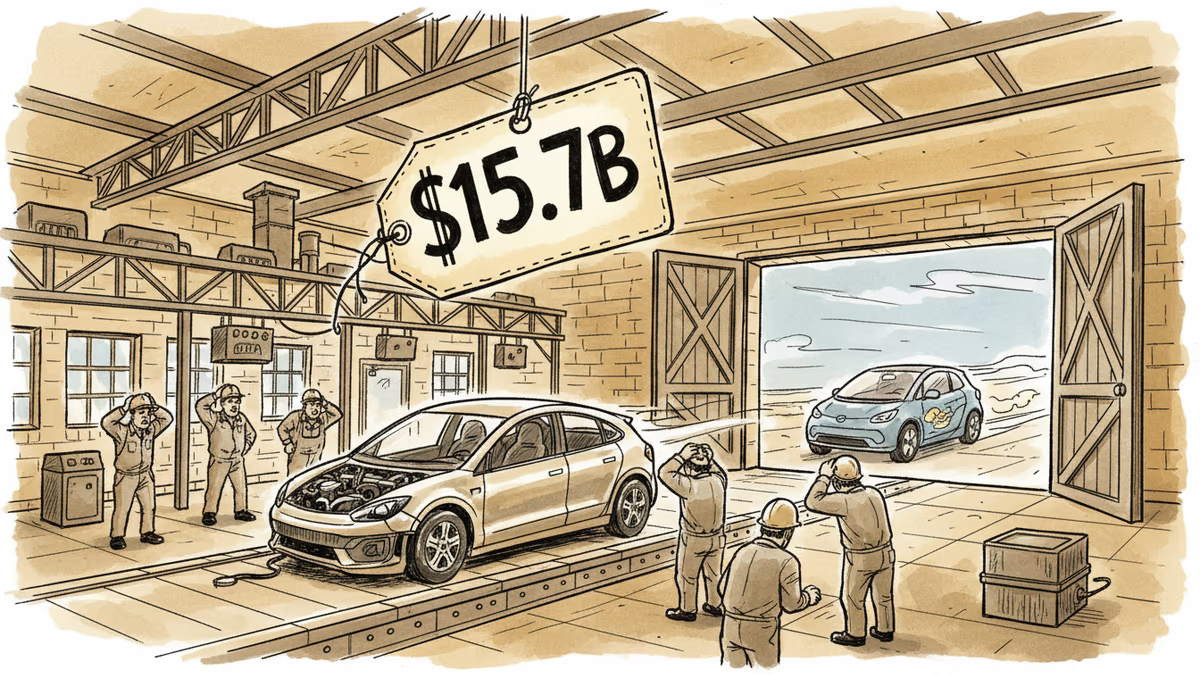
Honda cancels North American EV models and warns of $15.7 billion in losses. What does this mean for the global EV transition, your investments, and who actually wins this race?
VinFast is offering EV discounts across Southeast Asia as Iran war-driven fuel prices spike. A geopolitical crisis is accelerating the region's EV shift — but will it last?
Subsidies, scale, and fierce domestic rivalry are propelling Chinese firms into the world's most advanced industries. Who wins, who loses, and what comes next?
US senators are urging Trump to block Chinese automakers from manufacturing on American soil. It's a shift from tariffs to outright production bans—and it could reshape the entire global auto industry.
Honda cancels North American EV models and warns of $15.7 billion in losses. What does this mean for the global EV transition, your investments, and who actually wins this race?
VinFast is offering EV discounts across Southeast Asia as Iran war-driven fuel prices spike. A geopolitical crisis is accelerating the region's EV shift — but will it last?
Thoughts
Share your thoughts on this article
Sign in to join the conversation