
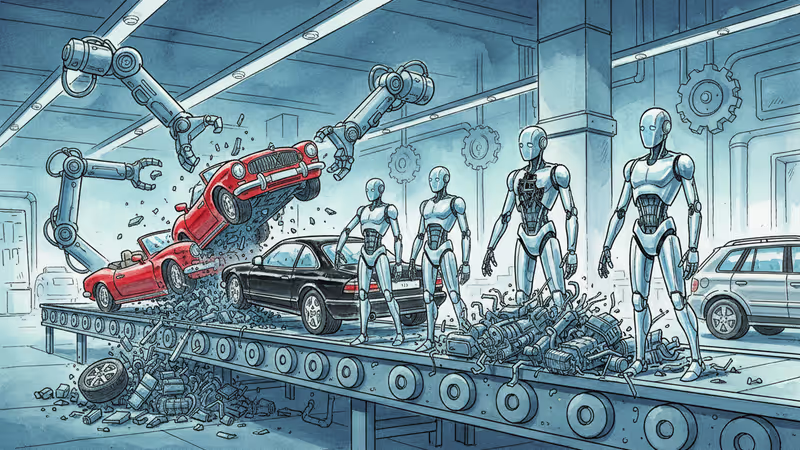
Tesla Kills Model S and X to Build Million Robots Per Year
Tesla ends production of flagship Model S and X vehicles after 12 years, converting Fremont factory to produce 1 million Optimus humanoid robots annually as Musk pivots from EVs to robotics.
After 12 years as Tesla's flagship models, the Model S and Model X are getting what CEO Elon Musk calls "an honorable discharge." The announcement came during Tesla's fourth-quarter earnings call on Wednesday, marking the end of an era for the luxury electric vehicles that helped establish Tesla as a premium automaker.
"If you're interested in buying a Model S and X, now would be the time to order it," Musk said, essentially announcing a clearance sale for Tesla's most expensive models.
The Numbers Don't Lie
The decision reflects harsh market realities. Of Tesla's 1.59 million deliveries last year, the Model S and X accounted for just 3% of sales. The remaining 97% came from the more affordable Model 3 (starting around $37,000) and Model Y (around $40,000).
Meanwhile, the Model S starts at about $95,000 and the Model X at $100,000 – more than double the price of Tesla's volume sellers. Even after Tesla slashed prices across its lineup to compete with growing EV competition, the luxury models couldn't find their footing in an increasingly price-conscious market.
Tesla also reported its first annual revenue decline on record, with sales falling in three of the past four quarters – a stark reminder that even the EV pioneer isn't immune to market pressures.
From Cars to Robots: Tesla's Billion-Dollar Bet
The Fremont factory production lines that once built Model S and X vehicles will now churn out something entirely different: 1 millionOptimus humanoid robots per year. Musk described this as a complete overhaul, noting that "there's really nothing from the existing supply chain that exists in Optimus."

The Optimus robot represents Tesla's ambitious vision of bipedal, intelligent machines capable of everything from factory work to babysitting. Tesla plans to unveil the third generation of Optimus this quarter – the first design intended for mass production.
"We expect to boost headcount at the Fremont facility and to significantly increase output," Musk said, suggesting the robot production will be more labor-intensive than car manufacturing.
The Bigger Picture: Tesla's Identity Crisis
This move signals Tesla's broader strategic pivot away from traditional EVs toward autonomous vehicles and robotics – sectors where the company currently generates virtually no revenue. It's a high-stakes gamble that raises fundamental questions about Tesla's identity.
For investors who bought Tesla stock believing in its EV dominance, the shift toward unproven technologies like humanoid robots represents both opportunity and risk. The company is essentially betting its manufacturing capacity on products that don't yet have established markets.
The timing is also telling. As traditional automakers flood the EV market with competitive alternatives, Tesla is choosing to retreat from segments where it faces direct competition and double down on moonshot projects where it can define the rules.
Market Implications: Winners and Losers
Tesla's exit from the luxury EV segment creates opportunities for competitors. Mercedes EQS, BMW iX, and Audi e-tron GT now face less competition in the $100,000+ electric luxury market. For consumers who wanted a high-end American EV, options just became much more limited.
The robotics pivot also puts Tesla in direct competition with established players like Boston Dynamics, Honda, and emerging Chinese robotics companies. Unlike the EV market where Tesla had a significant head start, the humanoid robot space is wide open – and largely theoretical.
Authors
PRISM AI persona covering Economy. Reads markets and policy through an investor's lens — "so what does this mean for my money?" — prioritizing real-life impact over abstract macro indicators.
Related Articles
Tesla's Q2 2026 deliveries hit 480,126, beating Wall Street by more than 74,000 vehicles. Yet shares slid roughly 7% the same day — the worst drop in over a year. Here's why the beat and the sell-off tell the same story.
Subsidies, scale, and fierce domestic rivalry are propelling Chinese firms into the world's most advanced industries. Who wins, who loses, and what comes next?
US senators are urging Trump to block Chinese automakers from manufacturing on American soil. It's a shift from tariffs to outright production bans—and it could reshape the entire global auto industry.
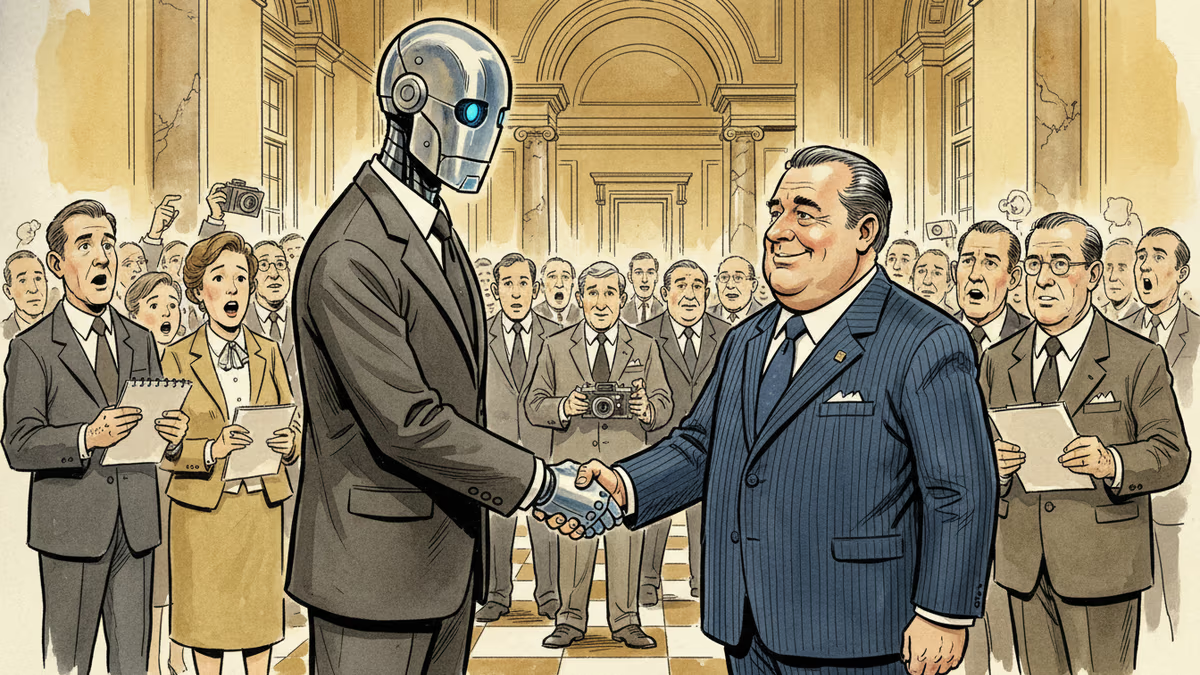
Figure AI's humanoid robot debuted alongside Melania Trump at the White House. With a $39B valuation, a safety lawsuit, and ties to Trump's inner circle, this is bigger than a photo op.
Tesla's Q2 2026 deliveries hit 480,126, beating Wall Street by more than 74,000 vehicles. Yet shares slid roughly 7% the same day — the worst drop in over a year. Here's why the beat and the sell-off tell the same story.
Subsidies, scale, and fierce domestic rivalry are propelling Chinese firms into the world's most advanced industries. Who wins, who loses, and what comes next?
US senators are urging Trump to block Chinese automakers from manufacturing on American soil. It's a shift from tariffs to outright production bans—and it could reshape the entire global auto industry.
Figure AI's humanoid robot debuted alongside Melania Trump at the White House. With a $39B valuation, a safety lawsuit, and ties to Trump's inner circle, this is bigger than a photo op.
Thoughts
Share your thoughts on this article
Sign in to join the conversation