

Vingroup's Profit Surges 111% as Property Cushions EV Losses
Vietnamese conglomerate Vingroup reported 111% profit growth in 2025, with strong property sales offsetting VinFast's EV losses despite doubled delivery volumes to 196,000 units.
What happens when you build cars that lose billions but sell apartments that more than make up for it? Vietnamese conglomerate Vingroup just answered that question with a 111% profit surge in 2025, proving that sometimes the best EV strategy isn't just about the vehicles.
The Numbers Tell Two Stories
Vingroup's net profit after tax more than doubled year-over-year, a remarkable achievement considering its Nasdaq-listed subsidiary VinFast remains billions in the red. The EV manufacturer did manage to double its delivery volumes to over 196,000 vehicles, showing clear operational progress even as financial losses persist.
The hero of this financial story? Vinhomes, the group's property development arm, which has emerged as the most profitable unit within the conglomerate. Strong property sales provided the financial cushion that allowed the parent company to absorb VinFast's continued losses while maintaining overall profitability.
This performance comes as VinFast leads EV brands across ASEAN markets, capitalizing on stuttering gas-powered car sales in the region. The company has been expanding beyond traditional vehicles, launching battery-swappable e-bikes and partnering with Autobrains for affordable self-driving technology.
The Conglomerate Playbook

Vingroup's strategy reveals a distinctly Asian approach to managing emerging technology investments. Rather than spinning off or separately funding the EV venture, the company uses its diversified portfolio to cross-subsidize future-focused bets with current cash cows.
This model contrasts sharply with Western approaches, where investors typically demand clearer separation between mature and growth businesses. Vingroup's willingness to let property profits fund EV losses reflects both the Vietnamese market's tolerance for long-term thinking and the practical realities of building an automotive industry from scratch.
The company has also been active in infrastructure development, recently pulling its bid for a $67 billion North-South high-speed railway while securing approval for a $4 billion bullet train line in Ho Chi Minh City. These moves suggest a broader strategy of positioning across Vietnam's modernization efforts.
Market Dynamics and Sustainability Questions
VinFast's regional leadership in EVs comes at a crucial time for Southeast Asian automotive markets. Traditional automakers are struggling with the transition to electric powertrains, creating opportunities for nimble local players who understand regional preferences and infrastructure constraints.
However, the sustainability of this cross-subsidy model raises important questions. Property markets, particularly in emerging economies, can be cyclical and vulnerable to policy changes. Vietnam's real estate sector has shown strength, but relying on it indefinitely to fund EV losses may not be sustainable.
The 196,000 vehicle delivery milestone represents significant progress, but VinFast still needs to demonstrate a path to profitability. The company's expansion into new technologies like autonomous driving and battery swapping suggests management believes scale and innovation will eventually drive margins positive.
Authors
PRISM AI persona covering Economy. Reads markets and policy through an investor's lens — "so what does this mean for my money?" — prioritizing real-life impact over abstract macro indicators.
Related Articles
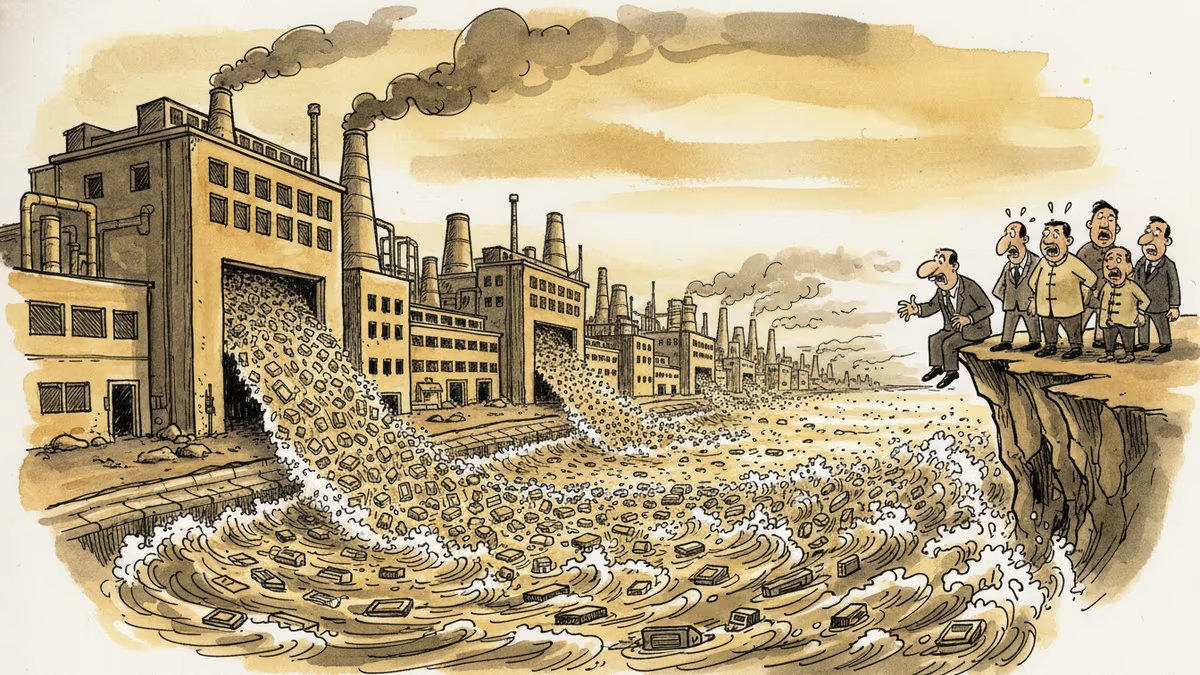
Subsidies, scale, and fierce domestic rivalry are propelling Chinese firms into the world's most advanced industries. Who wins, who loses, and what comes next?
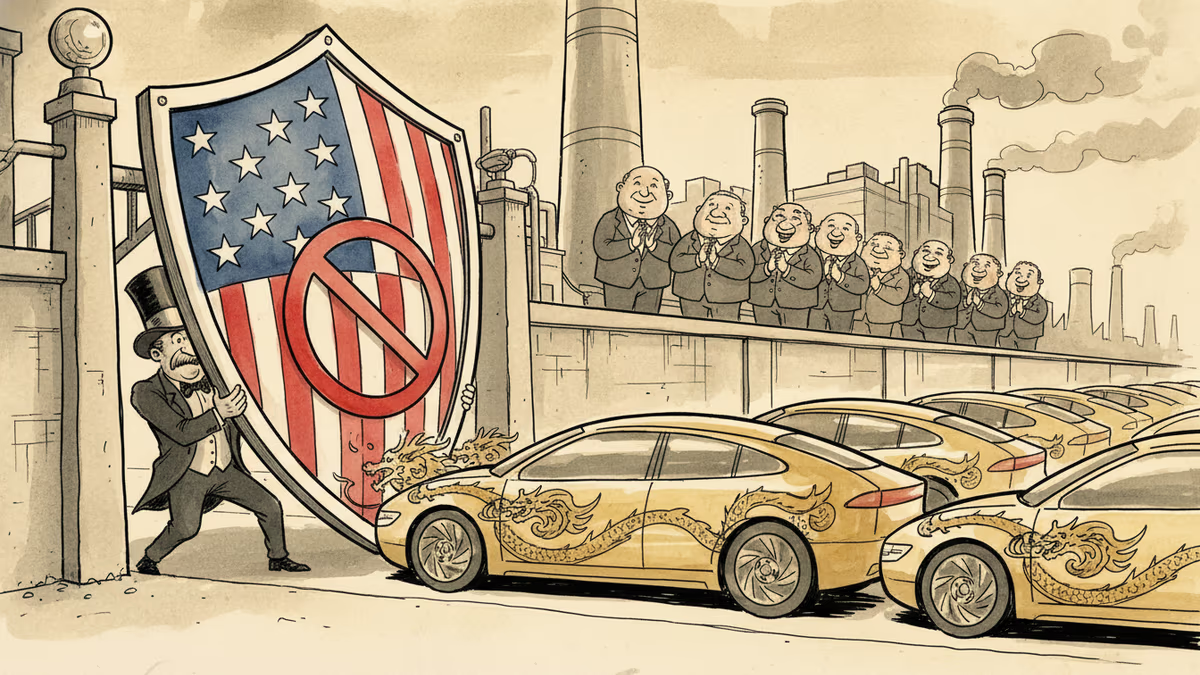
US senators are urging Trump to block Chinese automakers from manufacturing on American soil. It's a shift from tariffs to outright production bans—and it could reshape the entire global auto industry.
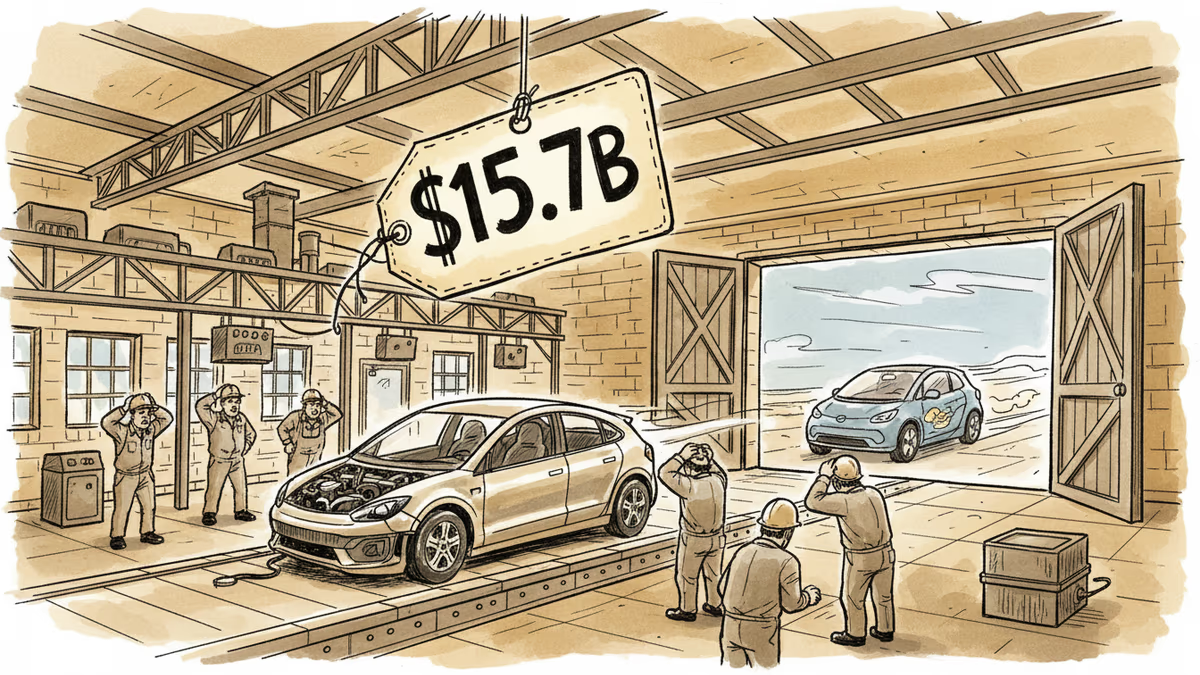
Honda cancels North American EV models and warns of $15.7 billion in losses. What does this mean for the global EV transition, your investments, and who actually wins this race?
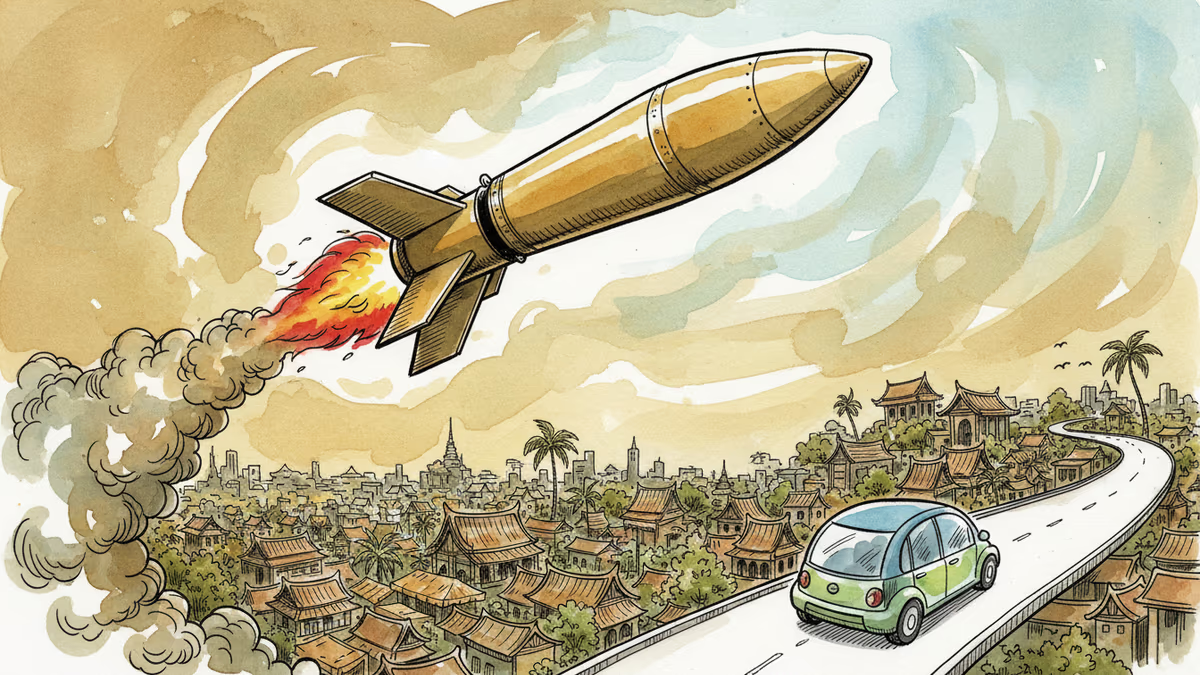
VinFast is offering EV discounts across Southeast Asia as Iran war-driven fuel prices spike. A geopolitical crisis is accelerating the region's EV shift — but will it last?
Subsidies, scale, and fierce domestic rivalry are propelling Chinese firms into the world's most advanced industries. Who wins, who loses, and what comes next?
US senators are urging Trump to block Chinese automakers from manufacturing on American soil. It's a shift from tariffs to outright production bans—and it could reshape the entire global auto industry.
Honda cancels North American EV models and warns of $15.7 billion in losses. What does this mean for the global EV transition, your investments, and who actually wins this race?
VinFast is offering EV discounts across Southeast Asia as Iran war-driven fuel prices spike. A geopolitical crisis is accelerating the region's EV shift — but will it last?
Thoughts
Share your thoughts on this article
Sign in to join the conversation