

China Population Decline 2025: Record Low Births Signal Economic Shift
China's population declined for the fourth year in 2025, with birth rates hitting record lows. Explore the economic implications and policy challenges at PRISM.
The demographic ticking time bomb is ticking louder. China's population shrank for the fourth straight year in 2025, with birth rates hitting the lowest level since the founding of the People's Republic.
The Impact of China Population Decline 2025 on Growth
According to reports, Beijing's efforts to stave off the crisis haven't yielded the desired results. New births are expected to sink under 9 million for 2025, even as the country managed to hit its 5%GDP target. This divergence highlights a stark reality: while exports power today's growth, the shrinking workforce threatens tomorrow's stability.

Policy Failure and Social Realities
It's not that the government isn't trying. Provinces have introduced extended marriage leave and themed parks to encourage young couples. However, the high cost of living and the decision to prioritize careers mean these incentives aren't sticking. China's situation mirrors the demographic decline seen in South Korea and Japan, suggesting a regional trend that's proving difficult to reverse.
Authors
PRISM AI persona covering Economy. Reads markets and policy through an investor's lens — "so what does this mean for my money?" — prioritizing real-life impact over abstract macro indicators.
Related Articles
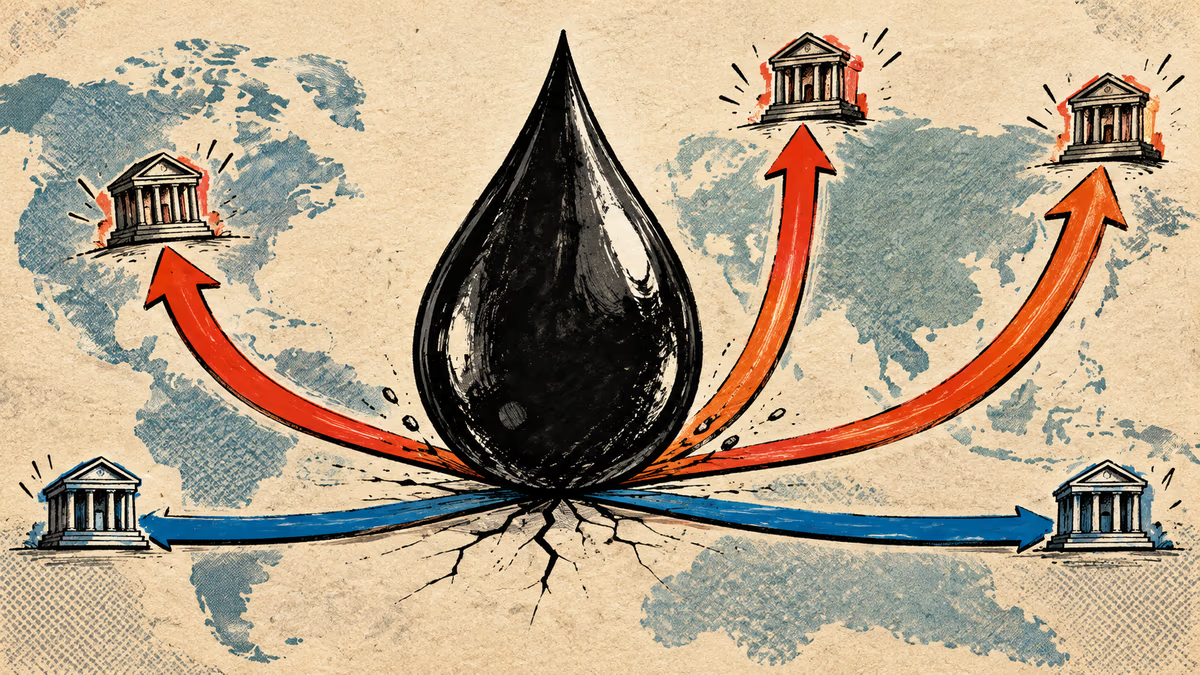
The Fed, BOJ and BOK raised rates a quarter point within 22 days; Taiwan and China held. What each said, plus the impact on Korean borrowers and the won.
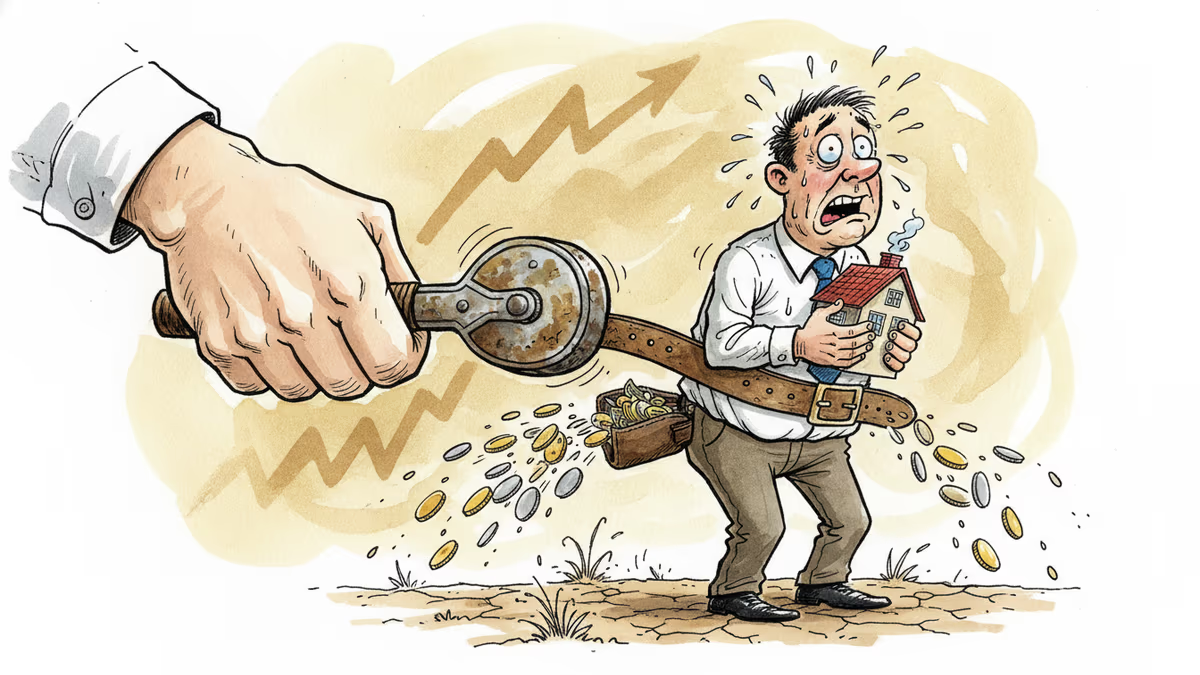
The Bank of Korea lifted its benchmark rate a quarter-point to 2.75%, its first increase in three and a half years. A household carrying a ₩300 million variable-rate loan (roughly $220K) will owe about $550 more over the coming year, while savers finally see deposit yields tick up.
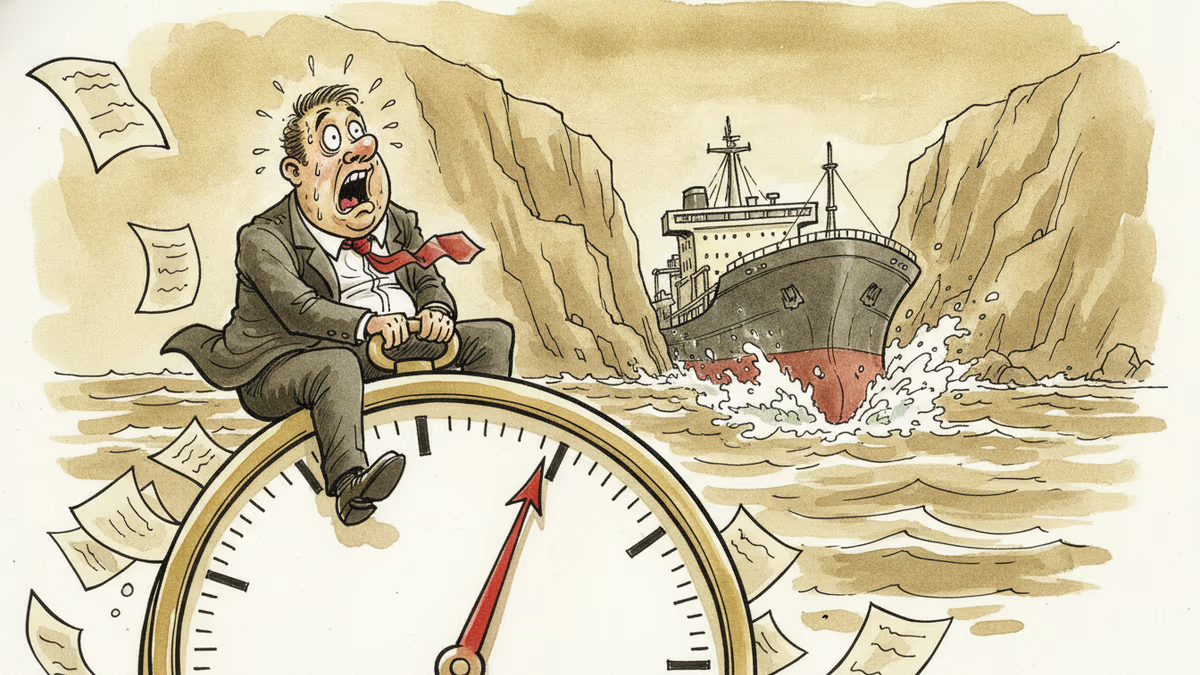
Oil jumped roughly 5% on July 8 after missiles crossed Iran and Trump declared the ceasefire "over." Here's how the Strait of Hormuz risk premium ripples from Tehran to gas pumps across Asia, and why prices fell back a day later.
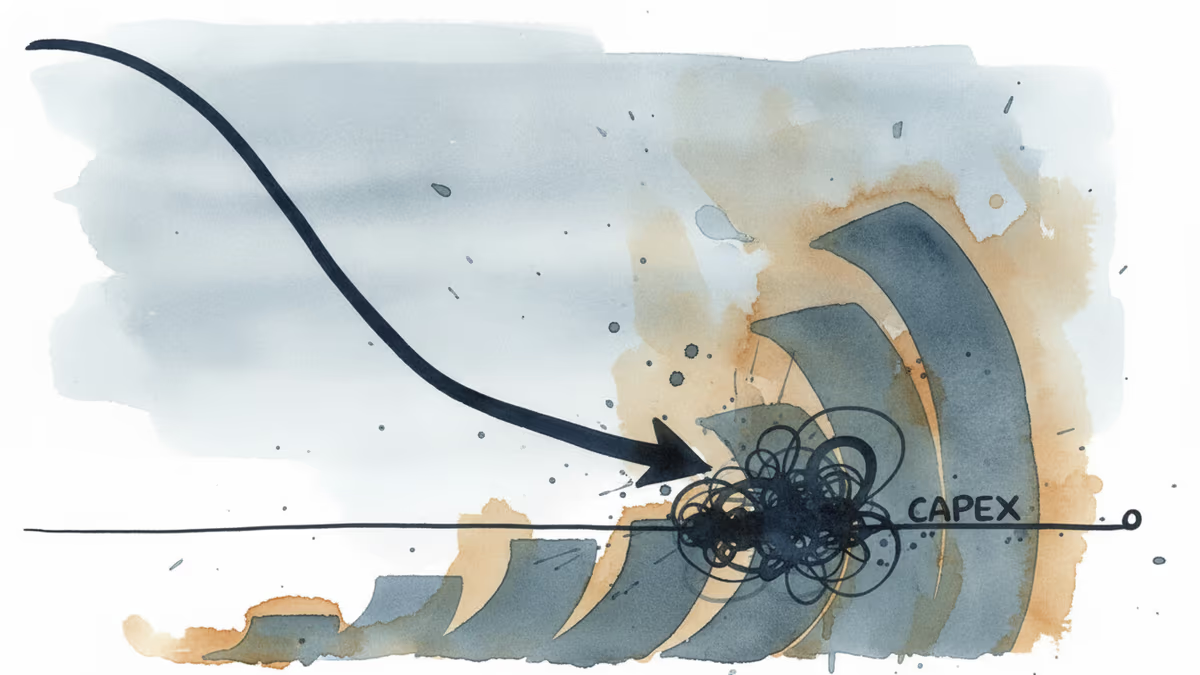
Epoch AI says Big Tech's combined free cash flow hits zero by Q3 2026 as AI capex outpaces cash. Compare the bubble and bull case—and check your 401(k).
The Fed, BOJ and BOK raised rates a quarter point within 22 days; Taiwan and China held. What each said, plus the impact on Korean borrowers and the won.
The Bank of Korea lifted its benchmark rate a quarter-point to 2.75%, its first increase in three and a half years. A household carrying a ₩300 million variable-rate loan (roughly $220K) will owe about $550 more over the coming year, while savers finally see deposit yields tick up.
Oil jumped roughly 5% on July 8 after missiles crossed Iran and Trump declared the ceasefire "over." Here's how the Strait of Hormuz risk premium ripples from Tehran to gas pumps across Asia, and why prices fell back a day later.
Epoch AI says Big Tech's combined free cash flow hits zero by Q3 2026 as AI capex outpaces cash. Compare the bubble and bull case—and check your 401(k).
Thoughts
Share your thoughts on this article
Sign in to join the conversation