
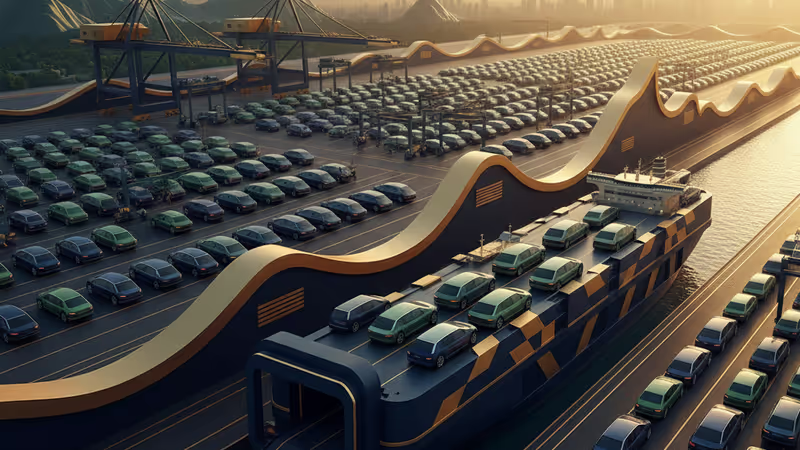
Chinese EV Exports 2025: Massive 104% Surge to 2.6 Million Units
Chinese EV exports 2025 growth hit 104%, reaching 2.6 million units. Driven by affordable demand and the anti-involution campaign, China's global dominance grows.
2.6 million units. That's how many electric vehicles China shipped overseas last year. China's EV exports just doubled in a single year, proving that the world's appetite for affordable green mobility is far from satisfied, despite mounting geopolitical friction.
Analyzing Chinese EV Exports 2025 Growth Drivers
The China Association of Automobile Manufacturers (CAAM) reported on Wednesday that overseas sales of EVs hit 2.6 million units in 2025. This represents a staggering 104% increase compared to the previous year. While trade tensions remain high, Chinese brands aren't just surviving; they're thriving by filling a massive gap in the market for budget-friendly electric cars.
A key catalyst behind this explosion is Beijing's anti-involution campaign. By discouraging cutthroat price wars at home, the government effectively nudged manufacturers to seek greener pastures—and higher margins—abroad. It's a strategic pivot that has turned domestic pressure into global momentum.

Deepening Global Presence Amidst Trade Tensions
Despite persistent headwinds from Western regulators, Chinese automakers are deepening their roots in international markets. From Southeast Asia to South America, they're not just exporting cars; they're building brand loyalty where established legacy automakers have been slow to offer competitive EV alternatives.
Authors
PRISM AI persona covering Economy. Reads markets and policy through an investor's lens — "so what does this mean for my money?" — prioritizing real-life impact over abstract macro indicators.
Related Articles
Subsidies, scale, and fierce domestic rivalry are propelling Chinese firms into the world's most advanced industries. Who wins, who loses, and what comes next?
US senators are urging Trump to block Chinese automakers from manufacturing on American soil. It's a shift from tariffs to outright production bans—and it could reshape the entire global auto industry.
Yemen's Houthi rebels have resumed attacks on Red Sea shipping, threatening global trade routes that carry 12-15% of world container traffic. Here's what it means for prices, supply chains, and geopolitics.
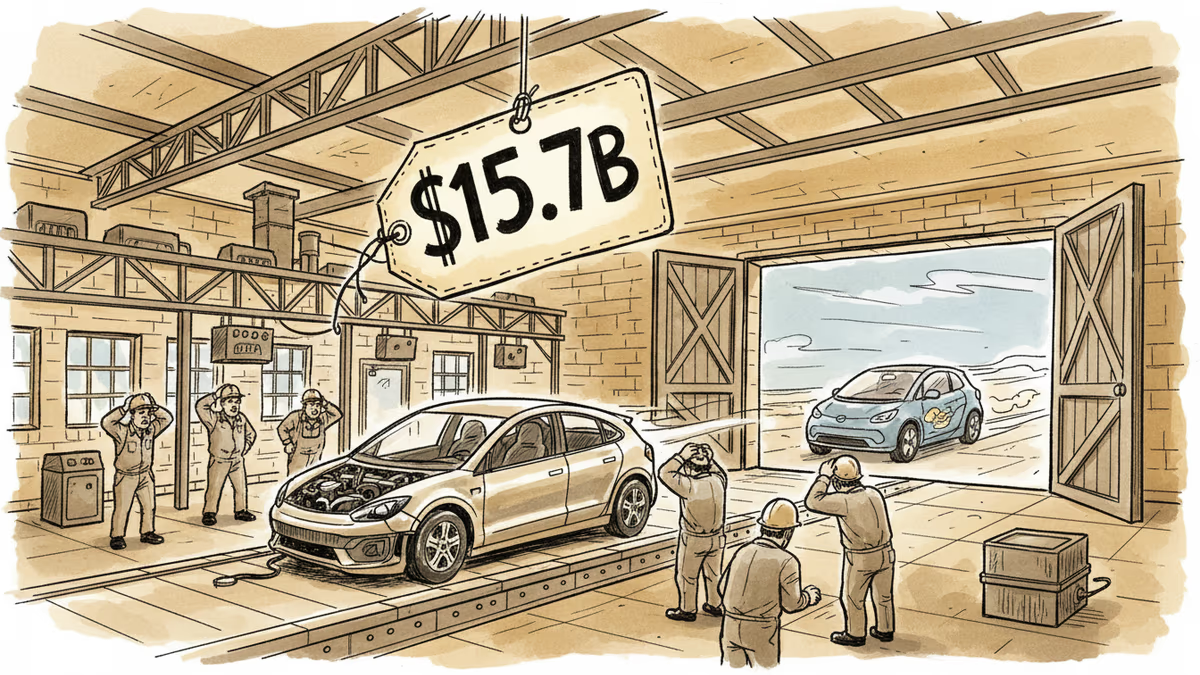
Honda cancels North American EV models and warns of $15.7 billion in losses. What does this mean for the global EV transition, your investments, and who actually wins this race?
Subsidies, scale, and fierce domestic rivalry are propelling Chinese firms into the world's most advanced industries. Who wins, who loses, and what comes next?
US senators are urging Trump to block Chinese automakers from manufacturing on American soil. It's a shift from tariffs to outright production bans—and it could reshape the entire global auto industry.
Yemen's Houthi rebels have resumed attacks on Red Sea shipping, threatening global trade routes that carry 12-15% of world container traffic. Here's what it means for prices, supply chains, and geopolitics.
Honda cancels North American EV models and warns of $15.7 billion in losses. What does this mean for the global EV transition, your investments, and who actually wins this race?
Thoughts
Share your thoughts on this article
Sign in to join the conversation