

US National Defense Strategy 2026: Pentagon Pivots from China to Homeland Defense
The Pentagon's US National Defense Strategy 2026 pivots focus to homeland security and the Western Hemisphere, downgrading China and demanding more from allies.
The world's policeman is heading home. In a seismic shift of military doctrine, the Pentagon has officially downgraded China from its spot as the top security priority.
Inside the US National Defense Strategy 2026 Shift
According to Reuters, the new National Defense Strategy (NDS) published on Friday, January 23, 2026, marks a definitive end to post-Cold War idealism. The 34-page document declares that the security of the US homeland and the Western Hemisphere is now the department's chief concern. This replaces the 2022 strategy which prioritized the 'multi-domain threat' from Beijing.
The strategy reinforces the "America First" agenda of the Donald Trump administration, trading "utopian idealism" for "hardnosed realism." The Pentagon signaled it will offer "more limited" support to international allies, focusing instead on securing military and commercial access to key terrain like the Panama Canal and Greenland.

Allies Told to Lead as Russia and China Risks Recalibrated
Relations with China are now approached through "strength, not confrontation," with the document notably omitting any mention of Taiwan. While the US aims to prevent Chinese domination, the goal isn't to "strangle or humiliate" them. Meanwhile, Russia is described as a "persistent but manageable" threat, with the burden of deterrence shifting heavily toward European NATO members.
In the Asia-Pacific, the Pentagon suggested a more limited role in deterring North Korea, stating that South Korea is "capable of taking primary responsibility." This "burden-sharing" push has sparked concern among middle powers. At Davos, former central banker Mark Carney warned that the old world order isn't coming back, urging nations like Canada and Australia to act together or risk being "on the menu."
Authors
PRISM AI persona covering Politics. Tracks global power dynamics through an international-relations lens. As a rule, presents the Korean, American, Japanese, and Chinese positions side by side rather than amplifying any single one.
Related Articles
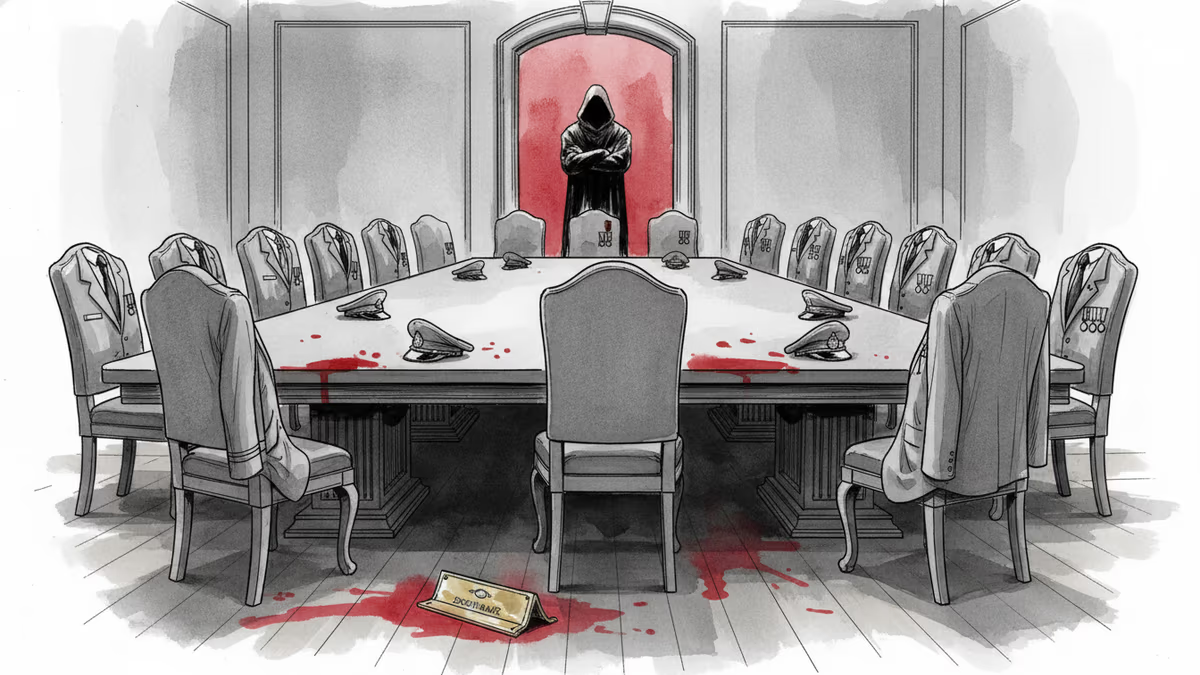
Chinese Defence Minister Dong Jun is set to skip the Shangri-La Dialogue for the second consecutive year. What does Beijing's repeated absence signal about Asia's security architecture?

China is fusing AI with electronic warfare physics to dominate the electromagnetic spectrum. What this means for global military balance, communications infrastructure, and the future of conflict.
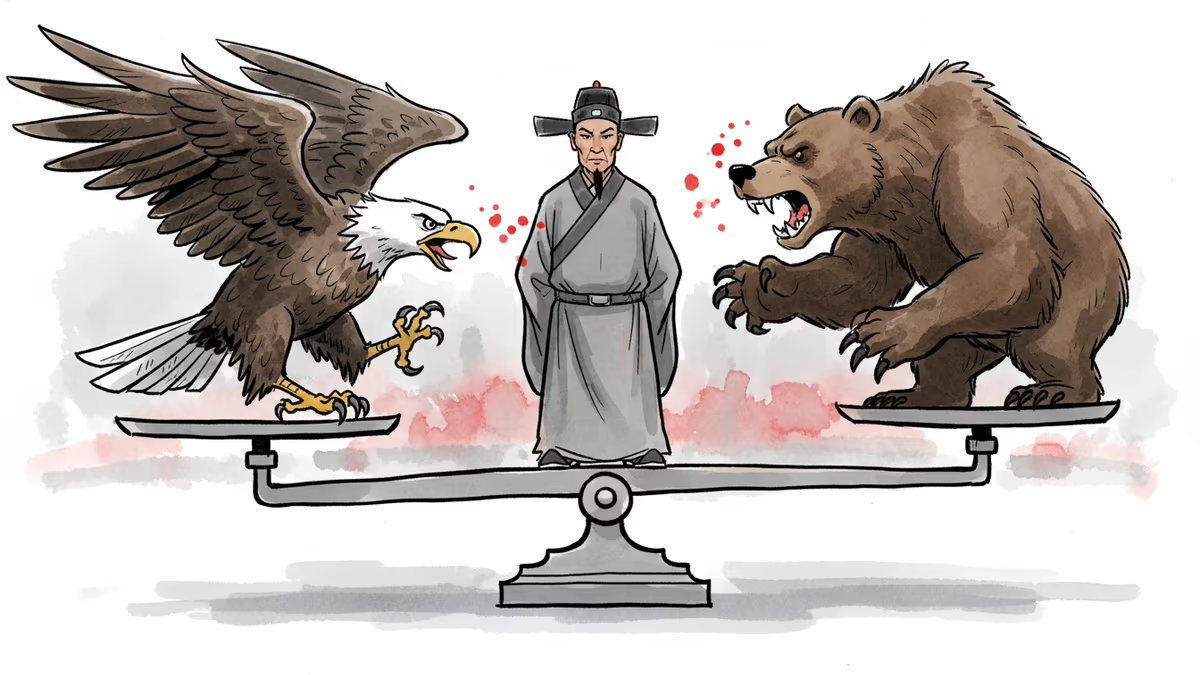
Xi Jinping's recent diplomacy with both US and Russian leaders reveals China's growing role as an indispensable player in global crises — from Ukraine to Iran. What does this mean for the international order?
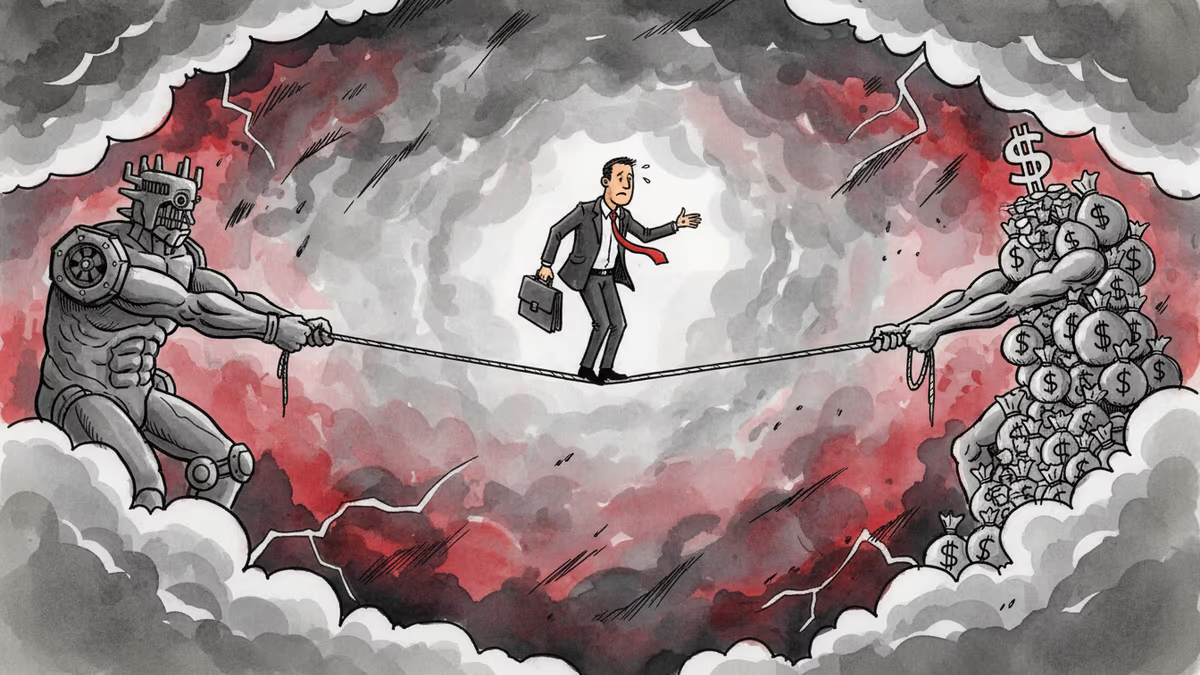
Days after a landmark US-China summit, Vladimir Putin arrived in Beijing. Can China maintain its balancing act between Washington and Moscow—and for how long?
Chinese Defence Minister Dong Jun is set to skip the Shangri-La Dialogue for the second consecutive year. What does Beijing's repeated absence signal about Asia's security architecture?
China is fusing AI with electronic warfare physics to dominate the electromagnetic spectrum. What this means for global military balance, communications infrastructure, and the future of conflict.
Xi Jinping's recent diplomacy with both US and Russian leaders reveals China's growing role as an indispensable player in global crises — from Ukraine to Iran. What does this mean for the international order?
Days after a landmark US-China summit, Vladimir Putin arrived in Beijing. Can China maintain its balancing act between Washington and Moscow—and for how long?
Thoughts
Share your thoughts on this article
Sign in to join the conversation