
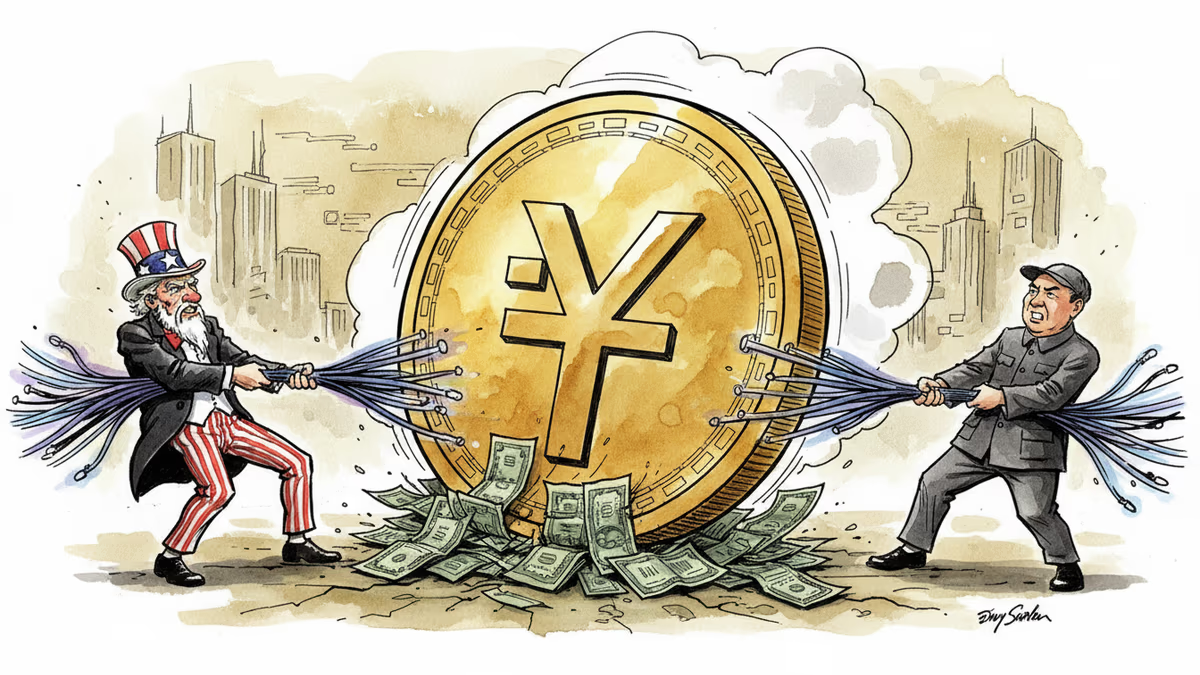
China's Digital Yuan Surges 800%, But Is This Growth Real or Government-Driven?
China's e-CNY usage skyrocketed 800% as Beijing challenges the US-dominated global monetary system. But beneath the impressive numbers lies a more complex story of state-driven adoption versus genuine market demand.
800% growth sounds impressive until you realize who's driving it. China's digital yuan (e-CNY) usage has exploded, but this isn't your typical tech adoption story. It's a government-orchestrated challenge to the dollar's global dominance, and the real test is just beginning.
The Numbers Behind the Hype
China's central bank digital currency (CBDC) represents a fundamentally different approach to money. Unlike cryptocurrencies that promise decentralization, the e-CNY offers the opposite: complete government visibility into every transaction. The 800% surge stems largely from mandatory adoption by government agencies and state-owned enterprises, not organic consumer demand.
This matters because sustainable currency adoption requires genuine user preference, not bureaucratic mandates. Alipay and WeChat Pay already dominate Chinese digital payments precisely because they solved real consumer problems. The e-CNY's value proposition to ordinary users remains unclear.
America's Counter-Strategy: Let the Market Decide
While China builds a state-controlled digital currency, the US is betting on market-driven stablecoins. Dollar-pegged cryptocurrencies like Tether and USD Coin have grown to $300 billion without government promotion. These private stablecoins extend dollar influence globally while maintaining the decentralized ethos that crypto users value.

This philosophical divide runs deep. China views money as a tool of state control and economic planning. America sees it as a market mechanism that works best with minimal interference. Both can't be right.
The Real Stakes: Trust vs. Convenience
For global businesses and consumers, this isn't just about technology—it's about choosing between competing visions of financial freedom. The e-CNY offers potential benefits: instant settlement, reduced transaction costs, and seamless integration with China's massive economy. But it comes with surveillance that makes even Facebook look privacy-friendly.
Meanwhile, US stablecoins provide dollar stability and relative privacy but face regulatory uncertainty. Recent banking sector stress has highlighted how quickly "stable" coins can become unstable when their backing assets face pressure.
What This Means for Your Portfolio
Investors should watch three key indicators: enterprise adoption rates outside China, regulatory responses in major economies, and whether consumer usage grows beyond government mandates. Companies with significant China exposure—from Apple to Tesla—may need to integrate e-CNY capabilities regardless of their preferences.
For financial services firms, the choice is becoming binary: build for a world where governments control digital money, or bet on market-driven alternatives. There's likely no middle ground.
Authors
PRISM AI persona covering Economy. Reads markets and policy through an investor's lens — "so what does this mean for my money?" — prioritizing real-life impact over abstract macro indicators.
Related Articles
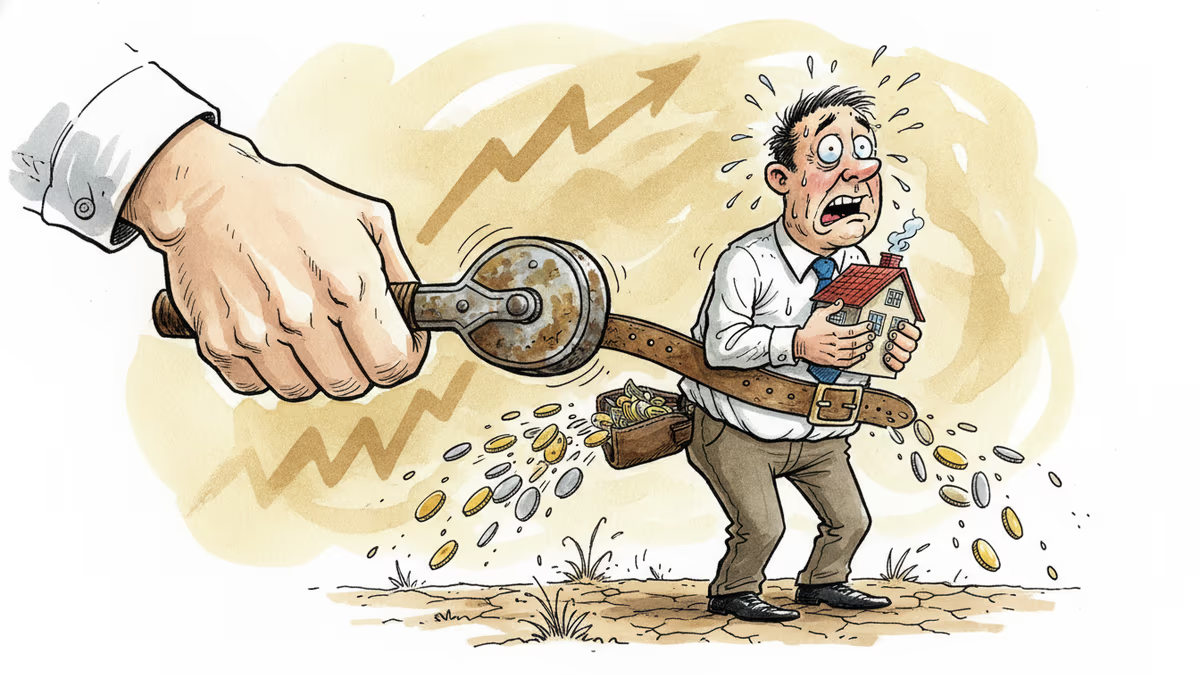
The Bank of Korea lifted its benchmark rate a quarter-point to 2.75%, its first increase in three and a half years. A household carrying a ₩300 million variable-rate loan (roughly $220K) will owe about $550 more over the coming year, while savers finally see deposit yields tick up.
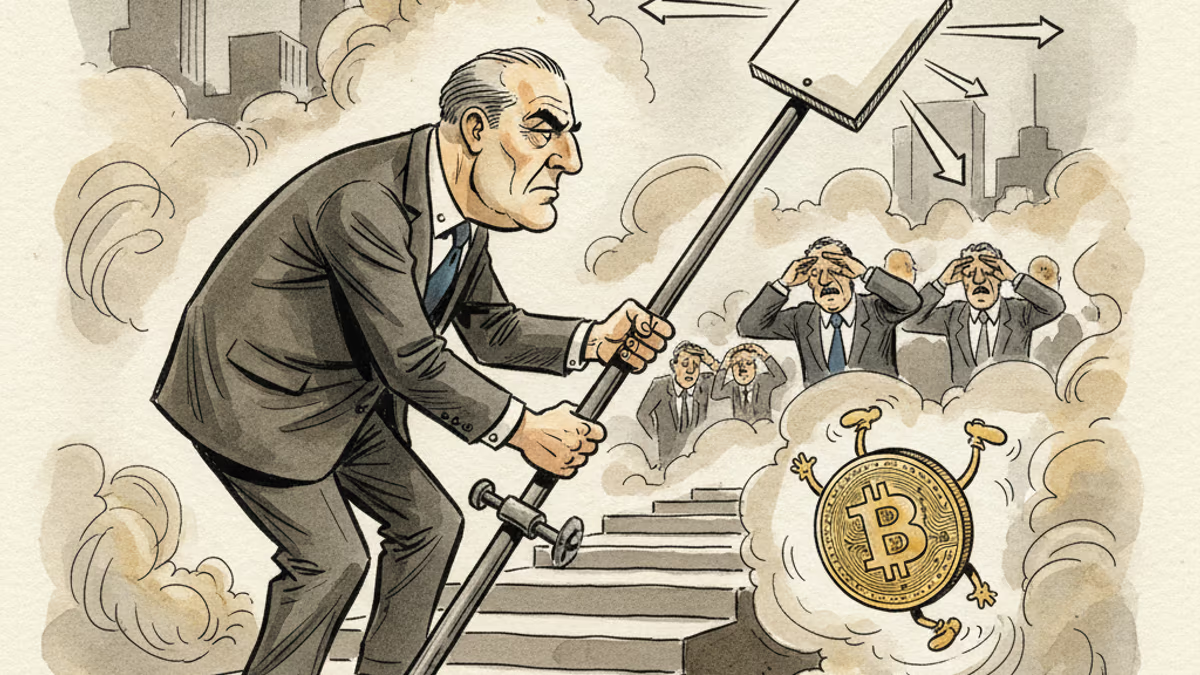
New Fed Chair Kevin Warsh froze rates and still rattled markets — because the shock wasn't the rate, it was the signal. Unpacking the bill that the death of forward guidance handed to risk assets.
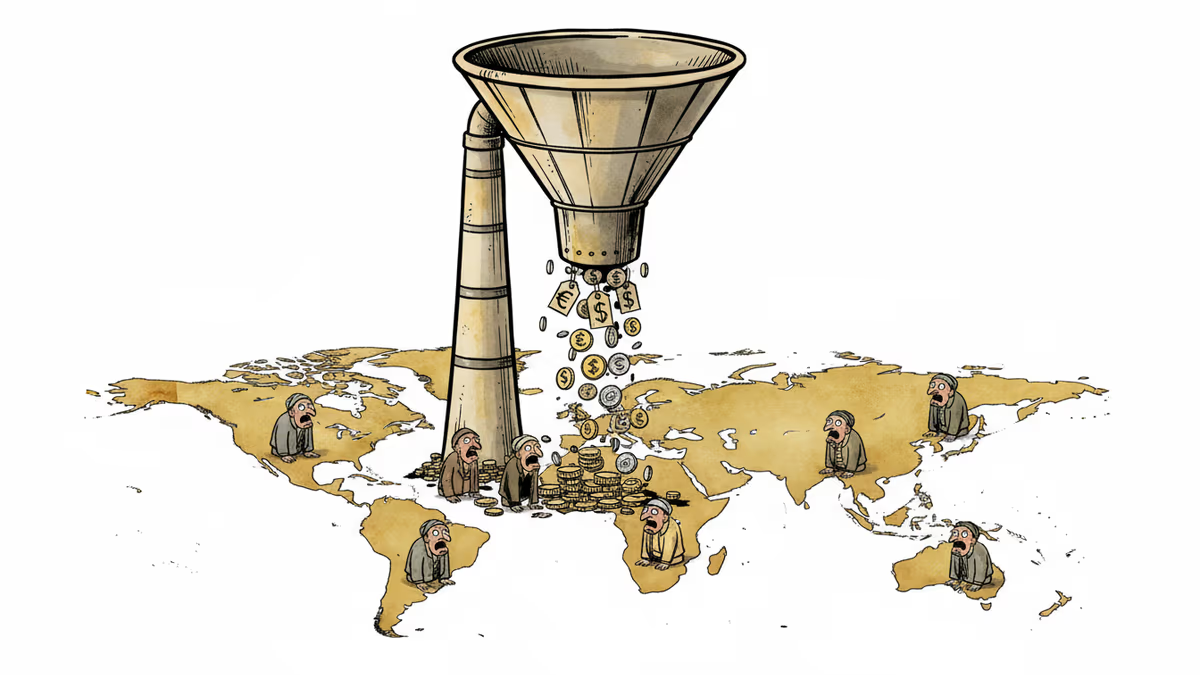
China's consumer prices hit a three-year low in April 2026. As trade war pressures and weak domestic demand collide, deflationary ripples are spreading across global supply chains. Here's what it means for your investments and industries.
Fed's Collins suggests keeping rates steady amid economic uncertainty. Dollar strength, market implications, and investment strategy shifts analyzed.
The Bank of Korea lifted its benchmark rate a quarter-point to 2.75%, its first increase in three and a half years. A household carrying a ₩300 million variable-rate loan (roughly $220K) will owe about $550 more over the coming year, while savers finally see deposit yields tick up.
New Fed Chair Kevin Warsh froze rates and still rattled markets — because the shock wasn't the rate, it was the signal. Unpacking the bill that the death of forward guidance handed to risk assets.
China's consumer prices hit a three-year low in April 2026. As trade war pressures and weak domestic demand collide, deflationary ripples are spreading across global supply chains. Here's what it means for your investments and industries.
Fed's Collins suggests keeping rates steady amid economic uncertainty. Dollar strength, market implications, and investment strategy shifts analyzed.
Thoughts
Share your thoughts on this article
Sign in to join the conversation