
China's Deflation Is Spreading—and the World Is Paying Attention
China's consumer prices hit a three-year low in April 2026. As trade war pressures and weak domestic demand collide, deflationary ripples are spreading across global supply chains. Here's what it means for your investments and industries.
When the world's largest manufacturer starts cutting prices, everyone downstream feels it.
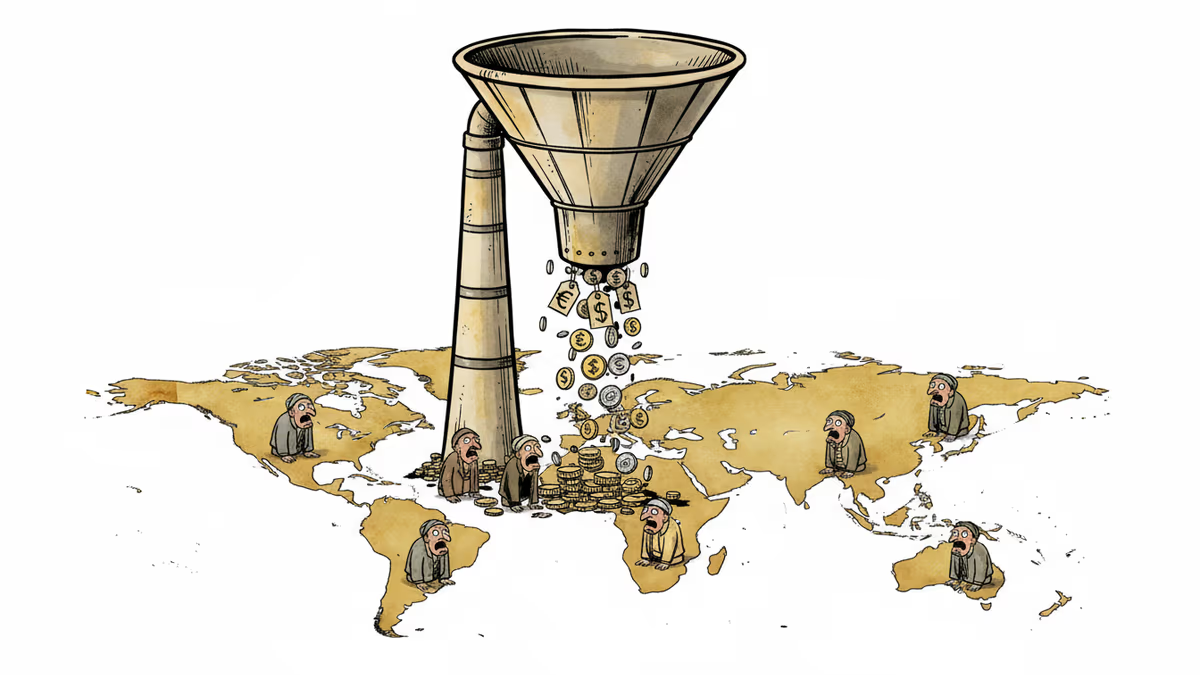
China's consumer price index fell to its lowest point in three years in April 2026, while producer prices—the cost of goods leaving factory gates—continued a steeper slide. These aren't just abstract statistics. They are the arithmetic of an economy where supply has outrun demand, and the surplus has to go somewhere.
What's Actually Happening
Two forces are converging at once. The first is a domestic demand problem that won't quit. China's property sector remains mired in a prolonged slump, dragging household wealth and consumer confidence down with it. Youth unemployment stays stubbornly elevated. Families are saving, not spending.
The second force is geopolitical. The Trump administration's sweeping tariffs have narrowed China's export corridor to the United States significantly. Chinese manufacturers sitting on excess inventory have two options: cut prices at home or redirect shipments to alternative markets in Southeast Asia, Europe, and the Middle East. Many are doing both.
The result is a broad-based price decline across steel, chemicals, solar panels, EV batteries, and electronics components. China's internal deflation is, in effect, being exported through trade.
Winners, Losers, and the Complicated Middle
The winners are real. Manufacturers globally that depend on Chinese inputs—auto assemblers, consumer electronics brands, construction firms—are seeing input costs ease. For consumers in Europe and parts of the United States still recovering from post-pandemic inflation, cheaper Chinese goods offer some near-term relief at the checkout.

But the losers are equally real. Domestic steel producers in South Korea, Europe, and India are already competing against Chinese material at prices that compress margins. Solar panel manufacturers in the US and EU, shielded by tariffs at home, face intensifying price wars in third-country markets where Chinese firms are redirecting volume. For any industry that competes with Chinese exports on a global stage, the pressure is not theoretical—it is arriving in quarterly earnings reports.
For investors, the picture is mixed. Positions built on a Chinese consumer recovery thesis deserve a hard look. Conversely, multinationals with deep Chinese supply chain exposure may see margin tailwinds in the near term—until trade policy shifts the calculus again.
Why Deflation Is More Dangerous Than It Sounds
Falling prices feel like good news until they become a trap. Japan's experience from the 1990s onward is the textbook case: once consumers expect prices to keep falling, they defer purchases; businesses cut investment; wages stagnate; demand weakens further. The cycle feeds itself.
Beijing is not unaware of this dynamic. The government has expanded consumer subsidies for appliances and electric vehicles in 2026, and is pushing local governments to accelerate infrastructure spending through bond issuance. But with the property debt overhang still unresolved, fiscal stimulus has shown limited traction in reigniting private consumption.
The deeper issue is structural. China's growth model—built on manufacturing capacity, export volume, and fixed-asset investment—has not yet made the pivot to consumption-led growth that economists have long called for. Until it does, cycles of overproduction and deflationary pressure are likely to recur.
The Trade Policy Feedback Loop
Here is where the story gets more complicated. As Chinese exports become cheaper, trading partners respond with tariffs, anti-dumping measures, and industrial subsidies of their own. The EU has already imposed duties on Chinese EVs. The US has layered tariffs across a wide range of goods. More countries are following.
Each round of protection narrows the channels through which global trade flows. And in a world where trade volumes contract, the countries most exposed are those—like South Korea, Germany, and Taiwan—whose growth models depend heavily on open export markets. China's deflation problem does not stay inside China's borders; it becomes a pressure test for the entire architecture of global trade.
This content is AI-generated based on source articles. While we strive for accuracy, errors may occur. We recommend verifying with the original source.
Related Articles
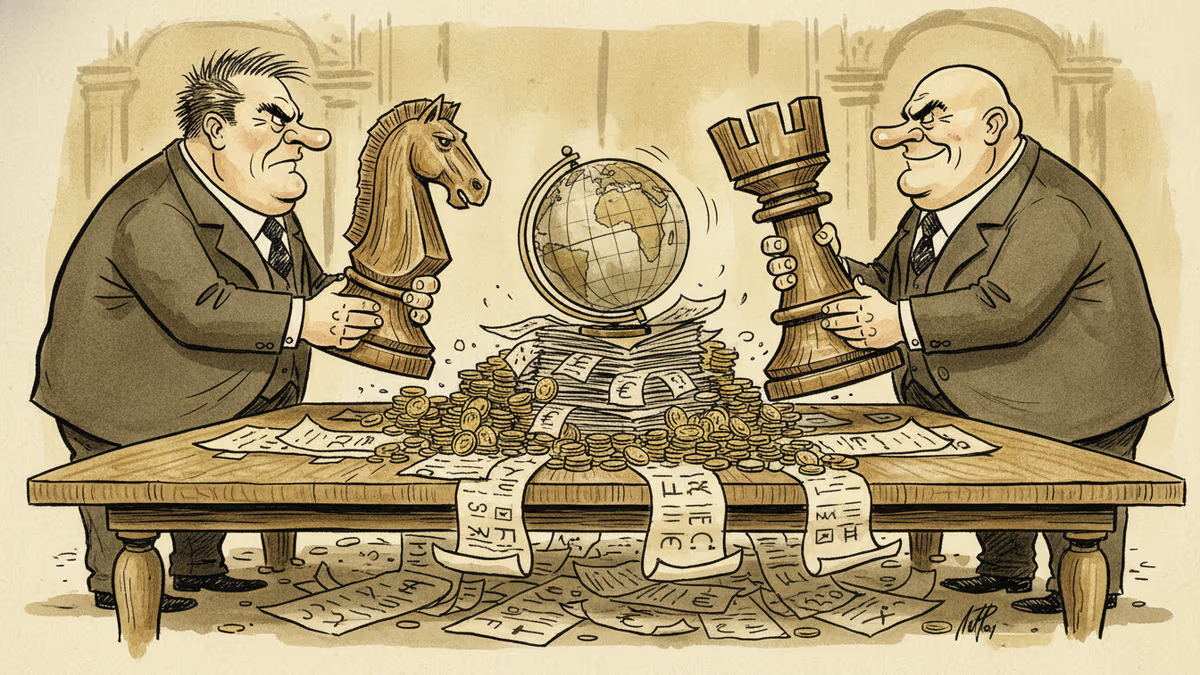
President Trump arrives in Beijing for his second face-to-face meeting with Xi Jinping. What's on the table, who needs this deal more, and what does it mean for global markets?
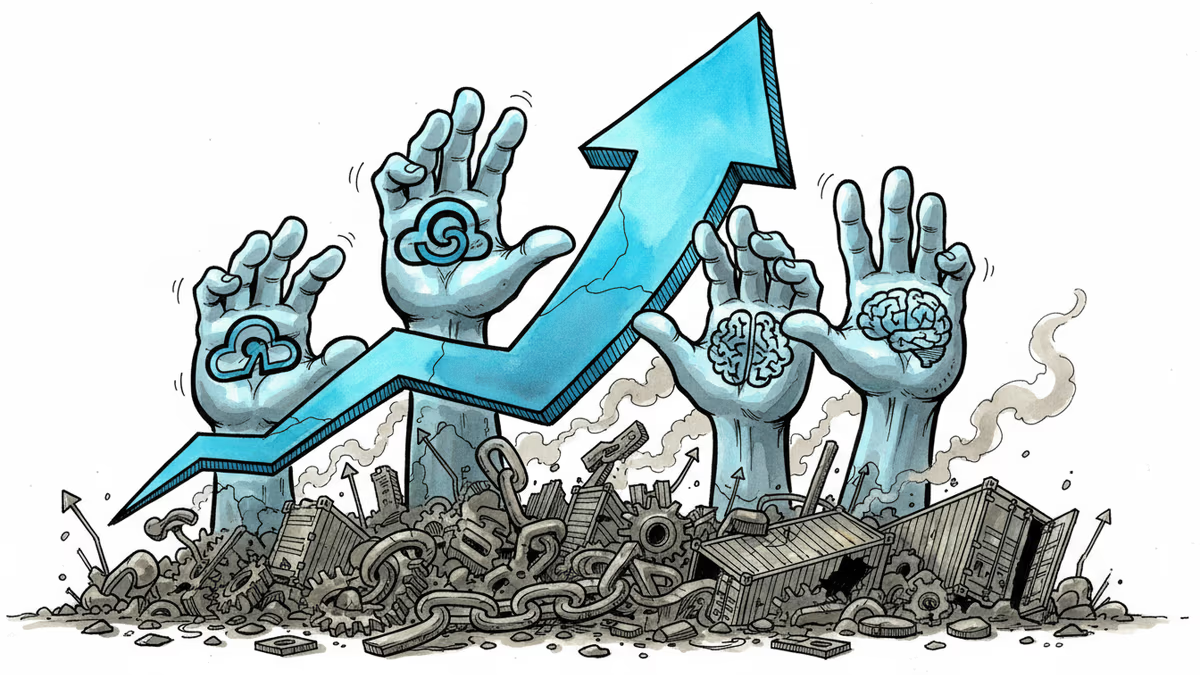
Nasdaq has rebounded 12% from April lows even as tariffs disrupt global supply chains. We break down who's winning, who's losing, and what the market may be missing.
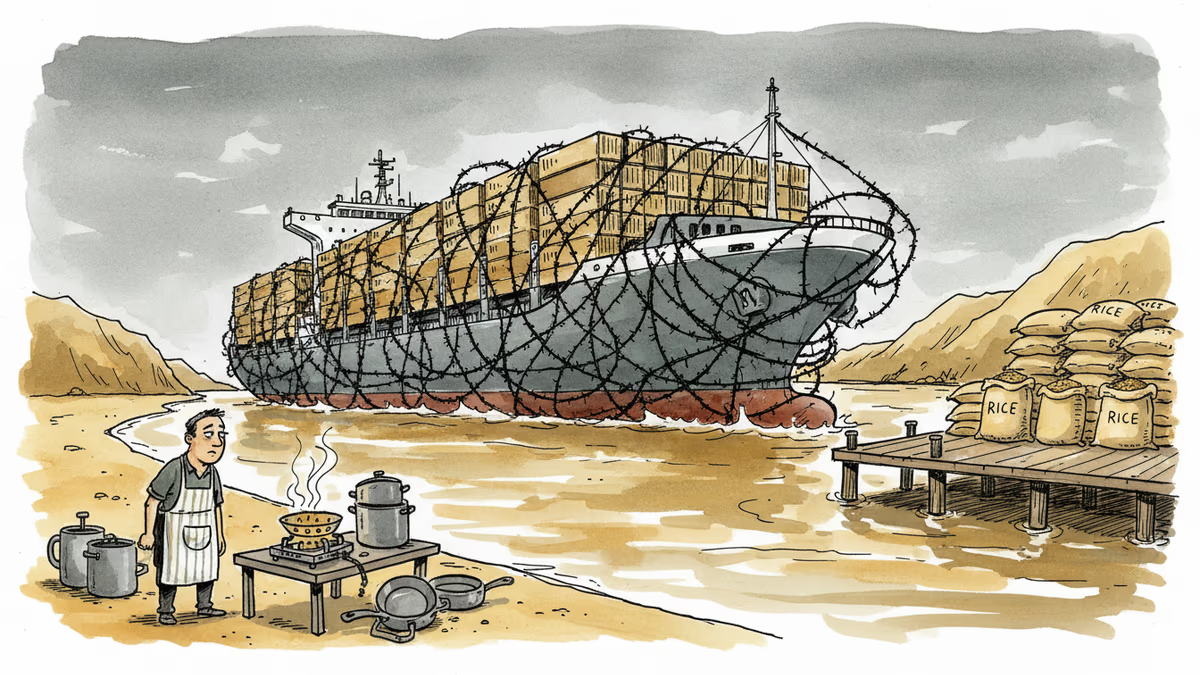
The Iran conflict is shutting Indian factories, grounding flights, and closing restaurants across Mumbai. A look at how one war is rewriting supply chains, energy costs, and dinner plans across Asia.

Economic sanctions are only as powerful as their depth of damage, the blowback they avoid, and how long allies hold the line. A framework for the era of weaponized trade.
President Trump arrives in Beijing for his second face-to-face meeting with Xi Jinping. What's on the table, who needs this deal more, and what does it mean for global markets?
Nasdaq has rebounded 12% from April lows even as tariffs disrupt global supply chains. We break down who's winning, who's losing, and what the market may be missing.
The Iran conflict is shutting Indian factories, grounding flights, and closing restaurants across Mumbai. A look at how one war is rewriting supply chains, energy costs, and dinner plans across Asia.
Economic sanctions are only as powerful as their depth of damage, the blowback they avoid, and how long allies hold the line. A framework for the era of weaponized trade.
Thoughts
Share your thoughts on this article
Sign in to join the conversation