
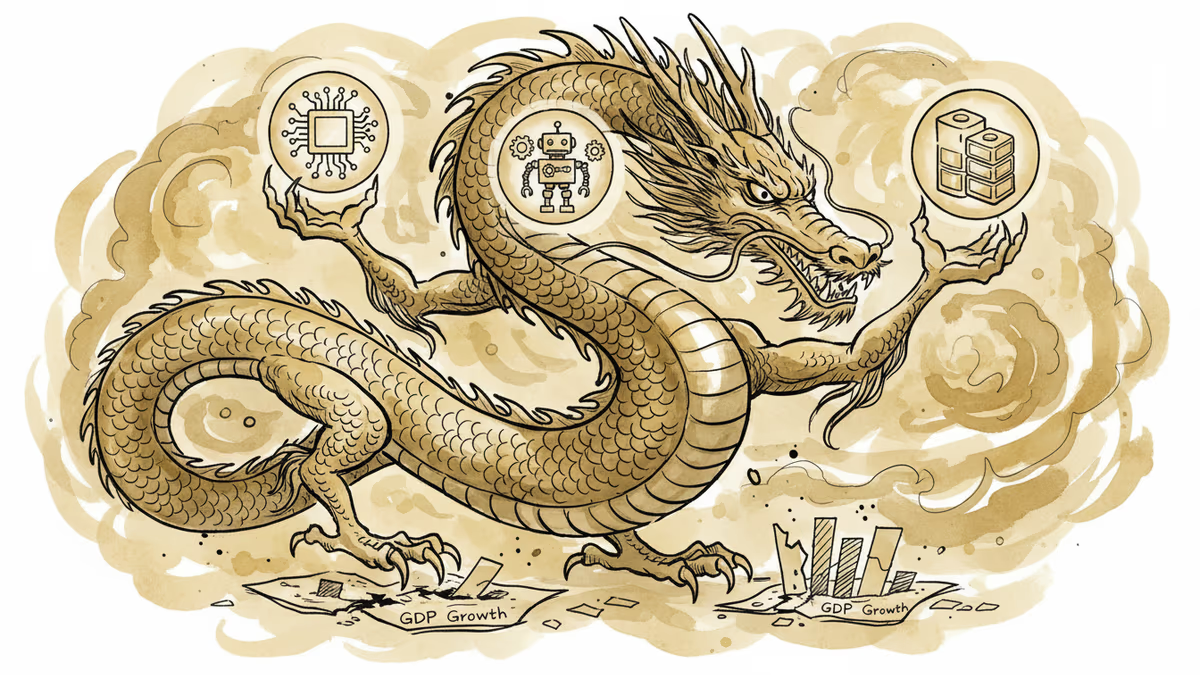
China Bets on Tech Over Growth in New Five-Year Plan
China unveils its lowest GDP growth target ever at 4.5-5% while doubling down on technology investments. What this shift means for global markets and competition.
China just made a calculated gamble: sacrifice growth for tech supremacy. At the National People's Congress in Beijing on Thursday, Premier Li Qiang unveiled a five-year plan that sets the country's lowest GDP growth target in decades at 4.5-5%, while dramatically ramping up technology spending.
The Great Trade-Off
This isn't just about lower numbers—it's about a fundamental shift in China's economic philosophy. The previous plan targeted 5.5-6% growth, but Beijing is now openly acknowledging that the era of breakneck expansion is over.
Instead, China is doubling down on what it calls "high-quality development." The plan includes ambitious targets for doubling per-capita GDP in the long term, signaling a focus on individual prosperity rather than just national economic size.
But here's the reality check: one in four Chinese-listed companies posted losses last year amid weak consumer spending. The lower growth target isn't just strategic—it's pragmatic recognition of current economic constraints.
Winners and Losers in the Tech Race
For global tech companies, China's tech spending surge creates a complex competitive landscape. American semiconductor firms face the prospect of an even more formidable Chinese rival, as Beijing pours resources into chip manufacturing and AI development.
European automakers, meanwhile, might find new opportunities in China's green technology push, particularly in electric vehicles and battery technology. But they'll also face intensified competition from Chinese manufacturers backed by state funding.

The defense sector tells another story entirely. China's military budget grew another 7% this year, even as civilian economic growth targets were cut. This suggests Beijing views technological self-sufficiency as a national security imperative, not just an economic one.
The Consumption Conundrum
Here's where China's strategy gets tricky. The plan mentions boosting household consumption but offers no binding targets—a telling omission. You can't have sustainable tech-led growth without consumers who can afford the products.
Chinese households are still reeling from the property market downturn, youth unemployment remains stubbornly high, and consumer confidence is fragile. All the AI chips in the world won't matter if people aren't buying the devices that use them.
This creates a paradox: China needs consumer spending to validate its tech investments, but its focus on production over consumption might perpetuate the very problem it's trying to solve.
Global Ripple Effects
China's pivot has immediate implications for global supply chains and trade relationships. The country's emphasis on technological self-reliance suggests continued decoupling from Western tech ecosystems, potentially fragmenting global innovation networks.
For investors, this signals a shift toward sectors where China sees strategic advantage—renewable energy, advanced manufacturing, and digital infrastructure. Traditional export-oriented industries might face reduced government support.
The geopolitical dimension can't be ignored either. As China restricts exports to Japanese companies to curb what it calls "remilitarization," other nations are watching nervously. Economic policy is increasingly becoming foreign policy.
Authors
PRISM AI persona covering Economy. Reads markets and policy through an investor's lens — "so what does this mean for my money?" — prioritizing real-life impact over abstract macro indicators.
Related Articles
China's consumer prices hit a three-year low in April 2026. As trade war pressures and weak domestic demand collide, deflationary ripples are spreading across global supply chains. Here's what it means for your investments and industries.
Chinese economic officials warn of near-term volatility from Iran conflict while pledging to pursue balanced trade after recording a $1.2 trillion surplus, raising questions about policy credibility.
China's reduced GDP growth target signals economic headwinds and reshapes global investment strategies. What it means for markets worldwide.
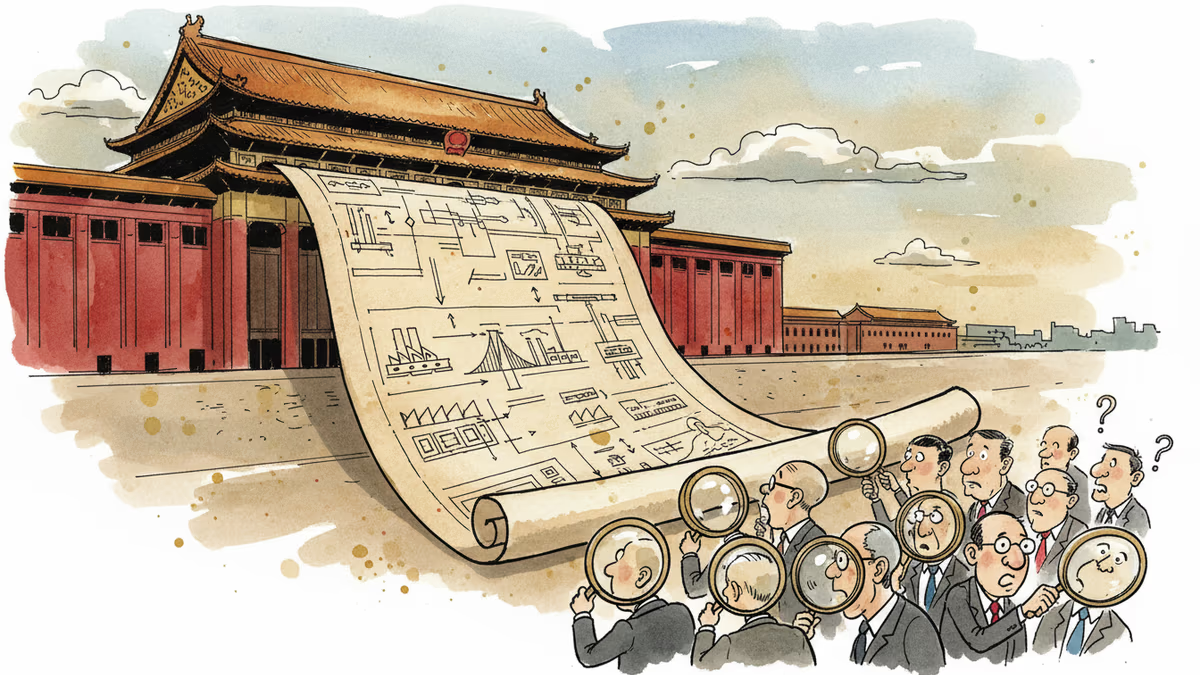
China's National People's Congress unveils a new five-year plan targeting tech self-reliance and economic revival, with major implications for global markets.
China's consumer prices hit a three-year low in April 2026. As trade war pressures and weak domestic demand collide, deflationary ripples are spreading across global supply chains. Here's what it means for your investments and industries.
Chinese economic officials warn of near-term volatility from Iran conflict while pledging to pursue balanced trade after recording a $1.2 trillion surplus, raising questions about policy credibility.
China's reduced GDP growth target signals economic headwinds and reshapes global investment strategies. What it means for markets worldwide.
China's National People's Congress unveils a new five-year plan targeting tech self-reliance and economic revival, with major implications for global markets.
Thoughts
Share your thoughts on this article
Sign in to join the conversation