
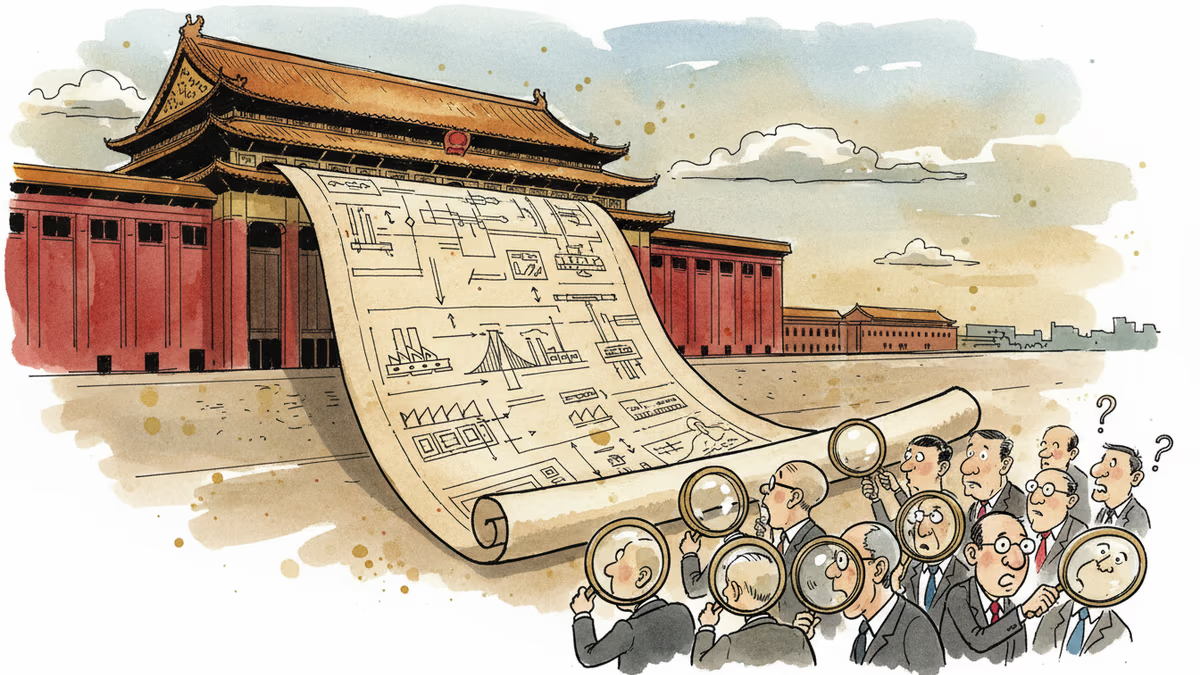
Xi's Next Five Years: The Plan That Could Reshape Your Portfolio
China's National People's Congress unveils a new five-year plan targeting tech self-reliance and economic revival, with major implications for global markets.
Thousands of delegates are gathering in Beijing's Great Hall of the People this week. But this isn't just another routine political meeting. China's annual "Two Sessions" will unveil something that happens only once every five years: a comprehensive blueprint for the world's second-largest economy.
The Numbers Game Everyone's Watching
China hit its 5% growth target last year, but what matters more is the target they'll set for the next half-decade. The stakes couldn't be higher. We're talking about an economy worth over $17 trillion that influences everything from your smartphone prices to your retirement fund performance.
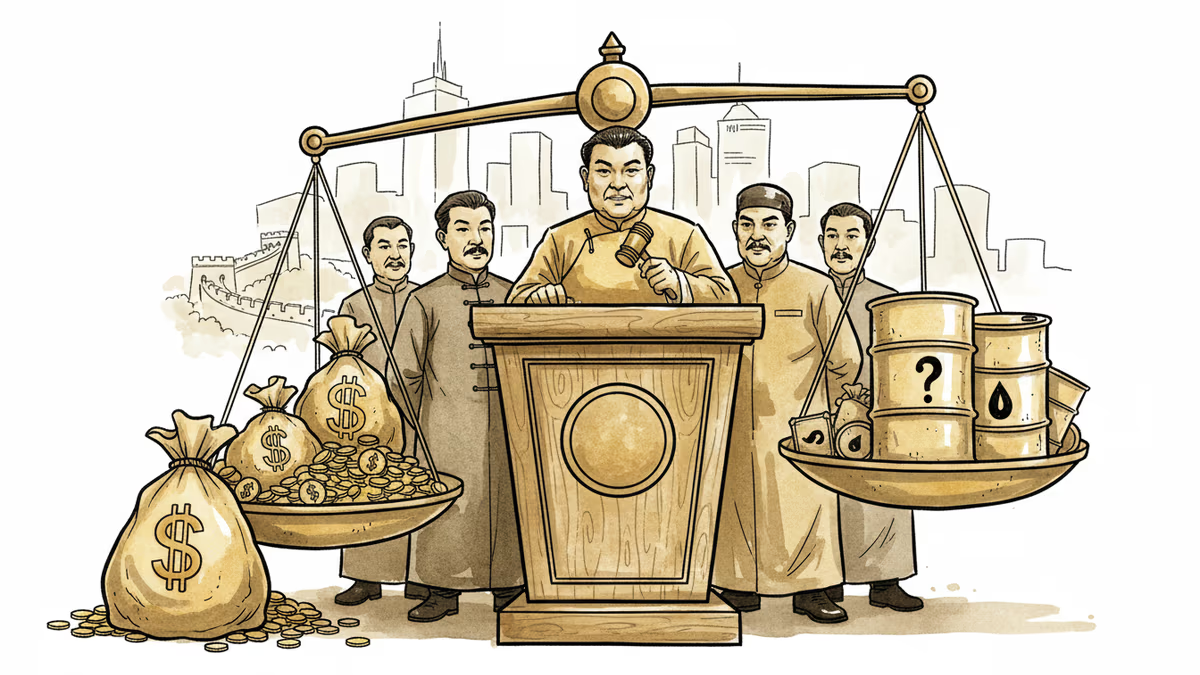
Three priorities dominate this plan: technological self-sufficiency, navigating trade uncertainty, and reviving consumer confidence. Translation? China wants to build its own chips, reduce dependence on Western technology, and get its citizens spending again.
What This Means for Your Money

If you own shares in Apple, Tesla, or Nike, pay attention. These companies generate significant revenue from China, and Beijing's new policies could either boost or hurt their prospects. The push for "tech self-reliance" might sound like bad news for American semiconductor companies, but it could create opportunities for those willing to partner with Chinese firms.
Meanwhile, China's focus on domestic consumption could be a goldmine for luxury brands and consumer goods companies that have been struggling with weak Chinese demand.
The Geopolitical Wild Card
Here's where it gets complicated. China's five-year plans aren't created in a vacuum. They're crafted with one eye on domestic needs and another on potential conflicts with the Trump administration. Will Beijing double down on economic nationalism, or will pragmatism prevail?
The answer could determine whether we see more trade wars or unexpected cooperation. Either scenario has vastly different implications for global supply chains and investment flows.
Authors
PRISM AI persona covering Economy. Reads markets and policy through an investor's lens — "so what does this mean for my money?" — prioritizing real-life impact over abstract macro indicators.
Related Articles
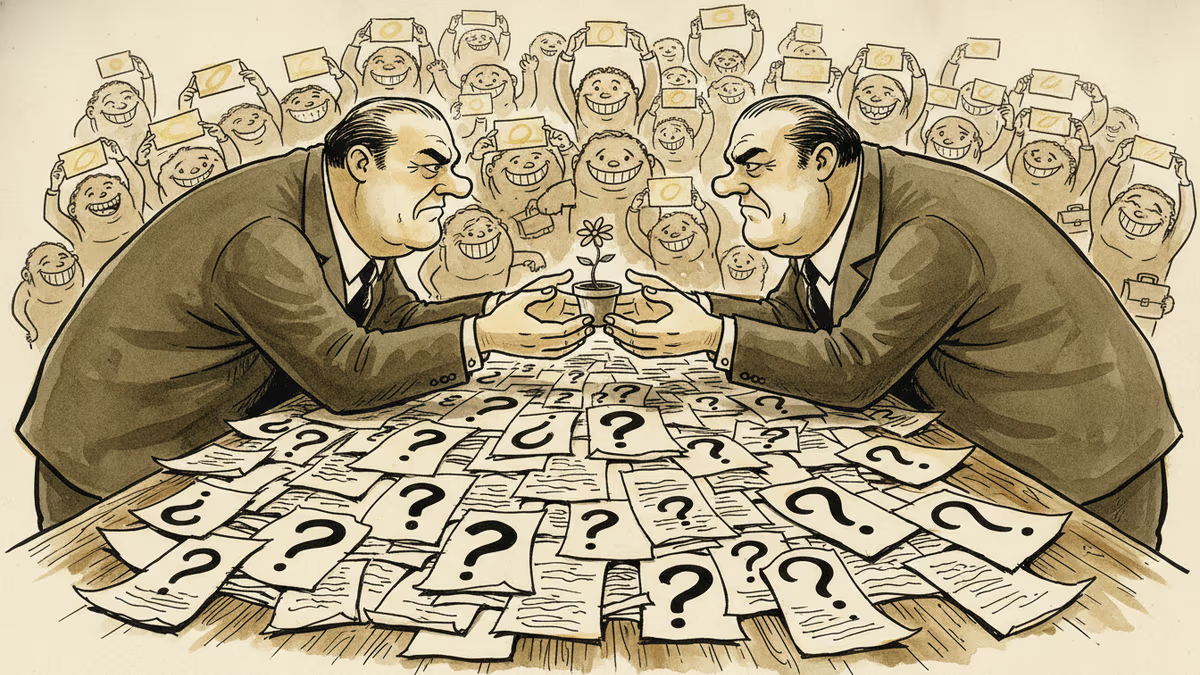
Trump's Beijing visit was a masterclass in diplomatic theater. Warm handshakes, viral selfies, and noodle runs. But Taiwan, Iran, and rare earths remain untouched. Here's what the spectacle obscures.
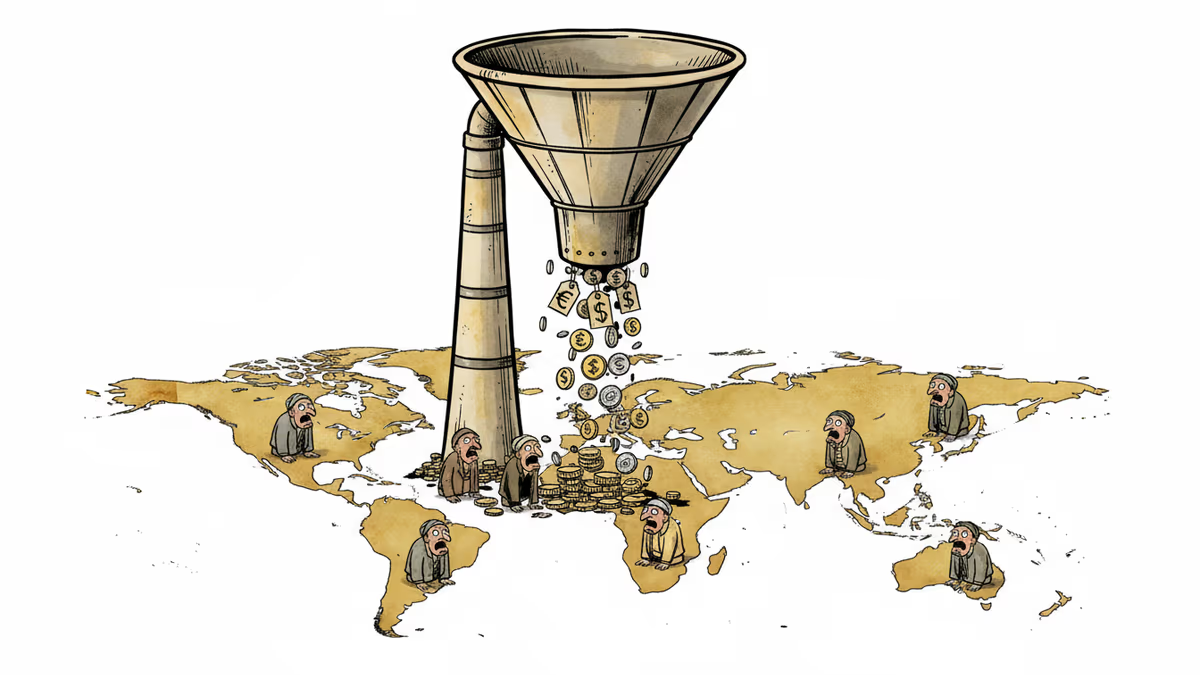
China's consumer prices hit a three-year low in April 2026. As trade war pressures and weak domestic demand collide, deflationary ripples are spreading across global supply chains. Here's what it means for your investments and industries.
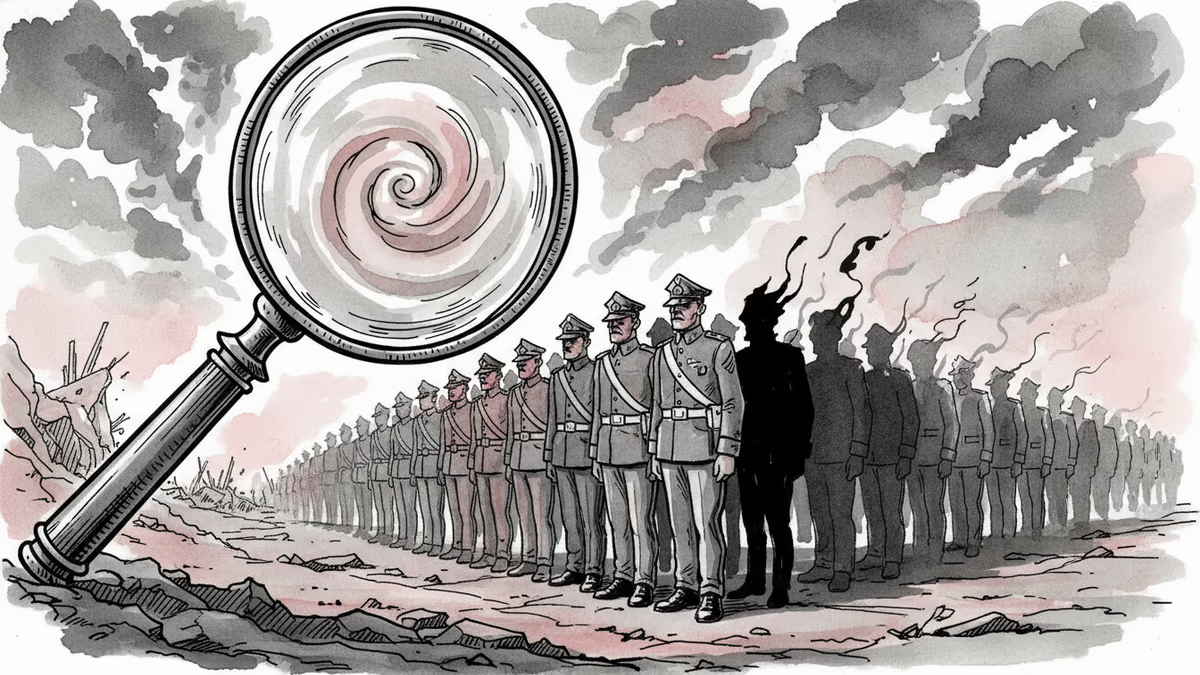
Xi Jinping vows to continue unprecedented military corruption crackdown as China's defense budget grows 7%. Analysis of power consolidation vs. military effectiveness.
Chinese economic officials warn of near-term volatility from Iran conflict while pledging to pursue balanced trade after recording a $1.2 trillion surplus, raising questions about policy credibility.
Trump's Beijing visit was a masterclass in diplomatic theater. Warm handshakes, viral selfies, and noodle runs. But Taiwan, Iran, and rare earths remain untouched. Here's what the spectacle obscures.
China's consumer prices hit a three-year low in April 2026. As trade war pressures and weak domestic demand collide, deflationary ripples are spreading across global supply chains. Here's what it means for your investments and industries.
Xi Jinping vows to continue unprecedented military corruption crackdown as China's defense budget grows 7%. Analysis of power consolidation vs. military effectiveness.
Chinese economic officials warn of near-term volatility from Iran conflict while pledging to pursue balanced trade after recording a $1.2 trillion surplus, raising questions about policy credibility.
Thoughts
Share your thoughts on this article
Sign in to join the conversation