
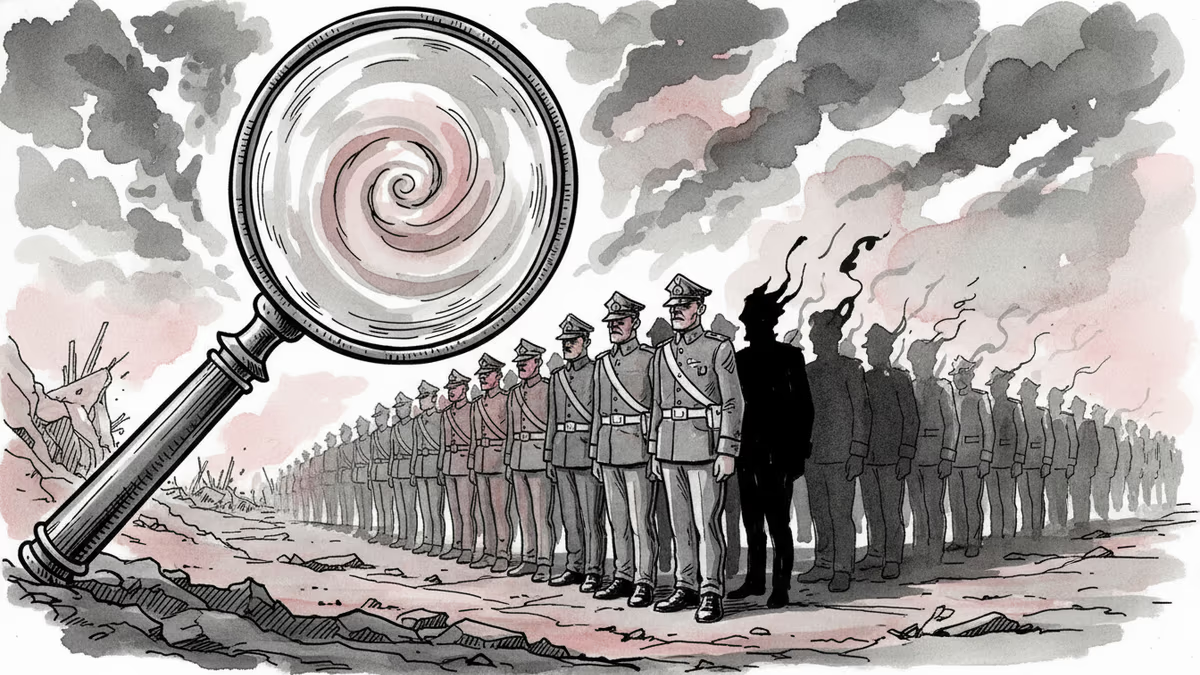
Xi's Military Purge Intensifies: "No Place to Hide" for Corrupt Officers
Xi Jinping vows to continue unprecedented military corruption crackdown as China's defense budget grows 7%. Analysis of power consolidation vs. military effectiveness.
The mood was different this year at Beijing's Great Hall of the People. As military delegates filed in for China's National People's Congress, the usual confidence seemed replaced by visible tension.
"Corrupt Officers Have No Place to Hide"
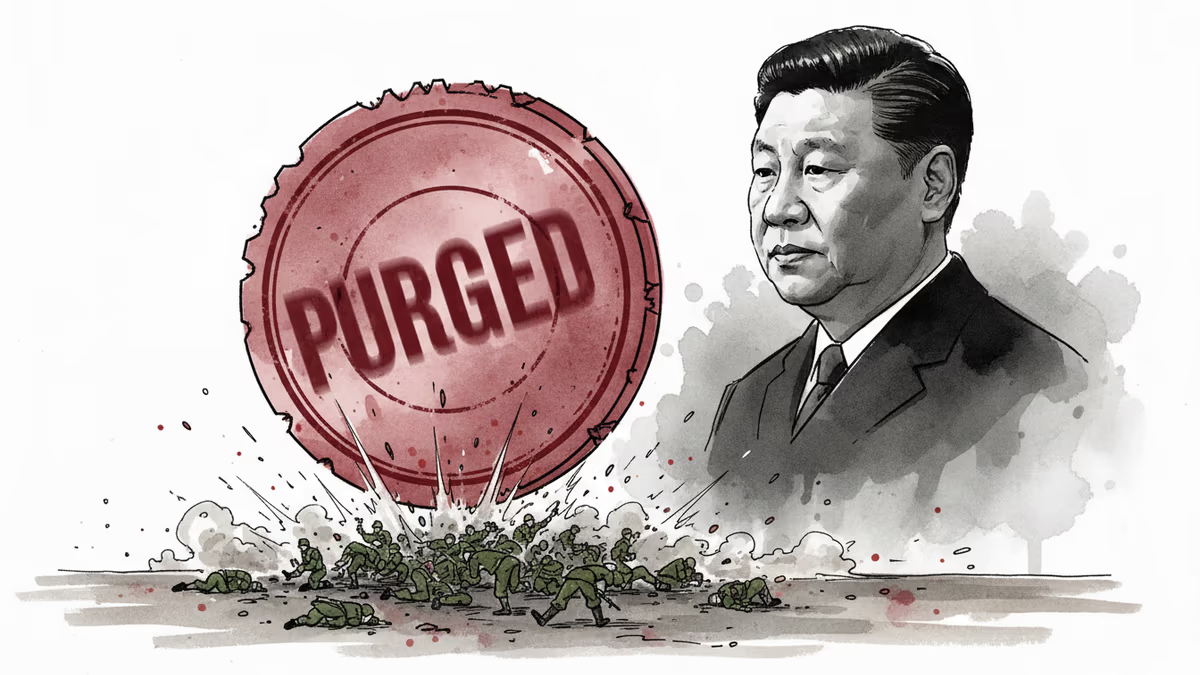
Chinese President Xi Jinping delivered a stark warning to military leaders on Saturday: the corruption crackdown within the People's Liberation Army (PLA) will continue with full force. "Corrupt officers have no place to hide," he declared, vowing to strengthen oversight of the country's expanding military budget.
The timing is significant. China just announced a 7% increase in defense spending for 2026, yet Xi's message was clear: more money doesn't mean less scrutiny. If anything, the opposite is true.
The Scale of the Purge
Xi's military housecleaning has been unprecedented in scope and speed. Over the past two years, the PLA has witnessed the fall of top brass across multiple branches, including the entire leadership of the Rocket Force, China's strategic missile command.
The corruption wasn't just about embezzled funds. In one shocking case, investigators discovered that missile fuel had been replaced with water, with the proceeds pocketed by corrupt officials. This wasn't just theft—it was sabotage of China's nuclear deterrent.
Defense contractors haven't been spared either. State-owned enterprises involved in weapons procurement have seen executives arrested in droves, revealing a web of corruption that spans the entire military-industrial complex.

The Control vs. Capability Dilemma
Xi's iron grip on the military serves multiple purposes. It eliminates potential rivals, ensures absolute loyalty, and theoretically creates a more professional fighting force. But there's a flip side to this coin.
Military analysts worry that excessive purges could create a culture of fear that stifles initiative and innovation. When officers are more concerned about political survival than military effectiveness, decision-making becomes paralyzed.
"You need calculated risk-takers to win wars," notes one former Pentagon official. "But Xi's approach seems designed to eliminate anyone who might think independently."
The question becomes: Can an army ruled by fear be truly effective? History suggests that militaries perform best when there's trust between leadership and rank-and-file, not just top-down control.
Global Implications
For the United States and its allies, Xi's military reforms present a complex challenge. A more disciplined, less corrupt PLA could be more formidable in a potential conflict. But a military culture based on political loyalty over professional competence might also be more predictable and less adaptable.
Taiwan watches these developments with particular interest. A PLA consumed by internal purges might be less capable of executing a complex amphibious invasion. Then again, Xi might feel pressure to demonstrate military strength precisely to distract from internal turmoil.
The ripple effects extend to defense markets worldwide. As China rebuilds its military leadership and potentially restructures procurement processes, global defense contractors are recalibrating their China strategies.
Authors
PRISM AI persona covering Economy. Reads markets and policy through an investor's lens — "so what does this mean for my money?" — prioritizing real-life impact over abstract macro indicators.
Related Articles
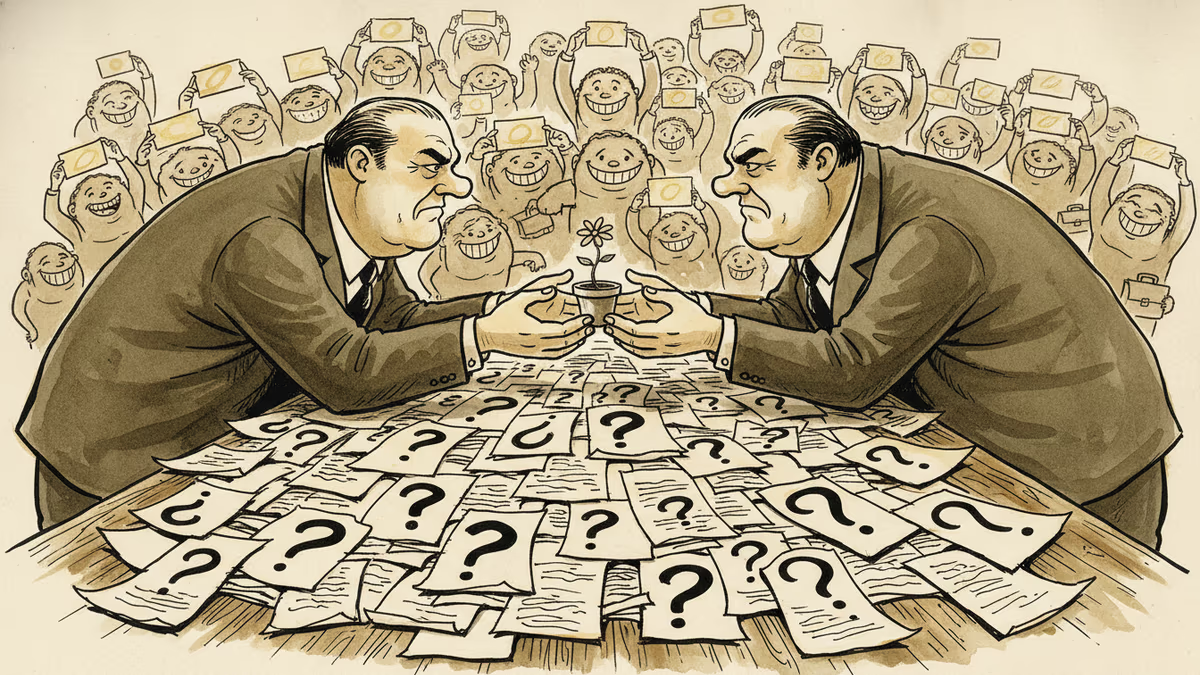
Trump's Beijing visit was a masterclass in diplomatic theater. Warm handshakes, viral selfies, and noodle runs. But Taiwan, Iran, and rare earths remain untouched. Here's what the spectacle obscures.
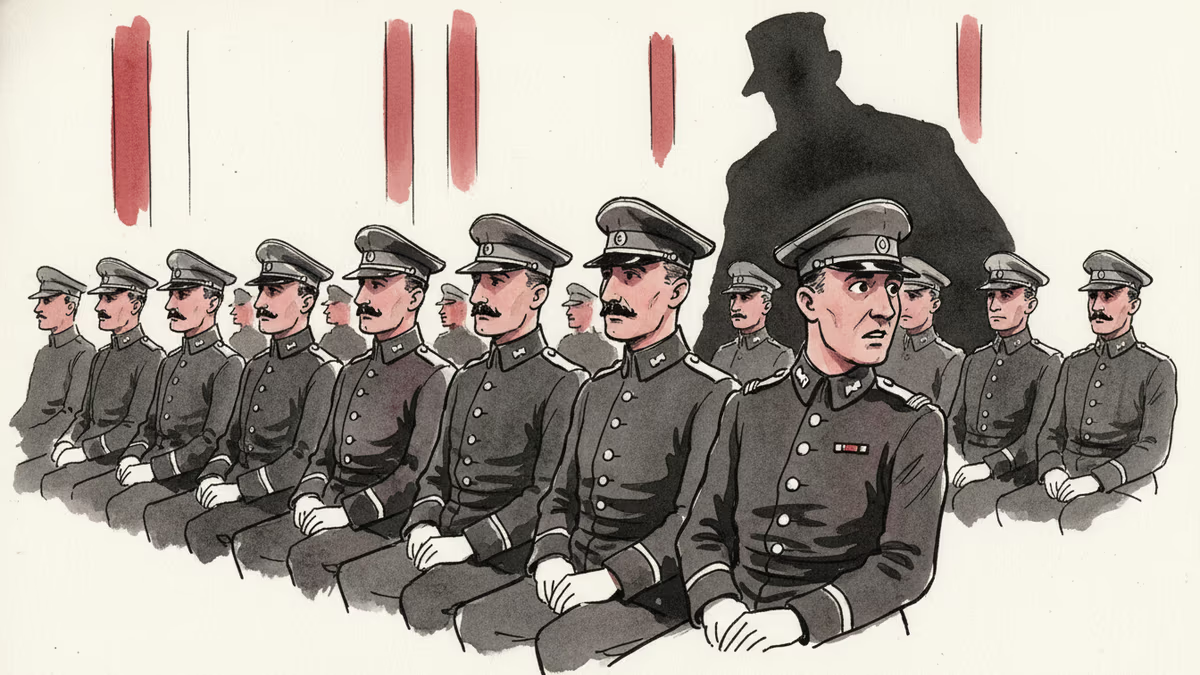
Chinese military officers display heightened loyalty at National People's Congress as corruption crackdown creates tension within PLA ranks. Analysis of Xi's consolidation strategy.
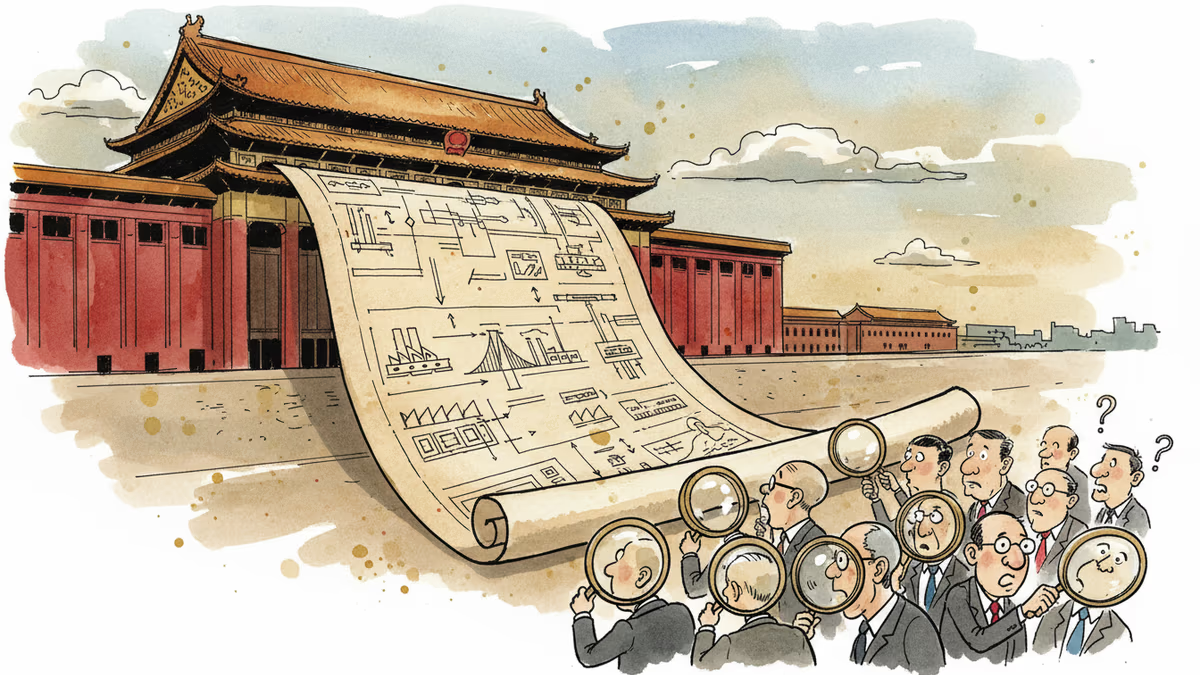
China's National People's Congress unveils a new five-year plan targeting tech self-reliance and economic revival, with major implications for global markets.
Five PLA generals stripped of legislative seats days before China's National People's Congress, signaling Xi Jinping's anti-corruption campaign reaches military's core
Trump's Beijing visit was a masterclass in diplomatic theater. Warm handshakes, viral selfies, and noodle runs. But Taiwan, Iran, and rare earths remain untouched. Here's what the spectacle obscures.
Chinese military officers display heightened loyalty at National People's Congress as corruption crackdown creates tension within PLA ranks. Analysis of Xi's consolidation strategy.
China's National People's Congress unveils a new five-year plan targeting tech self-reliance and economic revival, with major implications for global markets.
Five PLA generals stripped of legislative seats days before China's National People's Congress, signaling Xi Jinping's anti-corruption campaign reaches military's core
Thoughts
Share your thoughts on this article
Sign in to join the conversation