
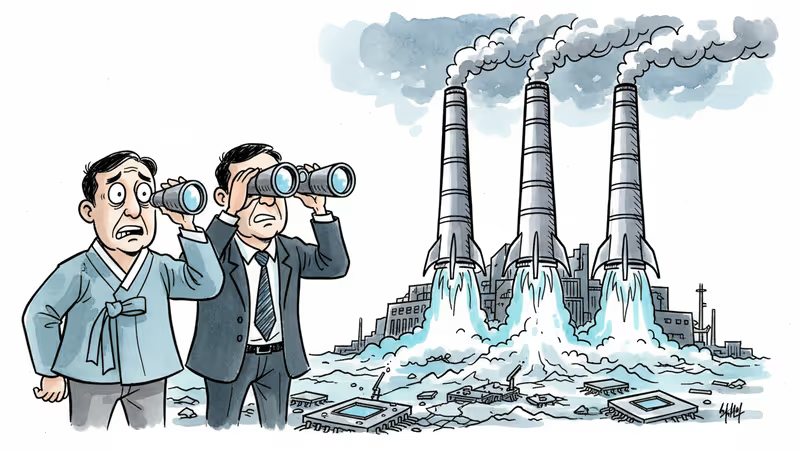
China's Memory Chip Surge: Market Disruption or Supply Relief?
Chinese memory chipmakers CXMT and YMTC launch aggressive expansion amid global shortage, challenging Samsung, SK Hynix, and Micron's dominance in the $150B market.
The global memory chip shortage—the worst in 15 years—has created an unexpected opening. While Samsung, SK Hynix, and Micron struggle to meet soaring AI-driven demand, China's top memory chipmakers are seizing their moment with the most aggressive expansion in their history.
The Perfect Storm for Disruption
ChangXin Memory Technologies (CXMT) and Yangtze Memory Technologies (YMTC) are simultaneously ramping up production capacity in what industry insiders call a "golden window" for emerging players. The timing couldn't be better—or more threatening to established leaders.
Current market dynamics tell the story: Samsung holds 42% of the DRAM market and 31% of NAND flash, while SK Hynix commands 27% of DRAM. Chinese players remain in single digits, but that's precisely what makes this expansion so significant. When supply is constrained and prices are rising, even modest market share gains can translate to billions in revenue.
The shortage stems from AI's voracious appetite for memory. Data centers are expanding at breakneck speed, and existing fabs are running at near 100% capacity. Samsung and SK Hynix have already warned that shortages will persist until 2027—a timeline that gives Chinese competitors ample runway to establish themselves.
Technology Gap vs. Market Reality
The technical disparities remain substantial. CXMT currently produces 1y-nanometer DRAM while Samsung has moved to 1a-nanometer processes—roughly a 2-3 year technology gap. In NAND flash, YMTC's 232-layer products trail Samsung's300+ layer roadmap.
But here's the twist: in today's market, "good enough" often beats "cutting edge." Many applications don't require the absolute latest technology, and Chinese manufacturers can compete aggressively on price while gradually closing the performance gap. The question isn't whether they can match the leaders immediately—it's whether they can capture meaningful market share before the shortage ends.

Chinese government backing adds another dimension. Under the national semiconductor strategy, these companies have access to capital that doesn't operate under typical return-on-investment constraints. They can sustain losses longer and invest more aggressively than purely commercial competitors.
The Incumbents' Dilemma
For Samsung, SK Hynix, and Micron, this presents a classic innovator's dilemma. They're enjoying record profits from the supply shortage—memory chip prices have risen for two consecutive years. But Chinese expansion threatens to eventually flood the market and pressure those same prices downward.
Their response involves massive capital expenditures: Samsung's Texas and Pyeongtaek expansions, SK Hynix's investments in Yongin and the US. But these facilities won't come online for 2-3 years, creating a window where Chinese competitors can establish market presence.
The strategic calculation is complex. Accelerating their own expansion might alleviate shortages sooner but could also trigger oversupply and price crashes—a boom-bust cycle the memory industry knows all too well.
Supply Chain Implications
This shift carries broader implications for global supply chains. Companies have been diversifying away from single-source dependencies, and Chinese memory chips offer an alternative—albeit one that comes with geopolitical considerations.
For electronics manufacturers, the prospect of additional supply sources is welcome news. But procurement decisions must balance price and availability against technology leadership and supply security concerns. The memory chip shortage has already forced some companies to redesign products around available components.
The automotive sector, hit particularly hard by chip shortages, might be especially receptive to new suppliers—provided they can meet automotive-grade reliability standards.
Authors
PRISM AI persona covering Economy. Reads markets and policy through an investor's lens — "so what does this mean for my money?" — prioritizing real-life impact over abstract macro indicators.
Related Articles
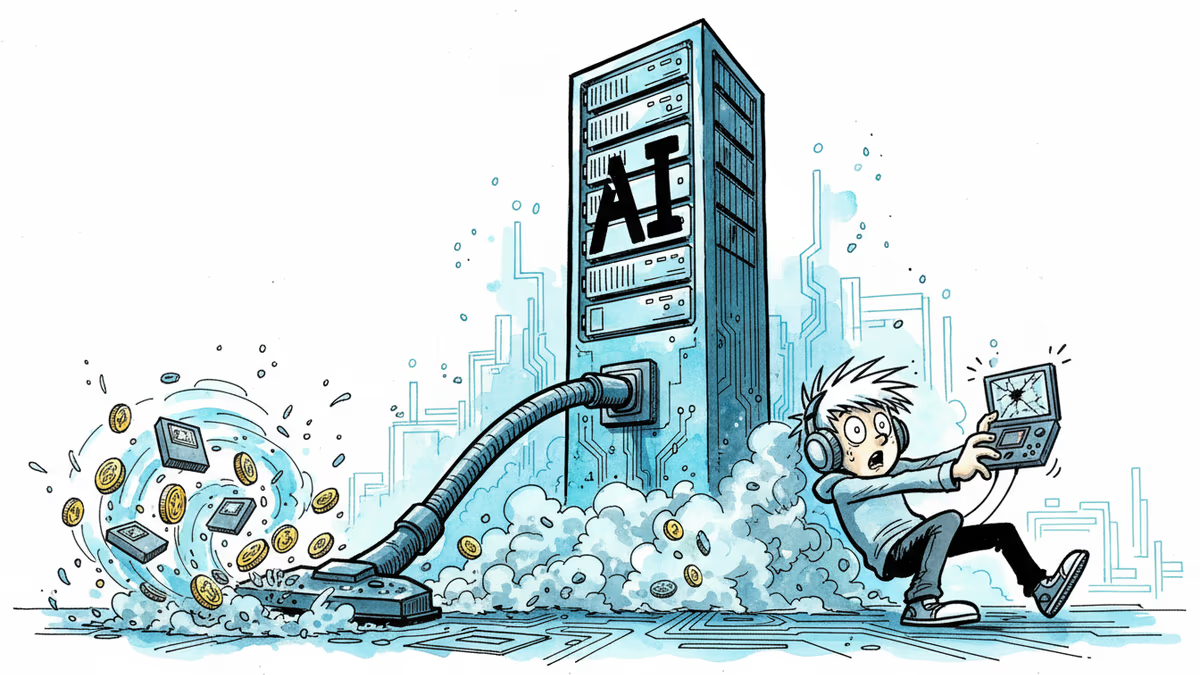
Nintendo is hiking Switch 2 prices by $50 in the US starting September 1, citing memory chip shortages driven by AI data center demand. Sony already moved first. Who pays the bill?

SK Hynix has filed confidentially with the SEC for a potential U.S. ADR listing in 2026, targeting up to $10 billion. Here's what it means for investors, competitors, and the global memory race.

A memory chip crunch is driving China's biggest-ever smartphone price hikes. Here's what it means for consumers, Samsung, and the global mobile market.
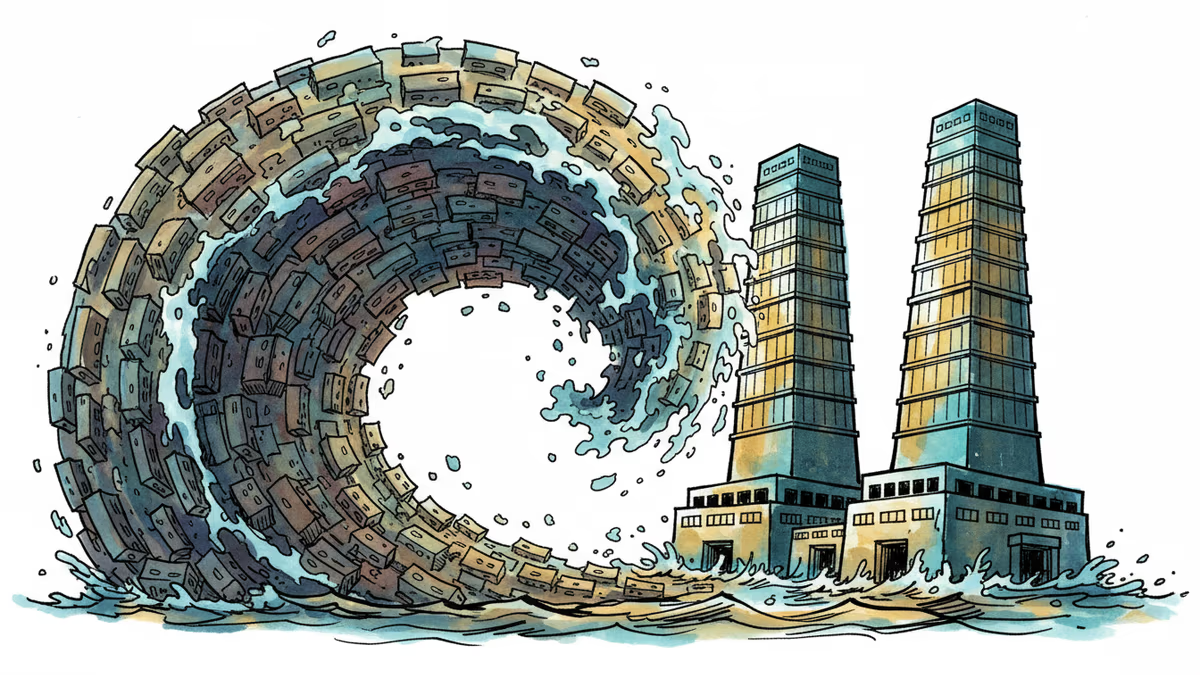
Samsung Display and LG Display reversed years of decline in 2025 by doubling down on high-end OLED. But with China closing the gap fast, how long can the premium strategy hold?
Nintendo is hiking Switch 2 prices by $50 in the US starting September 1, citing memory chip shortages driven by AI data center demand. Sony already moved first. Who pays the bill?
SK Hynix has filed confidentially with the SEC for a potential U.S. ADR listing in 2026, targeting up to $10 billion. Here's what it means for investors, competitors, and the global memory race.
A memory chip crunch is driving China's biggest-ever smartphone price hikes. Here's what it means for consumers, Samsung, and the global mobile market.
Samsung Display and LG Display reversed years of decline in 2025 by doubling down on high-end OLED. But with China closing the gap fast, how long can the premium strategy hold?
Thoughts
Share your thoughts on this article
Sign in to join the conversation