
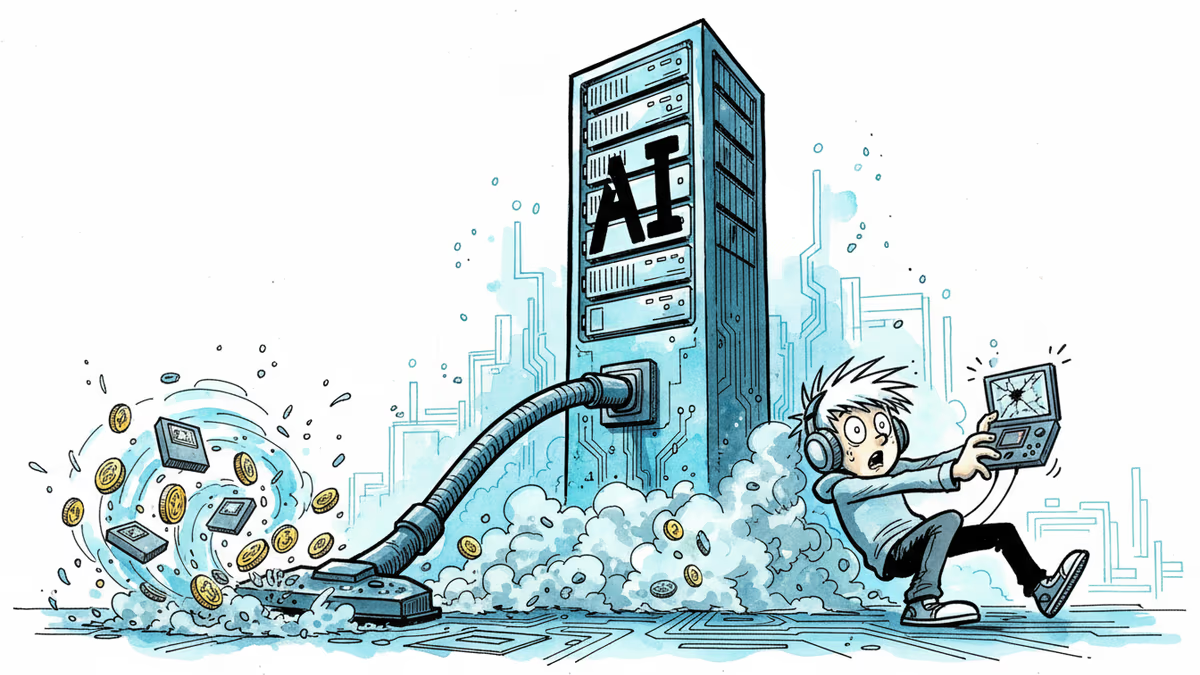
Your Next Nintendo Switch 2 Just Got $50 Pricier — Blame AI
Nintendo is hiking Switch 2 prices by $50 in the US starting September 1, citing memory chip shortages driven by AI data center demand. Sony already moved first. Who pays the bill?
The AI boom has a bill. Gamers are starting to receive it.
Nintendo announced Friday that the Switch 2 will cost $499.99 in the US starting September 1 — up $50 from its current $449.99 price tag. In Japan, the hike hits sooner: ¥59,980 from May 25, up from ¥49,980. Canada and Europe face increases too. The company's explanation was brief: "changes in market conditions" and a review of "the global business outlook." Translation — memory chips are getting expensive, fast.
The Chip Crunch Nobody Saw Coming for Gamers
The memory chips inside the Switch 2 are the same class of components that AI data centers are consuming at a record pace. As Nvidia, Microsoft, and Google race to build out GPU clusters, memory manufacturers have shifted production capacity toward high-margin AI-optimized chips. The result: standard DRAM supply tightens, prices climb, and game console makers absorb the shock.
Nintendo put a number on it. The company warned that rising component costs — particularly memory — combined with tariff measures will hit its fiscal year ending March 2027 by approximately ¥100 billion. That's not a rounding error. Sales forecasts already reflect the pain: Nintendo expects to sell 16.5 million Switch 2 units in the coming fiscal year, down from 19.86 million units in the year just ended — and well below what analysts had projected.
Nintendo shares have lost nearly 50% since peaking above ¥14,000 last August. The market had priced in a growth story; what it got was a cost story.

Sony Already Moved. The Industry Is Following.
Nintendo isn't the first to blink. Sony raised PlayStation 5 prices by up to $150 in March. Two of gaming's biggest hardware players hiking prices within months of each other signals something more durable than a temporary squeeze. When rivals move in the same direction at the same time, it usually means the underlying cost pressure is real and shared — not a competitive disadvantage one player can absorb while the other can't.
The question for consumers is whether this is a one-time adjustment or the start of a new pricing floor for premium consoles. At $499.99, the Switch 2 now sits at a price point that would have been unthinkable for a Nintendo handheld five years ago.
Winners, Losers, and the Invisible Subsidy
The clearest winners here are memory chip manufacturers — Samsung Electronics and SK Hynix chief among them. AI demand has already driven record margins on HBM chips; tighter supply of conventional DRAM pushes those prices up too. The console maker's pain converts directly into the chipmaker's gain.
For investors in gaming stocks, the calculus gets uncomfortable. Nintendo's hardware margin compression isn't resolved by a price hike alone — if higher prices suppress demand, unit volumes fall further, and the fixed-cost leverage that makes console businesses profitable erodes. The 16.5 million unit forecast may prove optimistic if the $499.99 price point slows adoption among casual buyers who were already on the fence.
Microsoft's Xbox division, which has leaned heavily into its Game Pass subscription model rather than hardware margins, could see a relative advantage here. When rival hardware gets more expensive, the pitch for "pay monthly, play everything" gets easier to make.
This content is AI-generated based on source articles. While we strive for accuracy, errors may occur. We recommend verifying with the original source.
Related Articles
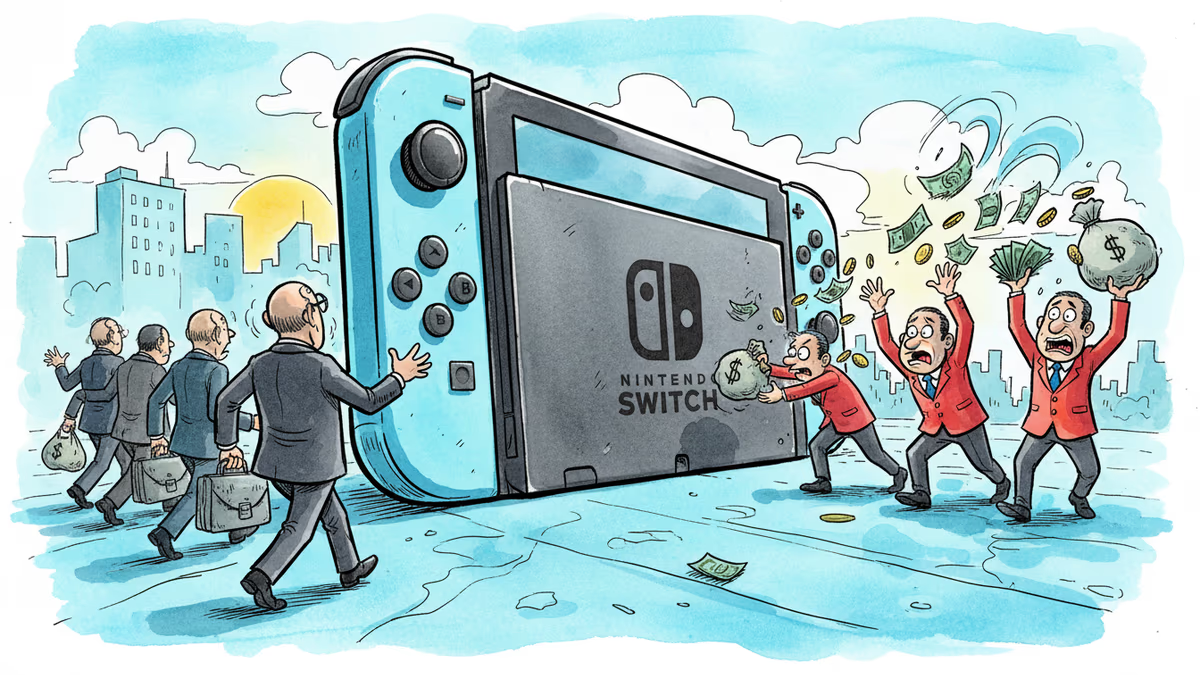
Four Nintendo shareholders announce massive $1.9B stock sale while company launches $640M buyback. Is this profit-taking or concern about gaming industry future? Analysis of what this means for Nintendo's strategy.
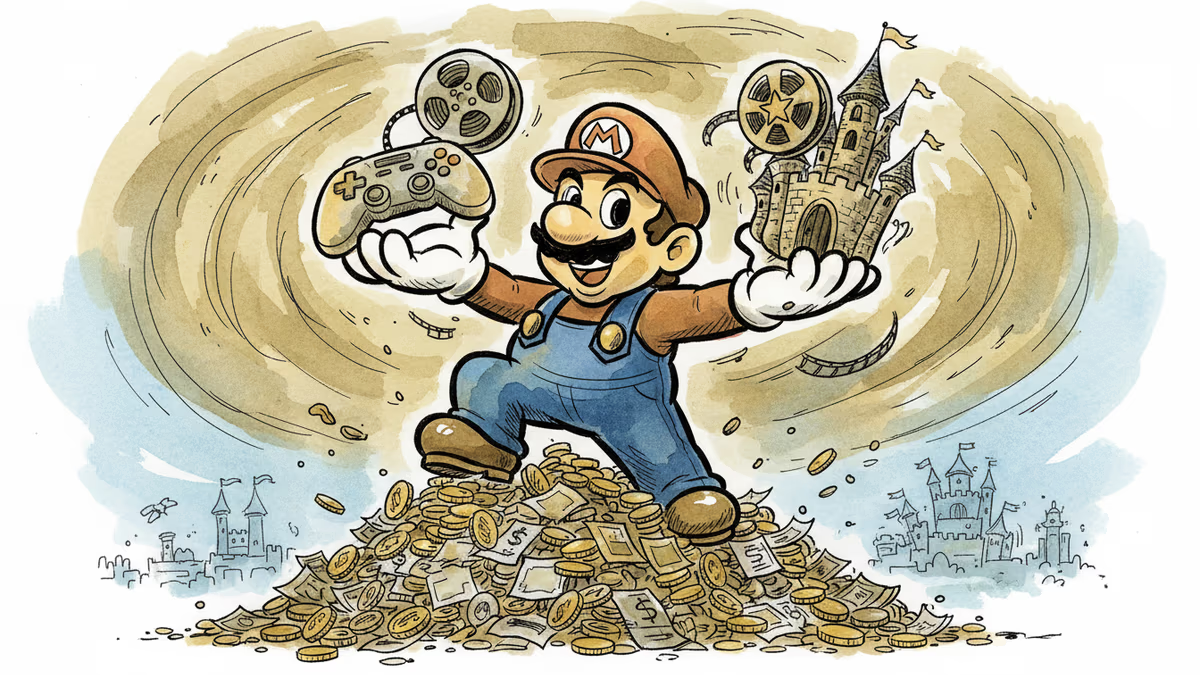
Nintendo is transforming from a console company to an IP empire, using movies and theme parks to drive gaming sales. But can Mario and Pikachu stay relevant forever?
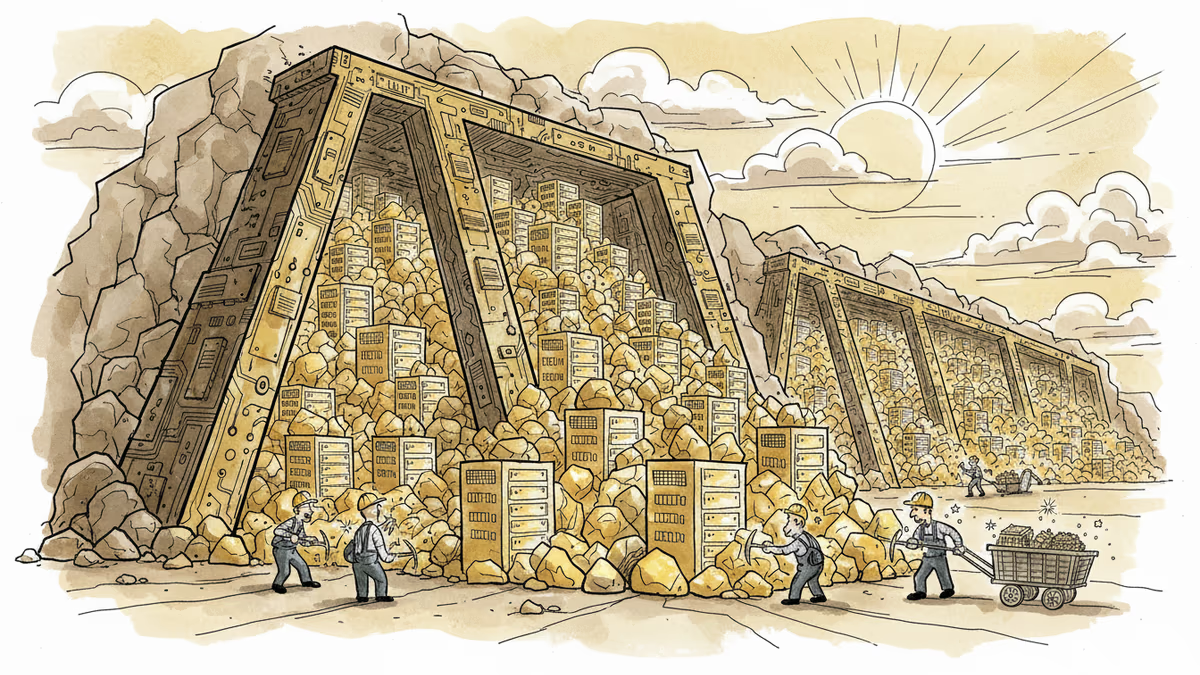
CoreWeave's 110% revenue surge reveals who's actually profiting from AI boom. While everyone chases ChatGPT, infrastructure providers count the cash.

Amazon invests $12 billion in Louisiana AI data centers as tech giants pour $700 billion into infrastructure. But who really wins in this rural AI gold rush?
Four Nintendo shareholders announce massive $1.9B stock sale while company launches $640M buyback. Is this profit-taking or concern about gaming industry future? Analysis of what this means for Nintendo's strategy.
Nintendo is transforming from a console company to an IP empire, using movies and theme parks to drive gaming sales. But can Mario and Pikachu stay relevant forever?
CoreWeave's 110% revenue surge reveals who's actually profiting from AI boom. While everyone chases ChatGPT, infrastructure providers count the cash.
Amazon invests $12 billion in Louisiana AI data centers as tech giants pour $700 billion into infrastructure. But who really wins in this rural AI gold rush?
Thoughts
Share your thoughts on this article
Sign in to join the conversation