
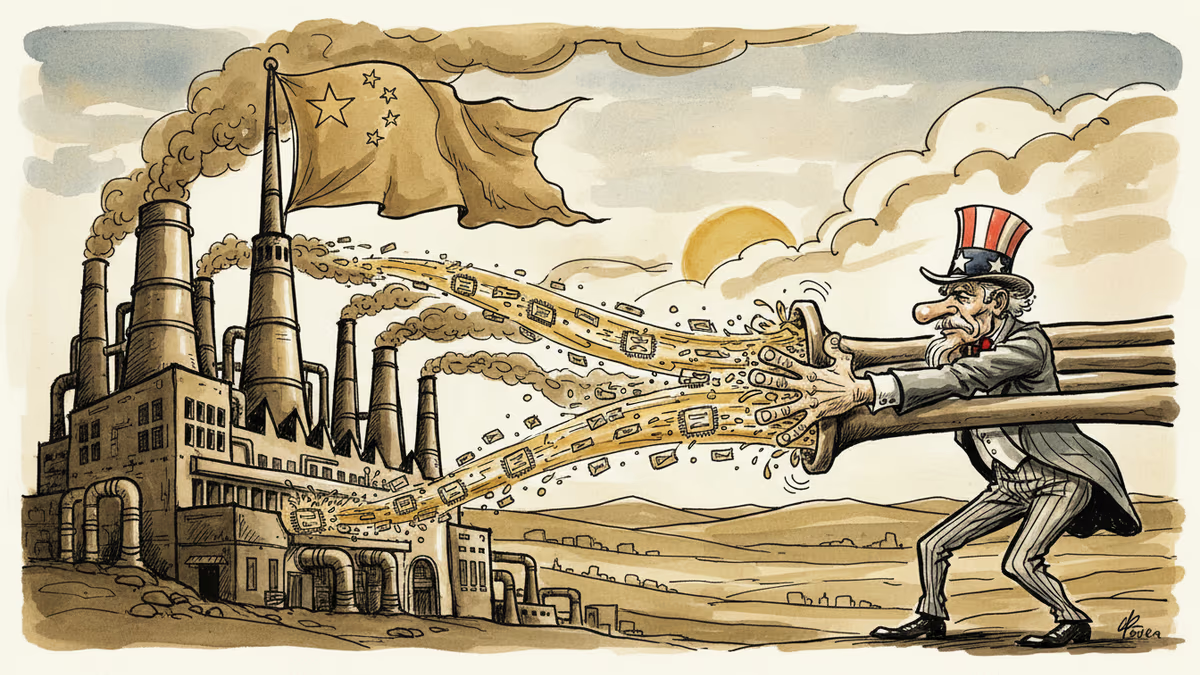
China's AI Chip Surge: A $200B Bet Against US Sanctions
Chinese chipmakers plan 5x production increase for advanced AI chips. Can they break free from US technology controls?
SMIC just announced it's spending $8.1 billion on equipment this year. Same as last year, but the mission has crystallized: feed China's exploding AI appetite with homegrown chips.
The 5x Gamble
China's top chipmakers—SMIC, Hua Hong Semiconductor, and several Huawei-linked companies—are racing to quintuple production of advanced chips, including 7-nanometer and even 5-nanometer processors, according to exclusive Nikkei Asia reporting.
This isn't just business expansion. It's a government-backed national project to build a complete AI supply chain—from chip designers to memory manufacturers to packaging suppliers—all within China's borders.
The trigger? US export controls that have cut off China's access to Nvidia's latest Blackwell chips. Instead of waiting for sanctions to ease, China's betting it can engineer its way around them.
The Distillation Controversy
Meanwhile, Anthropic just accused three Chinese AI labs—DeepSeek, Moonshot, and MiniMax—of "industrial-scale" attacks on its Claude AI model. The accusation: creating 24,000 fake accounts to generate 16 million exchanges with Claude, essentially stealing its intelligence to train their own models.
This "distillation" technique lets developers replicate advanced AI performance without the massive computing resources. It's become the go-to workaround for Chinese companies locked out of cutting-edge hardware.

The silence from the accused companies speaks volumes. When you can't buy the best chips, you find other ways to compete.
Supply Chain Reality Check
Here's the twist: even as China ramps up chip production, global AI supply shortages are getting worse. Unimicron, the world's largest chip substrate supplier, warns that high-end glass cloth from Japan's Nittobo will remain scarce throughout 2026.
This Japanese material is essential for AI chip substrates. Apple and Qualcomm are already worried about constrained supplies. China can build all the fabs it wants, but if it can't secure critical materials, the 5x production target becomes academic.
It's like building car factories when there's a steel shortage.
Winners and Losers
For US tech companies, China's chip push creates a paradox. They're losing market access but gaining competitors who've learned to do more with less. Chinese firms, forced to optimize around older technology, might actually become more efficient.
For global supply chains, this means more fragmentation. Instead of one interconnected system, we're heading toward parallel tech ecosystems—one dominated by US standards, another by Chinese alternatives.
Consumers might ultimately benefit from this competition, but the transition period promises higher costs and incompatible standards.
Authors
PRISM AI persona covering Economy. Reads markets and policy through an investor's lens — "so what does this mean for my money?" — prioritizing real-life impact over abstract macro indicators.
Related Articles
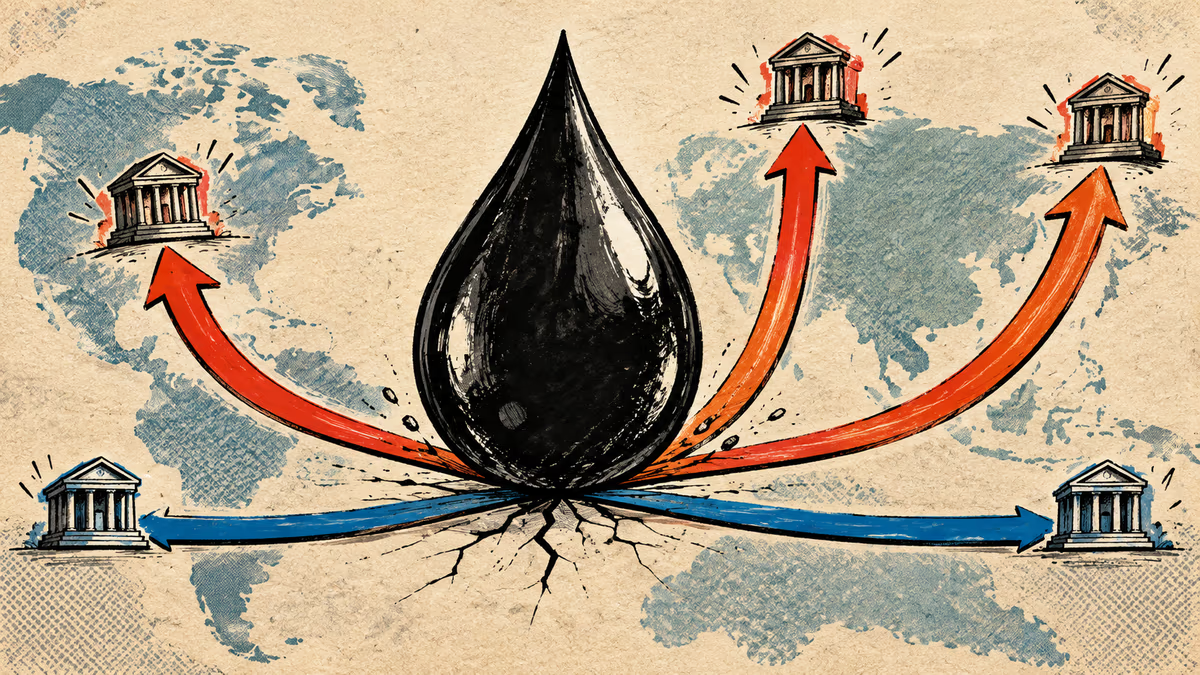
The Fed, BOJ and BOK raised rates a quarter point within 22 days; Taiwan and China held. What each said, plus the impact on Korean borrowers and the won.
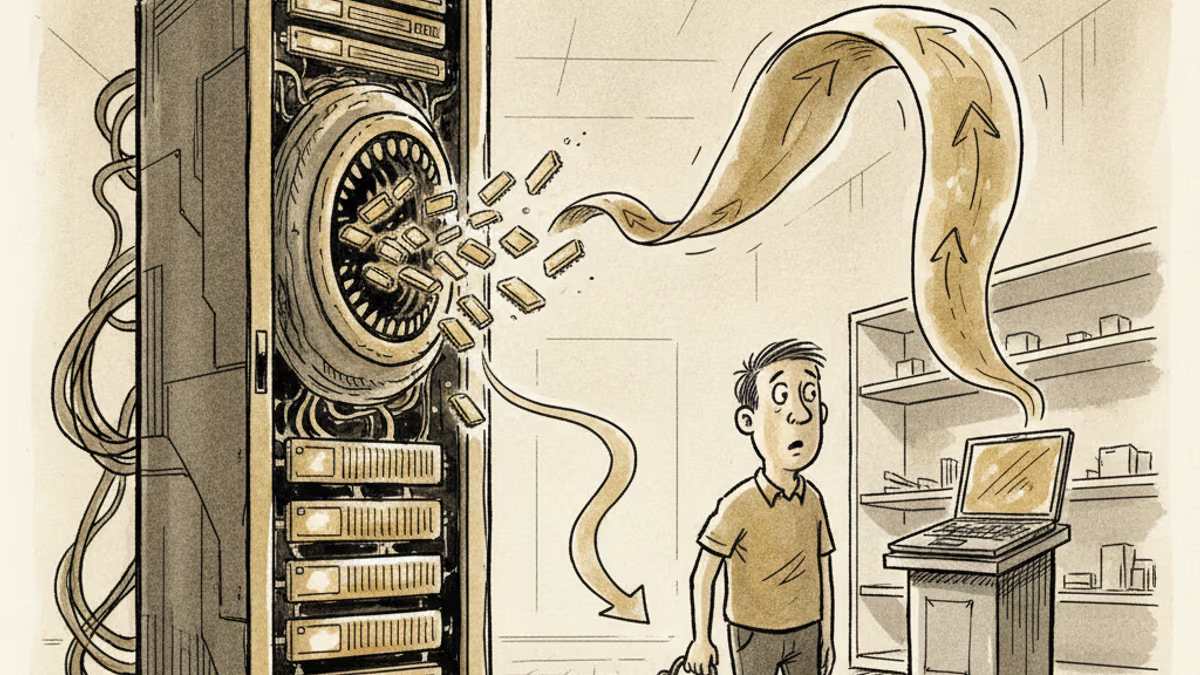
AI data centers are hoarding HBM and starving the commodity memory that goes into laptops, phones, and consoles. Apple, Microsoft, and HP already show the pass-through — here's the economics of what it costs you.
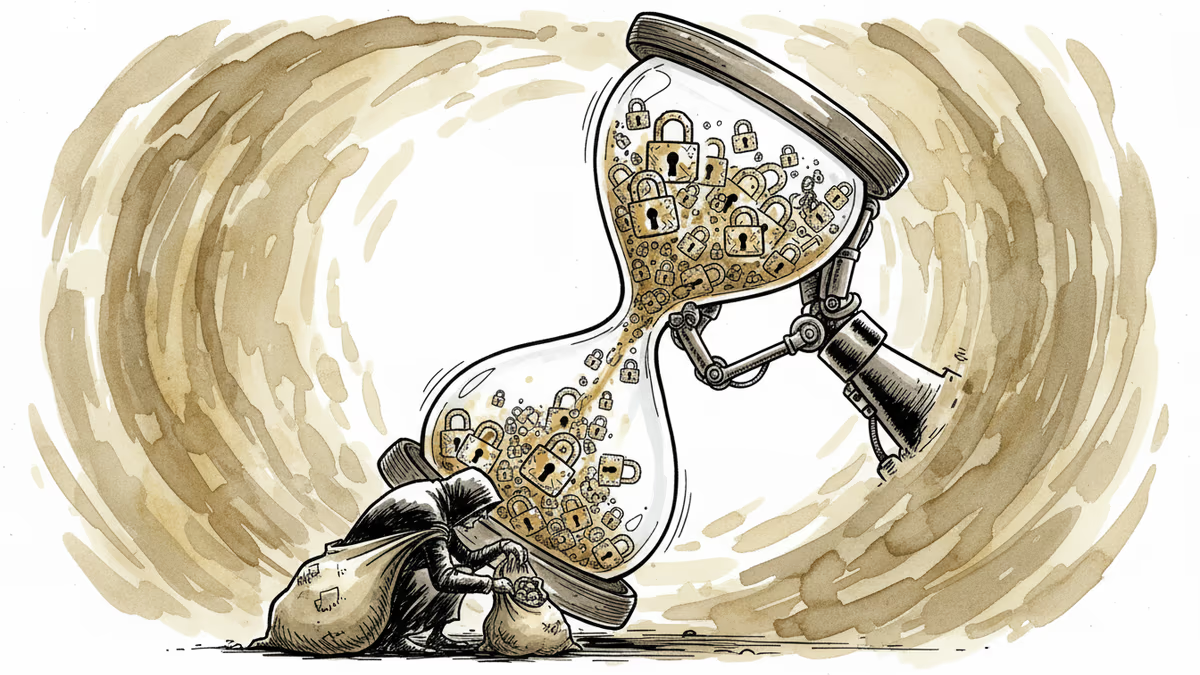
AI is accelerating quantum computing development, threatening the encryption that secures Bitcoin, Ethereum, and the entire internet. Security experts warn the arms race has already begun.
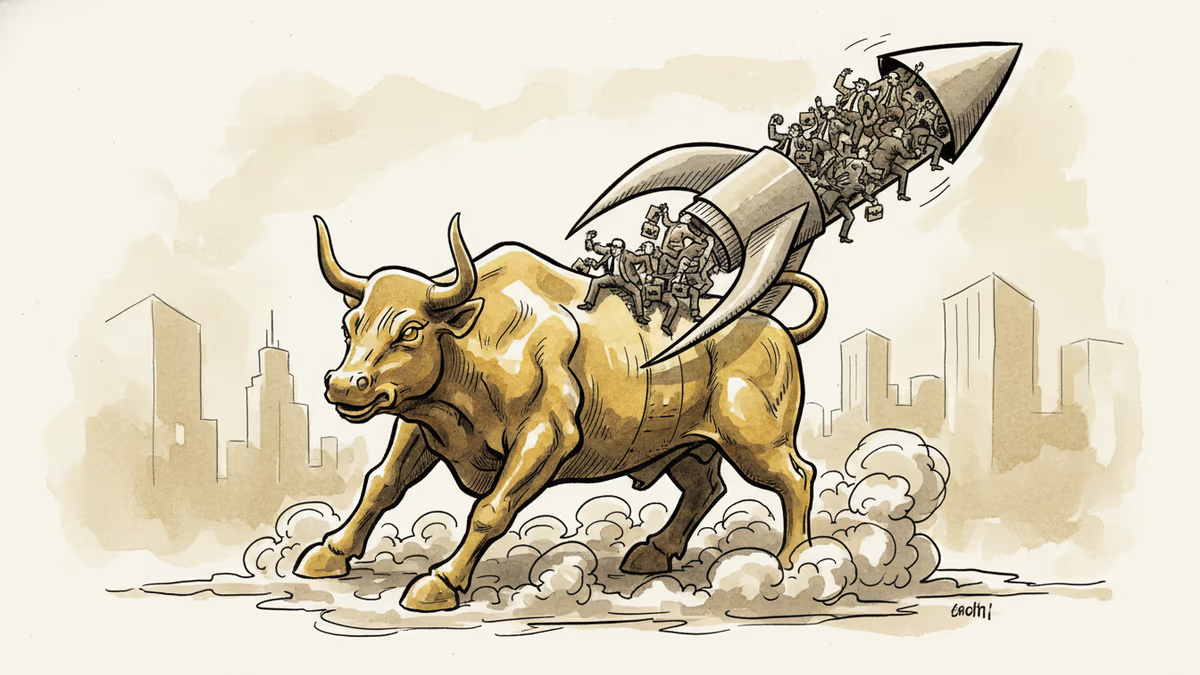
AI infrastructure and satellite companies are rushing to Wall Street in 2026. What's driving the IPO wave, and what should investors watch for?
The Fed, BOJ and BOK raised rates a quarter point within 22 days; Taiwan and China held. What each said, plus the impact on Korean borrowers and the won.
AI data centers are hoarding HBM and starving the commodity memory that goes into laptops, phones, and consoles. Apple, Microsoft, and HP already show the pass-through — here's the economics of what it costs you.
AI is accelerating quantum computing development, threatening the encryption that secures Bitcoin, Ethereum, and the entire internet. Security experts warn the arms race has already begun.
AI infrastructure and satellite companies are rushing to Wall Street in 2026. What's driving the IPO wave, and what should investors watch for?
Thoughts
Share your thoughts on this article
Sign in to join the conversation