

AI Boyfriends in China Social Impact 2026: Why Millions Prefer Digital Romance
Explore the social impact of AI boyfriends in China in 2026. From 5 million users to regulatory crackdowns, see how digital love is reshaping human relationships.
Is a perfect AI better than a flawed human? For Jade Gu, a 26-year-old student in Beijing, the answer is a resounding yes. She spends 3 hours a day texting Charlie, an AI companion she meticulously trained using MiniMax's platform, Xingye. Gu's story isn't an anomaly; it's the face of a booming emotional industry in China.
AI Boyfriends in China Social Impact 2026: The Rise of Female Users
According to WIRED, the gender dynamics of AI companionship in China flip the global script. While men make up 80% of the user base for top global AI platforms, women dominate the market in China. The platform Zhumengdao reportedly boasts 5 million users, most of whom are women seeking emotional connection in an increasingly lonely urban landscape.

- Major players like Tencent and Baidu have launched dedicated AI companion apps for women.
- The "economics of loneliness" drives monetization through voice customization and memory upgrades.
- Real-world crossovers include hiring professional cosplayers for dates at 720 RMB ($100) per day.
The Regulatory Wall vs. Emotional Dependency
This digital intimacy hasn't gone unnoticed by regulators. The Cyberspace Administration of China (CAC) has initiated campaigns to clean up "vulgar" AI content and released draft rules targeting "human-like" AI. These measures aim to prevent emotional dependency, stipulating that AI should not be designed to replace human social interaction. However, for many women, the patience and non-judgmental nature of AI provide a sanctuary that real-world relationships often lack.
Authors
Related Articles

Google DeepMind hires Hume AI's CEO and top talent in a strategic licensing deal to boost Gemini's emotional intelligence. Learn about the Google DeepMind Hume AI deal.
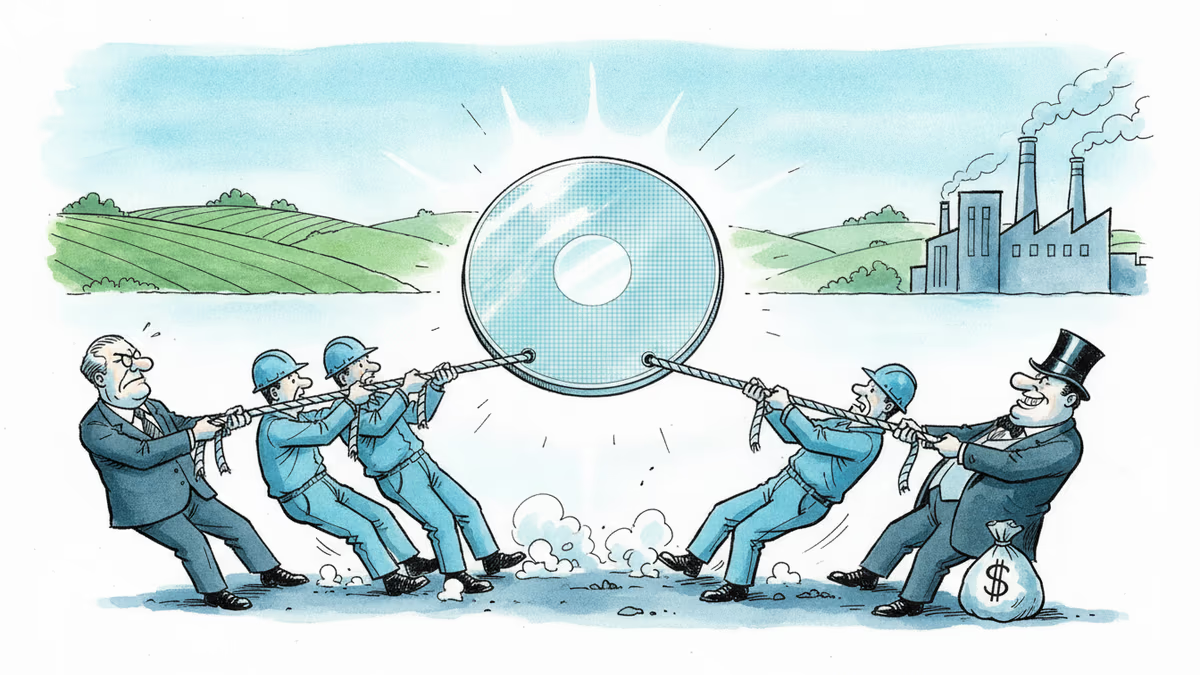
Samsung Electronics' union branch revealed that 84% of survey respondents oppose the government's roughly $290 billion (₩400 trillion) semiconductor megaproject in Gwangju. Government, management, the union and shareholders are all reading the same national project in sharply different ways.
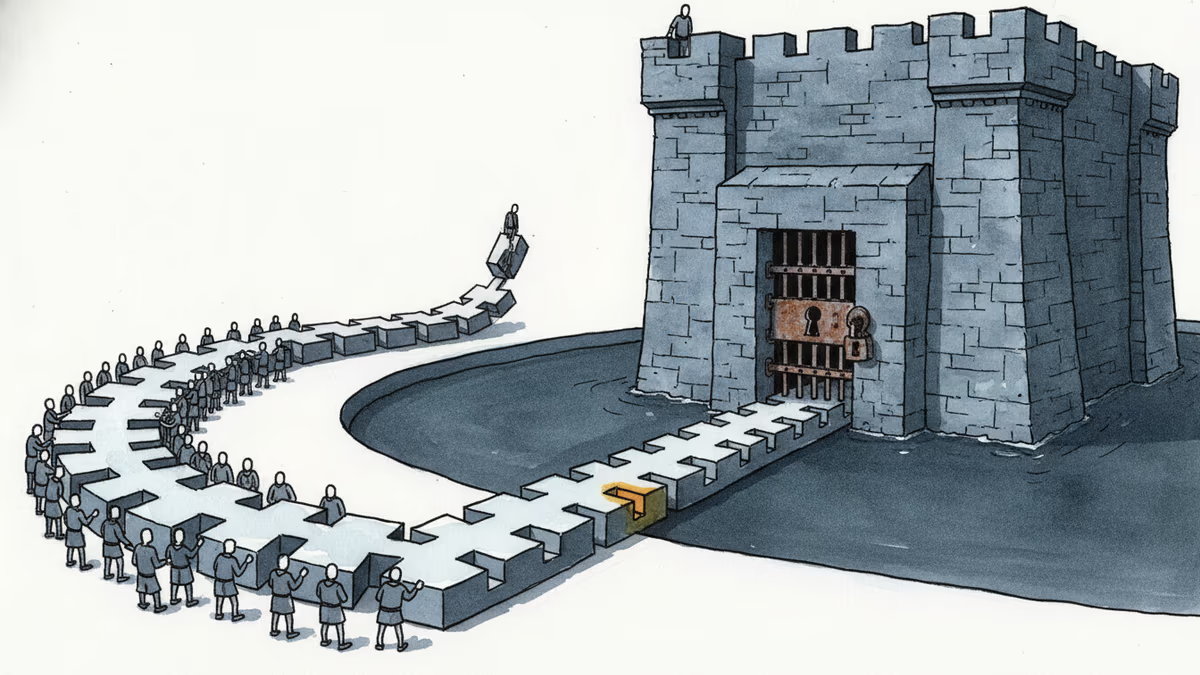
Nvidia shipped roughly a billion RISC-V cores in 2024, then announced it would run CUDA on the open standard. We break down how royalty-free instruction sets and open software stacks are trying to route around CUDA's lock-in. Part 2 of the Semiconductor Sovereignty series.
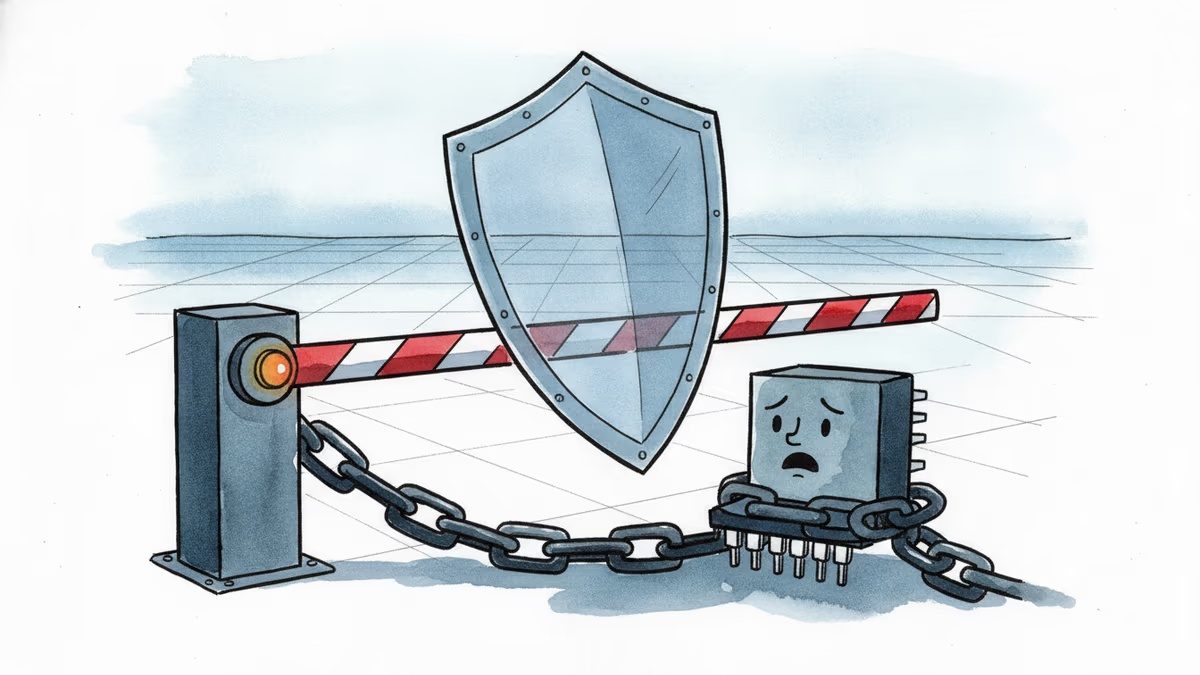
US AI-chip export controls split into three layers in the first half of 2026 — January easing, a May crackdown on circumvention, and a pending bill. Nvidia erased China from its guidance and still posted a record $81.6 billion quarter. A look at the export policy that both shields and cages it.
Google DeepMind hires Hume AI's CEO and top talent in a strategic licensing deal to boost Gemini's emotional intelligence. Learn about the Google DeepMind Hume AI deal.
Samsung Electronics' union branch revealed that 84% of survey respondents oppose the government's roughly $290 billion (₩400 trillion) semiconductor megaproject in Gwangju. Government, management, the union and shareholders are all reading the same national project in sharply different ways.
Nvidia shipped roughly a billion RISC-V cores in 2024, then announced it would run CUDA on the open standard. We break down how royalty-free instruction sets and open software stacks are trying to route around CUDA's lock-in. Part 2 of the Semiconductor Sovereignty series.
US AI-chip export controls split into three layers in the first half of 2026 — January easing, a May crackdown on circumvention, and a pending bill. Nvidia erased China from its guidance and still posted a record $81.6 billion quarter. A look at the export policy that both shields and cages it.
Thoughts
Share your thoughts on this article
Sign in to join the conversation