

China Cybersecurity Software Ban: Why Palo Alto and CrowdStrike Are Shaking
China has banned cybersecurity software from Palo Alto Networks and CrowdStrike in retaliation for U.S. chip curbs. Discover the financial impact and stock outlook.
The geopolitical chess match between the U.S. and China has just moved to a more critical square: software. According to Reuters, Chinese authorities have instructed domestic firms to stop using cybersecurity software from major U.S. and Israeli providers, including Palo Alto Networks and CrowdStrike. It's a clear signal that the 'Splinternet' is becoming a reality, as Beijing cites national security concerns over potential data collection.
Analyzing the China Cybersecurity Software Ban 2026 Impact
Investors are naturally on edge, but the numbers tell a story of resilience for some and risk for others. Palo Alto Networks saw its stock dip by 3% before recovering. Why the bounce back? FactSet data shows China only accounts for 2.2% of their total revenue, while the U.S. remains their fortress at 63%. Their platformization strategy and acquisitions like CyberArk give them an edge that transcends regional bans.

CrowdStrike is in an even more curious position. While they're on China's hit list, a company rep told Bloomberg they don't even sell products in China. The financial impact is, essentially, zero. On the flip side, Broadcom faces a steeper climb. With 17% of its revenue tied to China and its subsidiary VMware targeted, the stock has felt the pressure, dropping over 4%.
Tit-for-Tat: The Semiconductor Connection
This isn't happening in a vacuum. China's move follows strict U.S. controls on AI chips. Beijing recently retaliated by blocking Nvidia's H200 chips from entering the country. While Broadcom boasts an AI backlog of over $73 billion, the uncertainty in the Chinese market makes it a 'battleground stock' for analysts trying to value its custom silicon business.
Authors
Related Articles
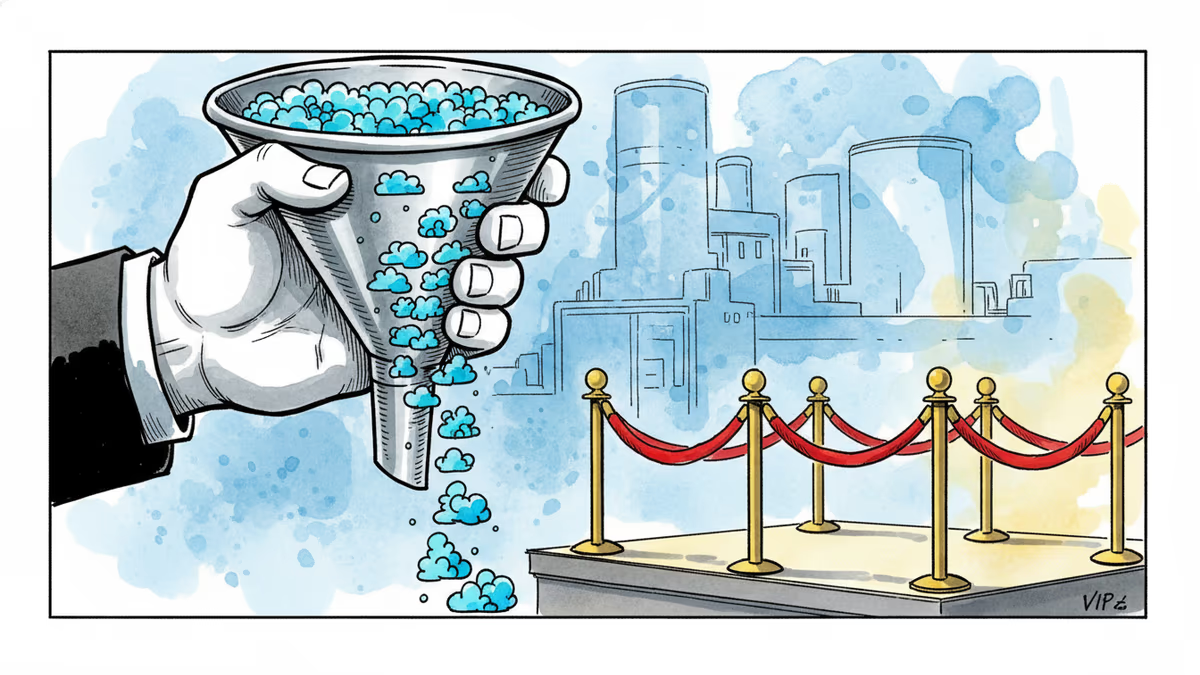
A cloud provider trade group has filed an EU antitrust complaint against Broadcom after it slashed VMware's CSP partner count from 4,000+ to just 19 in the US. Here's what's really at stake.

Two years post-acquisition, 88% of VMware customers still call Broadcom's changes 'disruptive.' Price hikes and uncertainty continue to plague enterprise users.
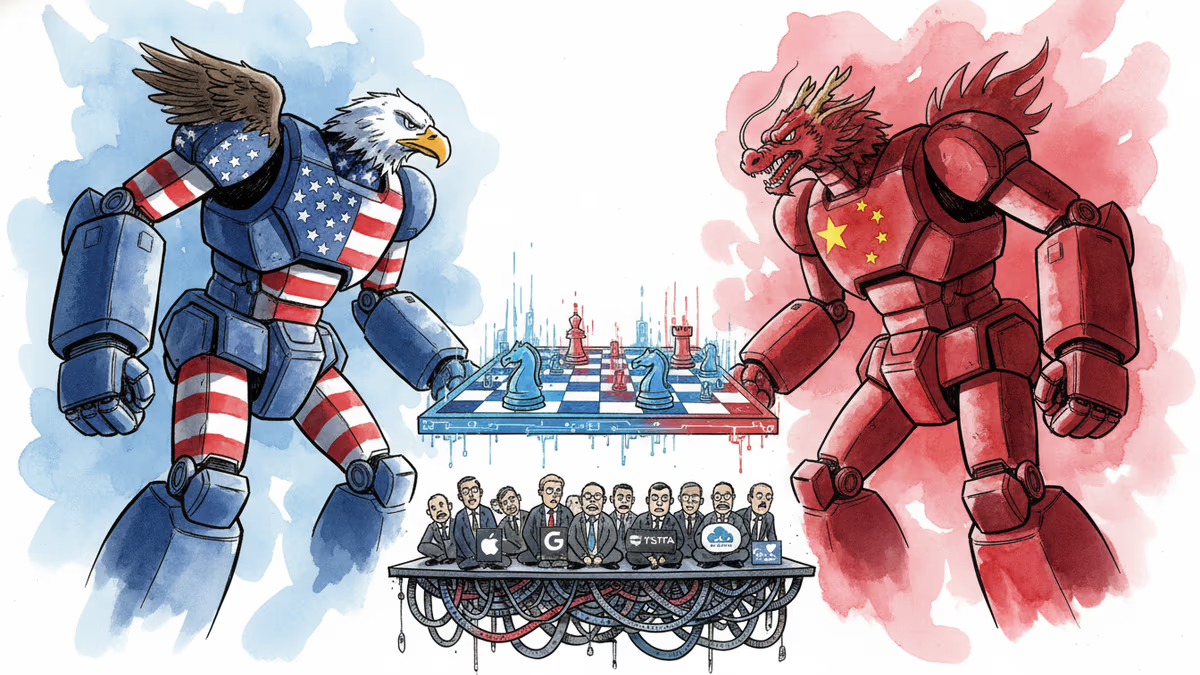
OpenAI accused DeepSeek of stealing AI capabilities before any new model launch. The real battle isn't about copying—it's about who controls AI's future.

CrowdStrike acquires identity management startup SGNL for $740 million. Learn how this strategic move aims to defend against AI-driven cyber threats and consolidate the security market.
A cloud provider trade group has filed an EU antitrust complaint against Broadcom after it slashed VMware's CSP partner count from 4,000+ to just 19 in the US. Here's what's really at stake.
Two years post-acquisition, 88% of VMware customers still call Broadcom's changes 'disruptive.' Price hikes and uncertainty continue to plague enterprise users.
OpenAI accused DeepSeek of stealing AI capabilities before any new model launch. The real battle isn't about copying—it's about who controls AI's future.
CrowdStrike acquires identity management startup SGNL for $740 million. Learn how this strategic move aims to defend against AI-driven cyber threats and consolidate the security market.
Thoughts
Share your thoughts on this article
Sign in to join the conversation