
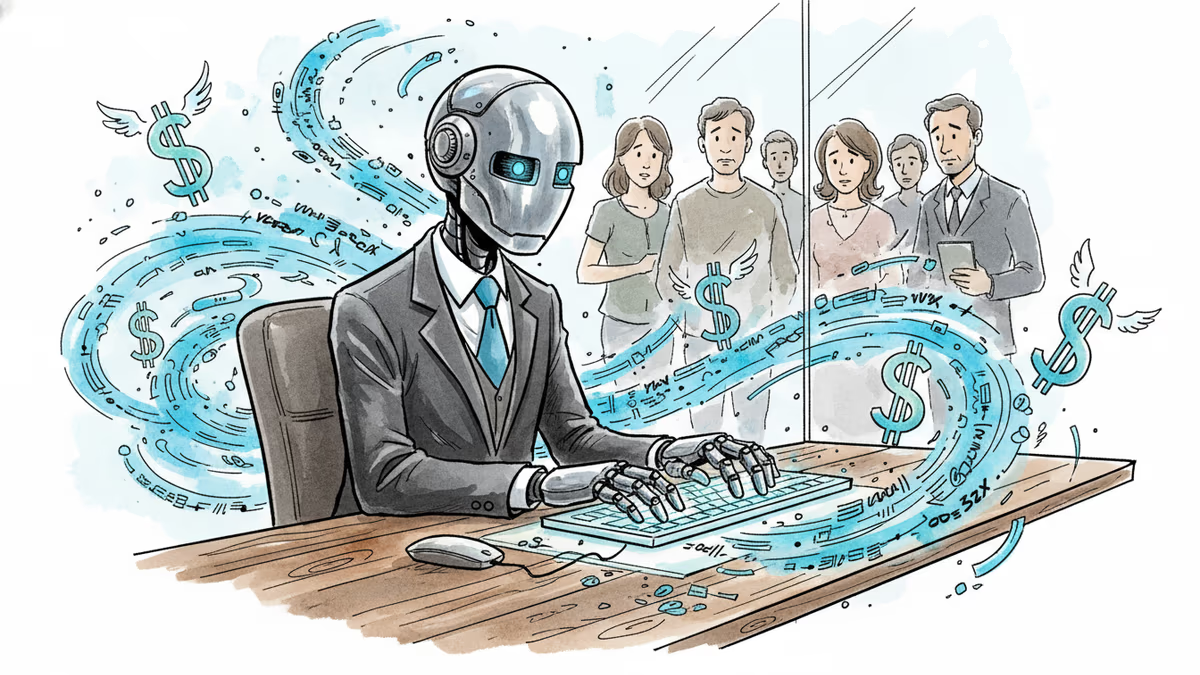
The $100B Question: Are AI Agents About to Kill the Startup Playbook?
Microsoft's Amanda Silver reveals how AI agents could reshape startups like cloud computing did, but deployment challenges suggest the revolution isn't quite here yet.
The Night Shift Nobody Wants
Picture this: It's 3 AM, your startup's server crashes, and someone has to stumble out of bed to diagnose what went wrong. For 24 years, this has been the reality Amanda Silver has watched developers endure. But the Microsoft corporate VP now believes we're witnessing something as transformative as the shift to cloud computing—except this time, it's AI agents doing the midnight troubleshooting.
Silver, who spent years building GitHub Copilot before moving to Microsoft's CoreAI division, has a front-row seat to how enterprises actually deploy AI systems through Azure's Foundry platform. Her latest observations suggest we're approaching what she calls "a watershed moment for startups"—but the revolution is happening slower than anyone expected.
The New Math of Starting Up
The comparison to cloud computing isn't casual. When Amazon Web Services launched in 2006, it eliminated the need for startups to buy servers, rent data center space, or hire infrastructure teams. Suddenly, two college kids could launch a service that previously required millions in upfront capital.
Silver sees AI agents creating a similar shift. "Many of the jobs involved in standing up a new venture—whether it's support people, legal investigations—a lot of it can be done faster and cheaper with AI agents," she explains. The result? "Higher-valuation startups with fewer people at the helm."
The evidence is already emerging in Microsoft's enterprise deployments. Multi-step agents can update software dependencies with a 70-80% reduction in developer time. Live-site operations that once required round-the-clock human monitoring now run with AI systems handling most incidents automatically. Package returns that needed human judgment calls for damage assessment increasingly rely on computer vision models.
The Reality Check

But here's where the story gets complicated. Despite the obvious ROI, agentic deployments haven't scaled as quickly as predicted even six months ago. Silver points to a fundamental problem: "Not really knowing what the purpose of the agent should be."
The technical barriers aren't the issue—it's the cultural and strategic ones. Companies struggle to define clear success metrics for their agents or identify the right data sets for training. "You need to be very clear-eyed about what the definition of success is for this agent," Silver emphasizes.
This mirrors the early cloud adoption curve, when enterprises spent years figuring out which workloads to migrate and how to restructure their operations. The technology was ready before the business processes were.
The Human-in-the-Loop Reality
Silver's enterprise perspective reveals something venture capitalists and startup founders should note: the future isn't fully autonomous agents, but rather human-AI collaboration at scale. Even in highly automated scenarios, critical decisions—deploying production code, legal obligations, borderline cases requiring judgment—still need human oversight.
The question becomes: "How often do you need to call in the manager?" The answer varies dramatically by industry and use case, creating opportunities for startups that can identify the right balance for specific verticals.
The Startup Opportunity Map
For founders, this creates an interesting strategic landscape. The companies best positioned to benefit aren't necessarily AI-first startups, but rather traditional software companies that can integrate agentic capabilities into existing workflows.
Consider the implications: If Silver's prediction holds, we'll see startups achieving higher valuations with smaller teams. But we'll also see increased competition as the barriers to launching new ventures continue to fall. The advantage may go to founders who can identify specific, well-defined problems for AI agents rather than those building general-purpose solutions.
Authors
Related Articles
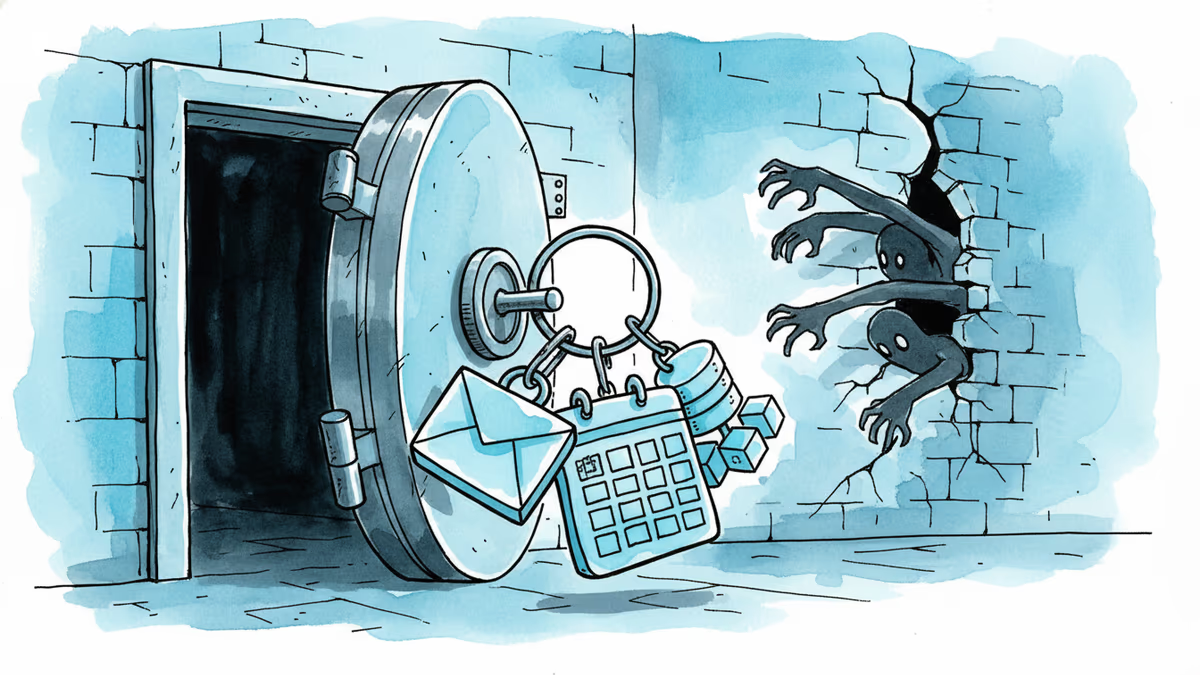
A critical vulnerability in Starlette—downloaded 325 million times per week—puts millions of AI agent servers at risk, exposing stored credentials for email, databases, and third-party services.

A small but growing group of developers has gone all-in on AI coding agents like Claude Code and OpenClaw. History suggests the rest of us won't be far behind.
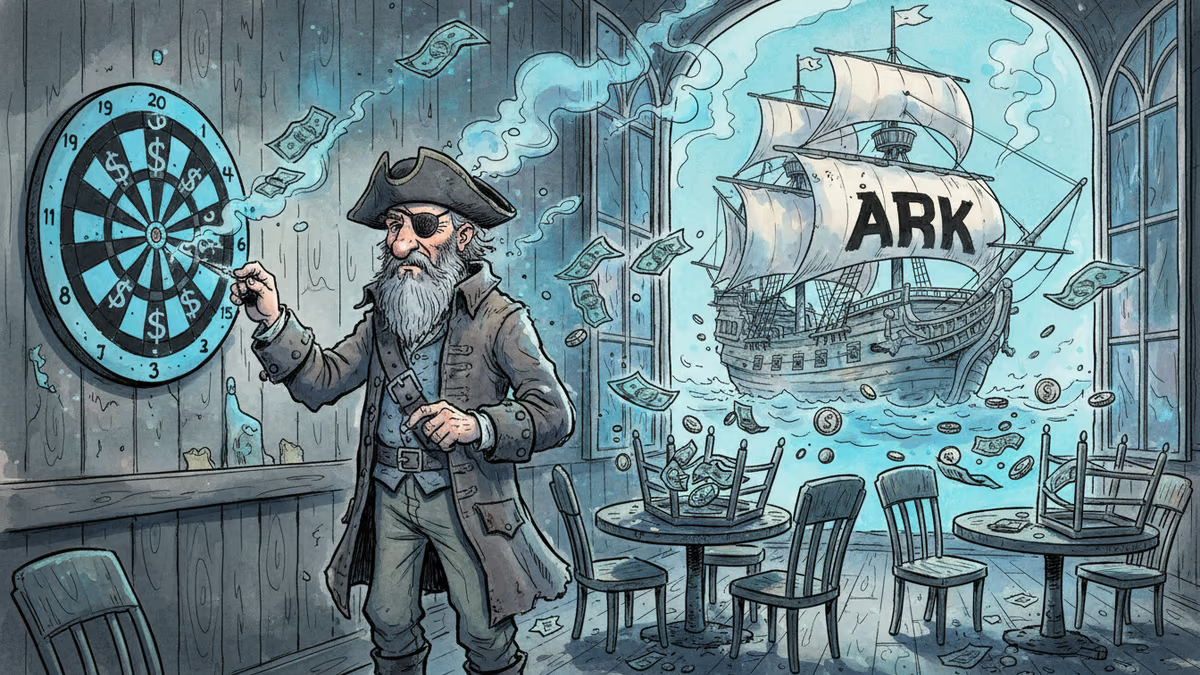
Lucra Sports CEO Dylan Robbins landed Cathie Wood's ARK Invest as a Series B lead without building AI. The story behind his unconventional fundraising playbook.
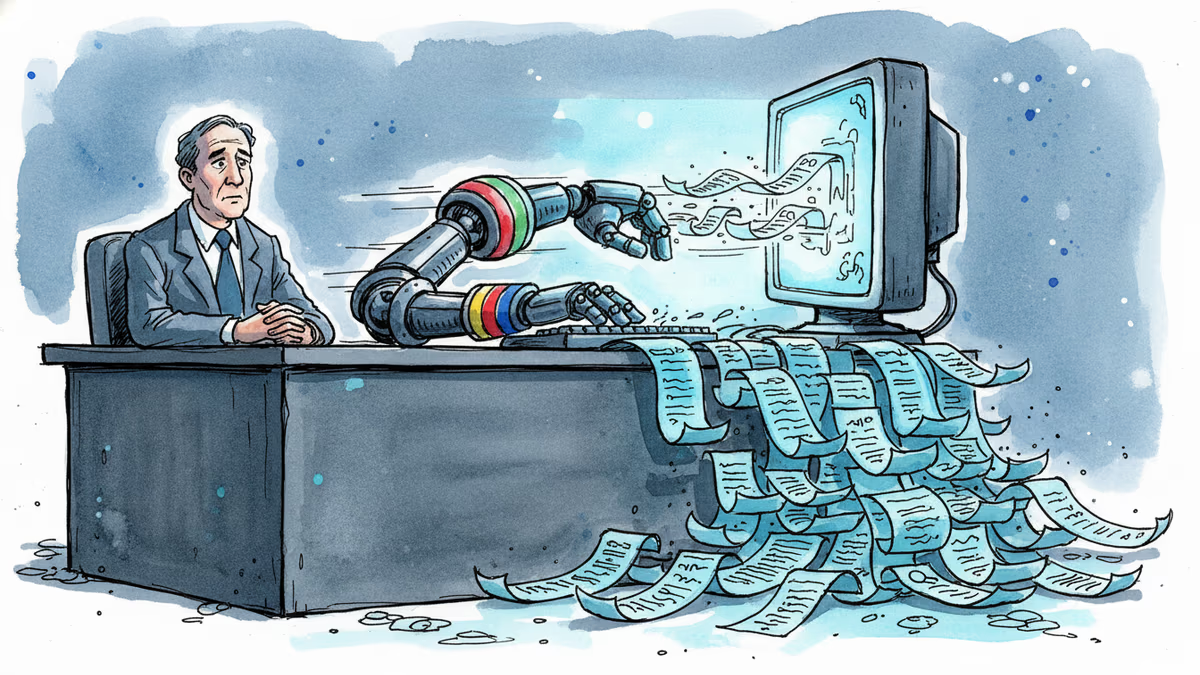
Google is building AI agents that search the web proactively, without user prompting. That's not just a product update — it's a fundamental shift in who controls the information you receive.
A critical vulnerability in Starlette—downloaded 325 million times per week—puts millions of AI agent servers at risk, exposing stored credentials for email, databases, and third-party services.
A small but growing group of developers has gone all-in on AI coding agents like Claude Code and OpenClaw. History suggests the rest of us won't be far behind.
Lucra Sports CEO Dylan Robbins landed Cathie Wood's ARK Invest as a Series B lead without building AI. The story behind his unconventional fundraising playbook.
Google is building AI agents that search the web proactively, without user prompting. That's not just a product update — it's a fundamental shift in who controls the information you receive.
Thoughts
Share your thoughts on this article
Sign in to join the conversation