

The VC Writing $10M Checks While Others Chase Billions
While Silicon Valley chases mega-rounds, former Google exec Stacy Brown-Philpot built a 2,000-company pipeline in just one year. Her contrarian bet on overlooked founders is paying off.
2,000 Companies Can't Be Wrong
A decade at Google. A successful exit as TaskRabbit CEO. When Stacy Brown-Philpot launched Cherryrock Capital just one year ago, she already had 2,000+ companies in her pipeline. While mega-funds chase buzzy AI deals and unicorn valuations, she's doing something radically different: writing smaller checks to founders everyone else ignores.
"When I left TaskRabbit, I saw this gap in the market—access to capital for underinvested entrepreneurs," Brown-Philpot told TechCrunch. It's a carefully chosen phrase in today's political climate, but her thesis is simple: great founders exist everywhere, not just in Sand Hill Road's usual suspects.
Twenty-five years ago, she wrote her Stanford MBA essay about becoming a VC. After building companies and watching them scale, she's finally back to that original plan.
The Slow Money Revolution
Cherryrock's approach feels like time travel. While other funds race to deploy capital as fast as they raise it, Brown-Philpot and co-founder Saydeah Howard (nine years at IVP) have backed just 5 companies in their first year. Their target? 12-15 investments total from their debut fund.
It's concentrated. It's patient. It's everything modern VC isn't supposed to be.
"It's very difficult to go public," Brown-Philpot says with refreshing honesty. "Most companies don't go public, they do get acquired." She should know—TaskRabbit's sale to IKEA proved that the right acquisition can create lasting value.
When Politics Meets Portfolios
DEI has become a lightning rod under the Trump administration. Some corporate diversity initiatives face legal challenges. SoftBank even sold its $100 million Opportunity Fund to its leadership team in late 2023, divesting from diversity-focused investing.
Brown-Philpot doubled down instead.

"It doesn't change the pitch at all," she says. "When we look at the people who decided to back Cherryrock, like JPMorgan and Bank of America...these are financial institutions who expect to generate a return."
Her LP roster reads like a who's who of institutional capital: Goldman Sachs Asset Management, MassMutual, Top Tier Capital Partners, and Melinda Gates's Pivotal Ventures. These aren't charity checks—they're calculated bets on underserved markets.
California's Transparency Play
Starting in April, California VC firms must report demographic data on their portfolio companies' founding teams. Unlike mandates or quotas, the law focuses on transparency—requiring reporting, not specific outcomes.
For Cherryrock, which already tracks diversity metrics, compliance is "table stakes." As Brown-Philpot puts it: "You accomplish what you measure."
The timing couldn't be better. While some firms scramble to collect data they never tracked, Cherryrock has been building this infrastructure from day one.
Philosophy Meets Engineering
Brown-Philpot's portfolio reveals her thesis in action. Coactive AI, led by Cody Coleman—an MIT grad with advanced degrees in both philosophy and engineering—provides multimodal AI infrastructure to media companies. It's exactly the kind of founder traditional VCs might overlook: deep technical skills plus humanistic thinking.
Then there's Vitable Health, founded by Joseph Kitonga, a Thiel Fellow and Y Combinator alum. The Philadelphia-based company provides on-demand primary care insurance to hourly workers—the gig economy population Brown-Philpot knew well from her TaskRabbit days.
"He is the exact kind of founder that we want to back," she says. "He does what he says he's going to do."
The Stanford Advantage
Brown-Philpot sits on Stanford's board, giving her a front-row seat to the next generation of founders. While students worry about AI's impact on employment, she sees opportunity.
"What I see on campus is the students are charting a path and finding a way to create opportunities for themselves," she observes. Her board positions at HP and StockX provide additional market intelligence—insight into both enterprise buyers and consumer behavior.
Authors
Related Articles
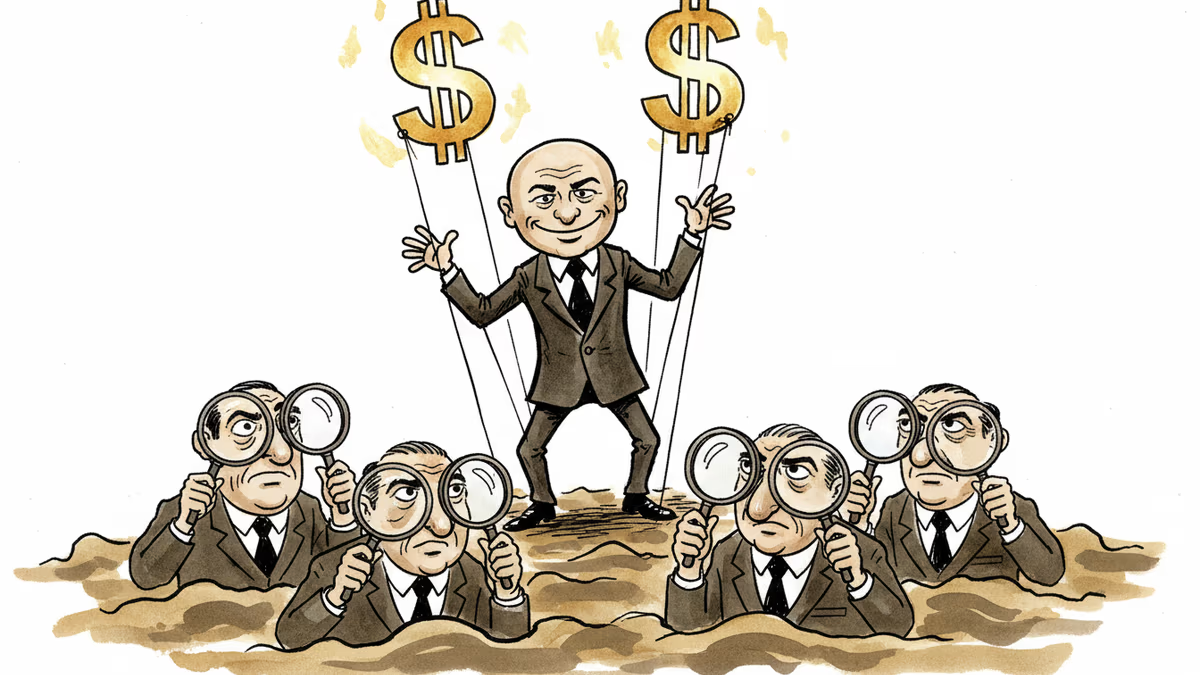
Cluely CEO admits to fabricating $7M revenue figure, exposing how startup "fake it till you make it" culture has gone too far. What this means for the ecosystem.
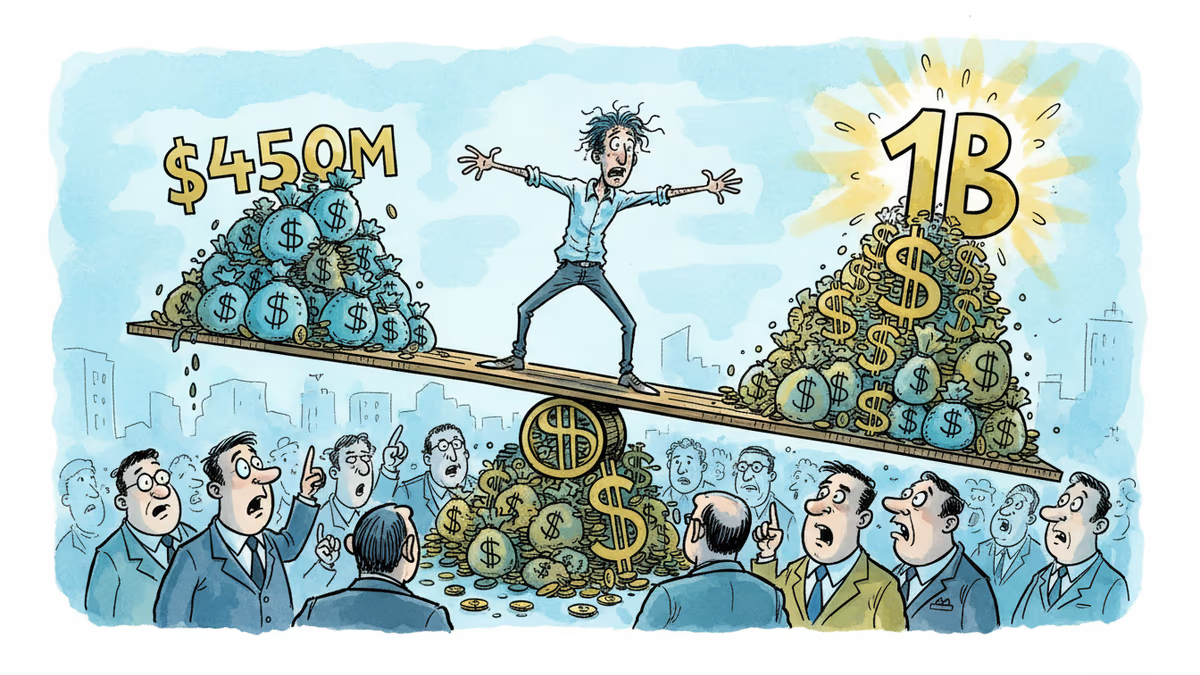
AI startups are using dual-tier valuations to manufacture unicorn status. Why are investors playing along with this new valuation game?

AI startups captured 90% of record $189B February VC funding, with OpenAI, Anthropic, and Waymo dominating 83% of all investments, reshaping venture landscape

Anduril's $60B valuation bid signals a seismic shift in defense tech. As VCs pour billions into weapons, what does this mean for warfare's future?
Cluely CEO admits to fabricating $7M revenue figure, exposing how startup "fake it till you make it" culture has gone too far. What this means for the ecosystem.
AI startups are using dual-tier valuations to manufacture unicorn status. Why are investors playing along with this new valuation game?
AI startups captured 90% of record $189B February VC funding, with OpenAI, Anthropic, and Waymo dominating 83% of all investments, reshaping venture landscape
Anduril's $60B valuation bid signals a seismic shift in defense tech. As VCs pour billions into weapons, what does this mean for warfare's future?
Thoughts
Share your thoughts on this article
Sign in to join the conversation