
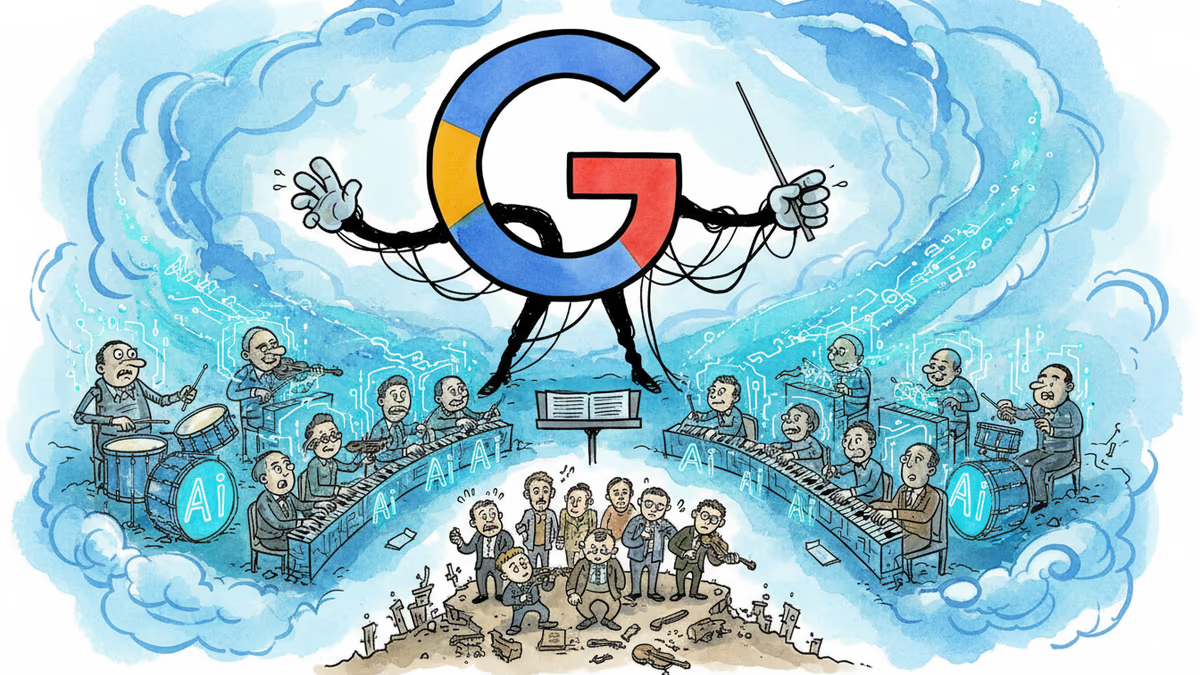
Why Google Really Bought This Music AI Startup
Google's ProducerAI acquisition isn't just about generating music. It's the first move in reshaping the entire creator economy.
The $24 Billion Music Industry Just Got a New Player
Google just acquired ProducerAI, a music-making AI startup. On the surface, it looks like another routine tech acquisition. Dig deeper, and you'll find something more ambitious: Google's blueprint for controlling the entire creator economy, from composition to consumption.
ProducerAI launched in July 2025 as the successor to Riffusion, offering users an AI agent that generates sounds, workshops lyrics, remixes songs, and even creates new instruments from simple prompts. Google plans to fold the platform under its Labs division and power it with a preview version of Lyria 3, its next-generation music AI model.
Musicians Are Split Down the Middle
The music community's reaction reveals a fascinating divide. Independent artists are celebrating the democratization of music production. "Finally, I can compete with major labels without a $100,000 studio setup," says one bedroom producer from Nashville.
But established producers aren't thrilled. They've spent decades mastering their craft, only to watch AI potentially make their expertise obsolete overnight. Session musicians are particularly worried—if AI can generate realistic instrument tracks, why hire humans?
Investors see dollar signs. The global music streaming market hit $24 billion last year, and Google already dominates distribution through YouTube and YouTube Music. Now they're moving upstream to control creation itself.

Google's Real Game Plan
This isn't just about better music tools. Google is building a vertical monopoly in audio content. They already own the pipes (YouTube), the audience (over 2 billion monthly users), and the recommendation algorithm. Adding creation tools completes the circle.
The Lyria 3 integration hints at bigger ambitions. Imagine asking Google Assistant to "create a workout playlist in my style" and getting original compositions in real-time. Or YouTube Shorts automatically generating background music that perfectly matches each video's mood.
This puts pressure on competitors like Spotify, which relies on licensing existing music rather than creating new content. If Google can generate unlimited original music at near-zero marginal cost, traditional streaming economics get turned upside down.
The Regulatory Wild Card
But there's a catch. Copyright lawyers are already circling. ProducerAI and similar tools train on existing music, raising questions about fair use and artist compensation. The Recording Industry Association of America has been notably quiet about this acquisition, but that silence probably won't last.
European regulators, fresh from their battles with big tech over data privacy and market dominance, are likely to scrutinize Google's growing control over creative industries. The question isn't whether regulation will come, but when and how strict it'll be.
This story is developing as Google integrates ProducerAI into its broader AI ecosystem.
Authors
Related Articles
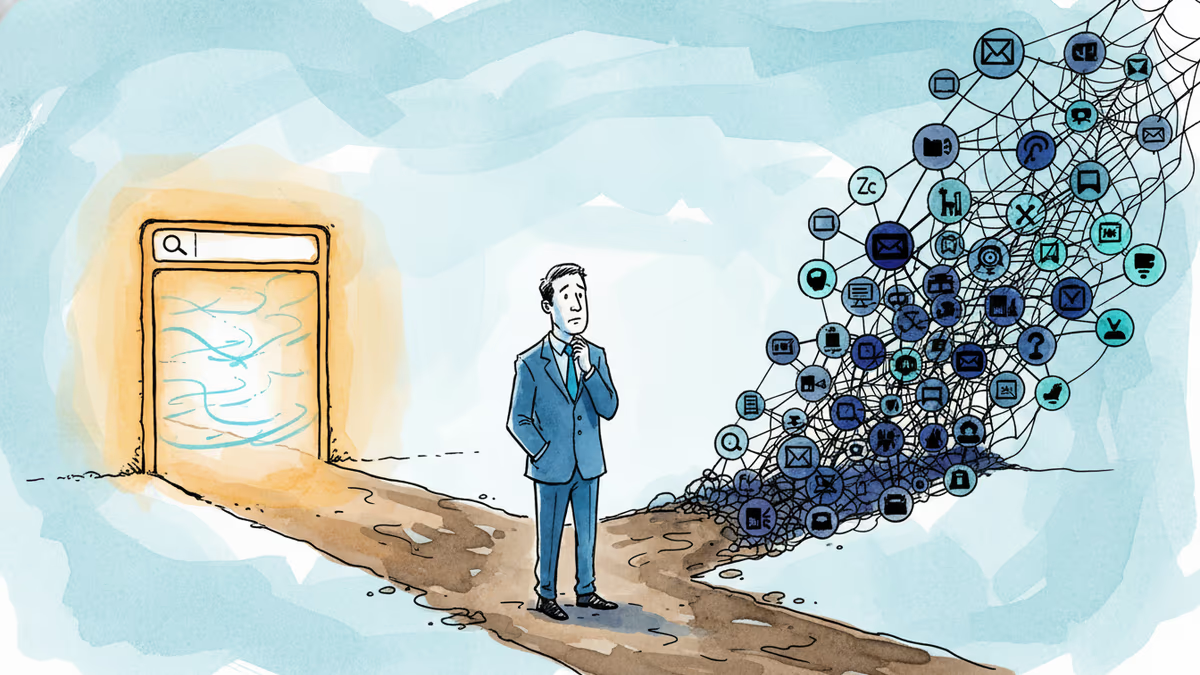
In a post-Google I/O interview, Sundar Pichai acknowledged flawed search results, real AI anxiety, and an AGI timeline that makes the label irrelevant. Here's what he said — and what it means.
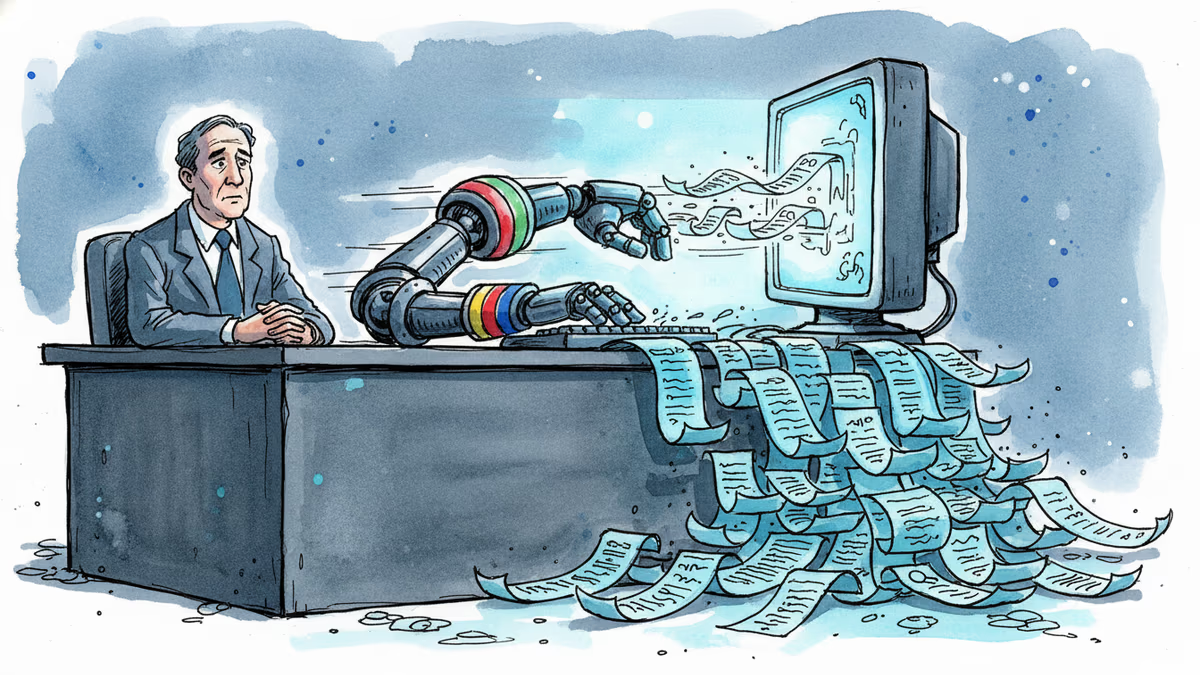
Google is building AI agents that search the web proactively, without user prompting. That's not just a product update — it's a fundamental shift in who controls the information you receive.
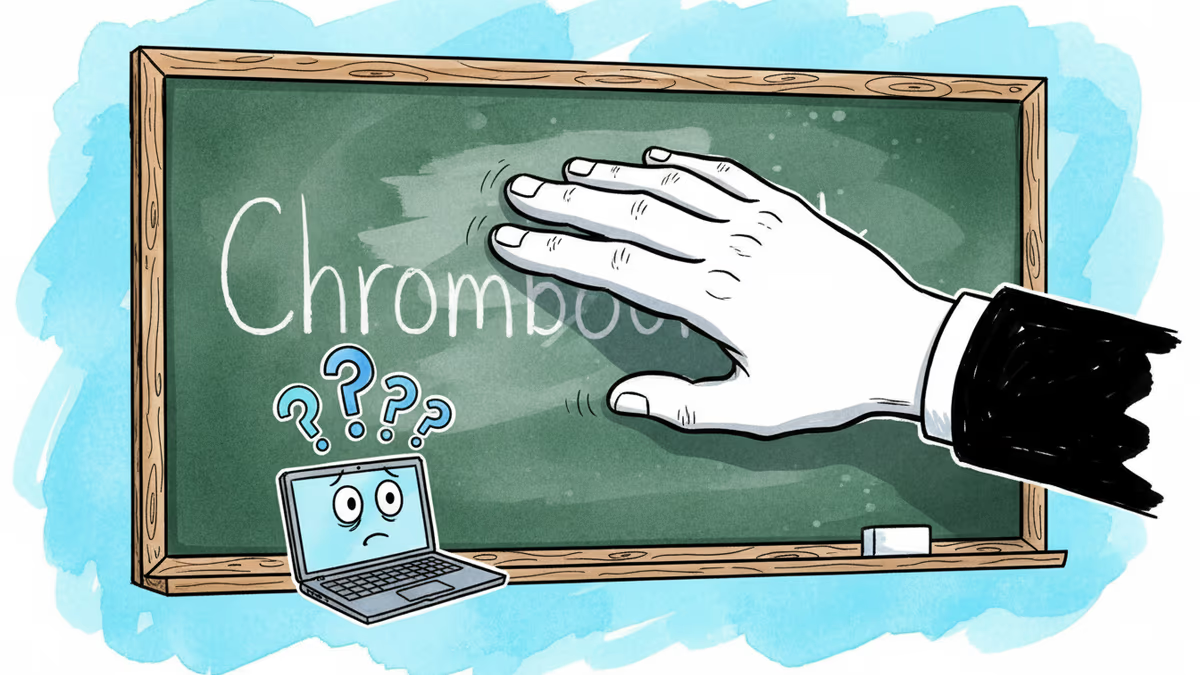
Google unveiled the 'Googlebook' platform to replace Chromebook and ChromeOS—but revealed zero hardware specs. What's the strategy, and what does it mean for users, manufacturers, and the education market?
After 15 years of fragmented mobile messaging, Apple and Google are rolling out end-to-end encrypted RCS messaging between iPhones and Android devices. Here's what changed, why it took so long, and what it means for your privacy.
In a post-Google I/O interview, Sundar Pichai acknowledged flawed search results, real AI anxiety, and an AGI timeline that makes the label irrelevant. Here's what he said — and what it means.
Google is building AI agents that search the web proactively, without user prompting. That's not just a product update — it's a fundamental shift in who controls the information you receive.
Google unveiled the 'Googlebook' platform to replace Chromebook and ChromeOS—but revealed zero hardware specs. What's the strategy, and what does it mean for users, manufacturers, and the education market?
After 15 years of fragmented mobile messaging, Apple and Google are rolling out end-to-end encrypted RCS messaging between iPhones and Android devices. Here's what changed, why it took so long, and what it means for your privacy.
Thoughts
Share your thoughts on this article
Sign in to join the conversation